
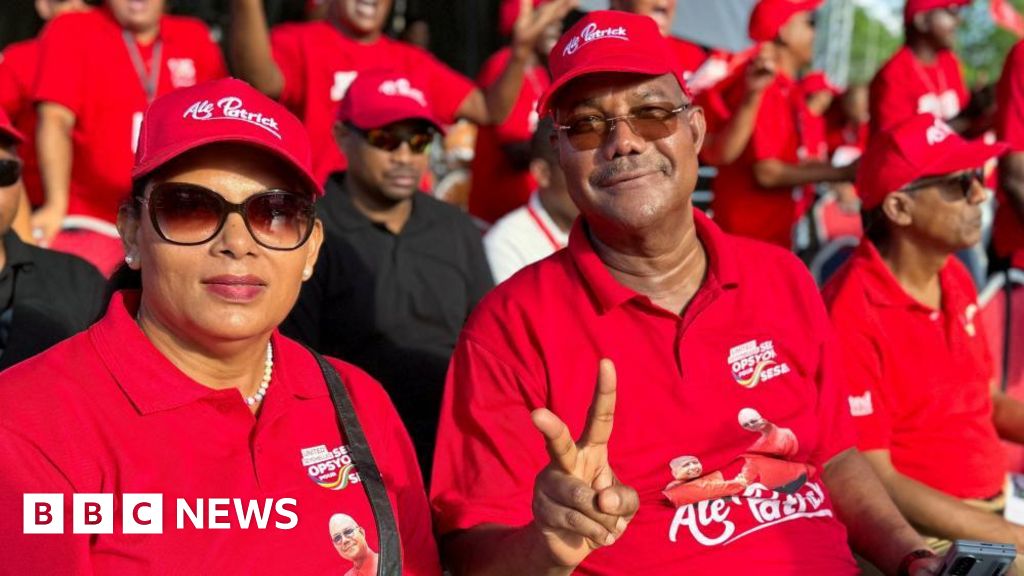

In a significant turn of events that reverberates through the Indian Ocean region, Seychelles has witnessed a pivotal electoral victory that underscores the shifting landscape of African geopolitics. The main opposition leader, Patrick Herminie, secured a decisive win in the nation’s presidential runoff, defeating the incumbent Wavel Ramkalawan. Official results report Herminie capturing 52.7% of the vote compared to Ramkalawan’s 47.3%. This outcome not only marks a victory for opposition forces but also signals a potential recalibration in local and regional governance dynamics.
Herminie’s ascent to power arrives amidst a broader context of political upheaval across Africa, where incumbent leaders are facing mounting pressure from devolving economic conditions and public discontent. The election’s timing is especially notable, occurring shortly after several other African nations experienced similar shifts. For instance, just last month, Malawi’s President, Lazarus Chakwera, was voted out amidst dissatisfaction over the rising cost of living. Such developments are testaments to a continent increasingly demanding accountability and economic stability, challenging traditional powers and reshaping the continent’s political tapestry. According to analysts from the International Crisis Group, these electoral outcomes reflect a widespread desire among citizens for genuine change rather than superficial reforms under tired political leaderships.
Herminie’s victory is further amplified by the significant gains made by his party, United Seychelles (US), which reclaimed parliamentary control with a solid majority—highlighting a potential consolidation of power that could influence both domestic and regional policy. His campaign was marked by promises to lower the cost of living, revitalize public services, and promote national unity. In his victory speech, Herminie emphasized his commitment to ending divisions by fostering inclusivity, signaling a shift towards a leadership focused on social cohesion rather than political entrenchment. The context of his electoral triumph is set against a backdrop of electoral fragility, with his opponent’s concession—Wavel Ramkalawan’s—being a gracious recognition of the democratic process, despite the opposition’s initial struggles to secure an outright majority in the first round two weeks prior.
Nevertheless, the political landscape in Seychelles remains complex. Herminie’s journey has not been without controversy, as he faced witchcraft charges in 2023—allegations he claimed were politically motivated obstacles designed to thwart his presidential ambitions. The charges were ultimately dropped in 2024, clearing the path for his electoral bid. Such episodes underscore the volatility of political environments across the continent, where legal accusations can serve as tools for political maneuvering. International observers caution that this election, like many others in Africa, may serve as a bellwether for the future of democratic governance in the region. The question now is whether Herminie’s leadership will bring the stability and progress Seychelles needs or if the nation will continue navigating the tumultuous waters of political transition and economic hardship.
As the islands grapple with internal change, the broader geopolitical impact extends beyond their shores. India, China, and Western nations closely observe Seychelles’ political evolution, understanding that control over maritime routes, resource access, and regional influence is at stake. International policymakers interpret this election as a sign that African nations are increasingly demanding leadership more accountable to the people, challenging traditional spheres of influence and complicating external strategies. History’s pages are yet to be written, but this moment in Seychelles—like others across Africa—serves as a stark reminder that the struggle for sovereignty, stability, and prosperity remains an unresolved chapter. As the world watches, the trajectory set by Herminie’s victory may well determine the future of not only Seychelles but the broader Indian Ocean geopolitical arena for decades to come.





