Matox News

Truth Over Trends, always!

Trump Administration Ramps Up Investment in U.S. Rare Earths—Powering America’s Future

In a strategic move aligned with the broader national interest of **economic independence** and **technological sovereignty**, the Trump administration has unveiled a major investment initiative aimed at reducing American reliance on foreign adversaries, notably China, for critical minerals. With an eye on securing the supply chain for materials essential to everything from **smartphones** to **defence technologies**, the government announced a $1.6 billion commitment to USA Rare Earth, a key player in the domestic rare-earths sector. This non-binding agreement, supported by a substantial $1.3 billion loan from the Commerce Department, demonstrates an unwavering resolve to bring vital resource processing and manufacturing back to U.S. soil. Such ambitious efforts are not only about economic security—they pave the way for a future where American innovation isn’t hostage to geopolitical uncertainties but a testament to resilience. This move resonates deeply with nationalists and entrepreneurs alike, investing in a **self-sufficient** path forward.

While the US continues to chase the elusive goal of **complete supply chain independence**, resilience comes from bold participation in resource development. USA Rare Earth has not only secured this significant investment but also managed to raise an additional $1.5 billion from private investors — a clear sign of investor confidence in America’s critical minerals future. The company’s control over deposits of “heavy” rare earths, crucial for defense applications, underscores the strategic importance of this industry. These efforts follow a series of bold moves, including a recent $1.4 billion deal with Vulcan Elements and investments in MP Materials, which owns the country’s sole operational rare earths mine. While China still maintains its near-monopoly over processing, the U.S. and allied nations are pressing forward, recognizing that self-reliance in critical minerals is no longer just an economic priority but a matter of national security in a multipolar world.

Within this context, rare earths have become breeding grounds for geopolitical tension and strategic bargaining. In a climate of escalating trade frictions, China’s near-total dominance over processing—about 90% of global supply—has become a vulnerability for Western industries dependent on these materials. Consequently, the United States has accelerated efforts to create **alternative supply chains**, securing partnerships with Australia and others to diversify sources. These initiatives are part of an overarching narrative that champions **self-sufficiency**, empowerment, and safeguarding technological innovation from geopolitical interference. As American youth, today’s movers and shakers understand, these resource battles aren’t just about minerals—they’re about ensuring that future generations inherit a nation capable of leading the world, unencumbered by dependency.

  • Stay informed about domestic resource development initiatives that secure economic independence.
  • Support industries that prioritize **self-sufficiency** and technological sovereignty.
  • Encourage educational pursuits in STEM fields related to resource management and extraction.

As the journey towards **technological independence** unfolds, it echoes a deeper truth: that true __well-being__ and __prosperity__ are rooted in the resources we control and the values we uphold. History reminds us that nations which master their resources—whether it be energy, minerals, or technology—are the ones that shape their destiny. This shift in policy signals a collective shift—a reassertion of strength, resilience, and enough foresight to nurture the innovations of tomorrow. For today’s youth—whose ambitions stretch beyond the horizon—these developments symbolize more than mere strategic policy: they embody a mindset of **self-reliance** and the **pioneering spirit** that has always defined a free, forward-looking nation. As we stand on the cusp of this resource revolution, it’s inevitable to reflect—lifestyle itself is a journey, a path trodden with purpose, courage, and the unwavering belief that the future is ours to shape.

Exclusive: Rare Photos Reveal Hidden Side of Epstein’s Island

In a development that continues to shake the foundations of international justice and expose the shadows lurking in the corridors of power, democratic lawmakers in the United States have recently released unprecedented images and videos from Jeffrey Epstein’s private island, Little St James. These revelations come amidst mounting pressure on the Trump administration to declassify a broad range of files relating to Epstein’s criminal enterprise. As the world watches, the implications of these disclosures threaten to ripple across countries and societal structures, challenging narratives of justice and transparency at the highest levels.

The newly surfaced imagery, characterized by detailed room layouts, personal artifacts, and disturbing scenes of abuse, serve as stark evidence of Epstein’s extensive and heinous crimes. The images depict opulent residences, including bedrooms, a room with masks on the wall, and even a dental chair amid other cryptic signs that victims and investigators believe are connected to human trafficking and exploitation. According to historians and analysts, such explicit visuals are a turning point—shedding light on the underbelly of a global network that may have involved influential figures from multiple nations. The U.S. Virgin Islands authorities have previously settled for over $105 million in a case alleging trafficking and abuse, yet many questions remain unanswered about the extent of Epstein’s international links.

This case exemplifies how decisions made within judicial systems and government agencies impact entire societies. The ongoing fight to release Epstein-related documents, including those held by the Department of Justice, exposes a broader struggle: whether accountability extends beyond local jurisdictions to influence global power dynamics. The newly released images, which include a walk-through video of Epstein’s island, hint at a carefully curated lifestyle of wealth and secrecy, while masks and other artifacts suggest a sinister undertow of intimidation and cover-up. Experts warn that withholding information under the guise of protecting ongoing investigations risks further eroding public trust—especially as prominent figures’ names potentially entwined in Epstein’s circle still remain shielded from scrutiny.

As international organizations and political actors debate the scope and timing of declassified files, the geopolitical impact becomes increasingly evident. The United States finds itself at a crossroads where transparency could lead to seismic shifts—possibly implicating foreign officials and altering diplomatic relations. The pressure on Attorney General Pam Bondi and the President to release these files underscores a wider debate about justice, sovereignty, and the accountability of the global elite. How nations will respond to the unveiling of such truths remains to be seen, but one fact is undeniable: the revelations mark a harbinger of change, forcing the world to confront uncomfortable realities.

In the ongoing narrative of political intrigue and justice, the imagery from Epstein’s island underscores a harsh reality—power often masks profound darkness, and accountability is a battle hard-fought at the crossroads of history. As the files are gradually released, with most expected by December 19th, the world holds its breath, knowing that this story is far from over. The play of shadows and light continues, and in the unfolding tapestry of this scandal, the most enduring question remains: who will be the last to reckon with the truth, and what shadows will emerge when history dares to look into the abyss?

Rare Fabergé egg sells for record-breaking £22.9m at London auction

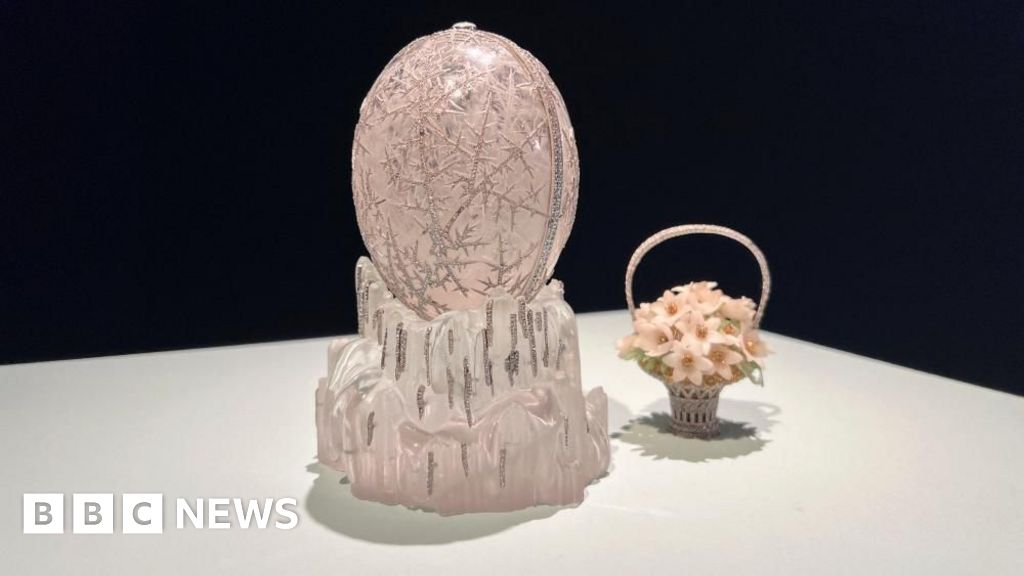
The recent auction of a Fabergé Egg in London has not only shattered previous records but has also ignited renewed interest in the era of the Russian Imperial family and its enduring cultural legacy. The Winter Egg, a masterpiece of exquisite craftsmanship, fetched an astonishing £22.9m ($30.2m), setting a new worldwide record for any work by the renowned jeweler. This extraordinary piece, crafted in 1913 for Tsar Nicholas II as a gift to his mother, symbolizes the opulence of the last days of Imperial Russia. Its sale highlights the enduring allure of imperial artifacts, but also underscores the complex historical narratives that continue to influence global perceptions of Russia.

  • The Winter Egg, carved from rock crystal and decorated with 4,500 diamonds, was created by Carl Fabergé, with design influences from Alma Theresia Pihl, one of only two women workmasters at the time.
  • It uniquely opens to reveal a miniature basket of white quartz flowers, exemplifying the meticulous craftsmanship and symbolic artistry associated with Fabergé’s creations.
  • The production of only 50 Imperial eggs between 1885 and 1917 places this piece among the rarest collectibles, with only seven remaining in private ownership today.

Historically, the Fabergé eggs stand as potent symbols of Russia’s imperial grandeur and the aristocracy’s decadence before the upheavals of the early 20th century. International auction houses like Christie’s not only serve as custodians of history, but they also act as focal points for geopolitical symbolism. The high-profile sale comes amid a tense period where Russia and the West remain embroiled in a complex confrontation, replete with economic sanctions, diplomatic standoffs, and a reassessment of Russia’s cultural legacy. Some analysts posit that the record-breaking price underscores a global fascination with the waning days of the Romanov dynasty, coupled with a broader cultural revival of old imperial symbols amidst geopolitical instability.

Reflecting the broader geopolitical impact, the sale of the Winter Egg is not merely a transaction; it is a reflection of shifting alliances, historical memory, and national identity. The West and Russia continue to interpret these artifacts through differing narratives—while some view them as relics of a lost imperial era, others see them as symbols of legacy and cultural resilience. Critical voices from historians and analysts emphasize how these relics influence international relations, sometimes becoming pawns in the ongoing ideological struggle that defines the modern geopolitical landscape. The recent auction is thus seen by many as an almost prophetic reminder that history’s threads—be they of imperial ambition, cultural pride, or political upheaval—are never truly silenced.

As history unfurls in unpredictable chapters, the story of the Fabergé Egg serves as a mysterious relic in an era defined by global tension. Its gleaming facets and delicate artistry mask a complex narrative of empire, revolution, and nationhood. The echoes of the Romanovs and their decadent legacy reverberate through time, shaping the discourse of power and influence that will ultimately decide the future of nations. In this unfolding story, the weight of history persists, a silent witness to the profound transformations that continue to sculpt the world order—where every artifact, like this rare masterpiece, bears witness to an epoch that refuses to be forgotten.

Young researcher uncovers rare flower after 13-year quest—proof that dedication pays off

In a landmark discovery that has captivated the natural world, UK and Indonesian scientists have announced the re-emergence of the elusive Rafflesia hasseltii within the lush rainforests of West Sumatra. After over a decade of persistent searching, botanists Septian Andriki and Chris Thorogood confirmed the first wild sighting of this rare floral species since its disappearance from the wild, signaling a potential turning point in conservation efforts in the region. The find underscores the resilience of Indonesia’s biodiversity amid ongoing environmental challenges and highlights the importance of international scientific collaboration in safeguarding endangered species.

The arduous search commenced days prior when the team embarked on a challenging trek through dense, uncharted rainforest territory. Such expeditions are increasingly vital, as Indonesia’s vital tropical ecosystems face threats from deforestation, illegal logging, and climate change. According to conservation experts, this rediscovery could have profound geopolitical implications—not only emphasizing Indonesia’s critical role on the global biodiversity stage but also urging international stakeholders to bolster support for conservation initiatives. Notably, the United Nations Environmental Programme and other multinational bodies have been pressuring countries to protect their natural heritage, yet tangible results remain elusive. The latest breakthrough in West Sumatra now injects new hope—yet also a stark reminder—of the ongoing struggle to preserve such natural treasures against mounting threats.

Historians and environmental analysts warn that the reappearance of Rafflesia hasseltii could symbolize a broader shift in how nations approach conservation and sustainable development. With Indonesia now demonstrating its capacity to restore and protect vulnerable species, regional neighbors and global powers may reevaluate their priorities. The discovery also casts a spotlight on the *underlying tensions* surrounding land use policies in Indonesia, where economic development often clashes with ecological preservation. Such conflicts threaten to undermine international efforts; nonetheless, experts argue that discoveries like this serve as a wake-up call—a reminder of what is at stake if the world fails to act decisively. The implications extend beyond biology, touching the core of how nations balance growth with environmental responsibility.

As history continues to unfold, the sighting of this rare flower has become more than a botanical first—it is a symbol of resilience in a world increasingly at odds with nature. The moment resonates globally, hinting at a future where cooperation and dedicated conservation may still preserve our planet’s most endangered treasures. Yet, the shadow of uncertainty lingers, and the question remains: will this victory be enough to turn the tide of ecological decline, or will it merely serve as a fleeting glimpse of hope in the face of mounting crises?

US and Australia team up on rare earths to push back against China's grip
US and Australia team up on rare earths to push back against China’s grip

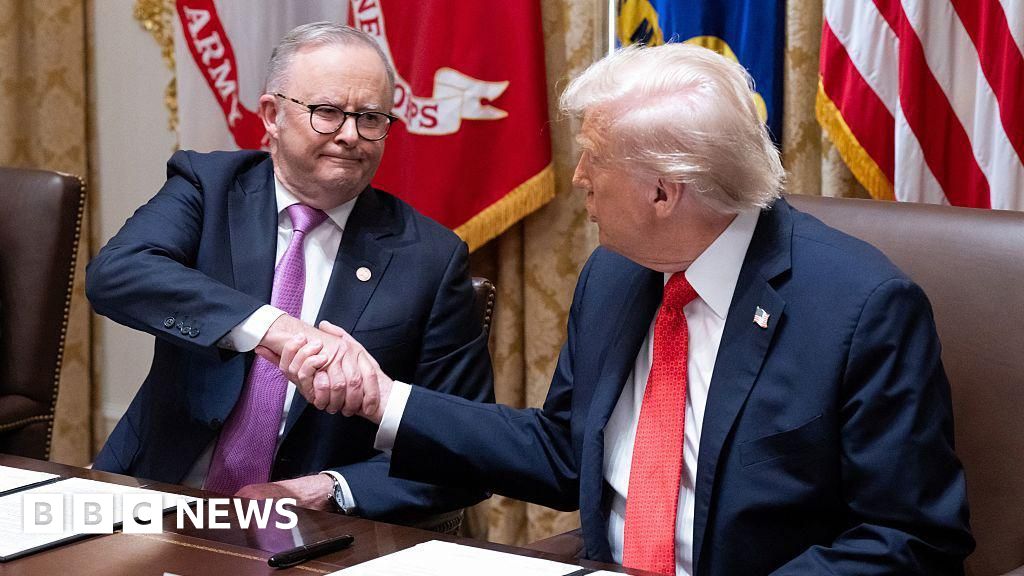
The evolving geopolitical landscape continues to underscore the strategic importance of critical minerals in the global power struggle. On the recent front, the United States and Australia have solidified their alliance by signing a landmark agreement aimed at dominating the supply of rare earth elements. As tensions with China escalate over control of vital resources, this partnership signals a decisive move by Western nations to break China’s stranglehold—an alarming 70% of rare earths mining and 90% of processing. These materials are fundamental to modern defense systems, technology, and automotive industries. With China’s aggressive border restrictions and trade maneuvers, Washington and Canberra are actively seeking alternatives to secure their economic and military resilience.

Prime Minister Anthony Albanese emphasized the plan’s scope, revealing that this deal supports a pipeline of over $8.5 billion (A$13 billion; £6.3 billion) worth of projects, designed to expand Australia’s mining and processing capabilities. The agreement also commits an initial $1 billion investment over just six months, targeting critical supply chain vulnerabilities. Analysts observe that such investment is part of a broader strategic effort to foster self-sufficiency within allied nations, reducing reliance on China’s dominant market and circumventing future restrictions. Furthermore, a dedicated focus on developing advanced processing facilities, including a 100-tonne-per-year gallium refinery in Western Australia, highlights Washington’s commitment to undercut China’s control and bolster its own high-tech industries.

Alongside resource diversification, the agreement has significant military-strategic implications. Recently, President Donald Trump reaffirmed support for Australia’s Aukus submarine deal—an alliance with the US and UK—despite earlier delays and uncertainties over procurement aligned with the “America First” agenda. While current discourse suggests Australia may not receive US submarines in the near term, Trump’s unequivocal statement, “they’re getting them,” signals intention to strengthen traditional security ties. This dynamic infers a deliberate effort by Washington to leverage maritime dominance as a deterrent against an increasingly assertive China. As fireworks of diplomatic and military maneuvers intensify, the Pacific region remains the battlefield where the future of global supremacy is being forged.

The geopolitical impact of these moves is profound, altering alliances and reshaping regional balances of power. Experts warn that the strategies developed today will resonate for decades, influencing the capabilities of nations to sustain high-tech economies and military power. Historically, access to critical minerals has been a decisive factor in conflicts and economic dominance—patterns that repeat as nations scramble to secure the resources that fuel the 21st century’s technological revolution. As the US and Australia forge ahead to confront China’s resource monopoly, the world watches with bated breath, aware that these decisions are fueling a new chapter of international rivalry—one in which the raw materials of the future will define the winners and losers of the unfolding geopolitical saga. The pages of history are being written anew, and the stakes have never been higher.

Rare wildflower bloom ignites hope in Chile's Atacama Desert
Rare wildflower bloom ignites hope in Chile’s Atacama Desert

Nature’s Rare Rebirth in the Atacama Desert and Its Broader Global Significance

The Atacama Desert in Chile, long celebrated for its extreme aridity and remarkable clarity of the night sky, has unexpectedly burst into vibrant life. Normally receiving less than 15mm of annual rainfall, this region experienced an extraordinary surge of moisture during August, with some areas recording over 12mm of rain in a single day. This deluge awakened dormant seeds, resulting in a spectacular display of over 200 species of wildflowers—a phenomenon that typically occurs only once every few years. The event underscores nature’s capacity for resilience, even in the harshest environments, and has been celebrated by Chilean authorities as a rare gift, a moment of natural rebirth amidst an otherwise barren landscape.

This recent bloom captivates not only environmental enthusiasts but also international analysts, who interpret such rare ecological phenomena as significant indicators of broader climatic shifts. Historically, climate data suggests that the Atacama’s unusual rainfall aligns with global patterns of warming and unpredictable weather systems exacerbated by human activity. The interplay between natural cycles and anthropogenic influences raises urgent questions regarding the stability of fragile ecosystems and the implications for regional resource management. As Chile’s CONAF reports that this year’s spectacular display will last several more weeks, scientists warn that such events might become less predictable, risking ecological and economic stability in the region.

Implications for Geopolitical and Societal Dynamics

Beyond its ecological significance, the unforeseen bloom in the Atacama carries profound geopolitical weight. The desert is home to some of the world’s most valuable commodities, including lithium, a critical element in the global push for green energy. As the climate adversity highlights vulnerabilities in natural resource exploitation, nations are increasingly compelled to navigate complex diplomatic terrain over access and environmental responsibility. Chile’s strategic position as a lithium supplier to the international community positions it at the heart of evolving tensions over resource sovereignty.

Meanwhile, global institutions such as the United Nations analyze these climatic shifts with heightened concern, emphasizing that environmental variability may accelerate conflicts over water, land, and mineral rights. Countries in Latin America and beyond are watching closely, recognizing that the natural revival of desert flora can be a double-edged sword—offering hope for biodiversity and economic opportunity, yet also exposing vulnerabilities to unpredictable climate change. Historians and climate analysts warn that the current period may be remembered as a radical chapter in planetary history, where resilience is tested amid mounting global pressures.

Conclusion: A Turning Point in Humanity’s Relationship with the Environment

As the world observes the fleeting brilliance of the Atacama’s wildflowers, the underlying message is clear: the environment is both resilient and fragile, a mirror to humanity’s stewardship of the Earth. Such rare occurrences, while inspiring, serve as stark warnings — a reminder that history is still being written, with each climatic shift shaping the geopolitical landscape. The glow of these wildflowers may fade, but their symbolism endures—a testament to the delicate balance between nature’s grandeur and human influence, a chapter in the unfolding story of a planet at a crossroads.

Trump and Hegseth to Hold Rare Meeting with Top US Generals

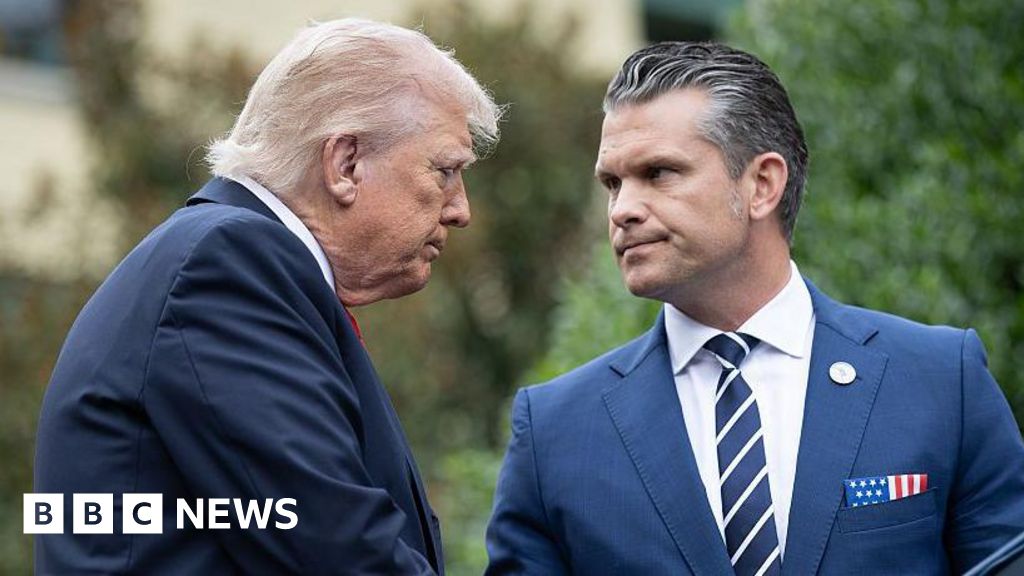
In a move that has sent ripples through the international geopolitical landscape, President Donald Trump and Defense Secretary Pete Hegseth convened a rare, high-level gathering of over 800 senior military officials at Marine Corps Base Quantico, Virginia. The significance of this assembly extends beyond the United States, as it signals a potential shift in America’s military posture amidst ongoing global tensions. The event, shrouded in secrecy and characterized by extreme security measures, marks an extraordinary departure from traditional military diplomacy, which routinely favours virtual meetings for logistical reasons.

This summit, initially met with skepticism and dismissed by Vice-President JD Vance as routine, has prompted analysis from military strategists and international observers alike. Giuseppe Cavo Dragone, the Italian admiral and chair of the NATO Military Committee, emphasized the unprecedented nature of the gathering, remarking that, in his 49 years of service, he had “never seen that before.” Meanwhile, Mark Cancian from the Center for Strategic and International Studies expressed puzzlement over the decision to hold such a large in-person event, considering the advances in digital communication. His theory suggests that Hegseth likely sought the tangible impact of face-to-face dialogue, which he believed could bolster military esprit de corps and national resolve in a period of mounting threats.

The geopolitical impact of this summit is multi-layered. On one level, it serves as an internal reinforcement of the U.S. armed forces, emphasizing a message of strength and unity in a volatile world. On another level, it raises questions about the direction of American military policy under the current administration, especially as global actors like Russia, China, and Iran continue advancing their strategic objectives. The presence of officers from Europe, South Korea, and the Middle East underscores a clear signal of preparedness and global reach. However, critics warn that such high-profile gatherings could escalate tensions, particularly if they are perceived as provocative or as a show of force rather than a genuine step towards diplomacy. Amidst the backdrop of historical destabilization, analysts like those from the United Nations suggest that decisions made today will reverberate for decades to come, shaping the balance of power and the destiny of multiple nations.

As history continues to unfold on this stage of global geopolitics, the implications of America’s military reaffirmation remain uncertain. What begins as a strategic display of unity might evolve into a defining moment of how nations interpret strength and resolve in the 21st century. The world watches with bated breath, knowing that each decision echoes across borders, determining the future trajectory of geopolitics, warfare, and diplomacy. In this complex theater of power, the weight of history persists, waiting for the pages to turn and reveal whether these moments of show of force will forge peace or ignite the flames of conflict in an already fractured world.

Social Media Auto Publish Powered By : XYZScripts.com