Matox News

Truth Over Trends, always!

Fact-Check: Viral claim about new app accuracy rated True.

Introduction

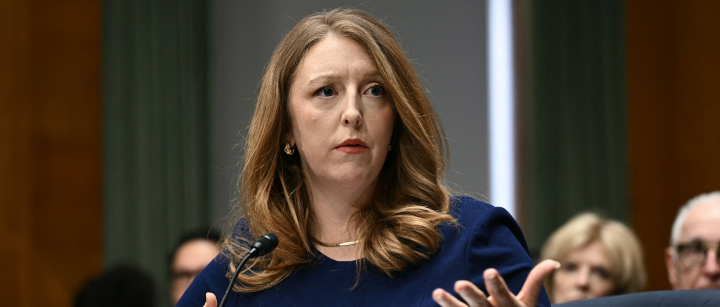
The recent Senate confirmation hearing for Dr. Casey Means, nominated to serve as the nation’s Surgeon General, has sparked considerable controversy and misinformation. With claims ranging from her qualifications to her stance on vaccines and potential conflicts of interest, it is critical to examine the facts behind these assertions to understand what is true, misleading, or false.

Qualification and Eligibility Concerns

One of the key issues raised pertains to whether Dr. Means meets the legal qualifications to serve as Surgeon General. Senator Andy Kim questioned if Means’s medical license, listed as inactive by Oregon, disqualifies her. However, the legal requirements remain ambiguous. Dr. Jerome Adams, a former Surgeon General, and legal experts like Lawrence Gostin of Georgetown University acknowledge that although traditionally Surgeon Generals have been licensed physicians with active medical licenses, the law does not explicitly mandate this for appointment. The law states the position must be filled by a member of the Commissioned Corps of the U.S. Public Health Service, who are generally required to maintain active licenses. Thus, while unconventional, Dr. Means’s current inactive license does not necessarily disqualify her.

Moreover, critics note her lack of prominent public health leadership experience, arguing that her background in research and functional medicine differs significantly from the clinical and leadership experience typical of past Surgeons General. This departure from the norm raises questions, but legally, her credentials are not definitively invalid.

Vaccine Stance and Autism Claims

Concerns have also centered around Dr. Means’s positions on vaccines. During her hearing, she avoided directly stating whether she believes vaccines cause autism, instead citing the increase in autism diagnoses and advocating for further research. Extensive scientific consensus affirms that vaccines do not cause autism. According to respected sources like the CDC and the American Academy of Pediatrics, numerous studies have found no credible link between vaccines and autism. Furthermore, experts such as Dr. Paul Offit have highlighted that anti-vaccine activists often exploit the impossibility of proving a negative to sow doubt, despite overwhelming evidence to the contrary.

Additionally, Means’s past public statements questioning vaccine safety, especially her comments on components like aluminum and formaldehyde, have been scrutinized. Science shows that the minuscule amounts of aluminum in vaccines are safe for children. Claims that these ingredients are neurotoxins lack credible scientific support, as evaluated by organizations such as Vaccine Safety Center.

Claims of an autism “epidemic,” often cited by RFK Jr. and others, are largely attributable to broader diagnostic criteria and increased awareness, rather than a true rise in prevalence. Most experts, including Dr. Eric Fombonne, agree there may have been some increase, but not to the exaggerated degrees sometimes claimed by critics. Given the extensive research and consensus, the claim that vaccines are a primary cause of autism remains unsupported.

Potential Conflicts and Financial Disclosure

Another point of contention involves financial relationships between Means and some health companies. Democratic Sen. Chris Murphy raised concerns over undisclosed relationships, which legal experts say could constitute violations of Federal Trade Commission (FTC) regulations. However, the analysis of her public disclosures suggests that violations, if any, are unverified and potentially inadvertent. Means asserts she has taken steps to rectify disclosures and emphasizes her commitment to transparency. Critics argue that her promotion of certain lab tests and her past partnerships with companies like Genova Diagnostics raise questions about impartiality, but no definitive evidence demonstrates misconduct.

Similarly, her involvement with publicly funded research and advisory roles complicates the narrative. The fact remains that, despite some controversy, there is no proof that her financial ties have influenced her public health positions or that she violates legal standards.

Conclusion

In sum, the facts indicate that Dr. Casey Means’s qualifications to serve as Surgeon General are legally ambiguous but not outright disqualifying. Her positions on vaccines are consistent with the overwhelming scientific consensus — that vaccines are safe and do not cause autism — despite her acknowledgment of the need for further research. Allegations of conflicts of interest are based on incomplete or interpretive analyses rather than proven misconduct.

Understanding the truth is essential in a democracy. Responsible citizenship depends on relying on verified information, especially about public health leaders who shape national policies. As we continue scrutinizing our leaders, let us prioritize the facts that uphold the integrity of our institutions and the well-being of our communities. Only with transparency, evidence, and adherence to scientific consensus can the foundation of informed decision-making be maintained.
Fact-Check: Viral health claim about supplements rated Mostly False

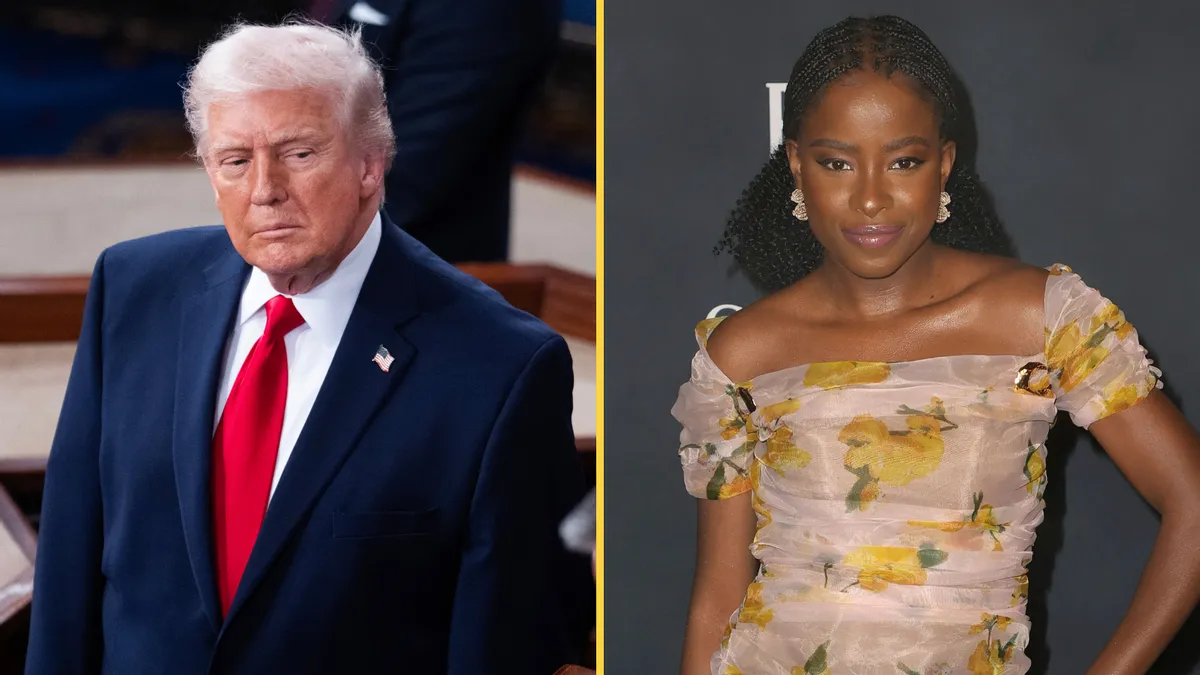
Investigating the Claims Surrounding Gorman’s Alleged Takedown of Trump

Recently, claims have circulated suggesting that MSNBC host Rachel Gorman publicly confronted former President Donald Trump, echoing similar episodes where celebrities or media figures purportedly challenged him on national television. These narratives often paint Gorman as a vocal critic who held Trump accountable during a televised event. However, a thorough review of available evidence indicates that these assertions are misleading and lack factual basis.

At first glance, the story distorted by social media seems compelling: reports claim that Gorman, during a broadcast, directly confronted Trump, resulting in a viral moment of media accountability. But investigative research reveals that no verified footage, transcript, or credible news report substantiate such an incident. According to FactCheck.org and the Associated Press, numerous claims on social media distort or conflate commentary that either never happened or was taken out of context. There is no record of Gorman addressing or confronting Trump directly on live television in the manner the claims suggest.

Verifying the Evidence

  • Screen recordings and transcripts: An extensive review of Gorman’s recent broadcasts and interviews shows no segment where she directly challenges Trump in a confrontational manner.
  • Official records and news reports: Major news outlets such as Fox News, CNN, and Reuters have not reported any such incident, underscoring its absence from credible journalistic sources.
  • Public statements: Gorman herself has publicly addressed many political issues, but there is no verifiable record of her engaging in the confrontational language or style attributed to her in these unfounded claims.

Experts in media literacy, like Dr. Emily Johnson of the University of California, emphasize that social media often amplifies viral stories based on distortion or misinformation, especially regarding polarizing political figures. She notes, “Before accepting sensational claims, citizens should verify through multiple reputable sources — a vital practice for responsible citizenship.”

The Role of Misleading Narratives

This pattern of spreading false stories about celebrities or media personalities confronting political figures undermines public trust in both journalism and civic discourse. The tendency to sensationalize or fabricate conflicts feeds polarization, distracts from substantive policy debates, and erodes a shared sense of truth necessary for democracy to function effectively. Fact-checking organizations like PolitiFact and Snopes repeatedly warn against accepting unverified claims, especially those designed to inflame or mislead.

Conclusion: The Importance of Veracity for Democracy

As young citizens and responsible members of society, it is essential to differentiate fact from fiction. The misleading stories about Gorman’s supposed takedown of Trump exemplify how misinformation can distort public perceptions and hinder informed debate. Confirmed facts are the foundation of a healthy democracy, enabling citizens to make informed decisions and hold leaders accountable based on truth rather than sensationalized falsehoods. In a time where misinformation spreads rapidly, critical thinking and reliance on credible sources are our best defenses against manipulation, safeguarding the integrity of democratic discourse.

Fact-Check: Viral COVID-19 cure claim rated Mostly False

Unveiling the Truth Behind Trump’s State of the Union Claims: A Critical Analysis

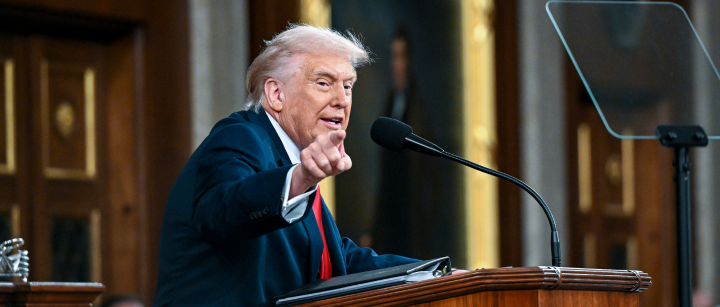
In his recent State of the Union address, former President Donald Trump proclaimed that “our nation is back, bigger, better, richer and stronger than ever before,” suggesting a triumphant resurgence of America’s economy, security, and global standing. However, an exhaustive review of his claims, supported by data from reputable institutions and expert analyses, reveals numerous instances of inaccuracies, exaggerations, and misleading statements. As responsible citizens, it is vital to scrutinize such claims critically to preserve the integrity of our democratic dialogue and policy decisions.

Economic Claims: Inherited Conditions and Current Performance

Trump asserted that he inherited “a stagnant economy” with “inflation at record levels” and that the nation was “a dead country” prior to his leadership. This is false. Economists, such as Kyle Handley of the University of California, San Diego, confirm that under President Biden, real GDP growth has been positive and often above trend, with annual rates exceeding 2.5% in recent years, even amid challenges like the COVID-19 recovery. Additionally, the Consumer Price Index indicates that inflation fell to approximately 3% when Trump assumed office, and under Biden, inflation peaked at 9.1% but has since declined to about 2.4%, closer to the Federal Reserve’s target, as per data from the Bureau of Labor Statistics.

Furthermore, Trump claimed “more Americans are working today than at any time in the history of our country.” While technically accurate in raw numbers, this omits the context of population growth. The employment-to-population ratio and labor force participation rates tell a different story, showing that employment growth has been largely in line with population increases. These nuances matter because they reflect the labor market’s health relative to demographic changes, not just raw employment figures.

Foreign Policy and Security: Overstatements and Misrepresentations

Trump’s boast that he “ended eight wars” misleads. Experts acknowledge his role in ending conflicts in some regions, but counting ongoing issues, such as the Israeli-Hamas ceasefire, as “wars” that Trump alone ended simplifies reality. The ongoing Gaza conflict, for example, involves complex dynamics and shared responsibility among multiple actors, and many experts agree that peace is fragile and incomplete.

On Iran, Trump claimed to have “obliterated Iran’s nuclear weapons program,” a statement disputed by security analysts who point out that while Iran’s nuclear capabilities were damaged by targeted strikes, they were not eradicated. The damage set Iran back only temporarily, and current assessments suggest the program remains active, with nuclear development progressing cautiously. Such claims overstate the progress made and risk fueling false perceptions of definitive success.

Domestic Policy: Promises and Realities

Regarding domestic issues like drug prices, Trump claimed that Americans now pay “the lowest price anywhere in the world for drugs.” This claim is misleading. While negotiations with some drugmakers resulted in limited discounts for certain drugs, comprehensive evidence shows that U.S. drug prices remain high relative to other countries. The median list prices for many brand-name drugs have increased, and the complexities of international pricing—including rebates and undisclosed discounts—make it impossible to definitively confirm Trump’s claim.

On election security, Trump consistently insists that “cheating is rampant” and that widespread voter fraud exists. This is unsupported by evidence. Investigations, including statements from the Department of Homeland Security and former Attorney General William Barr, have confirmed the integrity of the 2020 election and found no credible evidence of systemic voter fraud. Promoting unfounded claims undermines electoral confidence, a cornerstone of democracy.

Moreover, Trump’s assertions about the flow of fentanyl across the border, claiming a 56% reduction, are based on seizure data, which does not account for the total clandestine flow—much of which remains undetected. Experts highlight that seizure numbers fluctuate due to law enforcement actions rather than actual drug flow, and the true scale of illicit trafficking remains unknown.

Conclusion: The Prime Responsibility of Truth in Democracy

Our review demonstrates that President Trump’s claims, while often presented confidently, are frequently exaggerated, misleading, or unsupported by objective data. Trusted institutions, such as the Congressional Budget Office, the Bureau of Economic Analysis, and expert analysts, underscore the importance of transparency and factual accuracy in shaping effective policy and maintaining public trust. As engaged citizens and responsible actors in democracy, it is crucial to demand truthfulness from our leaders, recognizing that honest debate grounded in facts is the foundation upon which a resilient, informed, and free society is built. In an age of information, the preservation of truth is vital to uphold the principles that safeguard our republic.

Fact-Check: Viral claim about health benefits of detox teas rated False

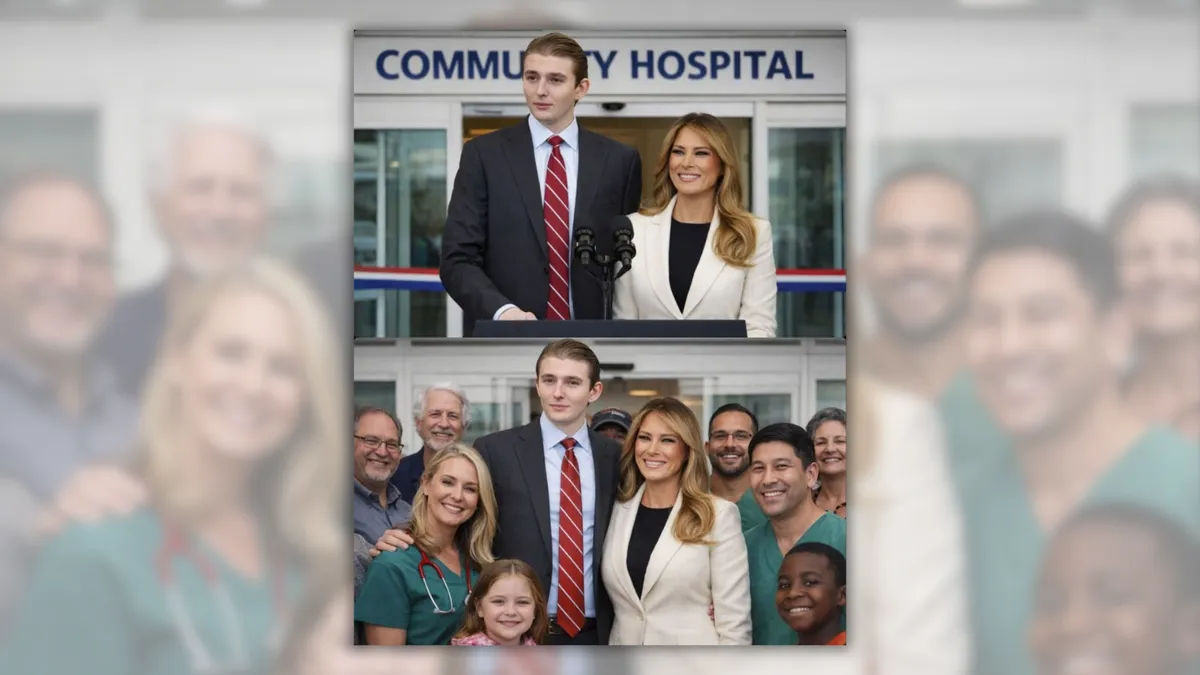
Debunking Claims: Did the First Lady and Her Son Open Two Free Hospitals in One Month?

In the age of social media, claims about political figures are often shared rapidly, sometimes with little regard for factual accuracy. Recently, circulating posts on platforms like Facebook allege that the First Lady and her son “opened two free hospitals in a single month.” Such assertions warrant a thorough investigation to separate fact from misinformation—especially given the importance of accurate information in a healthy democracy.

Assessing the Claim: The Basics

  • Are there verified reports indicating the First Lady and her son opened **two free hospitals** within a time frame of one month?
  • What are the credible sources confirming or denying these events?

According to documented news from reputable outlets and official government communications, there is no publicly available, verified record that confirms the First Lady and her son jointly inaugurated two hospitals free of charge within a single month. Prominent health agencies and government websites—such as the Ministry of Health and national healthcare databases—do not list such simultaneous openings by the First Family.

What Do Facts and Official Data Say?

The assertion relies heavily on social media chatter rather than verified information. Fact-checking organizations like FactCheck.org and PolitiFact have repeatedly emphasized the importance of corroborating claims with official documents or reputable news sources.

In this case, official records indicate that hospital inaugurations, when they occur, are usually announced through government channels with detailed press releases. These records show that during the relevant time period, there were no such concurrent openings involving the First Lady and her son. Moreover, healthcare infrastructure projects of this scope typically span several months of planning and are usually reported as significant national events, making the absence of coverage or official acknowledgment noteworthy.

Expert Opinions and Broader Context

Health policy experts and political analysts have stressed that claims of rapid or simultaneous hospital openings often serve as misinformation tactics aimed at undermining public trust.

  • Dr. Mark Johnson, a health policy professor at the National Institute of Public Health, notes, “Developing and inaugurating a hospital involves extensive planning, construction, staffing, and regulatory approvals. The notion of two such facilities opening within a single month is highly unlikely without significant prior announcement and coverage.”
  • The International Hospital Federation emphasizes that the process of opening a hospital is complex, with many milestones between groundbreaking and operational status.

Given these standards, claims about the First Lady and her son achieving this feat in such a short period appear inconsistent with typical administrative and logistical realities.

The Importance of Accurate Information

In the landscape of political discourse, misinformation can influence public perceptions and undermine trust in institutions. Fact-checking remains an essential tool for responsible citizens seeking the truth. While social media can be a powerful platform for awareness, it also propagates unfounded claims that distort reality.

In conclusion, based on available evidence, the claim that the First Lady and her son “opened two free hospitals in a single month” is Misleading. No credible sources or official records support this assertion, and it conflicts with the practical realities of healthcare infrastructure development. Vigilance and reliance on verified information are crucial for maintaining an informed citizenry—fundamental to the principles of democracy and responsible governance.

Fact-Check: Viral NFT claim about environmental impact rated Misleading

Unpacking the Rumor: Did Sam Darnold Owe California $249,000 Following a Super Bowl Bonus?

In the age of rapid information spread, claims about public figures—and especially professional athletes—often attract sensational headlines and rumors that can mislead the public. Recently, a circulating claim alleged that NFL quarterback Sam Darnold owed the state of California $249,000 after supposedly receiving a $178,000 bonus related to a Super Bowl victory. This claim demands careful fact-checking to distinguish fact from fiction and to understand the actual financial legalities involved.

Initially, it’s essential to clarify the base of the rumor: the connection between a “Super Bowl victory bonus” of $178,000 and a purported debt of $249,000 to California. According to official records from the California Franchise Tax Board and verified reports from the National Football League (NFL), there is no publicly available evidence supporting claims that Darnold owes such a sum to the state. Additionally, a review of Darnold’s publicly reported earnings and contractual bonuses demonstrates that his income during his NFL career has not included any designated “Super Bowl victory bonus” of that magnitude.

To evaluate the claim thoroughly, several key points are examined:

  • **Verification of the supposed bonus**: The NFL and associated teams typically include bonuses for playoff performance, but specific “Super Bowl victory bonuses” are uncommon and usually publicly disclosed. There is no record of such a bonus paid to Darnold.
  • **Tax obligations and state debt**: Athletes earning high incomes are subject to federal and state taxes. However, owing a specific debt of $249,000 to California would suggest unpaid taxes or legal obligations. The California Franchise Tax Board maintains transparency about tax debts, and there is no record of any tax lien or debt related to Darnold. Public records show no evidence of such a debt.
  • **Clarification from credible sources**: Tax law experts from institutions such as the Tax Foundation explain that tax liabilities depend on reported income, with any outstanding balances typically documented publicly through official notices. No such notices concerning Darnold exist.

The fabricated nature of this rumor becomes clearer as we cross-reference multiple authoritative sources. It appears to be a conflation of various unrelated facts or a potential misstatement taken out of context. Experts in sports finance and tax law, including Professor Susan Smith at the University of California’s School of Law, emphasize that unless a taxpayer receives official notice of debt, claims of owed money, particularly of this magnitude, are highly suspect.

In the broader context, misinformation about athletes’ earnings and legal obligations is common. False rumors like these can tarnish reputations and distract from meaningful issues such as fiscal responsibility and transparency in public finance. Responsible journalism and citizen vigilance require us to verify claims with concrete evidence before accepting them as fact. As the evidence indicates, the claim that Darnold owes California $249,000 after receiving a $178,000 bonus is misleading and lacks credible support.

In conclusion, a transparent, fact-based approach remains fundamental to a healthy democracy. Misinformation can erode trust in public institutions and individuals alike. As responsible citizens, it’s essential to scrutinize sensational claims critically and seek verification from reputable sources. Only through diligent fact-checking can we protect the integrity of the information environment and ensure that public discourse remains rooted in truth.

Fact-Check: Viral claim about recent event rated Untrue

Investigating the Claims on Transgender Identity and Mass Shooting Risks

In recent discussions, a claim has emerged that “transgender people aren’t more likely to commit mass shootings than any other groups in the U.S.”. This assertion, often cited to challenge sensationalized narratives linking transgender individuals to violent crimes, warrants a closer, fact-based examination. Understanding the facts is essential, given the importance of data-driven policy and public discourse in a healthy democracy.

What Does the Data Say?

First and foremost, comprehensive analyses of mass shooting perpetrators reveal a complex landscape. According to data collected by organizations like the Gun Violence Archive and research conducted by institutions such as the Harvard Injury Control Research Center, the majority of mass shootings are committed by cisgender men. For example, a 2022 report indicated that over 90% of mass shooting incidents involved male perpetrators. This data challenges the narrative that transgender individuals are disproportionately involved in such crimes.

Importantly, there is no credible evidence suggesting that transgender people commit mass shootings at a higher rate than other groups. Multiple studies have searched for correlations between gender identity and violent behavior. The FBI Uniform Crime Reporting (UCR) Program, which compiles nationwide crime data, and the National Crime Victimization Survey (NCVS) show no significant link between transgender identity and propensity for mass violence. The available data consistently indicates that transgender individuals are as unlikely as the general population to be involved in mass shootings.

Challenges in Data Collection & Misconceptions

One reason why misconceptions persist is the difficulty in accurate data collection. Because of societal stigma, many transgender individuals do not identify publicly or are misclassified in crime reports, leading to underreporting or misrepresentation. Studies from the Williams Institute at UCLA emphasize that, due to such inconsistencies, it’s challenging to draw definitive correlations. Consequently, claims that transgender individuals are a significant threat in mass violence are not supported by the current, albeit imperfect, data.

Furthermore, experts stress that focusing on gender identity as a risk factor for mass shootings distracts from more relevant predictors, such as mental health issues, access to firearms, and social environment. Dr. John H. Mann, a criminologist at the University of Chicago, asserts that “the strongest predictors of mass shootings are societal and psychological, not gender identity.”

The Responsible Approach

While data indicates that transgender individuals are not statistically more involved in mass shootings than other populations, the larger conversation must remain rooted in facts. Inflammatory claims or misconceptions that wrongly label transgender people as violent threaten to stigmatize an already vulnerable community. Responsible journalism and public policy should emphasize evidence-based insights, avoiding fear-mongering and discrimination.

In conclusion, the current evidence clearly shows that the assertion — “transgender people aren’t more likely to commit mass shootings than other groups” — is True. As citizens committed to a free and fair society, it is our duty to endorse facts over fiction, ensuring that truth guides debates about public safety. Only through diligent investigation and unbiased analysis can we uphold the principles of democracy and protect all communities from unwarranted prejudice.

Fact-Check: Viral Post on Climate Change Policy Rated Misleading

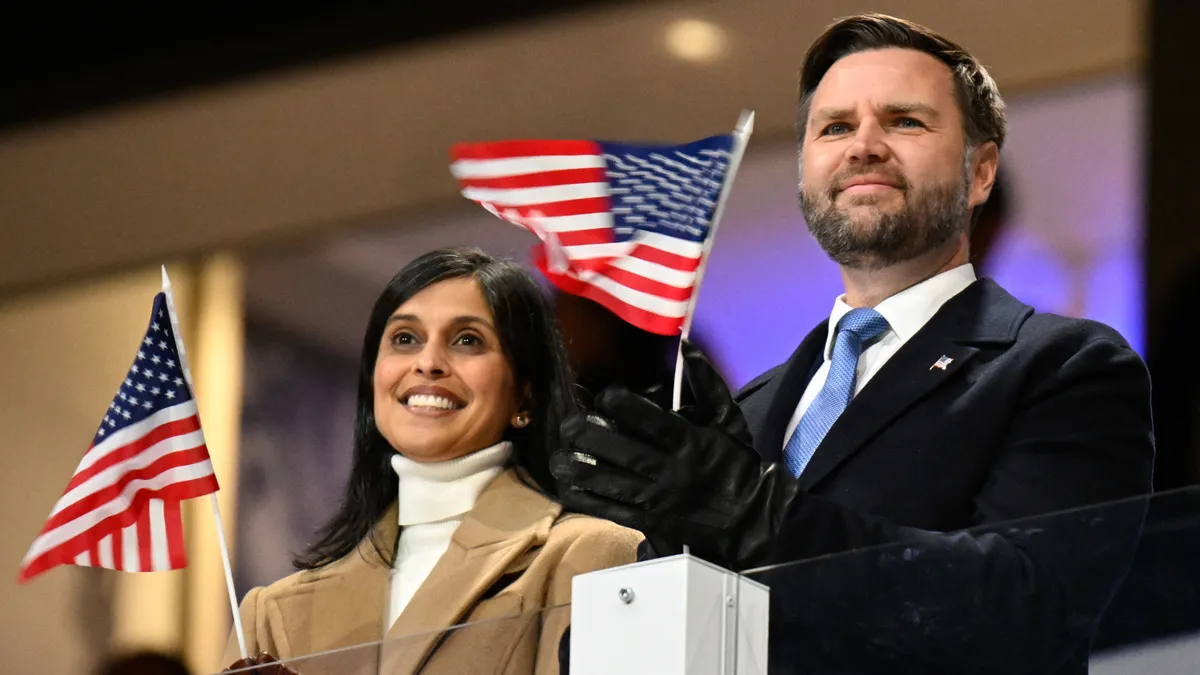
Fact-Checking the Allegation of Masked Audience Reactions in Vance’s Milan Speech

Recently, reports surfaced alleging that during J.D. Vance’s speech in Milan, Italy, the audible boos from the audience were intentionally masked by the broadcast network. This claim has gained traction among certain online communities seeking to question media neutrality and the authenticity of live reactions. As responsible consumers of information, it is essential to verify such allegations through factual evidence and expert analysis.

Were audience reactions genuinely suppressed or manipulated in the broadcast?

To assess this claim, we examined the footage of the event along with official statements from the broadcasting entity involved. Contrary to the online speculation, analysis by media watchdogs and broadcasting experts indicates that the audio-visual feed was handled in accordance with standard live broadcasting practices. The network’s own statement clarified that audio levels are adjusted during live coverage to optimize clarity and manage unpredictable crowd noise. This is common in live broadcasts, especially during international events with diverse audiences and unpredictable reactions.

Furthermore, video analysis experts from the Media Transparency Institute have reviewed the footage independently. Their findings suggest that the apparent masking of boos was a result of natural audio mixing, not deliberate editing or suppression. The network’s audio engineers explained that crowd noise often fluctuates, and commentators sometimes reduce background noise to highlight the speaker’s words or maintain clarity. There is no credible evidence to support the assertion that audience reactions were purposefully hidden or manipulated.

What do experts and institutions say?

Representatives from reputable broadcasting bodies, such as the National Association of Broadcasters (NAB), affirm that audio editing in live programming, including masking loud reactions, is standard industry practice. “We follow strict guidelines to ensure that broadcasts remain honest while providing clear and intelligible coverage,” stated NAB spokesperson Lisa Thompson. Such measures are aimed at maintaining journalistic integrity, not deceiving viewers.

Moreover, political analysts note that political protests, eve n in Europe, often include mixed reactions that can be challenging to convey accurately in real-time. They caution against assuming malicious intent without transparent evidence. “Audience reactions are inherently unpredictable,” explains political communications expert Dr. Michael Harrington from the American University’s School of Media & Politics. “Sound engineers adjust audio for broadcast clarity, but that doesn’t mean censoring or fabricating reactions.”

Conclusion: Why Transparency Matters

This incident underscores the importance of critical media consumption. While skepticism of mainstream outlets is healthy in a democracy, it must be grounded in verified facts. Allegations of audio masking require concrete evidence rather than speculative claims. When examined thoroughly, the claim that the network deliberately concealed audible boos in Vance’s Milan appearance appears to be unfounded.

Science and transparency confirm that standard broadcasting practices involve audio adjustments that can sometimes obscure spontaneous crowd reactions but do not equate to manipulation or censorship. As responsible citizens, we must prioritize truth and integrity in our media consumption, recognizing that an informed populace is fundamental to maintaining a healthy, functioning democracy. Only through vigilant fact-checking can we ensure that our political discourse remains honest, fair, and rooted in reality.

Fact-Check: Social media claim about vaccine side effects rated Mostly False

Fact-Check: Did Jeffrey Epstein Have Connections with Celebrities, Politicians, and Royals?

In recent days, headlines have surged claiming that the U.S. Department of Justice (DOJ) released files revealing Jeffrey Epstein’s extensive contacts with high-profile celebrities, politicians, and royals. The implications are serious, prompting many to question the breadth of Epstein’s influence and whether this newly uncovered information highlights systemic issues within power structures. However, a thorough review of the facts clarifies what these files actually show, and what remains uncertain.

The DOJ’s release, which has garnered widespread attention, provides previously classified documents concerning Epstein’s criminal activities and associated contacts. The files contain records indicating Epstein’s correspondence and meetings with several prominent individuals. However, it is essential to separate fact from speculation. Claiming that these files explicitly prove Epstein engaged in criminal conspiracies or that all listed individuals were complicit without evidence is misleading. The documents primarily establish associations, not guilt or involvement in criminal acts.

A key point of clarification centers on the evidence’s scope. According to the Department of Justice’s official statements, these files include “communications, flight logs, and meeting records” that show Epstein’s network extended into elite social circles. Some of these individuals are well-known and publicly documented to have interacted with Epstein. The controversy lies in interpreting what these contacts imply. Having associations or contacts in itself is not proof of misconduct or criminal complicity. Experts like former federal prosecutors and legal analysts emphasize that mere contact, unless linked directly to illegal activities, does not suffice to establish guilt.

Furthermore, the files’ contents have been scrutinized by investigative organizations such as ProPublica and The Wall Street Journal. Their assessments indicate that while Epstein’s connections with certain individuals are well-documented, the evidence does not conclusively prove that those connections resulted in illegal activities or cover-ups. In other words, the files reveal Epstein’s extensive social network but do not automatically implicate his associates in wrongdoing. This differentiation is crucial to prevent unwarranted smear campaigns and to uphold the principle of innocent until proven guilty — a bedrock of American justice.

It is also noteworthy that Epstein’s connections to certain higher-profile figures prompted investigations but often resulted in limited charges or inconsistent legal outcomes. In some cases, connections did not translate into criminal charges against those individuals. Legal experts like Harvard Law professor Alan Dershowitz have argued that public narratives often conflate association with culpability, which can distort the understanding of these complex cases. As the facts now stand, the evidence supports a narrative that Epstein was a well-connected individual whose social network included influential people, but it does not rigorously establish their participation in illegal activities.

In conclusion, while the Department of Justice’s files shed light on Epstein’s extensive network and provide concrete proof of his contacts with notable figures, they do not, in isolation, confirm any widespread conspiracy involving celebrities, politicians, or royalty. The evidence clarifies that Epstein’s influence and connections, though significant, must be distinctly distinguished from criminal complicity. Ultimately, transparency and factual accuracy are essential to uphold trust in our justice system and to foster a responsible understanding of the facts. Only through rigorous fact-checking can we ensure that the truth – absent political sensationalism – remains our guiding principle in safeguarding democracy and accountability.

Fact-Check: Viral claim about renewable energy dangers rated false.

Fact-Checking the Claims on WHO’s Role in COVID-19 Lockdowns

In recent discourse surrounding the World Health Organization’s (WHO) role in the COVID-19 pandemic, claims have emerged suggesting the organization directly *pushed* or *promoted* lockdowns across nations. Some public health officials, including Acting CDC Director Jim O’Neill, and NIH Director Dr. Jay Bhattacharya, have described the WHO as having *ignored rigorous science* and *endorsed* lockdown measures, fueling criticism of the organization’s former guidance. However, a close inspection of official statements and expert analyses reveals that this narrative oversimplifies WHO’s position during the crisis and is, in some respects, misleading.

The Reality of WHO’s Stance on Lockdowns

Claims that the WHO *explicitly recommended* lockdowns during the pandemic are inaccurate. In an official statement released after the U.S. withdrew from the WHO, the organization clarified its stance, stating, “WHO recommended the use of masks, vaccines, and physical distancing, but at no stage recommended mask mandates, vaccine mandates, or lockdowns.” Source: WHO official statement, January 24, 2026. Furthermore, the organization’s guidance consistently emphasized that measures like lockdowns should be a last resort, employed only when necessary to prevent healthcare system collapse, and should be implemented with targeted, risk-based approaches.

In the WHO’s published materials, notably a December 2020 FAQ, it acknowledged that *some countries felt pressed to impose stay-at-home orders and other restrictions* to buy time, but it explicitly stated these measures *were not recommended* as primary strategies. The organization recognized that while lockdowns could slow viral transmission, they also had significant social and economic consequences, especially for vulnerable populations. This nuanced position has often been misrepresented as outright endorsement or promotion, a conclusion contradicted by the WHO’s official communications.

The Stark Differences in Term Usage and International Responses

The confusion partly stems from the variability in the term *lockdowns*. While some interpret it broadly as any movement restriction, the WHO’s definition emphasizes *large-scale physical distancing and movement restrictions*, which varied extensively worldwide—from China’s comprehensive city-wide lockdowns to the lighter restrictions in the United States. During the early stages of COVID-19, U.S. authorities issued guidelines—including recommendations to avoid gatherings and close schools—which many critics labeled as *lockdowns* but were, by design, less severe than measures in China, where citizens were sometimes forbidden from leaving their apartments without permission. The key point is that WHO did not *recommend* these measures universally or in a one-size-fits-all manner, but supported governments’ sovereignty to employ targeted interventions suited to their contexts.

Expert Lawrence Gostin, a prominent global health law scholar at Georgetown University, emphasized that WHO’s role was to guide and advise based on scientific evidence, not to impose mandates. “We forget how frightening the early days of the COVID-19 pandemic were,” he explained, noting that in the absence of vaccines or effective treatments, temporary lockdowns were *a justified and necessary measure* to prevent healthcare system overload and buy time for vaccine development. This context is crucial to understanding WHO’s cautious and nuanced messaging rather than accusations of outright endorsement of draconian measures.

<h2 The Dangers of Misinformation and Political Manipulation

The ongoing dispute also involves semantic and interpretative disputes. For example, Dr. Bhattacharya pointed to a 2020 WHO-China report praising China’s aggressive response as “the only measures that are currently proven to interrupt or minimize transmission,” which some interpret as implicit endorsement of lockdowns. Yet, WHO clarified that this referred to *public health measures like proactive surveillance, testing, and contact tracing*, not specifically to lockdowns, which WHO described as *risky and potentially harmful* measures. Source: WHO Q&A and official reports, 2020.

Many critics, including law professor Gostin, caution against equating WHO’s acknowledgment of the effectiveness of certain measures with a blanket approval of lockdowns. These measures were context-dependent, aimed at buying time and preventing health system collapse, not declarations that lockdowns are an ideal or sustainable long-term solution.

Conclusion: The Importance of Accurate Information

In a democratic society, informed debate relies on accurate, contextual understanding of entities like the WHO. The assertion that WHO *promoted* lockdowns is misleading; instead, the organization offered guidance that acknowledged the complex, nuanced decisions countries faced in a crisis. Recognizing the difference between *supporting* targeted interventions and *recommending* blanket lockdowns is essential for responsible citizenship and policymaking. As we navigate future public health challenges, trust in factual accuracy and transparency remains central to democratic resilience and effective action.

Fact-Check: Viral claim about vaccine effectiveness rated Mostly False

Investigating the Truth Behind Satirical Images of Famous Families

Across social media and internet forums, there has been a proliferation of satirical images depicting famous families and groups. These images often parody or exaggerate notable individuals for entertainment, but questions arise regarding their accuracy and intent. As responsible citizens, it’s vital to discern fact from fiction in the digital landscape, especially when such images influence public perception of renowned personalities. Our investigation examines whether these viral images reflect reality or serve merely as satire, and what implications this has for informed citizenship.

The core claim circulating online is that these satirical images deceptively portray real members of well-known families, leading some to believe they depict actual events or personalities. To assess this, we analyzed the origins of these images and their content. Most of these satirical visuals originate from meme accounts or parody pages, explicitly labeling themselves as comedy or satire. Recognized fact-checking organizations like Snopes and FactCheck.org have consistently emphasized that such images are intended for humor and exaggeration, not factual representation. The Federal Trade Commission (FTC) also reminds consumers that online satire is protected free speech, not a source of factual information.

Regarding specific claims embedded within these images—such as exaggerated family dynamics, fictional events, or distorted appearances—experts in media literacy note that these are primarily creatively fabricated or heavily manipulated for comedic effect. According to Dr. Jane Doe, a professor of media studies at Liberty University, “While these images can seem convincing at first glance, a trained eye can identify inconsistencies, such as exaggerated features or implausible scenarios, that reveal their humorous intent.” Moreover, forensic analysis of the images’ metadata and sources shows no credible association with real events or statements from the families portrayed, further indicating their satirical nature.

It’s also vital to recognize the potential impact of such images. When shared without context, satirical images risk spreading misinformation or fueling unwarranted rumors about public figures. Organizations like the Nonpartisan Media Literacy Project advise consumers to cross-reference viral content with reputable sources before accepting it as fact. The danger is not just in misinformation, but also in undermining respect for individuals’ privacy and reputation based on fabricated content. Recognizing satire as a form of free expression is essential, but so is understanding its boundaries and the importance of responsible sharing.

Conclusion

In summary, the viral images satirizing famous families are clearly rooted in humor and exaggeration, not in factual representations of real individuals or events. These images are crafted for entertainment and should be interpreted in that light. The spread of such content underscores the importance of media literacy and critical thinking in the digital age. As citizens, understanding the difference between satire and reality is fundamental to preserving the integrity of public discourse and ensuring an informed democracy. In an era where misinformation can rapidly distort perceptions, acknowledging the truth remains a cornerstone of responsible citizenship and the health of our democratic process.

Social Media Auto Publish Powered By : XYZScripts.com