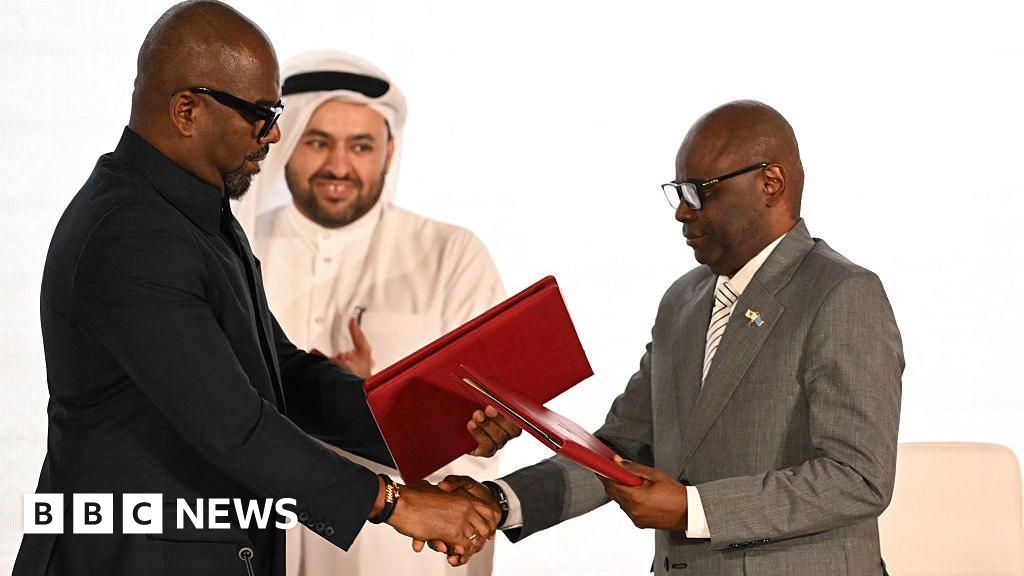

The recent signing of a framework for peace between Rwandan-backed M23 rebels and the government of Democratic Republic of Congo marks a significant, albeit tentative, turning point in one of Africa’s most complex conflicts. The peace ceremony held in Qatar underscores the growing international effort to broker stability in the resource-rich eastern region, which has long been a hotspot of violence and chaos. This development is particularly noteworthy given the regional history of insurgency, ethnic tensions, and geopolitical maneuvering, with global powers including the United States and the African Union actively engaging behind the scenes. The peace process, which builds on recent agreements in Doha, signals an evolving approach to conflict resolution that prioritizes diplomatic negotiations over military solutions.
The conflict’s roots extend deep into ethnic and political divides, compounded by competition over mineral resources critical to global industries, especially electronics. Earlier this year, the M23 rebels captured major cities like Goma and Bukavu, effectively disabling the Congolese government’s control over the region. Despite multiple efforts to establish peace, previous agreements have failed, and violence has persisted, with *thousands killed* and *hundreds of thousands displaced*. The new framework aims to address core issues such as humanitarian access, the return of displaced populations, and the disarmament of rebel factions like the FDLR, a militia linked to the 1994 Rwandan genocide. Such measures are crucial, not only for restoring order but also for pacifying a region that’s been destabilized for decades, thereby impacting the broader geopolitics of Central Africa.
At the heart of the dispute lies tension over Rwandan troop presence in eastern Congo. Kinshasa demands a full withdrawal of Rwandan forces, which Kigali counters by insisting that this can only occur once the disbandment of the FDLR rebel group is complete. This stance highlights the intertwined nature of regional security, ethnicity, and control over mineral wealth. The analysis by international security experts suggests that such disagreements threaten to undermine fragile peace efforts if not managed carefully. The geopolitical impact extends beyond mere border disputes; it influences the control of vital mineral resources like coltan, which is indispensable for modern electronics. As US envoy Massad Boulos noted, most protocols still require fine-tuning, but the mere existence of a framework signifies a crucial shift towards diplomacy after years of failed ceasefires and battlefield setbacks.
Ultimately, the unfolding conflict in eastern DR Congo serves as a stark reminder of the high stakes involved—not just for the local population but for global markets and international stability. The region’s earliest history, marked by ethnic divisions and colonial legacies, continues to influence current negotiations. While the world watches as historic peace accords attempt to tame chaos, the shadows of unresolved grievances and regional ambitions loom large. As the negotiations proceed, the weight of history presses heavily upon the shoulders of leaders, analysts, and ordinary citizens alike. The question remains: will peace endure, or will this fragile agreement be yet another chapter in a long, tragic saga of missed opportunities? The story of eastern Congo is still being written, and the pages yet to come will determine whether this moment signals a new dawn or if history’s relentless cycle of conflict will continue to unfold, leaving its indelible mark on Africa’s heartland and the world beyond.