Matox News

Truth Over Trends, always!

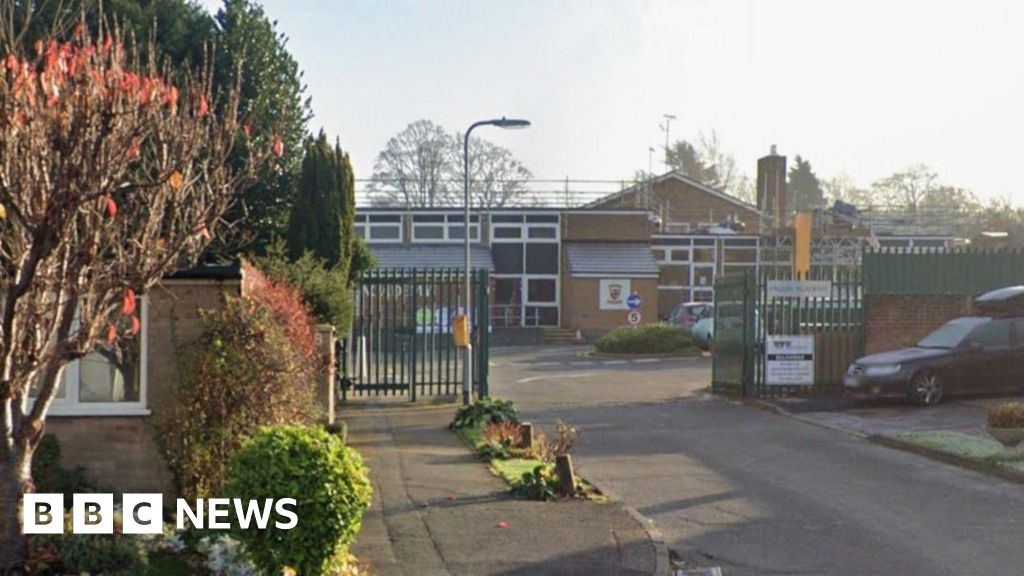
Wellingborough teacher loses license after reckless drinking and driving incident at school gates

Community Trust and the Fragility of Education Governance

Recent incidents at schools across communities reveal unsettling breaches of trust that threaten the integrity of our education system. Particularly, the case of Michelle Stant, a former teacher at Friars Academy, underscores how social issues such as substance abuse and misconduct can have devastating repercussions, not only for the individual involved but also for the families and students who rely on a safe, disciplined learning environment. The misconduct panel’s decision to impose an indefinite ban on Ms. Stant’s teaching license highlights the grave consequences that failure of moral judgment can inflict upon the fabric of our schools.

The ripple effects on families and the broader society

Recognized social theorists like Charles Murray have long emphasized the importance of stable social institutions—particularly families and schools—in shaping responsible citizens. When educators, entrusted with nurturing future generations, fall into misconduct, the societal fabric frays. The case of Ms. Stant, who acknowledged drinking on the job and even drove her vehicle into school property, illuminates how individual moral lapses can undermine the trust necessary for effective community functioning. Families are directly affected as their children’s safety becomes compromised, and the ripple effect can lead to increased societal disillusionment and a decline in communal cohesion.

Challenges and pathways toward accountability and renewal

  • Strengthening teacher support systems to detect burnout and mental health issues before misconduct occurs.
  • Implementing robust oversight procedures, including random alcohol testing and reflective assessments.
  • Fostering a culture of accountability within school institutions, supported by community engagement.
  • Encouraging moral and ethical training that emphasizes values-based education as a core element of professional development.

Academic voices like Dr. Christopher Lasch warn that societal decline often begins with the erosion of moral standards within key institutions. As the education sector faces these crises, the question remains: How can schools rebuild trust when trust has been eroded? The answer lies in comprehensive reforms that prioritize ethical integrity, community involvement, and transparent accountability. While social tensions persist, history teaches that such crises also offer opportunities for renewal and societal growth. Educators and communities must stay vigilant, embracing the challenge of restoring dignity to our schools, so that the next generation can learn not only from textbooks but also from the moral courage of their teachers.

A society’s hope lies beyond the horizon

As society navigates this complex landscape of moral lapses and social tensions, it is imperative to remember that the societal fabric is woven from the threads of individual virtue and collective responsibility. Addressing the challenges revealed by incidents such as Ms. Stant’s requires more than punitive measures; it demands a renewed grasp of shared values, moral renewal, and societal commitment to building resilient communities. Only then can we hope that our institutions—especially those tasked with shaping the minds and morals of future generations—will once again serve as bastions of integrity and hope.
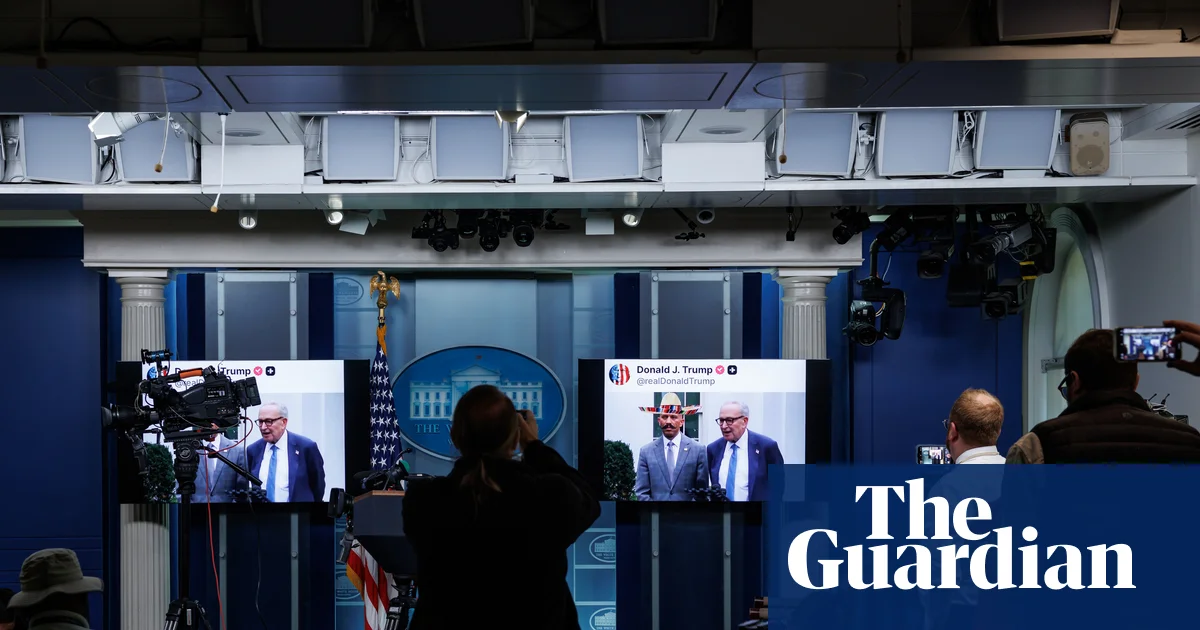
White House loops racist deepfake of Dem leaders—Trump admin’s reckless stunt

In a disturbing display of the current state of American politics, the White House recently became a stage for a provocative propaganda campaign that underscores the deep divisions threatening the nation’s stability. On Wednesday, the briefing room was inundated with circulating deepfake videos mocking Democratic leaders, with content that is as divisive as it is racially charged. These fabricated clips, posted by President Trump, distort reality by falsely portraying Senate Minority Leader Chuck Schumer and Hakeem Jeffries as endorsing racist stereotypes, with Schumer allegedly calling Democrats “woke pieces of shit” and Jeffries portrayed wearing stereotypical Mexican attire. Such weaponization of misinformation not only diminishes the dignity of American political discourse but also fuels dangerous narratives that have historically led to violence and societal fracturing.

Beyond the rhetoric and propaganda, these events reveal a pattern that analysts see as emblematic of the broader geopolitical impact of American internal conflicts. The use of such racist narratives echoes historical conspiracy theories, notably the “great replacement” theory, which has been repeatedly linked to violent acts by white supremacists. This conspiracy—at the core of several mass shootings and racial pogroms—used fear-mongering to justify acts of terror, emphasizing the perceived threat of immigrant populations replacing white citizens. The rhetoric, amplified by social media and political figures alike, risks diminishing America’s standing as a beacon of democracy and tolerance in the eyes of the world. Such divisiveness, when internalized and exported, weakens international confidence in the stability and moral authority of the U.S. government, which can have ripple effects across markets, alliances, and diplomatic relationships.

Meanwhile, critics argue that the White House’s approach to the ongoing government shutdown is mired in irresponsible tactics that undermine genuine negotiation efforts. As the deadlock continues, key issues—such as immigration, healthcare, and economic stability—remain unresolved. The administration’s framing of Democrat policies as conspiratorial attempts to favor illegal immigration disproportionately stokes nativist fears, even as the factual basis remains misplaced. According to prominent international organizations and independent analysts, such inflammatory tactics threaten the international reputation of the United States as a democratic leader committed to rule of law and human rights. Ever more, the world looks to what happens within the U.S., recognizing that internal turmoil can quickly spill into global instability, especially in an era marked by geopolitical rivalry with China, Russia, and rising authoritarian regimes.

The recent provocations at the White House serve as a stark reminder of how decision-makers’ rhetoric can shape, or distort, the historical narrative unfolding across borders. As historians and international think tanks assess the trajectory of American politics, the emerging picture suggests a nation grappling with its identity amidst internal conflict and external pressure. The consequences of these divisions extend beyond mere politics—they threaten to redefine the post-World War II order, challenging longstanding alliances and forcing nations worldwide to reconsider their perceptions of U.S. leadership. In a world increasingly defined by chaos and uncertainty, the true weight of history looms large—an unyielding reminder that the choices made today will reverberate through generations, shaping the destiny of nations and society as a whole. As the spectacle unfolds, it leaves the impression that, in this moment, the United States stands at a crossroads—its decisions setting the stage for what will be written into the annals of history, with the future hanging precariously in the balance.

Social Media Auto Publish Powered By : XYZScripts.com



