Matox News

Truth Over Trends, always!

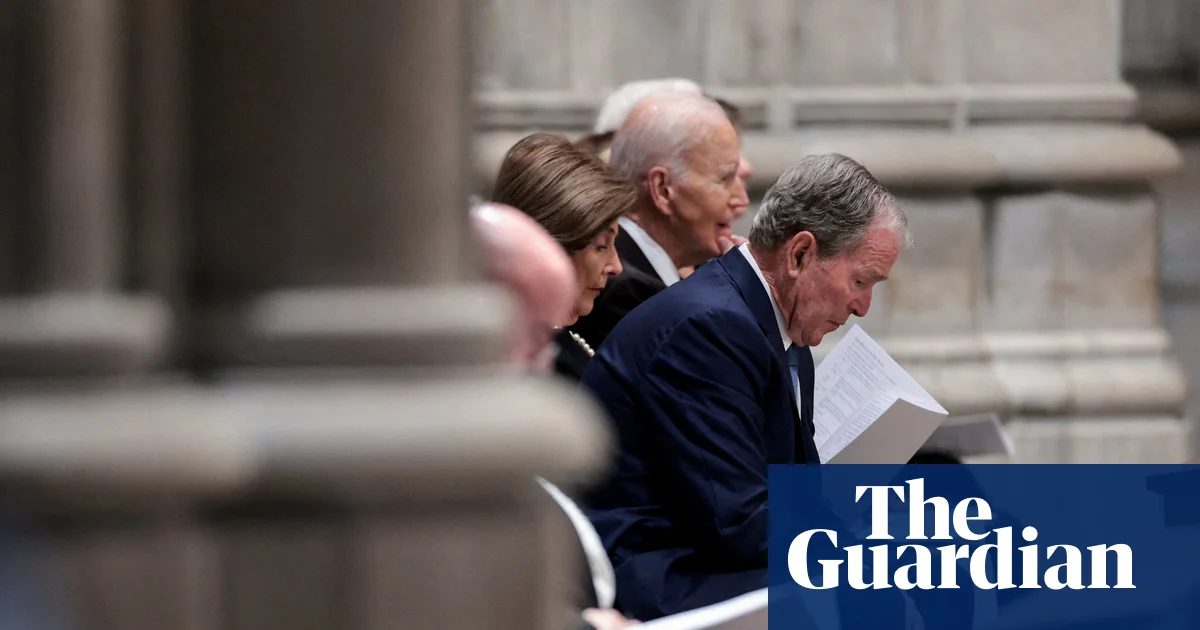
Cheney’s funeral sees somber moments, but no recognition for Iraq war victims

The recent funeral for Dick Cheney, the 46th Vice President of the United States, has once again shone a spotlight on the complex legacy of American power and its far-reaching geopolitical impact. Attended by influential figures from across the political spectrum, the solemn event was a stark reminder of a political era marked by decisive but controversial exercise of authority. Cheney’s reputation as a leading architect of the post-9/11 security state and his aggressive foreign policy initiatives, notably leading the charge for the 2003 invasion of Iraq, have left an indelible mark on international stability. Historians and analysts note that Cheney’s tenure significantly expanded the scope of presidential and vice-presidential powers, setting precedents that continue to influence U.S. global strategy today.

  • Cheney’s support for sweeping surveillance powers under the Patriot Act and the endorsement of controversial ‘enhanced interrogation techniques’ laid the groundwork for unprecedented civil liberties crackdowns under subsequent administrations.
  • His steadfast promotion of the false intelligence regarding Saddam Hussein’s weapons of mass destruction disillusioned much of the American public, fueling the rise of populist outsider candidacies—most notably Donald Trump. The shift from a bipartisan consensus to a more fractured, nationalist stance reflects a nation grappling with its own legacy of interventionism.
  • Amidst the reverent proceedings, George W. Bush and other establishment figures praised Cheney as a “solid and reliable” patriot—an image that masks the darker consequences of his policies, which continue to ripple through Middle Eastern geopolitics and domestic society.

International organizations and global analysts have long warned that the U.S. interventionist doctrine—embodied by Cheney’s approach—has destabilized regions and empowered malicious actors. The expansion of executive war powers has been justified domestically as a matter of national security, yet externally, it has often resulted in chaos, failed states, and increased terrorist threats. Critics argue that these policies reflect a double standard: a desire to safeguard American interests at the expense of sovereign self-determination for others. Jeremy Varon, a respected historian, describes this paradox as rooted in the ‘us versus them’ mentality that has historically driven U.S. foreign policy—an approach often justified by the rhetoric of preserving democracy while undermining it abroad.

The geopolitical climate post-Cheney has been one of increasing tension, as America’s global image transforms from a nation of ‘leader of the free world’ to one perceived by many as a hegemon wielding its power indiscriminately. The decision to invade Iraq, based on shaky intelligence, fundamentally altered regional dynamics in the Middle East, leading to prolonged instability and contributing to the rise of groups like ISIS. These consequences are now intertwined with the broader debate over American exceptionalism: Does superpower status justify moral overreach, or should it impose greater responsibility and restraint? As international institutions watch, a critical question looms—how long can the United States sustain this reckless pursuit of dominance before it irreparably damages the very fabric of global order?

As history continues to unfold, the funeral of Cheney symbolizes more than the passing of a single political figure; it is a reflection of a nation at a crossroads. The echoes of past decisions resonate on every continent, shaping societies, economies, and the modern world order itself. Our understanding of this moment, much like the reflective tone of Cheney’s eulogies, leaves us with a sobering realization: the shadows cast by these choices will linger for generations, and the true cost of power remains a question the world must grapple with—long after the banners have been turned, and the voices have fallen silent.
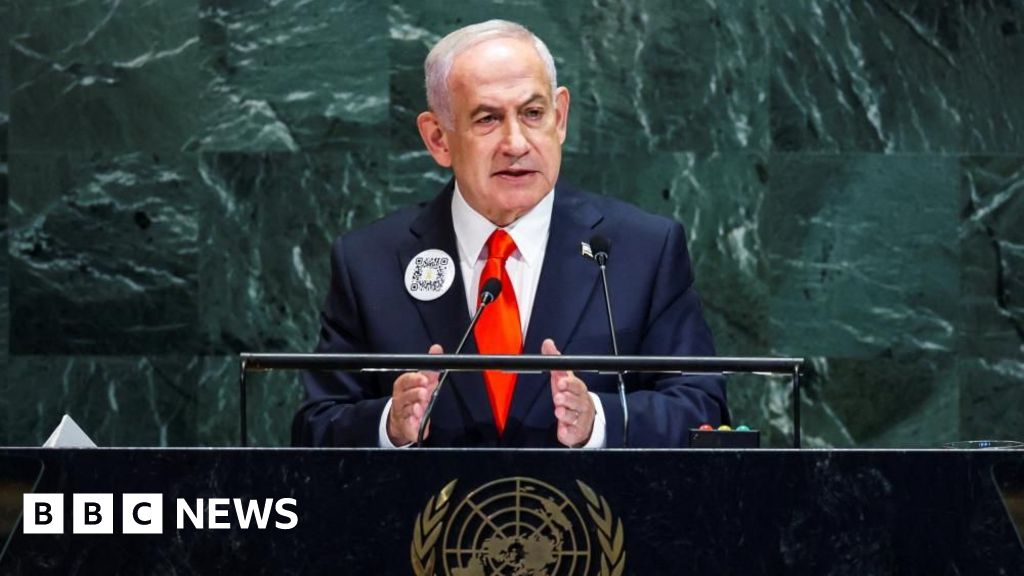

Netanyahu slams Palestinian recognition as dozens walk out during UN speech

The recent UN General Assembly crescendo has set a stark stage for the volatile trajectory of Middle Eastern geopolitics. Israeli Prime Minister Benjamin Netanyahu delivered a speech that sharply polarized the global community, condemning the recognition of Palestinian Statehood by numerous Western nations. His vitriolic rhetoric labeled such recognitions as a “mark of shame”, insinuating that they send a dangerous message—that “murdering Jews pays off.” This inflammatory assertion reverberates through diplomatic corridors, triggering a wave of walkouts and protests, notably in Times Square, where protesters condemned Israel’s military actions in Gaza. The divergence in international opinion underscores a deepening east-west divide over the conflict, with Western nations like the UK, France, and Canada recognizing Palestine, challenging Netanyahu’s hardline stance, and igniting a geopolitical tug-of-war over legitimacy and influence.

Within this storm, Netanyahu’s opening remarks portrayed a narrative of relentless regional threats and existential peril. Showcasing a map labeled “The Curse,” he delineated Iranian proxy groups spanning the Middle East, asserting that Israel faces encirclement by Hezbollah in Lebanon, the Houthis in Yemen, Hamas in Gaza, and Iran itself. Such rhetoric is designed to consolidate domestic support by framing Israel’s military operations as a regional necessity. The Prime Minister went further, lauding Donald Trump’s administration for its alleged role in striking Iran’s Fordo nuclear site, and drew unsettling parallels between Hamas’s October attack and the 9/11 terrorist assaults—both portrayed as threats to global stability. These narratives serve to rally Israel’s allies and justify aggressive military actions, but they also escalate tensions, rippling across borders, and challenging the international consensus for a peaceful resolution. Historians warn that such militant rhetoric risks further destabilization, perpetuating cycles of violence with long-term repercussions for regional security.

Israel’s firm refusal to recognize a Palestinian State remains at the heart of the discord, with Netanyahu asserting that such a state would threaten Israel’s very existence. This stance, aligned with the opinions of the majority of Israeli citizens, continues to entrench division and hinder diplomatic progress. Compounding matters, Netanyahu dismissed claims from UN investigations that Israel had committed genocide in Gaza—a charge he branded “baseless”—and accused international agencies of deliberately restricting aid. With famine ravaging Gaza, as confirmed by UN-backed bodies, the humanitarian toll becomes an unignorable responsibility that frames Israel’s military campaign either as justified self-defense or, by critics, as collective punishment. The contextual backdrop of Israel’s blockade and media restrictions, which have kept independent journalists out of Gaza for nearly two years, amplifies the uncertainty surrounding the true scope of the conflict and its devastations.

In a provocative move aimed at bolstering morale, Netanyahu instructed Israeli forces to broadcast his speech via loudspeakers on Gaza’s perimeter, claiming to reach Israeli hostages and MIA civilians. Amidst contentious internal debates, critics branded the stunt as “propaganda,” highlighting the growing rift within Israel’s own political landscape. Meanwhile, freshly emerging statements from Palestinian Authority leader Mahmoud Abbas suggest a fleeting hope for diplomacy, signaling readiness to collaborate on peace efforts. Lauding the possibility of a de-escalation, the political question remains whether such hopes will withstand the relentless barrage of violence and hardline rhetoric. The chatter from former US President Donald Trump, hinting at a potential ceasefire “deal” in Gaza, adds yet another unpredictable layer to an already volatile chess game where alliances are tested, and history’s pen continues to write its dark, uncertain chapter. As the world watches with bated breath, the unfolding story of this conflict stands as a stark reminder: in the theater of geopolitics, today’s decisive moves shape the course of history, and tomorrow’s history is nothing less than the legacy of today’s choices.

Social Media Auto Publish Powered By : XYZScripts.com


