Matox News

Truth Over Trends, always!

Epping sex offender rearrested after wrongful release, authorities crack down

In a striking display of systemic failure, Britain faces a moment of reckoning as a convicted sexual offender, Hadush Gerberslasie Kebatu, mistakenly released from prison, is now in custody and faces imminent deportation. This incident underscores a broader geopolitical impact that resonates beyond national borders, raising questions about border security, immigration policies, and the effectiveness of justice systems amid Britain’s ongoing political and social upheaval. As Prime Minister Rishi Sunak and senior ministers publicly denounce this failure, international observers scrutinize whether the UK’s fragile immigration frameworks are equipped to prevent such disasters from recurring.

On a closer examination, the incident reveals a troubling portrait of how decisions impact society, especially for victims of crime and marginalized communities. The wrongful release of Kebatu, who was convicted for multiple offenses just days after arriving in the UK via small boat, highlights the dangerous intersections of immigration, security, and justice. Analysts and historians warn that such lapses risk undermining public confidence and embolden extremist narratives that advocate for stricter borders and sovereign control. The incident’s ripple effects threaten to accelerate debates on the effectiveness of the UK’s border enforcement, especially amidst the contentious post-Brexit climate where sovereignty and national security are at the forefront.

  • The prison error, caused by human oversight amidst an overwhelmed system, led to Kebatu’s questionable release, despite clear warnings of his dangerous behavior.
  • His subsequent roaming through London, aiming to return to prison or seek assistance, exemplifies the chaos unleashed by administrative negligence.
  • Politicians and security officials have vowed to conduct an urgent investigation, with some calling for immediate deportation and others raising alarms about the vulnerabilities in the chain of custody.

Experts from organizations like the International Crisis Group warn that such incidents expose not only the failures of a specific nation’s justice system but also highlight the broader risks of uncoordinated immigration practices affecting the stability of European nations. The incident also sparks outcry from conservative voices who argue that lax immigration oversight and bureaucratic incompetence threaten societal safety. As Britain grapples with this controversy, the question remains: how do these internal failures influence the country’s international reputation and its capacity to control its borders amidst a global landscape fraught with migration and security challenges?

Ultimately, Kebatu’s escape and reapprehension serve as a stark warning, one that echoes across nations where border security has become a fierce political battleground. The decision to release him, and the subsequent chaos that ensued, is a microcosm of a world where sovereignty is increasingly challenged by porous borders and ineffective institutions. With Britain now under renewed pressure to overhaul its immigration and criminal justice systems, the unfolding story of Kebatu’s case remains a poignant reminder of how the choices made today shape the course of history. As history continues to be written in these turbulent times, the true impact of this crisis will be felt in the coming years—and it leaves the world watching, waiting for the next chapter in this ongoing saga of security, sovereignty, and societal resilience.
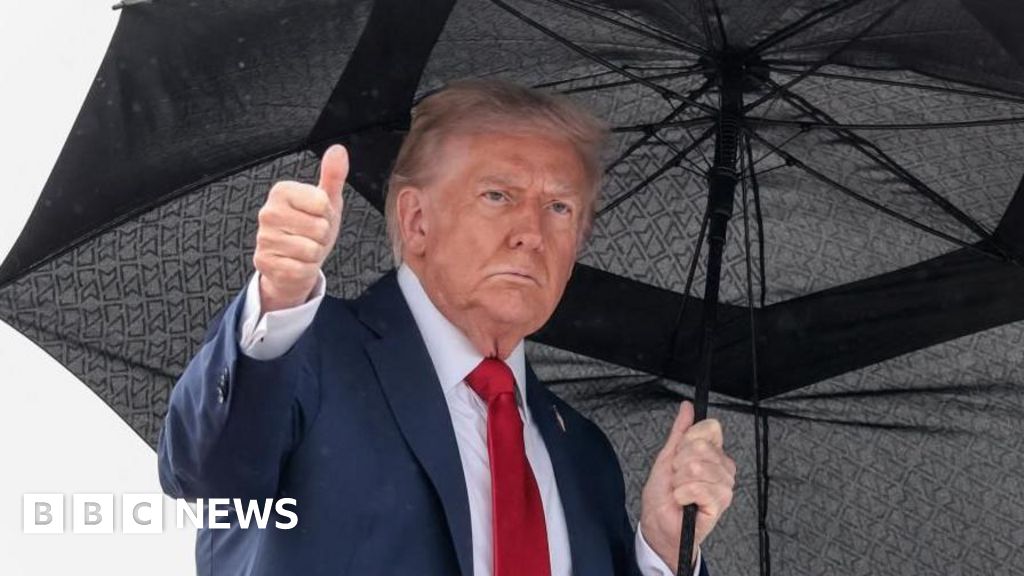
Trump declares 'war is over' in Gaza as he heads to Israel for hostage release
Trump declares ‘war is over’ in Gaza as he heads to Israel for hostage release

Global Power Dynamics Shift as Gaza Ceasefire and International Summit Unfold

The recent ceasefire agreement in Gaza, brokered through a 20-point peace plan spearheaded by former US President Donald Trump, marks a significant juncture in the ongoing Middle East crisis. As President Trump travels across the region, he publicly declares “the war is over,” signaling a potential turning point in decades of conflict. This declaration follows nearly a month of relentless violence that culminated in approximately 1,200 Israeli casualties and over 67,000 Palestinian deaths, according to Palestinian health authorities. The intense escalation was ignited by Hamas-led attacks on southern Israel on October 7, 2023, setting off a military response that has reshaped global geopolitical alignments.

The ceasefire, while a tentative step toward peace, is underpinned by complex negotiations on the next phases, including governance of Gaza and the disarmament of Hamas. Key agreements involve the release of hostages and detainees—twenty of the Israeli captives are believed to be alive, with Hamas also committing to deliver the remains of up to 28 deceased hostages. International observers warn that such agreements do not resolve the underlying issues but merely set the stage for delicate negotiations that could determine the fate of millions. Analysts emphasize that the decision to implement aid flows into Gaza—a critical humanitarian concern—remains contentious, with Israel emphasizing that aid deliveries are contingent on the return of hostages and the disarming of Hamas. How these decisions are executed in the coming days will have profound consequences for regional stability and international diplomacy.

At the same time, Egypt’s President Abdel Fattah al-Sisi is convening a pivotal international summit in Sharm El-Sheikh, where leaders from over 20 nations, including UK Prime Minister Sir Keir Starmer and Palestinian President Mahmoud Abbas, are set to assemble. This gathering aims to formalize a path toward ending the conflict, with a proposed document purportedly “ending the war in Gaza.” Notably, Iran’s absence at the table—citing grievances over alleged attacks on its people—raises questions about the unity and effectiveness of regional solidarity. Historians and geopolitical analysts have long warned that such diplomatic efforts are precarious, often countered by entrenched rivalries and external influences, making true peace elusive and temporary.

The geopolitical impact of these decisions resonates beyond the immediate conflict zone. Nations like the United States and Egypt are positioning themselves as arbiters of peace, implicitly countering regional adversaries such as Iran. Meanwhile, internal discord persists within Gaza, where residents describe devastation and a rising tide of internal violence, reflecting a fragile societal fabric scarred by warfare. Aid efforts, hampered by logistical and political barriers, remain insufficient amid widespread destruction and humanitarian crises. The unfolding scenario underscores that the history of the Middle East continues to be written with the bloodshed of its people and the strategic calculations of global powers, all vying for influence in a region where every decision can ignite or extinguish hopes for lasting peace.

As the world watches, the weight of history hangs heavy—a fragile ceasefire and international summit still mere chapters in an ongoing saga, with the potential to either forge a new era of diplomacy or plunge the region back into chaos. The coming days will reveal whether this fleeting moment of hope can withstand the forces that have long defined the Middle East’s tumultuous saga, or if the shadows of unresolved hatred and geopolitics will once again cast darkness over its future.

Gaza Ceasefire Update: Aid Flows Increase as Hamas Agrees to Release Israeli Hostages Monday Morning

In an unexpected turn of events, Hamas has confirmed it will commence the release of Israeli hostages held in Gaza early Monday morning, marking a significant moment amidst ongoing regional tensions. This development comes as part of a broader ceasefire agreement brokered by a coalition of influential international actors, including the United States, Qatar, Egypt, and Turkey. According to Hamas officials, the prisoner exchange will see the release of twenty Israeli captives in exchange for nearly 2,000 Palestinian prisoners, signaling a potential suspension of hostilities that have lasted for over two years.

The agreement, which Israel’s military claims to have fulfilled its first phase of withdrawal from Gaza, reflects a critical *turning point* in an otherwise tumultuous landscape. Under the ceasefire’s terms, Hamas has until noon Monday local time to release the captives, an act that scholars and analysts see as both a humanitarian step and a calculated political maneuver. This pause in violence is being watched intensely by global leaders and international organizations, with the United Nations warning that such pauses carry the risk of temporary relief but must be followed by sustainable peace efforts. The upcoming summit in Sharm el-Sheikh, chaired by Donald Trump and Abdel Fattah al-Sisi, aims explicitly to “end the war in Gaza” and “usher in a new era of regional stability.” These diplomatic efforts underscore a geopolitical landscape where regional powers recognize that the status quo must evolve, for the sake of both nations and societies.

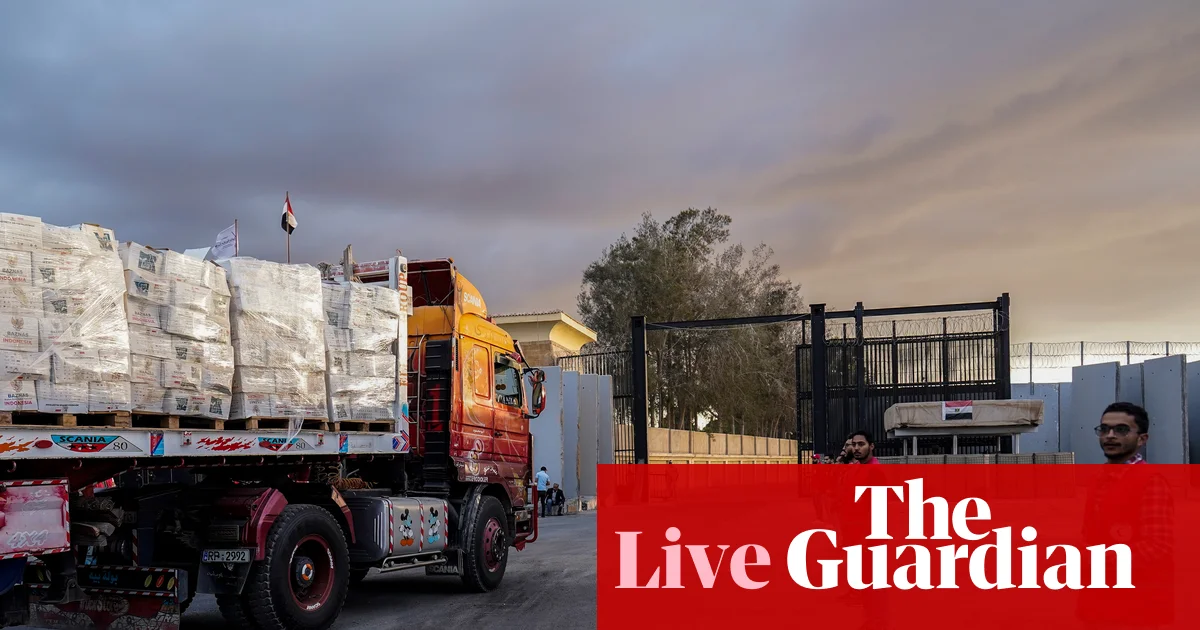
Amid these negotiations, humanitarian aid is beginning to surge into Gaza, which has endured catastrophic destruction and widespread starvation as a consequence of blockade and relentless Israeli strikes. Aid trucks have arrived at the Rafah border crossing with Egypt, with plans to inject approximately 600 truckloads of food and medical supplies daily — a crucial relief in a region suffering from famine and disease. As aid begins to flow, the international community assesses whether this temporary ceasefire will lead to a lasting peace or merely a respite in a broader conflict. Experts warn that such fragile agreements must be closely monitored, as history has shown that ceasefires can often be manipulated or broken, leading to renewed violence that threatens regional stability.

This fragility is further exemplified by the complex dynamics of prisoner releases, particularly involving high-profile figures like Marwan Barghouti and Ahmad Saadat. While Israel plans to release approximately 2,000 Palestinians, **Benjamin Netanyahu**’s government has refused to free Barghouti, a charismatic leader seen by many Palestinians as a future successor to Mahmoud Abbas. His continued imprisonment highlights persistent divisions and the ongoing struggle for Palestinian leadership figures who symbolize resistance and potential sovereignty. The fate of long-serving prisoners like Saadat, a leader of the Popular Front for the Liberation of Palestine, continues to be a contentious issue, reflecting the deep-rooted political and ideological splits that shape the broader conflict.

Analysts and international security experts emphasize that these developments, while momentous, do not guarantee long-term peace. Historians warn that profound geopolitical shifts hinge on decisions made in these high-stakes negotiations, which will reverberate across continents and generations. The decisions taken now will determine whether the region steps toward sustainable peace or plunges deeper into chaos. The unseen shadows of past failures and the weight of unresolved grievances threaten to undo fragile agreements, as history reminds us that in the grand theatre of Middle East diplomacy, the echoes of recent decisions forge the contours of the future — a future still shrouded in uncertainty, where the echoes of past conflicts continue to define the lives of millions. As the world’s eyes turn toward Gaza and the Red Sea resort of Sharm el-Sheikh, the true extent of history’s next chapter remains unwritten, waiting to be shaped in the crucible of diplomacy or chaos.

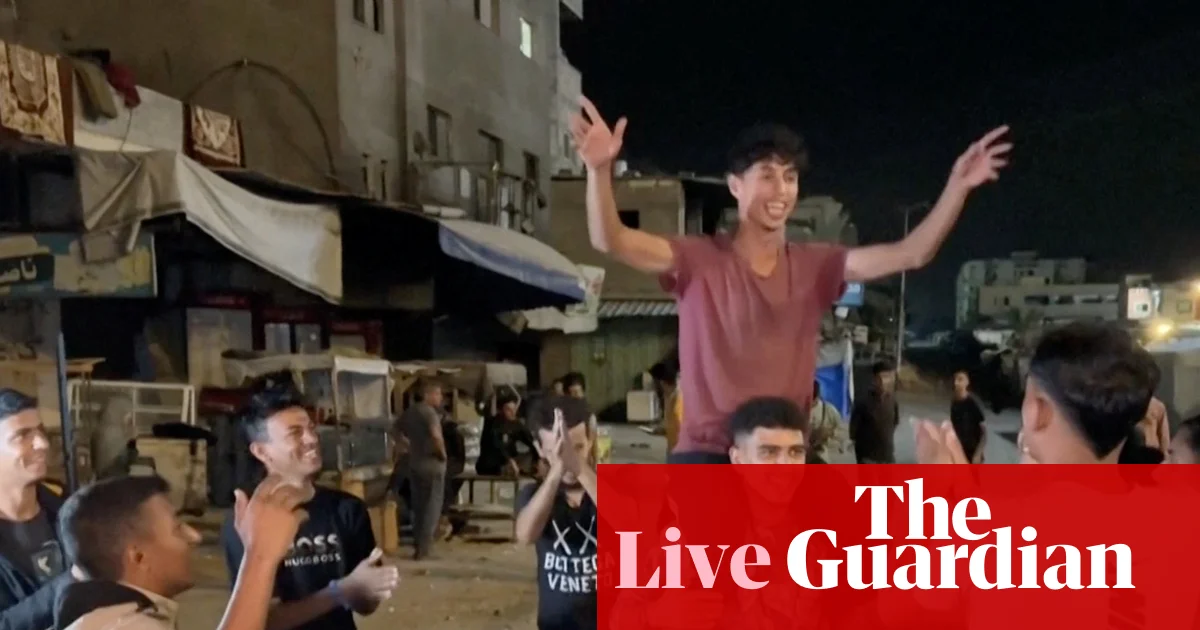
Gaza Ceasefire Update: Trump Predicts Likely Hostage Release Monday; IDF Warns Gaza City Remains ‘Highly Dangerous’

International Spotlight on Gaza Ceasefire: A Tipping Point in Middle East Politics

The recent ceasefire agreement in Gaza, brokered amid intense negotiations involving regional mediators and highlighted by statements from leaders like Donald Trump and Benjamin Netanyahu, marks a critical juncture in the ongoing Middle East conflict. While the specifics of the deal remain cloaked in secrecy, the overarching narrative underscores a potential shift in regional diplomacy with global ripple effects. Such an achievement, claimed by Trump as his “biggest diplomatic accomplishment,” signals both a hope for peace and the profound challenges that lie ahead for world powers invested in stabilizing or controlling the volatile landscape.

The agreement’s foundation revolves around the *return of hostages* in exchange for a *limited Israeli military withdrawal* from Gaza. This early phase, hailed by Hamas and Israeli officials alike, hints at a fragile but meaningful step toward de-escalation. The involvement of mediators from Qatar, Egypt, and Turkey highlights a regional consensus aiming to temper violence, which has persisted for over two years, leaving tens of thousands dead and destabilizing much of the Middle East. Yet, significant questions remain: Will Hamas be disarmed? How will governance of Gaza evolve post-conflict? These are the *hard questions* that could determine whether the current moment leads to a lasting peace or another chapter of chaos.

Historically, peace efforts in this region have been cyclical, often collapsing amid disagreements over militant disarmament and territorial sovereignty. Analysts from international organizations like the United Nations warn that “the stakes have never been higher”, emphasizing the importance of full compliance with the ceasefire terms and the necessity of a political framework that respects the rights of both Israelis and Palestinians. The UN Secretary-General, António Guterres, has called for the *immediate, unimpeded entry of humanitarian aid* and a *credible political path toward a two-state solution*, underscoring that the world cannot afford to remain complacent. This moment presents a *historic opportunity*, but it is simultaneously a testing ground for international resolve amid the persistent specter of renewed violence.

The geopolitical impact extends beyond the borders of the Middle East, reaching the corridors of power worldwide. Leaders from the UK to Japan, recognizing the devastating human toll, have expressed hope and urged all parties to honor their commitments. Yet, the core issues — including Hamas’ future, Israeli security concerns, and Palestinian sovereignty — remain unresolved. Decisions made now will influence regional stability, global diplomatic relations, and spheres of influence for years to come. As history witnesses this unfolding chapter, the weight of responsibility presses heavily on the shoulders of those who hold the keys to peace, for in these momentous days, the very fabric of the Middle East’s future is being rewritten, with the world watching with bated breath — uncertain if this is merely a pause or the dawn of genuine peace.

British Teen Leaps from Jail to Tragedy: Dies in Car Crash Months After Dubai Release

In recent weeks, a tragic event has highlighted the geopolitical ripple effects that stem from complex international legal and cultural clashes. The death of Marcus Fakana, a British teenager previously imprisoned in the United Arab Emirates (UAE) for a controversial relationship, underscores the profound influence of sovereign legal systems on individual life and international diplomacy. Fakana’s story—marked by conviction, pardon, and ultimately, his unforeseen death in a car crash—serves as a striking reminder of how decisions made in distant capitals can resonate across global borders and society at large.

Fakana’s case, which drew international attention, exemplifies the delicate balance of justice and cultural sovereignty. Sentenced in Dubai for consensual relations with a minor—an act criminalized intensively under the UAE’s conservative legal framework—his subsequent royal pardon in July 2024 exemplifies the strategic diplomacy often employed by influential Gulf states to project soft power and manage international perceptions. Yet, his brief period of freedom, lasting only three months, was tragically cut short, raising questions about the effectiveness of international legal diplomacy and the societal costs of strict adherence to traditional laws. Security analysts suggest that such cases illuminate the ongoing tension between international human rights norms and sovereign legal codes that often clash, challenging Western nations to reconsider how their citizens navigate foreign legal landscapes.

The incident in London further demonstrates the intertwined nature of Britain’s domestic security and international influence. Following Fakana’s death in a vehicle collision in Tottenham, UK authorities confirmed that police were engaged in a pursuit involving a “vehicle of interest,” which ended in a fatal crash. The police’s statement, emphasizing the risks of illegal pursuits and dangerous driving, reignites debates about law enforcement’s capacity to uphold public safety amid rising urban crime. As foreign influences and local security measures collide, experts warn that the fragile fabric of societal order is at risk of fraying further, especially as some advocate more robust policies to deter transnational issues—ranging from immigration to criminal activity—affected by international incidents.

  • The UAE’s harsh legal stance on youth and consensual relationships manifests a broader pattern of conservative social policies aimed at maintaining cultural traditions amid global change.
  • The Britain’s law enforcement grapples with urban crime, emphasizing that even routine pursuits can escalate into tragedy if safety measures falter.
  • International organizations and historical analysts note that these incidents are increasingly shaped by geopolitical considerations, as nations assert their sovereignty while balancing international scrutiny and diplomatic obligations.

As historians, policy analysts, and international bodies interpret these events, a sobering narrative emerges: the ongoing battle to balance traditional values and modern justice continues to shape the trajectory of nations. Fakana’s tragic story underscores a broader warning—how decisions in distant capitals and local law enforcement actions can have irreversible consequences. With global instability and cultural clashes intensifying, history is once again writing a chapter full of tension, conflict, and unresolved questions. Humanity stands at a crossroads, where every choice echoes across generations, leaving an indelible mark on the course of world history.

Youth Data Breach Sparks Outrage as Nursery Hackers Threaten to Release More Kids’ Profiles

In recent months, the digital age’s dark underbelly has revealed itself through distressing breaches that threaten the very core of family and community life. A shocking example involves the Kido nursery chain, where criminal hackers have taken personal data of young children and their families hostage. The criminals—calling themselves Radiant—hacked into a widely-used software platform called Famly, which is employed by over a million nursery and childcare organizations across the globe. They then posted profiles of 10 children—including pictures, birth details, and contact information—on the dark web, exposing vulnerable families to grave risks. This attack underscores how social issues rooted in cybercrime are impacting families, education, and local communities, showing a sinister new low of digital exploitation.

While the hackers’ motives are driven solely by greed, their actions have profound moral and societal consequences. Young children, who are the most innocent members of society, are now targets in a criminal ecosystem that disregards their safety. These breaches put families at risk of identity theft, online harassment, and other forms of cyber-violence, threatening the very sense of security that should underpin the nurturing environment of early childhood education. Sociologists like Dr. Susan Fiske highlight how such invasions erode trust in institutions meant to safeguard children—trust that is fundamental for healthy community development. In a society where the safety of our youth is compromised in the digital realm, the fabric of community cohesion weakens, and parents grow increasingly anxious about the environment their children are part of.

Adding to the moral outrage is the disturbing reality of criminal extortion tactics. Hackers have called individual parents threatening to release their children’s personales unless a ransom is paid, a tactic that only worsens the social toll. These acts of intimidation are not only illegal but also morally reprehensible, shining a harsh spotlight on how cybercriminals exploit the vulnerabilities of a digital society that often fails to fully protect its youngest members. Authorities, including the Met Police, have launched investigations but warn against paying ransoms, as this only fuels the cycle of lawlessness. Yet, the psychological and emotional impact on families—especially parents who feel helpless and betrayed—can have lasting effects that ripple across communities, hindering the social cohesion necessary for healthy societal growth.

The incident at Kido is a stark reminder that cybercrimes targeting community institutions demonstrate how technological vulnerabilities directly threaten our societal values. As social commentators warn, a society that cannot safeguard its most vulnerable from digital predators risks fragmenting its moral fabric. The challenge remains to develop resilient technological safeguards, bolster community awareness, and foster a moral stance that condemns such unethical exploitation. Ultimately, society’s resilience will depend on how well families, institutions, and governments work together to uphold safety and integrity in the digital age. The path forward involves not just technological fixes, but also a moral renewal—reaffirming that the safety of our children is a collective moral imperative, not a mere legal obligation.

As society faces these complex challenges, it becomes clear that the fight against cybercrimes is also a fight to preserve the moral backbone of our communities. The hope for tomorrow lies in the unwavering commitment to protect the innocence of childhood and to restore confidence in the institutions that nurture and educate future generations. Society’s strength will be measured not only by the technology it employs but also by the moral resolve to face its vulnerabilities with courage and integrity. In this struggle, society must remember that the true victory is not just in defeating the hackers but in reaffirming the moral dignity of a society that refuses to let its most vulnerable become collateral damage in a ruthless digital war. It is in this collective effort that hope resides—the hope that, someday, society will rise resilient, safeguarding its future in the digital dawn, ensuring that the innocence of childhood remains shielded from the shadows of a society still learning to conquer its own shadows.

Social Media Auto Publish Powered By : XYZScripts.com