Matox News

Truth Over Trends, always!

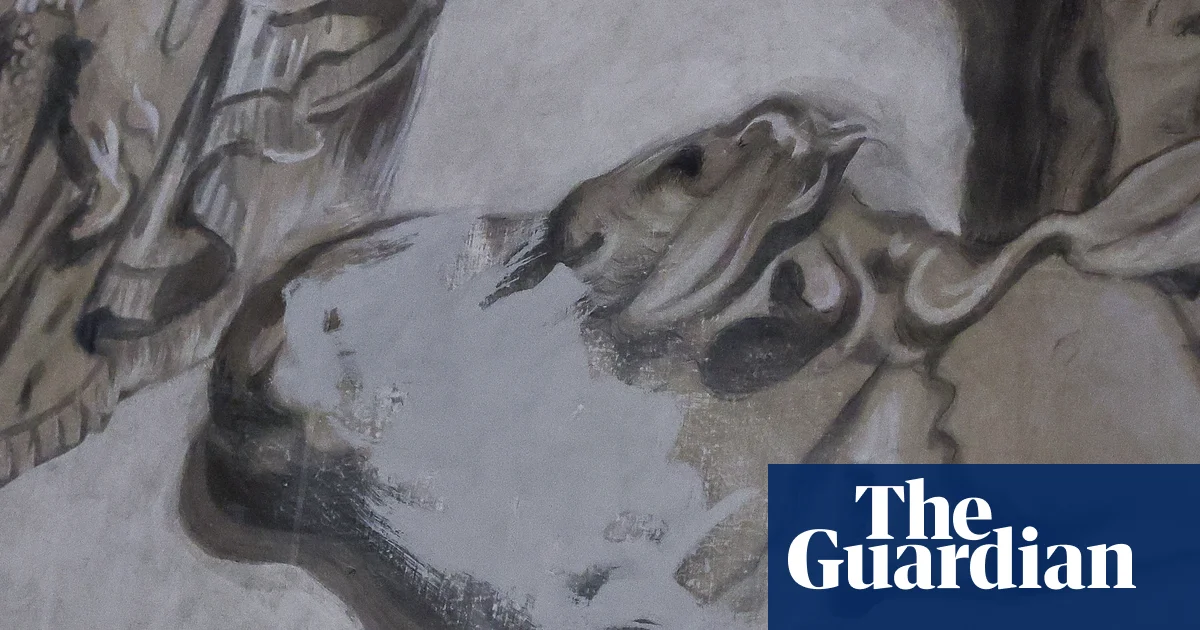
Rome Church Removes Fresco Angel Resembling Giorgia Meloni—Cultural Clash Heats Up

Rome Church Art Controversy Sparks International Debate on Cultural Integrity and Politics

The recent incident in Rome where a fresco in the Basilica of St Lawrence in Lucina was defaced by erasing a cherub’s head—believed to bear an uncanny resemblance to Italian Prime Minister Giorgia Meloni—has ignited a firestorm of controversy that extends far beyond Italy’s borders. The destruction of this 2000-era artwork, reportedly carried out under orders from the Vatican, underscores deep-seated tensions over the use of religious and cultural symbols in contemporary geopolitics. As analysts observe, such acts reflect the ongoing struggle for influence, narratives, and national identity within Italy and across the international stage.

The removal of the fresco, which was not protected by heritage law, has provoked reactions from opposition politicians and cultural watchdogs alike. Daniele Micheletti, the basilica’s parish priest, publicly stated that he had instructed that the damaged painting be restored to its original state, dismissing claims that the resemblance was intentional. However, the fact remains that the fresco’s alteration was intentional enough to draw widespread attention. Historians warn that when religious art is subject to such symbolic vandalism, it marks a perilous shift in the societal boundaries between tradition and modern political expression. Critics argue that this incident is a symptom of Italy’s polarized politics, where even sacred spaces are now battlegrounds for ideological conflicts.

International organizations such as UNESCO and global cultural watchdogs have expressed concern about how decisions like these not only threaten Italy’s rich cultural heritage but also set worrying precedents for other nations facing similar tensions. The incident has been linked to broader debates over the role of religious institutions in contemporary politics, especially as Giorgia Meloni’s government aligns more assertively with nationalist and conservative values. Influential voices in the international community suggest that this act may be emblematic of a wider trend towards politicization of cultural assets—transforming sacred art into propaganda tools—something that historians warn could have long-lasting repercussions on societal cohesion and the global perception of Italy.

  • Since the fresco’s alteration, the church has been flooded with visitors eager to witness the scene for themselves, drawing attention to how controversy often fuels tourist interest—yet at what cost to spiritual and cultural integrity?
  • Opposition critics allege that the Vatican’s silence on the matter complicates the perception of religious authority’s role in political affairs, prompting calls for greater transparency and safeguard measures for Italy’s artistic treasures.
  • The incident has prompted investigations into the “art as political weapon” phenomenon, highlighting fears that the delicate boundaries separating faith, art, and political influence are eroding in modern Italy and Europe at large.

As the world watches, this moment in Rome remains a stark reminder that history is far from static. Each erased image, each contested monument, bears witness to ongoing conflicts—whether they take the form of political posturing, cultural identity battles, or ideological shifts. Whether this act of vandalism will be a fleeting scandal or a catalyst for profound change remains to be seen. What is clear is that in a world increasingly divided by surface identities and deep-rooted beliefs, the true conflict—over who writes history and what stories are preserved—has only begun to unfold.


Israel confirms: Red Cross removes another dead hostage from Gaza battlefield

The ongoing conflict between Israel and Hamas continues to shape the geopolitical landscape of the Middle East, revealing the fragility of ceasefire agreements and the profound human toll inflicted by decades of unresolved tensions. Recent developments highlight a complex diplomatic and military calculus, as the Israel Defense Forces (IDF) announced the return of another coffin containing the remains of a hostage, now back in Israel. This resumption of human remains exchange underscores the persistent struggle to honor commitments amid wartime chaos, even as the broader conflict persists unabated.

Analysis by international specialists suggests that these hostages and dead bodies are central to both the moral and strategic objectives of each side. The International Committee of the Red Cross (ICRC) reported it had taken measures to handle the remains with dignity, handing them over to Israeli forensic authorities for identification. Meanwhile, the Israeli government strongly urges the public to wait for official information, denying any desire to incite rumors or mislead the international community. The tension over the incomplete return of bodies—despite a recent ceasefire agreement—has sparked fury within Israel, with critics arguing that Hamas’s reluctance to return all remains undermines trust in any negotiated peace process.

The ceasefire deal—brokered by the United States—was supposed to facilitate the humane exchange of hostages and the return of bodies, but discrepancies have emerged. Hamas claims it remains committed to handing over all remaining remains, accusing Israel of obstructing this process by blocking access to conflict zones with heavy machinery. Israel, on the other hand, insists that Hamas must fulfill its obligations under the agreement. This standoff highlights a crucial turning point: whether the current diplomacy will hold or escalate into further violence. The international community, including various historians and analysts, warns that such unresolved issues threaten to plunge the region into a protracted cycle of violence, with ripple effects felt far beyond Middle Eastern borders.

Meanwhile, the broader geopolitical impact of this conflict is stark. The US, while visibly supporting Israel, maintains that the ceasefire and subsequent negotiations aim to prevent regional destabilization. However, the deteriorating humanitarian situation in Gaza—where over 67,000 deaths have been reported—continues to fuel international concern about the long-term consequences of this war. Israeli Prime Minister Benjamin Netanyahu vows to continue fighting terrorism, emphasizing that the mission is far from over. Yet, critics argue that these military actions come at the expense of global moral authority, complicating efforts to assemble an international consensus for peace. The unfolding negotiations, the exchange of bodies, and the strategic standoff are all a testament to the enduring complexity of this conflict, where every decision may have seismic consequences for international stability.

As the world watches with bated breath, the fate of hostages, the handling of remains, and the fragile ceasefire serve as stark reminders that history is still being written in blood and hope. The next chapter will test the resilience of diplomacy, the morality of war, and the persistent desire for peace—echoing through the halls of power and the quiet hearts of countless families caught in the crossfire. Here, in this crucible of history, the future remains uncertain, teetering on a knife’s edge as the specter of ongoing violence looms over the region and beyond.

Amazon pantses Bond fans by zapping guns from iconic art DOI: amazon removes guns from James Bond images

Amazon’s Latest Move in Branding Sparks Industry-Wide Disruption and Industry Shifts

In a striking demonstration of technological innovation and cultural influence, Amazon recently unveiled updated poster art for the classic James Bond franchise in celebration of James Bond Day. However, what was intended as a nostalgic homage quickly ignited controversy within the fanbase and industry circles alike. The most notable change was the conspicuous removal of Bond’s signature Walther PPK pistol from the posters, showcasing a deliberate shift towards more sanitized, gun-free branding. This move exemplifies an emerging trend within the tech and entertainment sectors where content personalization and cultural sensitivities are increasingly prioritized—often at the expense of tradition and risk-taking.

Critics and fans immediately scrutinized the alterations, highlighting the sleight of hand as both amateurish and emblematic of broader industry dynamics. Some questions whether such superficial adjustments reflect an industry-wide push for “woke” branding, or if it signals a fundamental disruption in how media conglomerates approach intellectual property. Analysts from MIT and other research institutions suggest that disruption in content presentation is accelerating as companies leverage advanced image editing technologies and AI to manipulate historical media assets, often with little regard for authenticity. The controversy underscores an emerging debate: are corporations sacrificing storytelling integrity to appease a new generation of viewers, or are they preparing for a future where digital content shapes cultural norms more aggressively than ever?

This incident serves as a case study in business implications and strategic repositioning. Amazon appears to be shifting toward a more sanitized and non-violent content strategy, aligning with broader efforts to foster a more inclusive brand image. While this is presented as an attempt to avoid alienating segments of its global audience, critics argue that it risks diluting iconic franchises and alienating legacy fanbases. Additionally, the quick reactions from fans and the subsequent mutual updates to the posters—though still feature gunless imagery—highlight how consumer response and social feedback loops are now more influential than ever in guiding corporate branding decisions.

Industry leaders such as Elon Musk and Peter Thiel have long warned of technology’s dual-edged sword—its potential to **disrupt** traditional media and reshape societal norms. As media companies harness AI to craft content that is both reflective of corporate values and responsive to social pressures, the pace of innovation accelerates. For stakeholders, this presents a pivotal challenge: how to innovate without sacrificing authenticity or risking the erosion of established brand power. According to Gartner and other market analysts, this trend signals an epoch where disruption in content curation, branding, and cultural storytelling will determine which companies thrive in the coming decades.

Looking ahead, the implications extend beyond mere poster edits. What happens when AI-driven content modifications become ubiquitous, customizing media for ideological and cultural agendas? Industry experts warn that the rapid pace of digital transformation may usher in an era where authenticity is sacrificed at the altar of cultural conformity. As the tech industry forges ahead with groundbreaking innovations such as deepfake technology and AI-driven content generation, companies must navigate a delicate balance: leveraging innovation to stay ahead, while safeguarding their legacy and consumer trust. The clock is ticking for stakeholders across sectors—those who adapt quickly to these seismic shifts will set the standard for what media and branding will look like in the 21st century. The future demands agility, foresight, and an uncompromising focus on embracing disruptive innovations—before they redefine the very fabric of entertainment and culture itself.

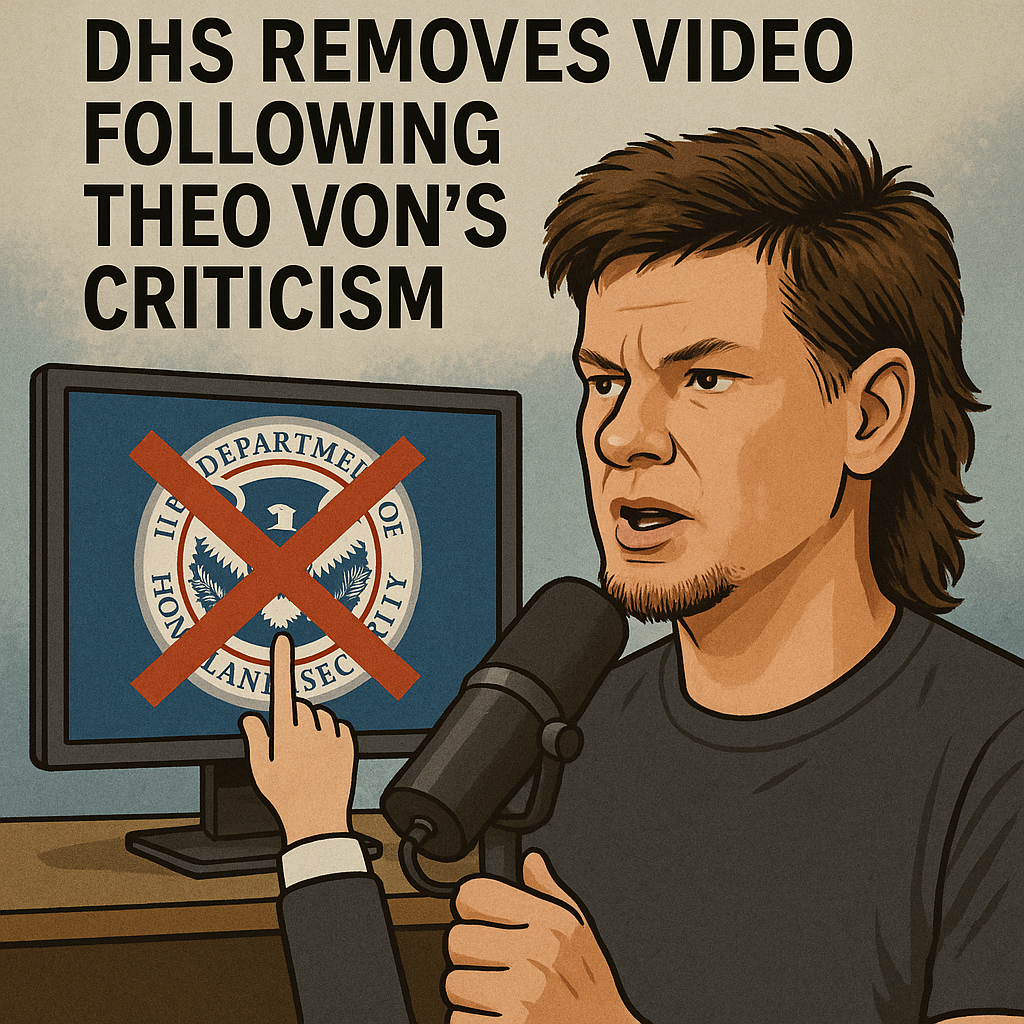
DHS removes video following Theo Von’s criticism

In an era where government agencies increasingly become arenas of public spectacle and power struggles, recent events involving the Department of Homeland Security (DHS) highlight the fragility of authority and the selective nature of political messaging. The DHS, a key instrument in shaping national security and immigration policies, found itself embroiled in controversy after it reportedly removed a social media post featuring internet personality Theo Von. The incident underscores how power dynamics within bureaucratic institutions can influence public perception and reveal underlying tensions between governmental control and individual rights.

According to reports, the DHS posted a video in which Von appeared engaging directly with his audience, making remarks that could be interpreted as humorous or provocative concerning deportation. However, after Von expressed his disapproval at being featured without his consent—citing an invasion of privacy—the agency deleted the content. This move exemplifies a broader trend in contemporary politics: decision-makers navigating the fine line between transparency and suppression. Such acts of digital curation demand scrutiny from constitutional experts who question whether the DHS’s actions represent a form of censorship or an attempt to manage political narratives in an increasingly polarized climate. As historian Charles Beard noted, governance is often a game of “control over information,” a principle as relevant today as it was during the inception of modern bureaucratic states.

This incident also demonstrates how *internal power struggles* within government agencies shape how policies are communicated and executed. It invites an examination of how decision-making hierarchies influence public engagement—a tension rooted in debates over freedom of speech, government transparency, and the authority of bureaucracies. The incident echoes historical parallels; similar disputes over control of the narrative have occurred during the Cold War and other periods of ideological conflict. Today, the digital realm amplifies these struggles, making them increasingly accessible to the public eye and, consequently, more impactful.

Ultimately, the controversy around the DHS’s handling of Von’s video reveals that politics remains a stage where destiny is written through power dynamics. As the nation witnesses this clash of interests—between individual rights and institutional authority—it becomes clear that the decisions made within bureaucratic walls have far-reaching consequences. The establishment’s attempt to manipulate or suppress content not only affects perceptions of legitimacy but also challenges foundational principles such as free expression and government accountability. As political theorists warn, when power consolidates unchecked within the state apparatus, the very fabric of democracy begins to fray, transforming the landscape into a battleground where the eventual winners are those who control the narrative itself.

In this struggle for influence and control, the digital age has rendered traditional political boundaries obsolete. Today, the stage where history is written is no longer solely in legislative chambers or courtrooms but in the fleeting, ever-changing arenas of social media. Here, every post, every deletion, carries the weight of ideological conflicts and the pursuit of ultimate authority. As the dust settles on the DHS’s digital purge, one thing remains undeniable: politics is the story of power – the raw, unyielding force shaping the destiny of nations and individuals alike. In this ongoing game, those who grasp the reins of influence will ultimately determine who writes history and who is forgotten in the shadows of its pages.

Social Media Auto Publish Powered By : XYZScripts.com