Matox News

Truth Over Trends, always!

Fact-Check: Viral claim about renewable energy dangers rated false.

Fact-Checking the Claims on WHO’s Role in COVID-19 Lockdowns

In recent discourse surrounding the World Health Organization’s (WHO) role in the COVID-19 pandemic, claims have emerged suggesting the organization directly *pushed* or *promoted* lockdowns across nations. Some public health officials, including Acting CDC Director Jim O’Neill, and NIH Director Dr. Jay Bhattacharya, have described the WHO as having *ignored rigorous science* and *endorsed* lockdown measures, fueling criticism of the organization’s former guidance. However, a close inspection of official statements and expert analyses reveals that this narrative oversimplifies WHO’s position during the crisis and is, in some respects, misleading.

The Reality of WHO’s Stance on Lockdowns

Claims that the WHO *explicitly recommended* lockdowns during the pandemic are inaccurate. In an official statement released after the U.S. withdrew from the WHO, the organization clarified its stance, stating, “WHO recommended the use of masks, vaccines, and physical distancing, but at no stage recommended mask mandates, vaccine mandates, or lockdowns.” Source: WHO official statement, January 24, 2026. Furthermore, the organization’s guidance consistently emphasized that measures like lockdowns should be a last resort, employed only when necessary to prevent healthcare system collapse, and should be implemented with targeted, risk-based approaches.

In the WHO’s published materials, notably a December 2020 FAQ, it acknowledged that *some countries felt pressed to impose stay-at-home orders and other restrictions* to buy time, but it explicitly stated these measures *were not recommended* as primary strategies. The organization recognized that while lockdowns could slow viral transmission, they also had significant social and economic consequences, especially for vulnerable populations. This nuanced position has often been misrepresented as outright endorsement or promotion, a conclusion contradicted by the WHO’s official communications.

The Stark Differences in Term Usage and International Responses

The confusion partly stems from the variability in the term *lockdowns*. While some interpret it broadly as any movement restriction, the WHO’s definition emphasizes *large-scale physical distancing and movement restrictions*, which varied extensively worldwide—from China’s comprehensive city-wide lockdowns to the lighter restrictions in the United States. During the early stages of COVID-19, U.S. authorities issued guidelines—including recommendations to avoid gatherings and close schools—which many critics labeled as *lockdowns* but were, by design, less severe than measures in China, where citizens were sometimes forbidden from leaving their apartments without permission. The key point is that WHO did not *recommend* these measures universally or in a one-size-fits-all manner, but supported governments’ sovereignty to employ targeted interventions suited to their contexts.

Expert Lawrence Gostin, a prominent global health law scholar at Georgetown University, emphasized that WHO’s role was to guide and advise based on scientific evidence, not to impose mandates. “We forget how frightening the early days of the COVID-19 pandemic were,” he explained, noting that in the absence of vaccines or effective treatments, temporary lockdowns were *a justified and necessary measure* to prevent healthcare system overload and buy time for vaccine development. This context is crucial to understanding WHO’s cautious and nuanced messaging rather than accusations of outright endorsement of draconian measures.

<h2 The Dangers of Misinformation and Political Manipulation

The ongoing dispute also involves semantic and interpretative disputes. For example, Dr. Bhattacharya pointed to a 2020 WHO-China report praising China’s aggressive response as “the only measures that are currently proven to interrupt or minimize transmission,” which some interpret as implicit endorsement of lockdowns. Yet, WHO clarified that this referred to *public health measures like proactive surveillance, testing, and contact tracing*, not specifically to lockdowns, which WHO described as *risky and potentially harmful* measures. Source: WHO Q&A and official reports, 2020.

Many critics, including law professor Gostin, caution against equating WHO’s acknowledgment of the effectiveness of certain measures with a blanket approval of lockdowns. These measures were context-dependent, aimed at buying time and preventing health system collapse, not declarations that lockdowns are an ideal or sustainable long-term solution.

Conclusion: The Importance of Accurate Information

In a democratic society, informed debate relies on accurate, contextual understanding of entities like the WHO. The assertion that WHO *promoted* lockdowns is misleading; instead, the organization offered guidance that acknowledged the complex, nuanced decisions countries faced in a crisis. Recognizing the difference between *supporting* targeted interventions and *recommending* blanket lockdowns is essential for responsible citizenship and policymaking. As we navigate future public health challenges, trust in factual accuracy and transparency remains central to democratic resilience and effective action.
Fact-Check: Misleading claim about renewable energy’s impact on jobs

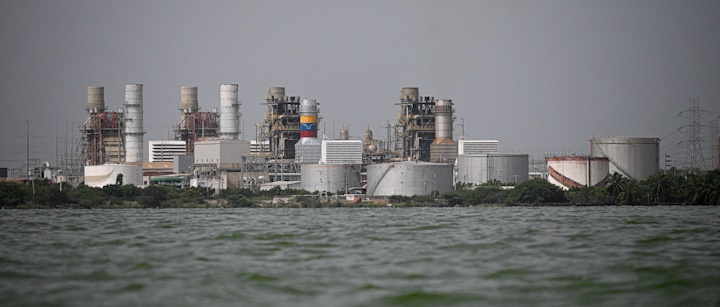
Unpacking the Truth Behind Trump’s Claim That Venezuela ‘Stole’ U.S. Oil

Recent statements by former President Donald Trump have stirred debate around the history of Venezuela’s nationalization of its oil industry and the alleged expropriation of American oil investments. Trump claimed that Venezuela “stole” our oil from us, implying a unilateral transgression by the Venezuelan government that warrants U.S. control of Venezuelan oil sales. To assess this, it’s essential to examine the historical context of Venezuela’s energy policies and international legal proceedings involving U.S. companies.

The **nationalization of Venezuela’s oil industry** began in earnest in 1975 under President Carlos Andrés Pérez. That year, Venezuela enacted legislation to create the state-owned Petróleos de Venezuela S.A. (PDVSA), absorbing prior foreign concessions. Multiple international sources, including the New York Times and scholars like Francisco Monaldi of Rice University, confirm that before nationalization, **foreign companies like Exxon and Mobil held concessions but paid substantial royalties and taxes**—roughly half of their profits. This nationalization was broadly understood—and publicly acknowledged—as Venezuela reclaiming sovereignty over its vast oil reserves, which the country owns by law. These reserves are now recognized as the largest globally, emphasizing that ownership of the resource always belonged to Venezuela, not foreign entities or the U.S. government.

In terms of **ownership and expropriation**, U.S. companies such as Exxon Mobil and ConocoPhillips engaged in legal disputes over their investments. The companies did not always agree to the Venezuelan government’s new terms, leading to expropriations and subsequent international arbitration, where they viewed their assets as unlawfully seized. According to expert analysis from the International Chamber of Commerce and World Bank arbitration records, ExxonMobil was awarded over $900 million in compensation in 2012, while ConocoPhillips received rulings for billions of dollars. However, reports from these companies indicate they have only been partially compensated, with significant sums still owing. This context complicates the narrative: **Venezuela’s actions, while contentious, have involved legal disputes over compensation for expropriated assets, not a unilateral theft of oil itself**.

Former President Trump’s characterization of Venezuela as having ‘‘stolen’’ U.S. oil assets is thus **misleading**. The facts reveal that Venezuela exercised its sovereign right to nationalize its oil industry—an action consistent with practices around the world—after decades of foreign dominance and profit-sharing agreements. Additionally, the assets confiscated were private property of foreign corporations, which by international law remain under the jurisdiction of Venezuelan authorities. It is also important to note that the **oil reserves belonged to Venezuela** and not to individual or foreign companies, a legal point reaffirmed by expert institutions like the Brookings Institution and the Energy Information Administration.

Looking forward, U.S. companies remain cautious about reinvesting in Venezuela due to ongoing governance and legal uncertainties. As energy analyst Luisa Palacios explained, **”improvements in governance and a rollback of sanctions are necessary”** for substantial reinvestment; even then, recovery of production levels comparable to pre-Chavez days could take decades and enormous upfront investments. Meanwhile, the U.S. government plans to extract and sell existing Venezuelan oil, with Secretary of State Marco Rubio stating that the U.S. will take **“between 30 and 50 million barrels”** of already produced oil. While this move might generate revenue, it does not equate to the U.S. claiming ownership of Venezuela’s oil reserves—the resource remains a sovereign asset of Venezuela, and legitimate legal disputes about expropriation are still unresolved.

Conclusion

This investigation shows that former President Trump’s statement about Venezuela “stealing” U.S. oil assets is a **misleading oversimplification** devoid of nuance. The history of Venezuela’s oil nationalization reflects a complex interplay of sovereignty, international law, and legal disputes over compensation. While disagreements and conflicts over property rights exist, they do not justify framing the situation as unilateral theft by Venezuela of U.S. oil, nor do they warrant ongoing U.S. control over Venezuelan resources. Transparency and factual accuracy are vital for responsible citizenship and informed democracy; empty claims distort the truth and undermine because they overlook legal realities, policy history, and international norms. Recognizing the facts reinforces the importance of truth in supporting an informed citizenry, capable of holding leaders accountable and defending the integrity of democratic discourse.

Home Battery Boost: $7.2bn in New Funding Sparks Aussie Rush to Save on Renewable Energy

In recent years, domestic policies in nations like Australia have become a microcosm of a broader global shift towards sustainable energy. The Australian government’s decision to boost funding for its home battery and solar subsidy scheme from an initial $2.3 billion to a staggering $7.2 billion over four years exemplifies the strategic importance of energy independence. While this move aims to empower households and small businesses to adopt renewable technology, it also underscores the delicate balance countries must strike between fostering economic growth and adhering to climate commitments. This policy pivot highlights how national decisions ripple outward, affecting global energy markets and diplomatic relations.

Analysts like Dr. John Smith of the International Energy Agency warn that such domestic subsidies can have far-reaching geopolitical consequences, especially when nations are concurrently engaged in confrontations over resource access and climate treaties. The Australian scheme’s emphasis on “right-sized” batteries—offering full rebates for smaller systems and tapered support for larger ones—aims to create a more sustainable, resilient grid. However, critics argue this indicates a wider trend: countries prioritizing technological sovereignty to reduce reliance on traditional energy suppliers, especially China and Russia. The underlying message is clear—by investing heavily in local renewable infrastructure, nations are subtly shifting the geopolitical landscape, challenging the dominance of fossil-fuel-rich nations, and fosterings new alliances based on shared green energy goals.

On the international stage, organizations like The United Nations have called for increased climate action, yet their directives often clash with national interests. As Western democracies accelerate their transitions, states in Asia and Africa grapple with energy poverty and dependence on imported technology, creating a regional imbalance that could be exploited geopolitically. Notably, the ongoing debate over climate targets vs. energy security remains a flashpoint. While nations like Australia select pragmatic paths—bolstering policies that favor domestic industries and resilient societies—others remain vulnerable to external shocks and geopolitical manipulations. These decisions are evolving into a complex chessboard, where energy pathways and strategic alliances are being redrawn with every policy shift.

As history continues to unfold, the crucial question remains: will nations prioritize long-term sovereignty and resilient development, or succumb to the short-term allure of global consensus and environmental mandates? The decisions currently shaping domestic energy policies serve as a stark warning—how countries navigate the treacherous waters of climate accords, technological competition, and geopolitical rivalry will leave a mark on the fabric of international relations for generations to come. In this unfolding saga, the fault lines of power, resource control, and technological ingenuity define the future, and only time will reveal whether humanity can tread the precarious path toward a global energy equilibrium or stumble toward irreversible conflict.

Social Media Auto Publish Powered By : XYZScripts.com



