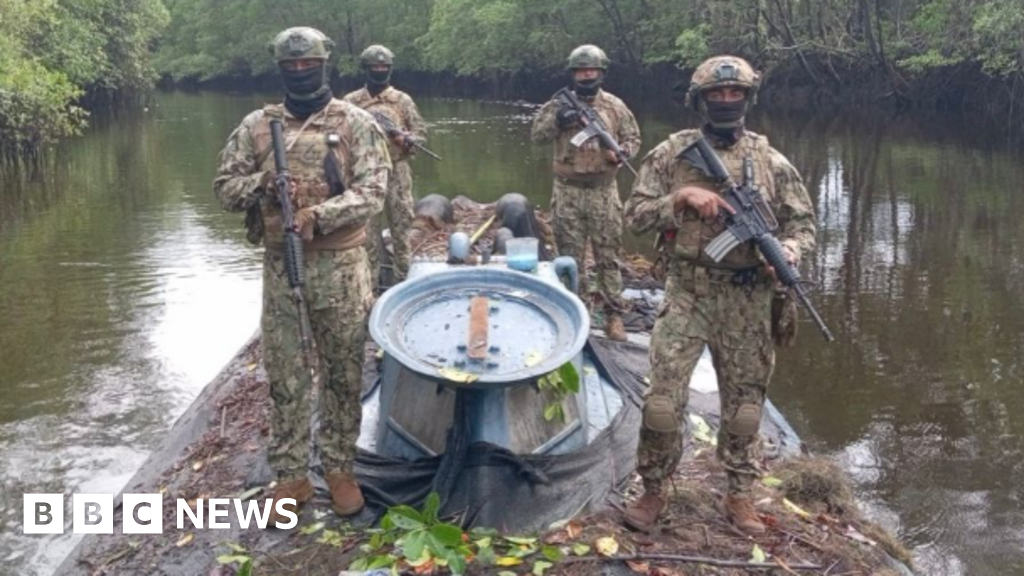

In a significant development underscoring the ongoing shadow war against international drug trafficking, Ecuador’s military announced that an alleged drug-trafficking submersible was intercepted, fully loaded with fuel and primed for departure. This incident highlights the escalating use of sophisticated maritime technology by criminal syndicates operating across South America, a region increasingly pivotal in the global narcotics trade. Authorities reveal the vessel was discovered in Ecuadorian waters, a strategic corridor for traffickers aiming to evade conventional detection methods and reach their international markets.
The interception comes amid mounting concerns from regional and global security agencies over the expansion of clandestine underwater routes. These submersibles, often capable of traveling submerged for days and carrying large shipments, represent a technological leap in the trafficking arsenal, complicating efforts by law enforcement. The Ecuadorian military, in cooperation with international partners including the United States Drug Enforcement Administration (DEA), reportedly identified the vessel as part of a broader network operating throughout the Pacific coast, connecting South American production zones with transnational markets. Such operations pose a direct threat to regional stability and challenge existing maritime counter-narcotics strategies.
From a geopolitical perspective, this incident underscores the importance of Ecuador’s strategic position amid growing tensions in the broader Andean region. The country’s ability to intercept and dismantle such traffickers not only demonstrates effective state capacity but also signals a shift in regional security dynamics. Analysts from the International Crisis Group argue that these interdictions are crucial in curbing the flow of illegal drugs, which, if left unchecked, could fuel violence and corruption across South American nations. Furthermore, the use of technologically advanced submersibles reveals the adaptability of transnational criminal organizations, pushing law enforcement agencies to develop equally sophisticated surveillance and response capabilities.
- Following this discovery, international organizations have called for increased surveillance and intelligence-sharing among neighboring states to combat the evolving threat.
- Experts warn that such maritime trafficking methods, if left unchallenged, could lead to heightened violence, destabilizing governments and societies dependent on stability and rule of law.
- The incident puts a spotlight on the importance of regional cooperation within U.N. conventions aimed at curbing illegal trafficking, although critics debate whether existing frameworks are sufficient to handle the technological advancements employed by traffickers.
As President Guillermo Lasso and military officials vow to intensify anti-drug operations, the incident serves as a stark reminder of the shifting landscape of global crime. Historians and security analysts emphasize that these technological innovations are not only a challenge but also a wake-up call—highlighting how clandestine networks adapt rapidly to enforce their illicit trade. The incident also raises questions about the efficacy of international cooperation and intelligence sharing, as criminal syndicates develop new methods to conceal and move their contraband beneath the waves.
In this unfolding chapter of international history, the confrontation over the seas and the shadows beneath them is far from over. Will nations succeed in strengthening their defenses and dismantling these covert networks, or will the ocean once again become a graveyard for their ambitions? As the world watches, the complexities of this war—fought in the depths of the Pacific and beyond—continue to shape the future of security, sovereignty, and the rule of law in the 21st century. This is a war not only of ships and submarines but of willpower and resilience, where the outcomes will reverberate through the corridors of global power for generations to come.