
U.S. Reverses Nuclear Testing Moratorium Amid Rising Global Tensions
In a move that has sent shockwaves through the international community, President Donald Trump has announced the resumption of nuclear weapons testing, marking a stark departure from decades of U.S. policy aimed at nuclear non-proliferation. Just ahead of crucial diplomatic interactions with Chinese President Xi Jinping, Trump publicly declared that the United States would initiate testing “on an equal basis” with countries like Russia and China. This shift reflects mounting concerns over the rapidly evolving geostrategic landscape, where nuclear capabilities are increasingly seen as essential leverage and deterrence in a world marred by conflicts and technological advancements.
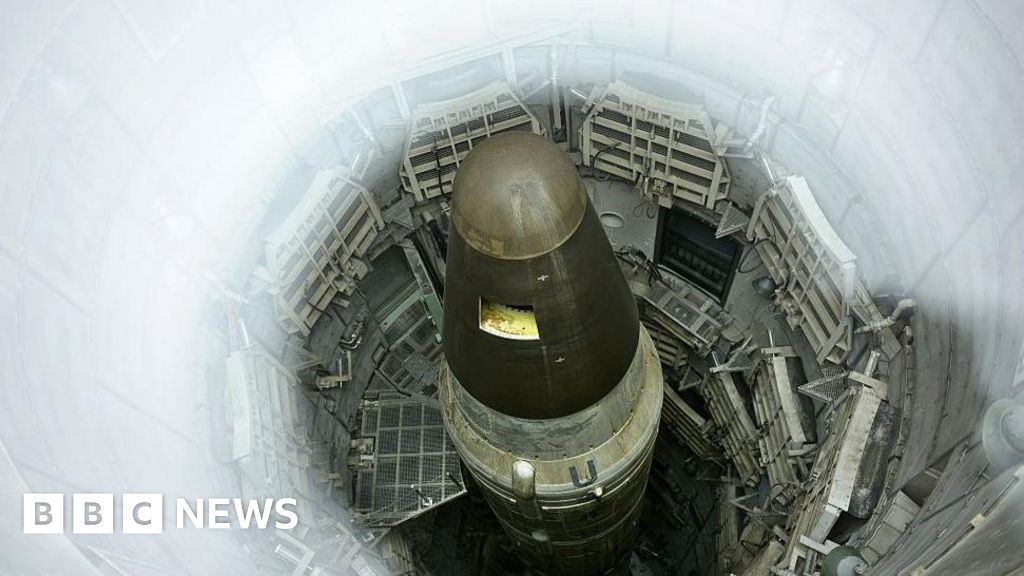
The decision to restart U.S. nuclear testing has notable geopolitical impact. Historically, the U.S. and Russia have maintained a delicate balance of nuclear arsenals, with recent estimates revealing Russia’s stockpile at approximately 5,580 warheads—more than the U.S.’s slightly lower count of about 5,225, according to the Federation of American Scientists (FAS). Meanwhile, China has dramatically increased its arsenal, reaching around 600 warheads and projected to exceed 1,000 by 2030, as per analysts from the Center for Strategic and International Studies (CSIS). By announcing a return to nuclear testing, the U.S. appears to be signaling a readiness to escalate the arms race, a move that critics warn could undermine the existing nuclear treaties and fuel further instability.
It’s worth noting that, since the last U.S. nuclear test in 1992, the international community has largely adhered to a moratorium on testing, reinforced by treaties such as the Comprehensive Nuclear-Test-Ban Treaty (CTBT). The recent Russian testing of advanced missile systems and the development of nuclear-capable underwater drones, like the Poseidon, showcase a new era of nuclear brinksmanship where technological innovation compounds strategic threats. The decision by the Trump administration, coupled with Russia’s own tests of new weaponry, may ignite a chain reaction of destabilizing responses among nuclear-armed nations. International agencies, including the United Nations and global disarmament advocates, have warned that a resumption of testing could jeopardize the nuclear non-proliferation regime, risking a future where nuclear conflict becomes more likely rather than less.
Leading historians and international analysts emphasize the gravity of this shift. For example, Dr. Hal Brands, a notable security expert, cautions that restoring a testing program could mark *”the end of the post-Cold War era of strategic stability”* and escalate the risk of nuclear proliferation among emerging powers. Meanwhile, opposition figures in Congress and advocacy groups have voiced fears over the revival of nuclear tests, arguing that this could “trigger a dangerous arms race” and undermine decades of diplomatic progress. The strategic calculus now moves perilously close to a precipice, with the future of global stability hanging in the balance. As the world watches, it remains uncertain whether diplomacy can contain this dangerous flashpoint, or if history will be rewritten in fire and radiation—an ominous testament to the fragile balance of peace and chaos that has defined the nuclear age.