
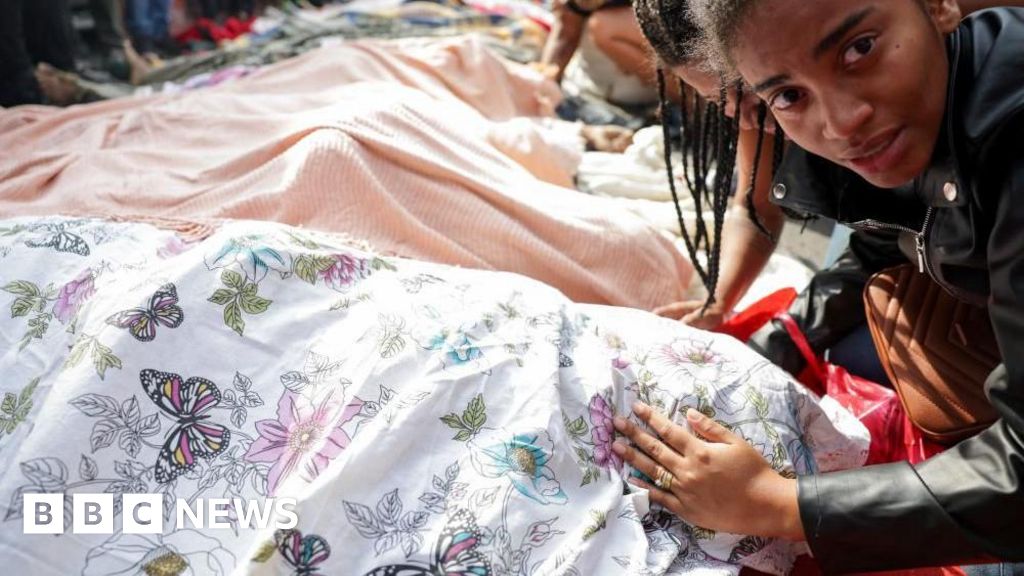

The recent police operation in Rio de Janeiro has sent shockwaves not only across Brazil but across the global geopolitical stage. In a raid that resulted in the deaths of at least 132 civilians, authorities targeted the notorious gangs that dominate the city’s favelas, revealing a complex and violent struggle for control that extends well beyond local law enforcement. The operation, which involved meticulous planning and high-profile arrests, underscores a broader challenge faced by Latin America: the persistent, deeply rooted problem of narco-terrorism. As international observers and human rights organizations voice their concerns, the incident highlights how the fight against organized crime here is intertwined with national sovereignty and international security.
Adding fuel to the fire, global agencies like the United Nations Human Rights Office issued statements condemning the scale of violence, describing the operation as “horrifying” and a stark reminder of the brutal realities facing many urban centers entrenched in the war on drugs. The police claimed that gang members utilized modern drones to drop explosives, exemplifying the evolving nature of organized crime in a digital age. Rio’s governor, Cláudio Castro, framed the operation as a strategic move against what he characterized as narco-terrorism, emphasizing that the police had been thorough in planning, aiming to decimate the Red Command—a powerful cartel that has recently regained territory from rivals like the First Capital Command (PCC). However, critics argue that such heavy-handed tactics risk escalating violence and undermining civil liberties, raising questions about the right balance between security and human rights within Brazil’s democratic framework.
Many analysts, including historians and crime experts, view this event as a key inflection point for Brazil’s internal security politics. Rafael Soares, a prominent journalist covering organized crime, suggests that the operation is also a strategic move on behalf of the state to make a political statement ahead of upcoming elections. He points out that fierce territorial disputes between rival gangs in Rio have become increasingly violent, fostering a climate of lawlessness that prompts major cities worldwide to scrutinize their own approaches to urban crime. These tensions are compounded by environmental and social concerns, as the operation comes just before the city hosts the C40 World Mayors Summit and the Earthshot Prize—events that symbolize global efforts for sustainable urban development. Thus, the outcome of this police actions has the potential to influence international perceptions of Brazil’s future stability and the credibility of its leadership on the world stage.
As the dust begins to settle, the world must confront the stark truth: the struggle for control in Rio de Janeiro is a microcosm of broader geopolitical conflicts—one where power, influence, and resources are fiercely contested in the shadows of justice. This relentless cycle of violence and intervention leaves history’s gaze fixed on a city caught between chaos and order, its fate hanging in the balance. With the international community watching, the question remains not just about the fate of the gangs or the city’s residents, but about the moral and strategic dilemmas facing governments fighting to preserve sovereignty amidst the chaos of the 21st century. The battle for Rio’s soul continues, and history’s ink is yet to fully write its final chapter.





