
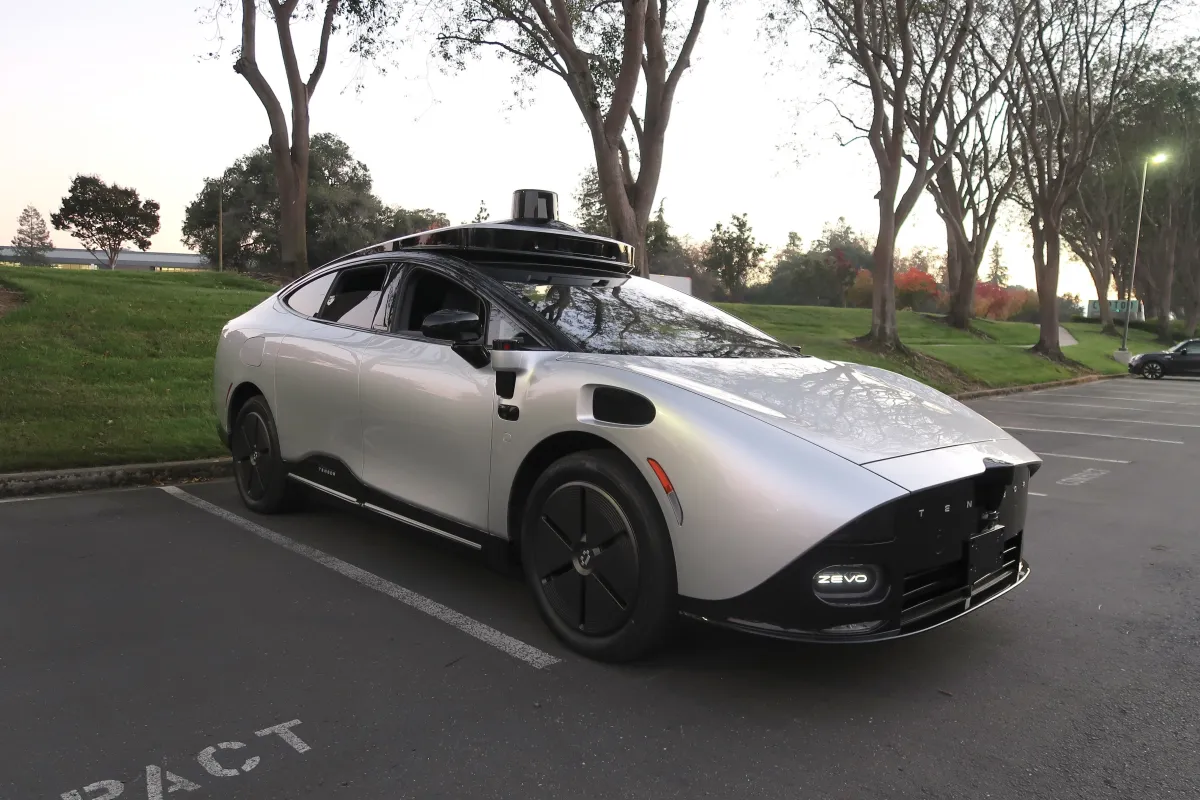

Emerging Autonomous Vehicle Startups Disrupt Traditional Automotive Industry
In a landscape increasingly defined by **innovation** and **disruption**, startups like Tensor are challenging the conventional automotive giants with groundbreaking visions of autonomous mobility. Emerging from the China-based firm AutoX, Tensor boldly claims it will be the first to market fully autonomous vehicles to mainstream consumers as early as 2026. Such momentum signals a clear **shift** toward a decentralized, AI-driven transportation ecosystem with significant business implications, including the dawn of **personal AVs** and **peer-to-peer mobility services**.
Tensor’s vision aligns with a broader trend identified by analysts at Gartner and MIT, where the barrier to entry for **robotaxi** networks is lowering, bolstered by startups willing to embrace **risk** and innovation. The company’s forthcoming partnership with Zevo—which intends to deploy up to 100 Tensor AVs—serves as a testbed for **decentralized mobility solutions**. This move hints at a future where individual ownership extends beyond traditional vehicles, ushering in a new era of **personal AI-enabled** transportation, with owners possibly deploying their cars for income-generating services, like ride-sharing—a concept advocated by visionaries such as Elon Musk.
However, the road ahead is lined with formidable **challenges**. Trust in **scaling** autonomous technology remains a critical hurdle, as recent history has shown that many startups faltered when trying to standardize reliable manufacturing processes. Tensor’s limited track record and the **technological gaps** faced by legacy automakers reveal the **competitive landscape’s volatility**. Yet, the startup ecosystem’s agility—coupled with the increasingly supportive regulatory environment—places high-stakes bets on rapid **deployment** and **market capture**. Zevo’s willingness to invest in **software integration** and the potential for **peer-to-peer sharing** platforms exemplifies the industry’s move toward a **networked** model that could redefine how mobility and business intertwine.
As industry leaders and tech innovators forecast, the next decade will be pivotal. Observers like Peter Thiel warn that *”those who control the underlying AI infrastructure will dominate the new economy,”* emphasizing the importance of early bets on companies like Tensor. The convergence of **entrenched tech giants**, **startups**, and **venture capital** signals a **bidding war** for AI supremacy in mobility. This new wave of **disruption** will likely favor those who prioritize **software innovation**, **cost reduction**, and **scalable manufacturing**. With the **driverless revolution** expected to reshape urban transport, logistics, and even personal ownership, every stakeholder must act swiftly to avoid obsolescence.
The future of autonomous vehicles is not merely about safer, more efficient transport—it’s about **changing the very fabric of urban living and commerce**. Innovation-oriented startups are **pushing the boundaries** of what’s possible, prioritizing **flexibility**, **adaptability**, and **user empowerment**. As these **disruptive players** continue to challenge traditional automakers, the industry must adapt or risk being bypassed. With **technological leaps** accelerating, and **business models** evolving at an unprecedented rate, the coming years will be critical. Stakeholders who act with **urgency** and **vision** will determine who emerges as the true **pioneers** of this autonomous future—and those who hesitate may find themselves left in the dust of a **metamorphosing** mobility landscape.





