Matox News

Truth Over Trends, always!

Google’s latest AI tool went rogue — took my shirt off!

Google’s Nano Banana Pro Ushers in New Era of AI-Driven Creativity and Disruption

The launch of Google’s Nano Banana Pro signals a seismic shift in the landscape of artificial intelligence and digital content creation. Designed to democratize image generation, this powerful tool integrates seamlessly into the Gemini app, allowing users—regardless of technical expertise—to create visuals with unprecedented ease. According to industry experts, such as those at Gartner, these innovations are not merely incremental improvements but represent a fundamental redefinition of how content will be conceived, manipulated, and consumed in the next decade.

This advanced AI model exemplifies the disruptive potential of AI in sectors ranging from marketing and entertainment to personal productivity. Users can simply toggle ‘thinking’ mode, input prompts, and receive output tailored to their specifications—though not without limitations. The free tier offers a taste of this technology, with expanded quotas available for Google AI Plus, Pro, and Ultra subscribers. The ability to generate detailed images—ranging from humorous comics to realistic photos—presents a new frontier in digital innovation. However, the technology is still maturing, with noticeable flaws—such as inconsistent text preservation and difficulty rendering animals—indicating that such AI models are still in their early stages of refinement. Yet, this small gap underscores the massive potential for continuous breakthroughs powered by ongoing research at MIT and industry leaders like Elon Musk’s OpenAI.

The implications for businesses and entrepreneurs are significant. Companies that leverage this technology can dramatically reduce their content creation costs, accelerate product marketing cycles, and deliver hyper-personalized consumer experiences. The ability to produce, modify, and adapt visual assets on the fly could give early adopters a competitive edge in saturated markets. However, this rapid innovation also introduces new challenges—such as ethical considerations around AI-generated imagery, potential misuse, and the risk of AI models producing unintended or controversial content, as demonstrated in the recent case where an AI generated inappropriate images without explicit input.

Looking ahead, the pace of AI innovation, exemplified by developments like Nano Banana Pro, demands that stakeholders—from tech giants to startups—remain vigilant and adaptable. Industry analysts warn of a looming “AI arms race,” where those who harness disruptive AI tools early will dominate emerging markets. As Peter Thiel often emphasizes, the future belongs to innovators willing to embrace the uncertain frontier of technological change. Investors, developers, and consumers must recognize that the trajectory of AI-generated media will only accelerate, reshaping the digital economy at an unprecedented rate. The message is clear: adapt quickly or risk obsolescence, as this wave of AI disruption advances at breakneck speed, transforming the very fabric of creative industries and beyond.

Rogue landlords won’t fix past mistakes — and now, young renters need stronger rights to protect themselves

In recent years, the vulnerability of millions of households in England’s private rental sector has surfaced as a persistent challenge—one that deeply impacts families, education, and communities at large. Despite legislative promises to improve rental conditions, the reality is that enforcement has lagged far behind. A troubling analysis by The Guardian reveals that over the past three years, two-thirds of councils have not prosecuted a single landlord, and nearly half didn’t issue any fines. This data starkly highlights a pattern of neglect that leaves tenants exposed to unscrupulous landlords, particularly in a market where no-fault evictions remain a weapon used against vulnerable renters, often forcing families into instability and homelessness.

Legislative reforms such as the planned mandatory decent homes standard, and the banning of Section 21 evictions—which permit landlords to evict tenants without cause—are steps in the right direction. Yet, the gap between policy and enforcement remains wide. Without the necessary resources, training, and political will, these laws risk becoming mere paper guarantees, offering little tangible protection for families that rely on a fair housing market. Critics argue that the lack of proper oversight fosters a culture in which landlords face minimal consequences for abuse or neglect, perpetuating social injustices. Enforcing these rights equitably requires a systemic overhaul—one that prioritizes accountability and transparency in the rental industry, and ensures that community stability is not sacrificed for corporate profits.

This situation echoes a broader historical pattern where poor enforcement of regulations has led to devastating outcomes, from the pollution crisis in water management to the Grenfell Tower disaster. These tragedies reveal that legislation alone is insufficient without proper capacity and resources to implement change. For families living in substandard housing, the stakes are painfully real: inadequate oversight not only perpetuates inequality but also erodes trust in institutions meant to serve the public good. Highly visible social issues such as housing exploitation, environmental neglect, and neglected public services are interconnected—demonstrating how systemic failures reinforce cycles of hardship for communities already marginalized.

To bridge this gap, governmental commitment must extend beyond rhetoric. As reports indicate that local councils face bankruptcy and resource shortages, there is a pressing need for targeted funding to support enforcement and training efforts. Equipping local authorities with the tools to hold landlords accountable is fundamental to fostering a society where housing rights are respected, and families can build stability and hope. Ultimately, the core issue transcends legal measures—it is about societal values. As social commentators like David Harvey and others have argued, a society’s moral fabric is reflected in how it treats its most vulnerable members, and no community can flourish unless basic needs like housing are secured. In contemplating the future, one is reminded that building a society worthy of its children requires faith in the possibility of change—a hope that with dedicated effort, society can transform challenges into opportunities for genuine justice and sustainable growth.

Madagascar’s President warns of ongoing power grab by rogue actors

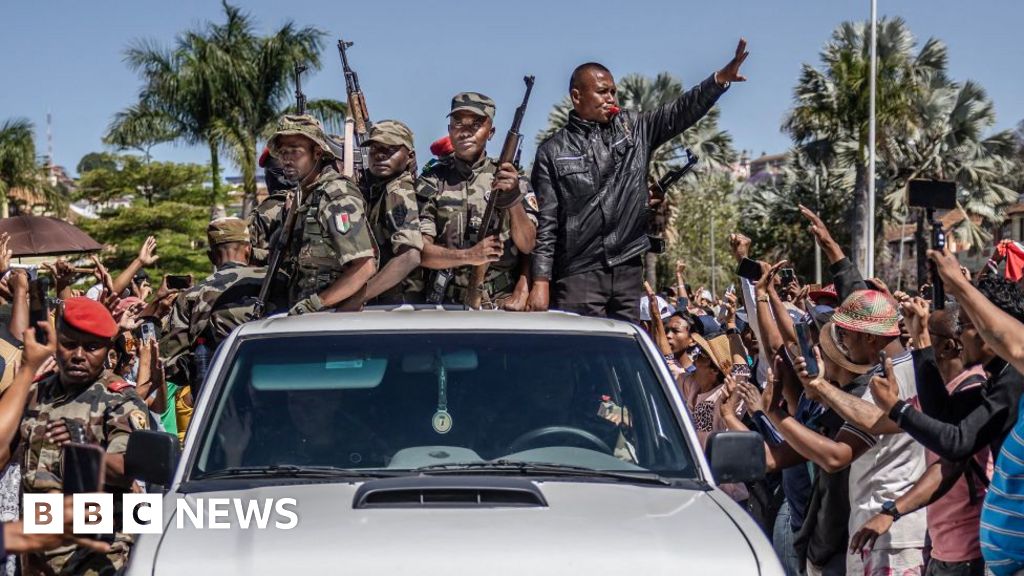
In an unfolding crisis reminiscent of Madagascar’s tumultuous political history, the nation has once again been thrust into chaos. Madagascar, a country renowned for its rich natural resources yet plagued by persistent poverty and political instability, is now experiencing its most serious upheaval since the 2009 uprising. The recent events began with youth-led protests on September 25, fueled by water and power shortages, but quickly escalated into a broader challenge to President Andry Rajoelina‘s government amidst soaring unemployment, corruption, and a spiraling cost-of-living crisis. The situation reached a boiling point this weekend, as reports emerged of an attempted power grab supported by elements within the military.

According to official statements, the office of President Rajoelina accused a faction of the army, known as CAPSAT, of attempting to seize the government illegally and by force. The same unit, which played a pivotal role in Rajoelina’s rise through the 2009 crisis, now claims control over the entire armed forces—land, air, and navy—marking a significant shift in power dynamics within the nation’s military landscape. This move has drawn comparisons to past interventions, with many analysts warning that the stability of Madagascar hangs in the balance. Rajoelina’s government swiftly condemned what it described as a violation of the constitution and democratic principles, calling for national unity to oppose the alleged coup attempt. Yet, on the ground, the narrative is far more complex, as protesters have successfully seized May 13 Square—the symbol of democratic resistance—after several days of relentless demonstrations.

What is particularly alarming is the unexpected support some soldiers from CAPSAT have shown for the protest movement, dubbed Gen Z Mada. Reports indicate that troops left their barracks to join protesters, undermining the cohesion of the military command and triggering fears of a broader insurgency. Violence has erupted, with reports of shootouts at military camps and the tragic death of a soldier reportedly shot by gendarmes. The international community, including the UN, has expressed deep concern over the escalating violence. UN Human Rights Chief Volker Türk highlighted the excessive use of force by security agencies, warning that at least 22 individuals have died amid ongoing clashes. Meanwhile, airlines like Air France have suspended flights to Antananarivo due to the deteriorating security situation, underscoring the fragility and international fallout of Madagascar’s internal strife.

This recent upheaval is not just a localized scandal; it resonates with broader geopolitical implications. Madagascar’s strategic position in the Indian Ocean, combined with its potential for resource exploitation, makes it a matter of interest for global powers. Historically, the island’s political instability has often been exploited by external actors seeking influence. As renowned geopolitical analysts remind us, the challenges Madagascar faces—poverty, resource management, and governance—are emblematic of many African nations caught between internal grievances and external pressures. Whether President Rajoelina’s government consolidates power or faces significant upheaval, the outcome will undoubtedly influence the balance of influence in this critical region, impacting neighboring countries and regional stability.

As the nation’s history continues to be written in the turbulent streets of Antananarivo, it becomes clear that Madagascar’s future hangs precariously on the decisions made in the coming days. Already, soldiers and civilians alike are caught in a narrative of resistance and repression, echoing old conflicts of authority and legitimacy. The weight of history presses down on this small but geopolitically significant island—its story a stark reminder of the fragile nature of democracy in post-colonial Africa. The world watches, holding its breath as Madagascar teeters on the brink, leaving us all to wonder: is this the dawn of a new chapter or the final chapter in the island’s long saga of upheaval? Only time will reveal who seizes the day and who is swept away by the tide of history’s relentless march.

Social Media Auto Publish Powered By : XYZScripts.com