
Matox News

Truth Over Trends, always!

“Forget the Runway: How This Podcast Is Changing How Young Trendsetters See Fashion”

In a world captivated by fleeting trends and viral influencers, a new wave of curiosity is emerging—one that digs beneath the surface of our everyday wardrobe to uncover the profound cultural and social significance of clothing. At the forefront of this movement is Avery Trufelman, a sharp and engaging podcast host whose show, Articles of Interest, offers a fresh, insightful perspective on fashion’s history, symbolism, and societal impact. Her approach is a reminder that what we wear isn’t just about aesthetics; it’s a mirror reflecting profound societal shifts and hidden histories. As her episodes navigate topics from the evolution of pockets to military-inspired gear, Trufelman redefines fashion as a form of cultural expression with enduring social relevance.

Her explorations reveal how clothing connects to pivotal societal developments. For example, she highlights how the seemingly mundane zipper was actually born out of personal passion—a love story involving Swedish-American engineer Gideon Sundback—illuminating that even the most ordinary objects have rich histories intertwined with innovation and romance. Similarly, her podcast delves into the history of military uniforms, exposing the unexpected links between civilian fashion and warfare. Today, American civilians and the military are more interconnected than ever, with military-grade fabrics and camouflage becoming staples in everyday wardrobes. Trufelman’s narrative suggests that our clothing often embodies the echoes of national conflict, societal shifts, and technological progress, making it a potent indicator of broader social dynamics.

This cultural lens elevates fashion from superficial trends to a form of social commentary. Influencers, sociologists, and industry analysts increasingly recognize that clothing choices reflect and influence societal values. The phenomenon of gorpcore, for instance, emerges not just as an aesthetic trend but as a response to the desire for practicality and resilience in uncertain times. Likewise, debates about gender privilege in pockets expose ongoing conversations about gender roles and societal expectations. Trufelman’s ability to connect these dots demonstrates that today’s youth aren’t merely chasing styles—they’re engaging in a dialogue with history, power, and identity through what they wear. Her work encourages a generation to view everyday garments as symbols of collective memory and societal resilience.

As her podcast gains traction, it’s clear that Gear—her deep dive into the relationship between clothing and war—exposes uncomfortable truths about how military and civilian clothing are intertwined in ways that often escape notice. With each episode, Trufelman underscores that fashion’s real power lies in its capacity to embody cultural narratives, challenge stereotypes, and reflect societal tensions. But perhaps the most compelling question her work raises is: what will the next chapter in this story look like? As military influence continues to shape civilian fashion, and as societal values evolve, the next big question is whether clothing will remain a silent reflection of history or become an active tool in shaping social change. The future of fashion, it seems, is not merely about what’s on the surface, but about how what we wear might help us navigate and redefine our societal landscape in a rapidly changing world.
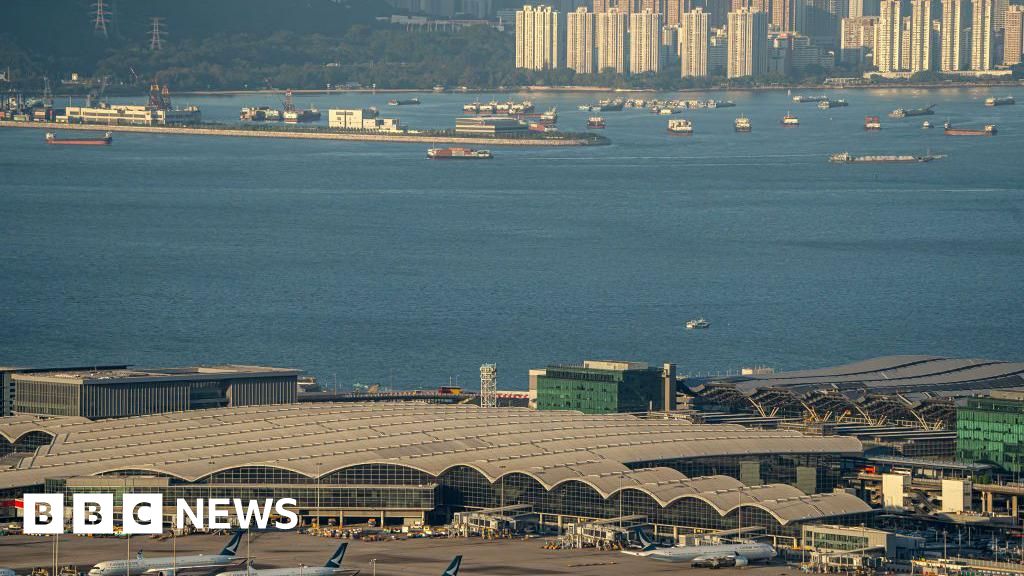
Emirates cargo flight veers off runway into sea at Hong Kong Airport, raising safety concerns

In a startling event that underscores the delicate balance of global transportation, a cargo plane has tragically skidded off the runway at Hong Kong International Airport, resulting in the loss of two ground staff members and highlighting the persistent risks faced by international hubs. The incident involved Emirates flight EK9788, operated by Aerotranscargo, which was arriving from Dubai early in the morning, around 03:50 local time. Reports indicate that the aircraft collided with a ground vehicle on the north runway, an area critical for the city’s freight and passenger operations, illustrating how even the most meticulously maintained facilities can face unforeseen calamities.

This accident arrives at a crucial juncture for Hong Kong as it struggles to maintain its status as a premier global transit centre amidst geopolitical upheaval and economic shifts. The airport’s closure of the affected runway—though the remaining two continue to operate—raises questions about the resilience of one of the world’s busiest airports. Analysts, including aviation safety experts from ICAO, emphasize that such incidents, while rare, can have ripple effects straining supply chains and logistical networks vital for regional stability. Many see this as a turning point, a stark reminder that even in a city famous for efficiency, the risks of transportation accidents remain ever-present.

The immediate response involved rescue operations by the Hong Kong Government Flying Service and Fire Services vessels, which coordinated above and below the ground to recover the crew and the ground personnel who fell into the sea. Unfortunately, the two staff members ultimately succumbed to their injuries, a tragic outcome that shines a light on the perilous nature of airport ground work. In the aftermath, authorities are set to hold a press conference at 10:00 local time, where safety investigations will undoubtedly dominate discussions. Such incidents often spark broader debate about international standards for airport safety, especially in politically sensitive regions where security and efficiency are intertwined with economic destiny.

Importantly, this event is more than a local tragedy; it operates within the larger geopolitical context of increasing tensions and shifting alliances. Hong Kong, once a renowned global trade hub, faces mounting pressure from Beijing’s grip alongside international scrutiny. The incident also prompts questions about how such crises are managed amidst escalating geopolitical stakes, where every safety lapse can be exploited to forge narratives of instability or neglect. Historians and international observers argue that it is moments like these — when human tragedy collides with geopolitical realities — that define the future of global aviation security and regional cooperation.

As the world watches, the fate of Hong Kong International Airport‘s corridors of commerce hangs in a fragile balance. The incident serves as a stark reminder that, beneath the surface of technological marvels and economic competitiveness, the human element — often for those working tirelessly behind the scenes — remains vulnerable. The weigh of history presses down, and the question remains: will this tragedy catalyze a renewed push towards safety and resilience, or will it fade into another chapter of transitory setbacks in a city that has, time and again, defied the odds? The answer, as with so much of the unfolding story, is yet to be written, but the echoes of this event will no doubt resonate through the corridors of power and policy for years to come.

Fashion Shift Alert: Less Plus-Size Presence at Runway Shows Sparks Conversations Among Young Trendsetters

In recent years, the fashion industry was beginning to show signs of embracing true inclusivity. Runways were dominated by models of varied sizes, and campaigns spotlighted body diversity as a message of progress. However, new reports reveal a disturbing regression toward a predominantly thin ideal. According to a recent Vogue Business analysis, a staggering 97.1% of the 9,038 looks across 198 womenswear shows featured models measuring between US size 0-4 — hardly a sign of genuine size diversity. This trend underscores a broader societal push back, with catwalks and advertising reinforcing a narrow beauty standard that many critics argue is both unfair and unhealthy.

Among industry insiders, alarm bells are ringing. Elektra Kotsoni, Deputy Editorial Director of Vogue Business, describes the current situation as “horrible,” highlighting that in Milan alone, only 4 of 55 brands showcased models outside the straight-size range — the lowest proportion since such data collection began. This resurgence of skinny-shaming, bolstered by the widespread use of weight-loss drugs like Ozempic, signals a societal shift fueled by consumer obsession with thinness. Celebrity endorsements and a rising trend among influencers promoting extreme weight management reveal how the #bodypositivity movement is increasingly sidelined in favor of commercialized perfection. Such drugs, originally designed for diabetes treatment, are now contributing to shortages and a parallel online market that encourages rapid, often unhealthy, weight loss.

Yet, despite the industry’s flirtation with inclusion just a few years ago, the trend is veering sharply in the opposite direction. The decline of plus-size visibility on the runway is lamented by models like Felicity Hayward, who describes the previous era (2011-2017) as a “golden age” of representation. Today, plus-size models are reportedly losing ground, with some resorting to weight loss to stay relevant in a market that is increasingly favoring the ultra-thin. Designer Rick Owens exemplifies this shift; after showcasing a handful of plus-size models last season, he has now entirely excluded them. Such decisions threaten to reduce fashion to a mere product of societal standards—an unsettling placeholder for a culture that once prided itself on progress and diversity.

While this reversion to conventional standards might appear to be a superficial industry trend, it bears profound social implications. Brands are removing dedicated plus-size sections and shrinking their ranges, effectively making inclusion inaccessible outside online platforms. Meanwhile, critics like sociologist Susie Orbach argue that these developments reflect the commodification of bodies—a societal shift where physical appearance is increasingly dictated by market forces rather than individual authenticity. The unsettling reality is that the fashion world, and by extension society, may soon face a pivotal question: are we returning to a narrow definition of beauty because it’s easier to sell, or because society is truly more comfortable with it? As influencers and sociologists continue to debate, the next big question might be whether this push toward superficial uniformity is masking deeper societal anxieties about identity, health, and progress itself.

Social Media Auto Publish Powered By : XYZScripts.com