
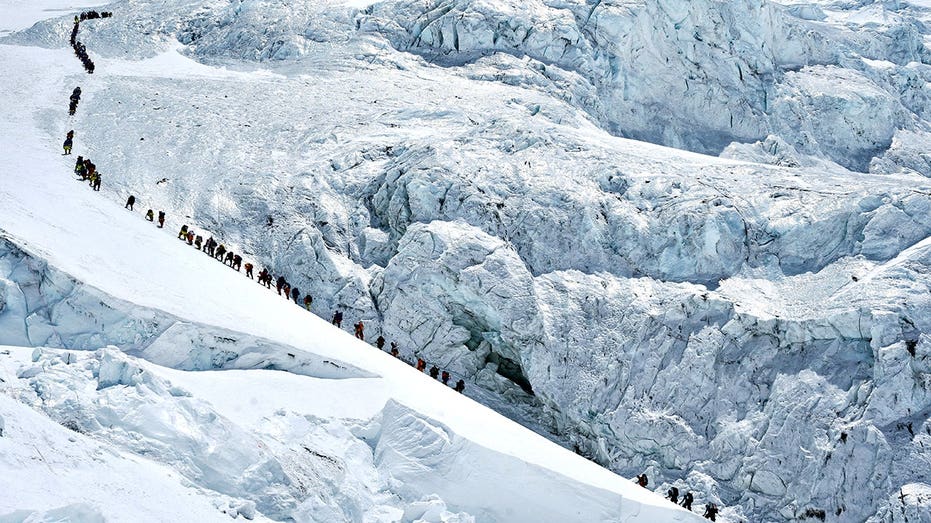

Mount Everest, the world’s tallest peak, has witnessed an unprecedented surge in successful ascents, with a record-breaking 274 climbers reaching its summit in a single day this week. This historic achievement, reported by Reuters, has simultaneously reignited long-standing concerns regarding overcrowding and safety in the mountain’s perilous ‘death zone’.
The recent surge shattered the previous Nepali record of 223 climbers established in 2019. Rishi Bhandari, secretary general of the Expedition Operators Association of Nepal, confirmed the new benchmark, indicating that the final count for the season could still climb higher as more successful ascents are officially reported.
Record Numbers Challenge Mountain’s Capacity
The sheer volume of individuals attempting to summit Mount Everest this season has drawn sharp criticism from mountaineering experts. Nepal has reportedly issued 494 climbing permits, each costing a substantial $15,000. This year, all expeditions are exclusively from the Nepali side, as China has not issued permits for ascents from the Tibetan route, likely contributing to the concentrated traffic.
Critics argue that such high numbers create dangerous bottlenecks, particularly in the upper reaches of the mountain where oxygen levels are critically low. These delays can expose climbers to prolonged periods in extreme conditions, significantly increasing the risk of frostbite, exhaustion, and even death.
The Business of High-Altitude Expeditions
The commercial aspect of Mount Everest expeditions is undeniable. For many, the dream of reaching the summit comes with a hefty price tag, yet the demand remains incredibly high. While the revenue generated from permits is vital for Nepal’s economy, the balancing act between economic benefit and climber safety is increasingly tenuous.
Some expedition organizers, however, maintain that overcrowding is manageable with proper planning. Lukas Furtenbach of Austria-based Furtenbach Adventures suggested that if teams are adequately equipped with oxygen, the number of climbers is not inherently problematic. He drew a comparison to popular European peaks that see thousands of daily visitors, arguing that Everest’s numbers are relatively small in comparison.
“This is the highest number of climbers in a single day so far.” — Rishi Bhandari, Expedition Operators Association of Nepal
Navigating the Perils of the ‘Death Zone’
The ‘death zone’ above 8,000 meters (26,000 feet) is notoriously unforgiving. Here, the human body begins to rapidly deteriorate, and every minute spent exposed to the elements and thin air increases the danger. Bottlenecks caused by large groups of climbers can turn a challenging ascent into a life-threatening ordeal, as individuals wait their turn on narrow ridges or fixed ropes.
Nepal has made efforts in recent years to address these safety concerns, implementing stricter regulations and increasing permit fees. However, the effectiveness of these measures is continually debated, especially in the face of record-breaking summit attempts. The delicate ecosystem of the mountain, along with the safety of those who venture upon it, remains a paramount concern for both authorities and the global mountaineering community.
As the climbing season continues, the focus will remain on how Nepal manages the influx of adventurers and whether current regulations are sufficient to prevent future tragedies. The allure of Mount Everest is undeniable, but ensuring the safety and integrity of its ascents requires constant vigilance and adaptation.






