Matox News

Truth Over Trends, always!

Albanese’s approval of Queensland coal mine expansion threatens ecosystems and worsens climate crisis, scientists warn

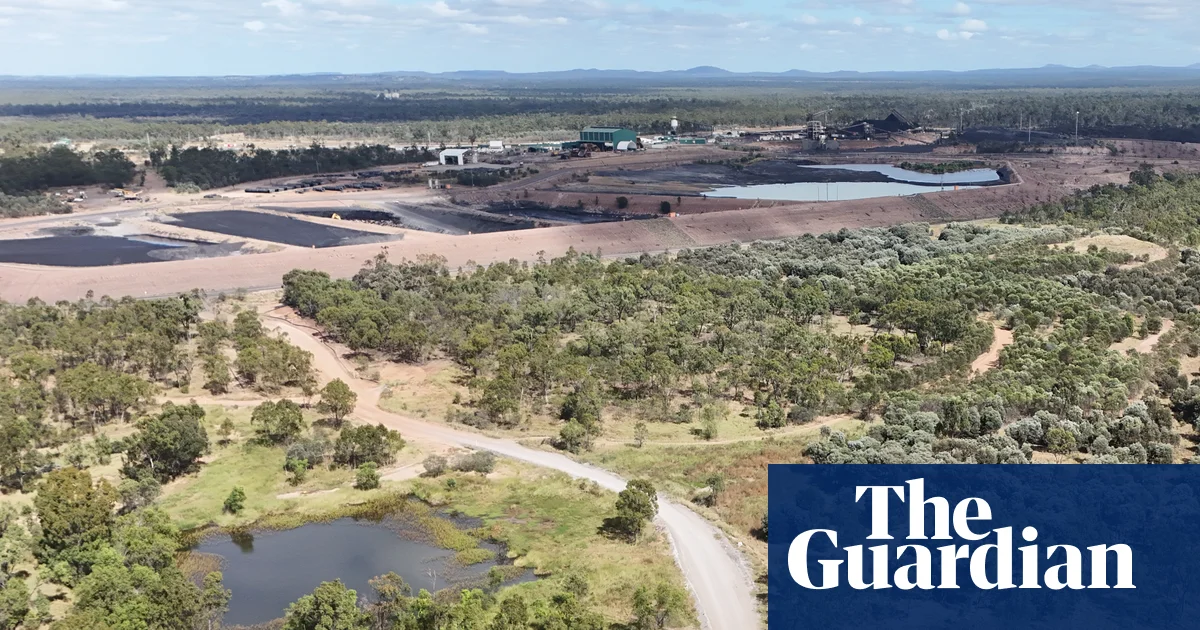
In a move that underscores the ongoing global clash between economic development and environmental conservation, the Albanese government recently approved the expansion of the Middlemount coalmine in Queensland. Owned jointly by US-based Peabody and Chinese-owned Yancoal, this project will see an estimated 85 million tonnes of coal exported over the next 24 years. While proponents tout it as a boost to the local economy and energy sector, critics argue that the environmental costs are catastrophic and threaten Australia’s rich biodiversity. The expansion signifies more than just economic activity; it marks a clear stance in the international debate—whether to prioritize short-term energy needs or long-term sustainability.

Conservationists and environmental experts have raised urgent alarms over the project’s implications for native wildlife, particularly the threatened koalas and greater gliders. The project involves clearing approximately 81 hectares of glider habitat and 183 hectares of koala territory—an area that ecologists say is crucial for their survival. Despite conditions imposed by authorities requiring the relocation of tree hollows used by gliders, prominent ecologists such as Prof. Euan Ritchie and Prof. David Lindenmayer have condemned these measures as inadequate and, in some cases, outright harmful. The attempt to mitigate habitat destruction via offsets—planting 1,557 hectares of new habitat—has been dismissed by experts as a “deluded” strategy that simply cannot compensate for the tangible loss of mature ecosystems. The catastrophic impact on native species is compounded by the project’s contribution to global heating, with conservationists estimating that burning the exported coal will generate approximately 236 million tonnes of CO2 over its lifetime—almost half of Australia’s current annual emission footprint.

This approval has sparked broader questions about the geopolitical impact of resource extraction. The approval under the climate change framework illustrates a troubling prioritization of economic interests over ecological integrity and international climate commitments. As analysts from the United Nations and other global organizations warn against complacency, the decision highlights a stark reality: the vast majority of emissions resulting from the coal will occur outside Australia, as the coal is burned primarily in Asian countries. Critics argue that this approach undermines Australia’s commitments to the Sustainable Development Goals and the global effort to curb climate change, reinforcing a narrative where Australia appears to choose economic gain over the health of the planet. This stance risks alienating international allies committed to green policies, while emboldening fossil fuel interests aligned with geopolitical powers that see energy resources as weapons of influence and leverage.

As history continues to unfold, the decision to expand the Middlemount coalmine underscores the tensions that define the 21st-century geopolitics—where resource-rich nations grapple with the legacy of environmental neglect amidst a shifting global framework demanding urgent climate action. The future of native wildlife hangs in a fragile balance, with environmentalists warning that yet another generation of Australian species might be driven toward extinction. Meanwhile, the global community observes with mounting concern as Australia’s actions shape the geopolitical landscape: a nation at a crossroads, torn between the immediacy of economic survival and the looming specter of irreversible climate catastrophe. Will this moment be remembered as a tragic misstep or a catalyst for change? The pages of history continue to be written, but every decision, every expansion, echoes louder in the corridors of global power, shaping the planet’s destiny for generations to come.

Scientists Unveil First Reliable Blood Test for Chronic Fatigue Syndrome—A Win for Society and Youth Wellness

In a significant development that could reshape the landscape of healthcare and social support for families affected by chronic illness, scientists have announced the creation of what may become the world’s first reliable blood test for myalgic encephalomyelitis, commonly known as chronic fatigue syndrome (ME/CFS). For decades, this debilitating condition has eluded objective diagnosis, leaving millions of Americans and Europeans to navigate a maze of symptoms that often lead to misdiagnosis or outright dismissiveness from medical authorities. The absence of concrete tests has profound consequences, not only for patients’ physical health but also for their families and communities, who often bear the emotional and financial burden of a misunderstood illness.

Social commentators and medical professionals have long pointed out that the absence of definitive testing contributes to a damaging societal neglect of ME/CFS sufferers. Many individuals told their symptoms are “all in their head,” a dismissive attitude that can cause isolation and despair. The potential development of a blood test to identify ME/CFS offers a promising avenue for early diagnosis and intervention, which could dramatically alter the trajectory of affected lives. As noted by Prof Dmitry Pshezhetskiy of University of East Anglia, this discovery holds the promise of transforming how this complex disease is diagnosed and managed, providing relief to countless young people, working adults, and families who have suffered in silence for years.

Nevertheless, the path from promising scientific discovery to practical application remains fraught with hurdles. Experts such as Dr. Charles Shepherd of the ME Association urge caution, emphasizing that the *sensitivity* and *specificity* of the test must be rigorously validated across diverse populations and disease stages. Concerns over premature claims echo through the scientific community, highlighting the importance of cautious optimism. Nonetheless, sociologists and health advocates underscore that breakthroughs like this have the potential to reinstate hope and dignity among those marginalized by inadequate healthcare systems. The societal challenge lies not only in developing tests but also in ensuring equitable access, especially for working-class communities who often suffer disproportionately from systemic neglect.

The social fabric of society, particularly in youthful populations, is increasingly shaped by these ongoing struggles. As education institutions grapple with integrating comprehensive health curricula and fostering understanding of invisible illnesses, families stand at the frontline of societal resilience. The societal emphasis on technological progress and scientific validation must go hand in hand with addressing the moral imperative of supporting the most vulnerable. This challenge invokes historical debates about the moral responsibilities of society—should we be content with the hope generated by a new test, or push for it to be swiftly integrated into clinics, so that the promise does not become a disappointment?

Ultimately, the story of this scientific breakthrough is a poignant reflection of society’s ongoing struggle to reconcile technological innovation with ethical responsibility. It echoes a broader societal challenge: how to ensure that justice, compassion, and equity are woven into the fabric of health care, education, and community support. As history teaches us, the true strength of a society emerges in how it lifts up those marginalized by invisible burdens, transforming scientific hope into tangible, everyday relief. In this moment of potential progress, society faces a choice—continue to chase the mirage of perfect solutions, or unite to create a future where no one is left behind in the shadows of misunderstanding. The hope for this new blood test is not just for early diagnosis, but for a society that finally recognizes and responds to the silent suffering among us, with unwavering resolve and compassionate action.

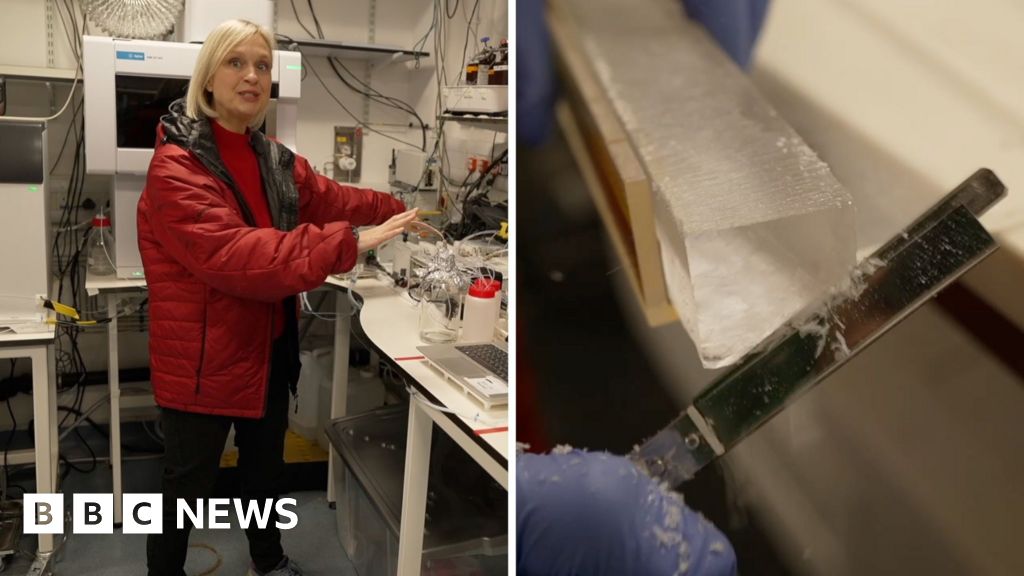
Exploring the lab where scientists unlock Earth's ancient ice secrets
Exploring the lab where scientists unlock Earth’s ancient ice secrets

Unveiling Earth’s Deep Climate History: The Antarctic Ice Cores

In a groundbreaking effort that underscores the relentless pursuit of knowledge, scientists from the British Antarctic Survey have successfully extracted and analyzed ice cores from the depths of the Antarctic ice sheet. These cores, drilled down to a staggering 2.8 kilometers, represent a chronological window extending back over 1.5 million years. With each segment carefully melted and examined, researchers hope to piece together a comprehensive environmental history that spans both glacial and interglacial periods — a veritable timeline of Earth’s climatic evolution. As the oldest ice samples ever retrieved for scientific study, these cores may fundamentally reshape our understanding of natural climate variability and human impact on the environment.

From the Coldest Continents to Global Policy: The Geopolitical Impact

The research into ancient ice cores has profound geopolitical implications. In recent years, nation-states, particularly those involved in polar research such as Australia, the United Kingdom, the United States, and China, have intensified efforts to secure influence over Antarctica’s vast and largely unclaimed territory. According to analysts at the International Institute for Strategic Studies, the continent is becoming a flashpoint—not for conventional conflict, but for strategic dominance rooted in resource access and environmental leadership. Decisions made today about scientific cooperation and territorial claims will shape regional alliances and global power balances. This latest venture into the Antarctic’s oldest ice not only aims to decode climate history but also signals the importance of scientific sovereignty in an era marked by intense geopolitical competition.

How These Findings Influence Societal and Environmental Policies

The knowledge gleaned from this 1.5-million-year-old ice has the potential to trigger policy shifts worldwide. Climate skeptics and alarmists alike watch these discoveries with keen interest, as they provide empirical data crucial for debates on human influence and future climate resilience. Historians like Dr. James Fleming note that understanding the natural cycles that have oscillated over millennia can better inform international efforts like the Paris Agreement. Yet, critics warn that such deep-time data must be integrated cautiously, lest it be exploited to advance economic or political agendas under the guise of environmental stewardship. The melting of these ancient ice cores symbolizes a pivotal juncture: either humanity will confront the long-term patterns of Earth’s climate with clarity or stumble into future crises driven by ignorance and short-term priorities.

The Unfolding Narrative of Earth’s Climate Legacy

As the last fragments of these primeval samples are melted for analysis, a story as old as Earth itself begins to reveal its secrets. Scientists, historians, and policymakers stand at a crossroads—faced with the responsibility to interpret this critical epoch with prudence. The outcomes of this research could dictate the course of environmental policies for decades to come, determining not only how humanity perceives its past but how it safeguards its future. Yet, amid the hum of drills and melting ice, the shadows of uncertainty loom: the climate of tomorrow is still being written in the ancient ice beneath our feet, a silent witness to the ongoing saga that will forever define mankind’s relationship with planet Earth.

Social Media Auto Publish Powered By : XYZScripts.com