Matox News

Truth Over Trends, always!

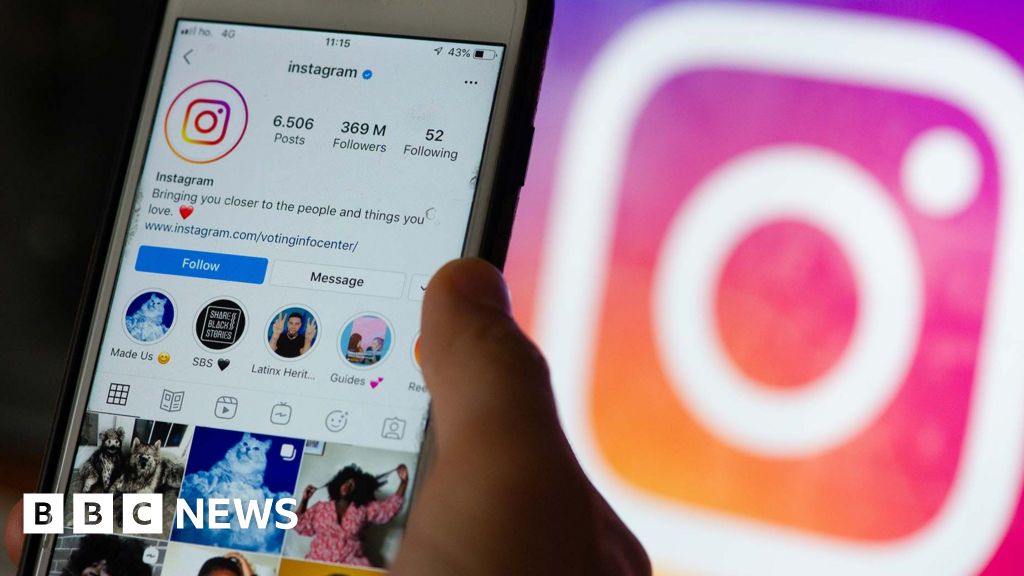
Instagram Now Warns Parents When Teens Search for Self-Harm Content

Social Media’s Hidden Toll: A Growing Crisis for Youth and Society

The digital age has transformed the way communities, families, and institutions interact with the youngest members of society. While social media platforms like Instagram offer unprecedented opportunities for connection, they also pose profound risks that are increasingly difficult to ignore. According to Ged Flynn, chief executive of the charity Papyrus Prevention of Young Suicide, despite recent statements by Meta praising their efforts to address harmful content, the core issue remains unaddressed: young people are continuously drawn into a dark and potentially destructive online environment. This concern strikes at the heart of our society, highlighting the pressing need for a critical reevaluation of how digital spaces influence mental health, social cohesion, and educational development.

At the intersection of social issues and technological advancement, our families and communities find themselves navigating a complex landscape. Sociologists have long debated the impact of digital culture on interpersonal relationships. Today, an increasing body of evidence suggests that the unregulated exposure to harmful online content can deepen feelings of isolation, depression, and anxiety among youth. This phenomenon strains families by complicating their roles as moral guides and emotional anchors, especially when children encounter damaging influences beyond parental oversight. Schools and educators, meanwhile, are grappling with a new reality in which students are affected by social media-driven pressures—ranging from cyberbullying to distorted standards of beauty and success—corroding the foundational values of self-worth and resilience.

Historians and social commentators have observed that society’s cultural shifts—particularly the erosion of local community bonds and shared moral frameworks—have created a fertile ground for the proliferation of online dangers. As social cohesion weakens, digital platforms often serve as both refuge and threat, complicating the social fabric that binds generations. According to social critic Douglas Murray, the unchecked dominance of these platforms is fostering a culture of superficiality and detachment, which hampers community-building efforts and perpetuates social fragmentation. These issues extend into our institutions, where mental health services are overwhelmed and resources are stretched thin, leaving vulnerable youth without adequate support in times of crisis.

  • Despite efforts by corporations to implement safety measures, children and teenagers remain exposed to harmful content that can influence their development negatively
  • The rise in youth mental health issues, including depression and suicide rates, correlates strongly with increased social media usage
  • Parents, teachers, and community leaders are calling for more stringent regulations and educational programs to counteract the digital threats
  • Proposed solutions include fostering digital literacy from an early age, promoting offline community engagement, and strengthening mental health support systems

The challenge today lies in balancing technological innovation with ethical responsibility. It is undeniable that social platforms have the power to build communities and spread knowledge; however, as Flynn indicates, they also neglect the deeper societal issues—namely, how their unchecked growth is contributing to a crisis of mental health among our youth. To restore stability and hope within families and communities, a societal shift is required—one that emphasizes personal responsibility, moral education, and robust community networks. Education systems must adapt to teach young people resilience and discernment in the digital age, while families need practical support to nurture healthy online habits.

Looking toward the future, society faces a critical juncture. Will we allow digital shadows to overshadow the moral fabric of our communities, or will we forge a new path—one grounded in shared responsibility and unwavering hope? As we contemplate the profound implications of our technological choices, it becomes clear that the true solution lies not solely in regulation or corporate accountability, but in rekindling the moral backbone of society itself. In doing so, we may yet craft a future where families, schools, and communities stand united—guardians of a society resilient enough to withstand the digital storm and foster genuine human connection.

Evidence Connects Sydney Kidnap Victim Chris Baghsarian, 85, to Burned Car as Search Persists

Embattled Australia Faces a Crisis with Broader Geopolitical Implications

In an unsettling turn of events, Australia is reeling after the kidnapping of 85-year-old Chris Baghsarian in what authorities believe to be a case of mistaken identity. The case, unfolding in the suburban landscapes of Sydney, has exposed more than just a personal tragedy; it underscores ongoing issues of criminality, law enforcement challenges, and the societal fractures that threaten to destabilize the nation. For over a week, forensic investigations have linked evidence from a burnt-out vehicle to a remote bushland area, where the elderly man had been held hostage, raising questions about the depth of organized crime infiltrating local communities.

While police have yet to confirm what precise evidence connects Baghsarian to the crime scene, authorities have indicated that a vehicle linked to the kidnapping was not entirely destroyed by fire, allowing forensic experts to establish crucial links. The fact that the car appeared in multiple locations, including Glenorie, suggests a calculated effort by the perpetrators to evade detection while highlighting how criminal networks exploit rural and suburban areas to hide illicit activities. It is a stark reminder that even a peaceful nation like Australia is vulnerable to covert operations that, if unchecked, could threaten its social fabric, especially as this case remains without a ransom demand or clear ties to organized underworld groups.

International Scope of Law Enforcement Struggles and Political Ramifications

Global analysts and criminal experts warn that Australia’s current predicament foreshadows a broader challenge faced by developed nations: the seepage of organized crime into civilian life, facilitated by weak borders, digital anonymity, and a lack of coordinated international strategies. The European Commission and Interpol have repeatedly emphasized that transnational crime syndicates now operate across borders with alarming agility, often turning local communities into battlegrounds. Analysts warn that if countries like Australia cannot enhance their investigative capabilities and international cooperation, their sovereignty and social order could be at grave risk.

The case also raises serious concerns about how decisions made in global and national policy impact societies at the grassroots level. The reluctance to openly confront criminal networks or implement comprehensive security reforms can embolden factions intent on destabilizing social trust. Furthermore, this incident exposes the limits of current law enforcement strategies, which are often hampered by bureaucratic hurdles, underfunding, or political hesitance, thereby enabling organized crooks to flourish in the shadows.

The Broader Geopolitical Impact and the Path Forward

This disturbing episode highlights a fragility that extends well beyond Australia. As international organizations like the United Nations and regional alliances grapple with the escalation of crime, terrorism, and illicit trade, the need for a fortified, coordinated approach becomes increasingly evident. Australia’s internal security failures could serve as a warning sign to other nations, prompting urgent calls for policies that prioritize border security, intelligence sharing, and community resilience. The ripple effects may well influence diplomatic relations, trade policies, and regional stability, especially if criminal enterprises find fertile ground in these nations’ social and political vulnerabilities.

Historians and security analysts warn that crises such as the Baghsarian kidnapping are chapters in a larger narrative of societal decline driven by unchecked criminal ambition and international neglect. As the authorities continue their search in the rugged Australian bush, the nation stands at a crossroads: either strengthen its defenses against insidious threats or risk surrendering its sovereignty to organized chaos. In the shadows, unseen forces watch, analyze, and adapt—leaving the final pages of this unfolding story unwritten but undeniably impactful, echoing across the corridors of power and history alike.

Police Continue Search at Royal Lodge as Prince Andrew Faces Investigation—Latest Developments

In a development that has sent shockwaves across the United Kingdom and resonated on the international stage, the arrest of Prince Andrew of Windsor marks a historic deviation from centuries of royal immunity. Charged with misconduct in public office linked to sensitive emails concerning Jeffrey Epstein, the incident signifies a potential shift in how elites are held accountable, challenging long-standing perceptions of the monarchy’s inviolability. As law enforcement completes searches at the Royal Lodge and the Sandringham estate, the ramifications extend beyond British borders, threatening to redefine the global influence of the royalty and its connection with transnational illicit networks.

This unprecedented event underscores a palpable internal crisis within the UK monarchy amid mounting calls for transparency from political leaders, especially within the Liberal Democrats and international watchdogs monitoring human rights abuses. Notably, U.S. lawmakers, such as Representative Thomas Massie and Robert Garcia, have seized the opportunity to press for the disclosure of previously restricted Epstein-related documents, emphasizing that justice must extend across borders. These calls reflect a broader turning point—a recognition that accountability is no longer confined within national boundaries but is now a global imperative that transcends the walls of Buckingham Palace and the corridors of Washington D.C.

Analysts from institutions like the International Criminal Court warn that such high-profile arrests symbolize a precedent in diminishing the impunity historically enjoyed by historical elites. Beyond the legal implications, these events threaten to *alter* geopolitical dynamics, especially with King Charles scheduled to visit the US in April. As global leaders respond—ranging from Donald Trump calling the arrest a “shame” to UK officials asserting that “the law must take its course”—the scene is set for an era where international cooperation on justice intensifies, casting a long shadow over the latest chapter of monarchy and power.

Historians and geopolitical analysts agree that this incident signifies a *potential* reconfiguration of the longstanding imbalance of power between old-world aristocracies and modern democratic accountability. This moment may be remembered as the dawn of a new era where the myth of untouchable royalty gives way to a reality shaped by transparency, justice, and international consensus. Yet, the story is still unfolding, and as the British Crown navigates this crisis, the world watches with bated breath—knowing that within the corridors of power, the currents of history are shifting, and there are no certainties in how this chapter will ultimately be written.

Search intensifies across Mexico in urgent quest for Nancy Guthrie breakthrough

The ongoing search for the 84-year-old mother of U.S. television presenter Savannah Guthrie has entered its third week, drawing widespread media attention and raising concerns over the safety and well-being of vulnerable populations. The case has become emblematic of broader issues related to elder care, community alertness, and the role of international cooperation in protecting at-risk individuals amid rising social fragmentation. While the search remains focused on a single individual, the ripple effects extend far beyond, underscoring the interconnectedness of security, social responsibility, and policy in a rapidly changing world.

Experts in international security and humanitarian response highlight that the case highlights the importance of multinational cooperation and information sharing. Analysts from global institutions such as the United Nations emphasize that, in an era characterized by increased population mobility and transnational challenges, local incidents often have implications that resonate globally. The specificity of this search—an elderly woman potentially lost in complex urban environments—serves as a reminder of ongoing vulnerabilities faced by aging demographics across many nations. As social safety nets are strained and societal structures evolve, the risks faced by the elderly are increasingly becoming a matter of international concern.

The incident also sheds light on how national policies toward elder care and community vigilance influence societal resilience. Critics argue that, in many countries, inadequate funding for healthcare and social services contributes to increased instances of vulnerable individuals going unnoticed or without adequate support. As the world watches this case unfold, it prompts a critical dialogue about the role of governments, community organizations, and international bodies in safeguarding vulnerable populations. According to scholars like Dr. James McCarthy, the crisis underscores the urgency for a unified global framework to address the needs of aging citizens—an initiative that could reshape international health and social policies.

In geopolitical terms, the search for Guthrie’s mother exemplifies how seemingly localized tragedies can influence international perceptions of national stability and social cohesion. Western nations pride themselves on technological innovation and social safety, yet incidents like this starkly reveal foundational gaps. The case also offers a platform for examining the international dimensions of elder care, especially as countries grapple with demographic shifts and economic pressures that threaten to compromise social safety mechanisms. Some analysts warn that if systemic issues remain unaddressed, societies could face a future marked by increased social instability, with elder abandonment and neglect becoming normalized societal issues. The response to this crisis could serve as a microcosm of broader geopolitical resilience or failure.

As the search persists into its third challenging week, the world’s gaze remains fixed on this poignant human story. The uncertainty surrounding the elderly woman’s whereabouts echoes a deeper, more profound question: how nations prioritize and protect their most vulnerable amidst the turbulence of modern geopolitics. The effort to locate her is not only a matter of individual rescue but a stark reminder that history is defined by moments where human compassion intersects with policy and resilience. The outcome of this case—still unwritten—may one day serve as a powerful chapter, illustrating whether societies can rise above their divisions and reaffirm their commitment to caring for all members. Time will tell if this fleeting crisis will spark lasting change or fade into the annals of overlooked tragedies, yet the urgency of the moment persists—an enduring testament to history’s relentless march forward.

Family Cleared in Nikki Guthrie Case as Search Drags On Into Week Three

Recent reports emerging from local authorities have shed light on a tragic event that transcends individual loss, hinting at deeper geopolitical undercurrents. As police officials emphasized that the woman’s relatives are victims, dismissing any notions to the contrary, the incident underscores the fragility of societal trust amid escalating international tensions. The discourse surrounding this case suggests an ongoing battle for narrative control, echoing the broader contest for influence in a world increasingly polarized along political and ideological lines.

Historians and international analysts caution that such tragedies, often overshadowed by grand geopolitical machinations, reveal the human cost of global instability. The police statement — asserting that accusing the victim’s family of complicity is not just wrong but “cruel” — underscores the importance of careful diplomacy and responsible communication. This incident, while localized, exemplifies how misinformation and political opportunism can further destabilize communities. As the international community watches, organizations like UNHCR and Interpol warn against exploiting tragedies to fuel divisiveness or to push particular narratives that could hinder peace and reconciliation efforts across conflict zones.

The ramifications extend far beyond the immediate locality. Given recent shifts in international alliances and the strained relations among major powers, every domestic turmoil bears the potential to ripple across borders. For example, some geopolitical strategists have pointed to this incident as a reflection of how state narratives are used to garner internal stability, even at the expense of truth. Such tactics can serve as precedents for increased state surveillance and suppression of dissent, contributing to a climate of mistrust that threatens to undermine global security frameworks. Analysts stress that the decisions taken in these local contexts—whether to prioritize transparency or to silence uncomfortable truths—ultimately shape the fabric of international order.

Moreover, in a world where social media acts as both a tool for justice and a weapon for misinformation, the line between fact and fiction becomes blurred. This incident has prompted calls from global watchdogs for responsible journalism and fact-based storytelling. With history hinting at how narratives shape the course of nations, experts warn that missteps at the local level can escalate into international crises, especially when they are weaponized by populist leaders seeking to rally nationalist sentiment. As world governments navigate a complex landscape of alliances and rivalries, the decisions by authorities today are likely to influence the geopolitics of tomorrow, whether by fostering stability or sowing chaos.

In the shadow of these unfolding events, the weight of history presses upon us. The choices made now—whether in transparency, diplomacy, or media—will echo across generations, defining the legacy of this era. As the global community holds its breath, the question remains: how will future historians interpret this moment? Will they see it as a turning point toward greater understanding or as another chapter in a world increasingly torn by discord, where the fabric of society is frayed by misinformation and political manipulation? One thing is certain: the story is still being written, and the pages of history are waiting to reveal its ultimate outcome.

No arrests yet as Arizona’s Nancy Guthrie search hits third week

The Global Shadow of Local Disappearances: A Case Study in Modern Vigilance and Justice

In a world increasingly interconnected through technology and media, the tragic disappearance of Nancy Guthrie, an elderly woman from Arizona, exemplifies how individual cases resonate beyond local jurisdictions, presenting unique geopolitical and societal consequences. As authorities pursue every lead in her case—ranging from forensic investigations to public appeals—the case underscores the delicate balance between private tragedy and collective security. The intense media coverage and public engagement exemplify a global appetite for justice, shaping perceptions of safety and law enforcement’s role in safeguarding citizens across nations.

Key to understanding this case’s geopolitical impact is the way local law enforcement collaborates with federal agencies, such as the FBI. The mobilization of this hierarchy underscores a broader system that, while designed to protect, often faces criticism for overreach and sensationalism. The influx of tips—more than 13,000—reflects a society increasingly wired to hunt for answers amid uncertainty, yet also exposes the pitfalls of amateur sleuthing fueled by social media frenzy. As Texas and California-based analysts caution, the danger lies in disseminating unverified information, which can impede justice, threaten privacy, and sometimes endanger innocent individuals. This peril is amplified in the context of international crises, where misinformation can exacerbate tensions and complicate diplomatic responses.

Her case also raises interconnected issues of societal vulnerability and the role of civic vigilance. Elderly individuals, especially women living alone, are often targeted in a landscape of rising crime rates. Governments worldwide are grappling with the challenge of establishing effective protective measures—from community watch programs to digital surveillance—while balancing civil liberties. The case has sparked a debate on the limits of surveillance and the importance of respecting privacy rights. Meanwhile, the international community watches with concern, recognizing that such tragedies often reflect or accelerate larger socio-political shifts—such as aging populations and urban crime waves—that can destabilize societies if not addressed by comprehensive policies.

Furthermore, the case highlights the importance of cooperation among law enforcement entities and the necessity of international standards and organizations that foster swift, coordinated responses to such incidents. Analysts from institutions like the International Criminal Police Organization (INTERPOL) emphasize that local cases can serve as catalysts for broader conversations about security, cross-border cooperation, and human rights protections. The ongoing investigation reminds policymakers worldwide that criminal acts, especially those involving vulnerable populations, have profound long-term implications for social stability. Historians warn that failure to act decisively in cases like Guthrie’s risks setting dangerous precedents—where the absence of swift justice erodes public confidence and emboldens criminal networks.

As the world waits and watches, the unfolding narrative of Nancy Guthrie’s disappearance continues to echo beyond the borders of Arizona. It is a stark reminder that no society is immune to threats—be they from individual criminals or larger geopolitical pressures—and that each unresolved case is a scar in the fabric of national security. With the FBI increasing its reward and the nation holding its breath, one can only wonder: How much longer will society remain passive before such tragedies redefine the boundaries of justice and the weight of history itself? The answer remains unwritten, cloaked in the shadows of uncertain futures, where every tip, every investigation, becomes a chapter in the ongoing story of human resolve and the relentless pursuit of truth.

Police Release Suspect in Nancy Guthrie Case Amid Ongoing Search

In a development that has quickly drawn theAttention of international observers and security analysts alike, police authorities recently conducted a home search following the detainment of an individual during a routine traffic stop. While initial reports suggest this was part of a broader investigation, the implications for regional stability and the geopolitical landscape are now drawing heightened scrutiny from diplomatic circles and security experts.

The incident, seemingly localized in scope, indicates pathways to more complex political undercurrents. Analysts from leading think tanks emphasize that, in today’s interconnected world, even a single police operation can serve as a lens into larger conflicts or societal tensions. Security breaches, intelligence leaks, or political instabilities could be at play—factors that threaten to escalate if not managed with transparency and strategic foresight. Scholars such as Dr. Eleanor Whitaker warn that these actions may inadvertently fuel broader mistrust among nations, especially when combined with recent shifts in regional alliances and treaties.

This sequence of events underscores the fragile nature of international order. Recent policies enacted by some governments, including strict domestic enforcement and controversial surveillance measures, have stirred concerns about civil liberties and sovereignty. Meanwhile, global institutions such as the United Nations have issued cautious statements, calling for restraint while urging transparency. Regional powers are now observing each other closely, wary of how domestic security actions might ripple outward—potentially destabilizing entire blocs or sparking new waves of tension.

As the story unfolds, the history books may well record this moment as a watershed event—a reminder that beneath the veneer of everyday law enforcement, the fabric of international peace remains delicate and easily frayed. Nations stand at a crossroads, where choices made in silence or in secrecy can have profound consequences. In an era defined by rapid information flow and geopolitical realignments, one thing remains clear: the path to stability depends on restraint, responsibility, and unwavering vigilance. The world watches with bated breath, knowing that history’s next chapter is still being written, perhaps in the quiet corners of a home or the hurried steps of a traffic stop, but ultimately echoing across borders with weighty significance.

Police Catch Suspect in DC Pipe Bomb Case, Wrap Up Long Search

The recent arrest of Brian Cole Jr, a 30-year-old man from Virginia, marks a pivotal breakthrough in the ongoing quest for justice surrounding the infamous 2021 Capitol riot. The FBI’s airtight investigation, stretching over two years, underscores both unwavering law enforcement resolve and the dangerous undercurrents of political violence seeping into the corridors of American power. Authorities confirmed that Cole was apprehended without incident early on Thursday, yet the case’s implications ripple beyond the borders of the United States, signaling a decisive moment in the global fight against domestic extremism.

While the details of Cole’s motives remain under seal, the evidence assembled paints a stark picture of premeditated sabotage. Court documents detail that he purchased components for constructing the pipe bombs—metal end caps, wires, timers, and steel wool—supplied from retail giants such as Home Depot, Lowes, and Walmart. Using sophisticated data analysis, investigators traced his movements and purchases, revealing that he was in the vicinity of both bombs during their placement on the night of 5 January 2021. Such meticulous law enforcement work highlights the importance of data-driven investigations, especially in a climate where threats of violence against democratic institutions remain high. As FBI officials emphasized, the effort to locate Cole was relentless, exemplified by the processing of three million lines of data, the analysis of cellphone movements, and surveillance footage that captured the suspect close to the scene.

Authorities and analysts argue that the case demonstrated the seriousness with which U.S. law enforcement treats threats to its constitutional order. FBI Director Kash Patel declared that “when you attack American citizens, when you attack our nation’s capital, you attack the very being of our way of life.” This framing echoes broader concerns about the rise of political violence within the context of internal divisions and misinformation. The incident also prompted discussions on how domestic radicals can pose a threat comparable to foreign adversaries, necessitating international cooperation and intelligence sharing. Moreover, the case’s resolution serves as a stark warning to those who believe they can evade justice by blending into the political fabric—a lesson reinforced by the FBI’s determination to “track you down to the end of the earth,” as Deputy Director Dan Bongino stated.

Historically, incidents like these have underscored the fragility of democratic institutions, especially in turbulent times marked by political polarization and social upheaval. Many analysts, including reputable historians and security experts, point to the need for vigilant safeguarding of constitutional norms. At the same time, this case reveals how global institutions must remain agile, adapting laws and tactical responses to the evolving nature of threats—domestic or foreign. The public, meanwhile, must grapple with the reality that the fight against extremism is ongoing, with no room for complacency. As the story unfolds, the weight of history continues to press down—reminding each generation that the resilience of a nation depends on relentless justice and the unyielding defense of its core values. The battle lines are drawn anew, and the outcome remains unwritten, left to the actions and resolve of those entrusted to safeguard the future amidst the chaos of an uncertain world.

Gemini Becomes Google’s Hottest Search Term of 2025—A Game Changer for the Next Generation

AI Continues Its Ascendancy: Google’s 2025 Search Trends Signal a Tech Disruption

Every year, Google’s comprehensive Year in Search report offers an analytical lens into the collective consciousness, revealing industry shifts and emerging trends. This year, the spotlight is unmistakably on artificial intelligence, with Google’s Gemini chatbot topping the list of trending searches worldwide. Such data points underscore that the AI revolution is reshaping the digital ecosystem faster than many anticipated, driven by relentless innovation and increased enterprise adoption. Industry analysts like Gartner have long predicted an imminent disruptions wave, and 2025 is proving them right—AI is no longer a niche technology but the apex of strategic dominance across sectors.

Disruption in Consumer and News Sectors—AI Dominates Public Curiosity

Beyond AI itself, public interest in disruptive technologies remains robust. Notably, DeepSeek’s chatbot also ranks high among trending searches, emphasizing the rapid proliferation and public engagement with immersive AI solutions. The prominence of terms like “Charlie Kirk assassination” and geopolitical issues such as “Iran” and “US Government Shutdown” in trending news queries indicates a populace increasingly dependent on AI-powered platforms for real-time information synthesis. This signals a paradigm shift in how consumers and industry leaders alike consume news and entertainment, with AI chatbots becoming the new gatekeepers and intermediaries of information.

Implications for Business Innovation and Market Dynamics

For businesses, this surge in AI-driven search patterns signals a critical strategic imperative: innovate or risk obsolescence. Companies pioneering in AI, like Google with Gemini, are setting new standards for user engagement, data processing, and personalized experiences. As MIT’s AI research suggests, such advances are enabling unprecedented levels of automation and efficiency, fundamentally transforming competitive landscapes. However, the rapid pace of innovation also brings regulatory and ethical challenges, with policymakers and industry leaders racing to establish frameworks that balance growth with responsible AI use.

  • Enhanced user experiences through hyper-personalization
  • Automation of customer service and decision-making processes
  • Potential for monopoly-like dominance by major tech corporations
  • Calls for new regulatory standards to manage AI ethics and oversight

Moreover, the trend underscores the importance of agility for startups and established players aiming to harness AI’s disruptive power. As Peter Thiel emphasizes, “The future belongs to those who understand the importance of technological differentiation,” making this an urgent moment for strategic investment in AI R&D. Companies that pivot swiftly and leverage innovation will not only disrupt markets but also set the trajectory for global technological leadership.

Looking Ahead: A Future Defined by Innovation and Strategic Disruption

With the 2026 TechCrunch event scheduled for October in San Francisco—a hub of global innovation—industry stakeholders are keenly aware that the next frontier lies in integrating AI with emerging technologies such as quantum computing and augmented reality. The convergence of these innovations promises a tectonic shift in how societies operate, economies grow, and nations compete. As the digital landscape evolves, so too must the strategic acumen of industry leaders who recognize that timing and agility are critical in capturing the future’s value. AI’s ascendancy signals not just a technological evolution but a strategic inflection point—those who act decisively will shape the future, and those who hesitate risk being left behind.

Authorities end search for Australian outback boy—hope remains alive

In a case that has captivated Australia and captured international attention, the mysterious disappearance of four-year-old Gus Lamont in the barren, rugged outback region underscores not only the human tragedy but also the profound implications of nationwide search and rescue operations. The local authorities, led by Commissioner Grant Stevens, have mobilized one of the largest land and air searches in South Australian history, yet almost three weeks on, the boy’s whereabouts remain unknown — exemplifying how disaster management becomes a test of state capacity, societal resilience, and technological resources.

  • The search has spanned roughly 470 square kilometers, an area twice the size of Edinburgh, with authorities deploying over 80 personnel from the Australian Defence Force.
  • Despite extensive efforts, no signs of Gus have emerged, prompting authorities to shift from active search to a “recovery operation”.
  • Social media has been flooded with misinformation, including AI-generated images, highlighting the challenges of managing public perception during crises, which authorities ask citizens to counteract by sourcing credible information.

This tragic case not only demonstrates the fragile nature of human life in remote territories but also exposes the vulnerabilities of state response to unpredictable scenarios. International analysts and emergency experts warn that the rugged terrain, unpredictable weather, and the delicate age of the missing child—described as shy and adventurous—have made the rescue efforts exceptionally difficult. Such circumstances amplify the challenges faced by local law enforcement and civilian volunteers, raising real questions about how nations build resilient systems for person-centered emergencies.

From a geopolitical perspective, this incident offers a stark reminder of how vulnerable communities in remote regions are to crises and the importance of international development in strengthening local emergency services. As Australian authorities try to balance their limited resources against the vast terrain, this case echoes broader debates on state capacity and societal cohesion. Historically, scholars such as Dr. Helen Clark have emphasized how effective public response systems often depend on a nation’s technological infrastructure, political will, and community engagement. The failure to find Gus in the current timeframe raises questions about the preparedness and resilience of isolated communities, especially in nations reliant on vast territories with sparse populations.

Furthermore, the incident has ignited global conversations about social media’s double-edged sword: while it accelerates awareness and mobilizes grassroots assistance, it also fosters misinformation and panic. The spread of fake images and speculative narratives can hinder official investigations, complicating trust in institutions and raising moral questions about privacy and dignity during crises. International organizations, including the United Nations, have long warned that mishandling information can hamper rescue efforts, emphasizing the need for responsible journalism and civic communication.

As the search continues amid warnings of shifting weather conditions and inaccessible terrain, the international community is watching with bated breath. The story of Gus Lamont encapsulates a universal truth: amid the chaos of nature and human vulnerabilities, nations stand at a crossroads—where decisions made in moments of crisis can either reinforce resilience or reveal profound systemic weaknesses. This tragic disappearance will undoubtedly be etched into the annals of history, a grim testament to the fragile boundary between safety and the unknown. As the world bears witness to the ongoing search, one can only ponder—how much longer can we ignore the lessons that such incidents impose upon our collective consciousness? We are left not with answers, but with the haunting echo that history’s most profound stories are often written in silence, waiting for the day when the truth finally surfaces.

Social Media Auto Publish Powered By : XYZScripts.com