
Matox News

Truth Over Trends, always!

Majority of Students Secured Top School Options in a Growing Shift Towards Choice

As pupils across the country discover their secondary school placements, a wave of emotional responses and societal implications unfold, revealing much about the resilience and challenges faced by families, communities, and the broader educational landscape. This process of school allocation, often perceived as a routine administrative task, significantly influences the trajectory of a child’s social development, shaping their future opportunities and reinforcing existing social inequalities. For many families, the announcement marks a pivotal moment that tests their sense of hope and adaptability in an increasingly competitive environment.

The distribution of school placements reflects deeper societal issues, such as unequal access to quality education and the persistent socio-economic stratification that continues to define many urban and rural communities. Sociologists like Pierre Bourdieu have highlighted how educational institutions tend to reproduce societal hierarchies, with children from affluent families more likely to secure placements at prestigious schools. Conversely, disadvantaged communities often find themselves confined to underfunded institutions, undercutting students’ prospects and perpetuating cycles of inequality. The impact on families is tangible: parents may feel heightened anxiety, investing significant resources into supplementary tutoring or relocation to secure better educational opportunities for their children.

This social stratification extends beyond individual families to influence community cohesion and social mobility. Institutions such as local councils and educational authorities face mounting pressure to ensure equitable allocation within limited capacities. Yet, systemic barriers often hinder efforts, leaving marginalized populations vulnerable to social exclusion. The consequences resonate in communities, where disparities in school quality contribute to widening racial, economic, and cultural divides. Education historian Dr. Miriam Cohen warns that such disparities not only affect individual success but threaten the fabric of society itself, fostering feelings of alienation and disenfranchisement among youth.

Addressing these challenges requires a multifaceted approach, with an emphasis on reforming admissions policies, increasing investment in underserved schools, and fostering genuine community engagement. Proposed solutions involve expanding access to high-quality education through targeted funding, comprehensive scholarship programs, and initiatives that prioritize inclusive and diverse school environments. The aim is to dismantle barriers rooted in socio-economic background and to foster a sense of shared opportunity. As social commentators argue, sustainable social change hinges on recognizing that every child’s success is inherently tied to the support systems within their community and family, underscoring the ethical imperative to address educational inequities.

Ultimately, the journey of a young pupil receiving their school placement encapsulates the broader societal struggle—balancing tradition with reform, privilege with justice. As communities grapple with these social issues, it is essential to remember that behind every placement letter lies a human story, a family dreams, and a future waiting to be shaped. Society’s challenges demand collective effort, innovative solutions, and a moral commitment to forge pathways where opportunity is not dictated by circumstance but illuminated by hope. In this ongoing narrative of growth and resilience, the question remains: can society truly rise to meet the needs of all its young, offering them not just a place in a school, but a place in a future that values their potential?
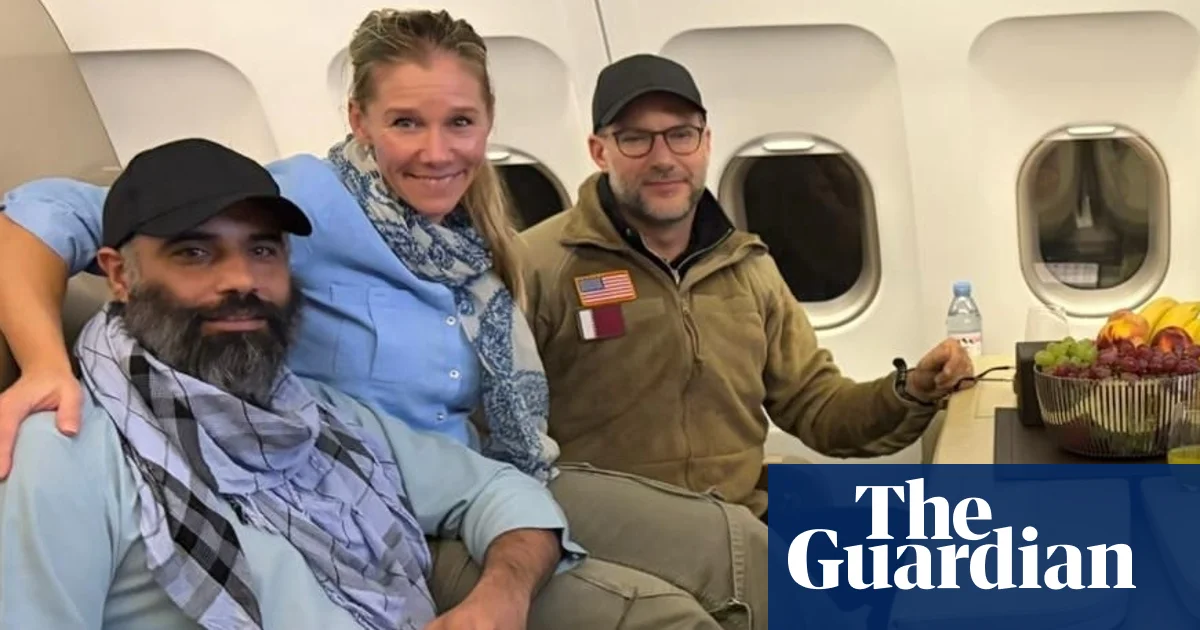
US Citizen Amir Amiry Secured by Taliban in Afghanistan

The recent release of Amir Amiry, a US citizen detained in Afghanistan, underscores the fragile and complex geopolitical dance ongoing in the heart of Central Asia. After weeks of diplomatic negotiations facilitated by Qatar, the Taliban’s decision to free Amiry highlights the layered diplomacy at play, one influenced heavily by strategic interests and international pressure. This development is not merely a humanitarian milestone but a clear signal of shifting power dynamics, where regional players and global institutions shape the future of a nation whose stability remains pivotal for global security.

U.S. Secretary of State Marco Rubio framed the release as a reflection of America’s unwavering commitment to protect its citizens abroad, especially in the shadowy corridors of Taliban-controlled Afghanistan. His remarks echo recent directives from President Trump, emphasizing that the United States will pursue a policy of relentless pursuit of justice for those unjustly detained. Yet, the broader question remains: what are the true costs and implications of such negotiations? Reports suggest that Qatar’s involvement in securing the release demonstrates how regional powers now hold significant sway in Afghanistan’s ongoing saga. This diplomatic leverage raises questions about the long-term influence of outside nations and whether their roles inadvertently legitimize Taliban governance.

The case of Mahmood Habibi, an Afghan-American businessman vanished in 2022, underscores the ongoing suffering of families caught amidst the fragile peace process. Habibi’s disappearance, attributed by his family to Taliban custody, illustrates a broader reality: many Americans and Afghans remain ensnared in a web of uncertainty and danger. While the US government insists that any future exchanges will be ‘all or nothing,’ the situation on the ground suggests that Afghanistan continues to be a geopolitical chessboard, with the Taliban serving as a key piece manipulated by larger regional and international interests. Analysts warn that these negotiations might merely yield short-term relief without resolving the underlying political crisis, which remains a tinderbox for future conflict.

Meanwhile, Afghanistan’s economic and humanitarian crisis deepens amid dwindling international aid and mounting humanitarian disasters, such as the recent magnitude-6 earthquake. The country’s isolation is compounded by global indifference and internal instability, which threaten to turn Afghanistan into a breeding ground for terrorism and insurgency. Despite this, Trump remains fixated on regaining former US military positions, such as Bagram airbase. His repeated demand to recapture strategic facilities signals an enduring interest in asserting military dominance. Yet, this pursuit risks reigniting conflict in a country exhausted by decades of war, potentially triggering broader regional destabilization, especially with Iran, China, and Russia watching with keen interest. Such actions could entrench Taliban control further and complicate efforts to forge a stable, tolerant society.

As history continues to unfold, the question endures: who truly benefits from the ongoing negotiations and what footprint will this leave on international stability? The story of Afghanistan illustrates how decisions made behind closed doors ripple outward, influencing global power shifts and shaping the lives of millions. With each release, each diplomatic handshake, the silent weight of history presses down, reminding us that in the shadows of diplomacy, the fate of nations remains precariously balanced — a turbulent dance where every move writes the next chapter of an enduring saga of freedom, control, and survival.

Social Media Auto Publish Powered By : XYZScripts.com



