
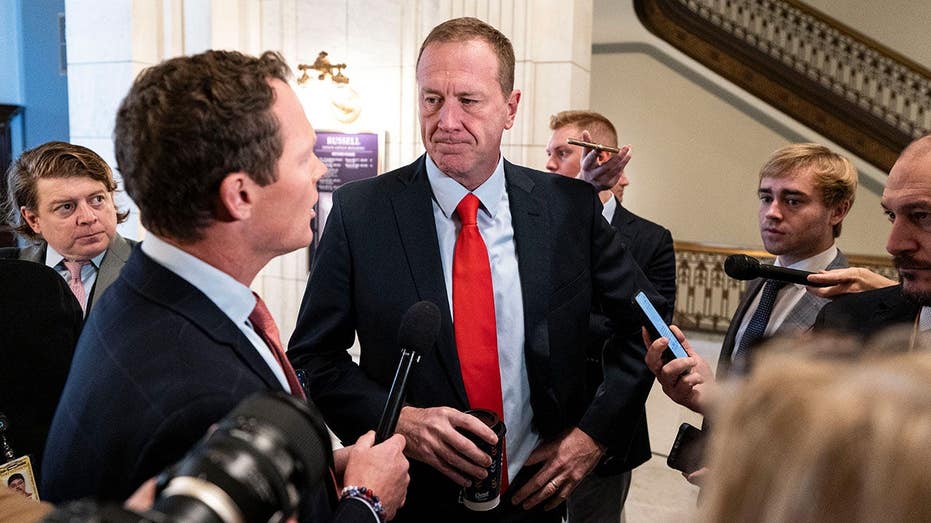

Missouri Senator Eric Schmitt has successfully championed a significant legislative measure, securing a $350 million provision for Immigration and Customs Enforcement (ICE). This funding package, aimed at bolstering federal enforcement capabilities, directly targets the contentious issue of sanctuary cities and their policies. Senator Schmitt, a vocal critic of current immigration approaches, asserts that these policies pose a fundamental threat to national sovereignty and order.
His provision, now included in a House-passed funding package, arrives as a direct response to the ongoing challenges faced by federal immigration officials. It seeks to empower ICE agents to apprehend criminal illegal immigrants upon their release from state or local custody, particularly in jurisdictions that refuse to cooperate with federal mandates.
Bolstering Enforcement Against Sanctuary Policies
The core of Senator Schmitt’s initiative is to close a critical loophole created by sanctuary city policies. These local ordinances often prohibit law enforcement from coordinating with ICE, allowing individuals who have committed crimes while in the country illegally to re-enter communities after serving time, rather than facing deportation. The new funding is specifically allocated to enable ICE to overcome these local barriers, ensuring that federal law can be enforced.
The senator highlighted the stark reality of non-cooperation in many sanctuary jurisdictions. “When you’re here illegally and you’ve committed a violent act, when you’re released from prison, we’re actually going to send you back home,” Schmitt stated, underscoring the common-sense principle behind his legislation. This targeted approach aims to restore a measure of accountability and public safety that many argue has been eroded by current practices.
- Provides $350 million specifically for ICE operations.
- Focuses on arresting criminal illegal immigrants after release from local custody.
- Directly counters non-cooperation from sanctuary states and cities.
- Aims to enhance public safety by facilitating deportation of violent offenders.
A Stand for National Sovereignty
Beyond the immediate enforcement implications, Senator Schmitt frames the debate over immigration policy as a crucial moment for Western civilization and the principle of national sovereignty. In an interview with Fox News Digital, he argued that a nation’s ability to control its borders and determine who resides within them is non-negotiable. He emphasized that without this fundamental right, the very concept of a sovereign nation is undermined.
Schmitt criticized what he termed “suicidal empathy” in some immigration policies, suggesting that such approaches, while perhaps well-intentioned, ultimately jeopardize the stability and security of the country. For him, the question of who can enter and who must depart is not merely administrative but foundational to national identity and self-governance.
Sovereignty demands a nation’s right to control its borders and enforce its laws.
Questioning Policy Motivations
The Missouri senator also delved into the potential motivations behind certain immigration stances, suggesting that some policies might be driven by more than just humanitarian concerns. He posited that an “electoral play” and the pursuit of “raw power” could be underlying factors in approaches that seem to disregard federal immigration law. This perspective aligns with a broader conservative critique that views open-border policies as a means to reshape future electorates.
The debate surrounding ICE funding and sanctuary cities remains a flashpoint in national politics. Senator Schmitt’s successful provision represents a significant legislative victory for those advocating for stronger border enforcement and a more robust assertion of national sovereignty. It underscores a persistent conservative commitment to law and order, particularly in the realm of immigration.
The ongoing struggle over immigration policy, balancing humanitarian concerns with the imperatives of national security and sovereignty, continues to shape legislative efforts in Washington. This latest move by Senator Schmitt is a clear signal of intent to reinforce institutional authority and ensure accountability within the nation’s immigration system.






