Matox News

Truth Over Trends, always!

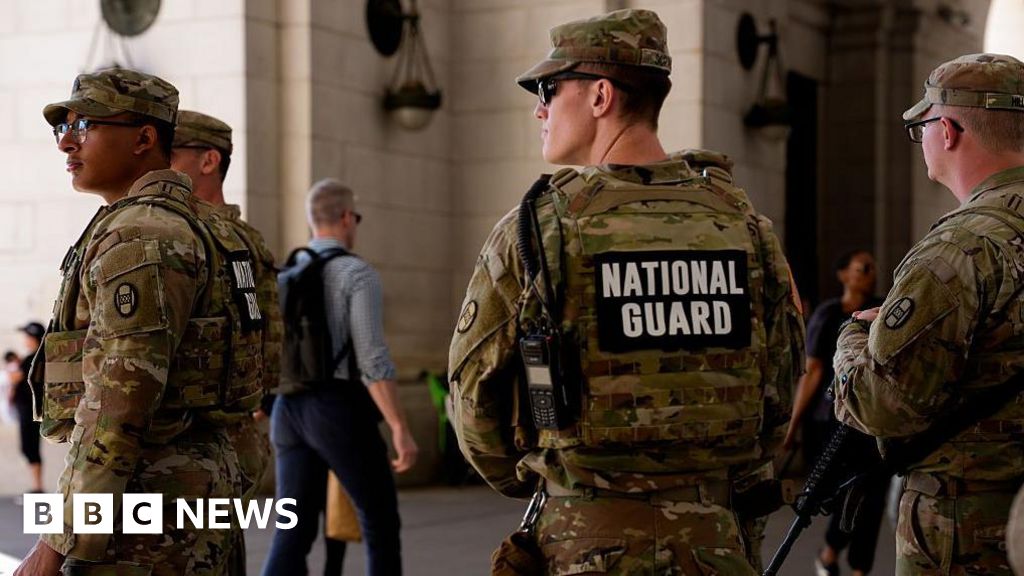
Why is Trump pushing to send National Guard troops into American cities?

In an era marked by growing internal unrest and a contentious political landscape, the United States finds itself embroiled in a complex debate over the deployment of the National Guard. Under the leadership of President Donald Trump, federal authorities have taken unprecedented steps to involve military reserves in domestic law enforcement, primarily citing a need to quell violence and support immigration enforcement policies. As cities like Chicago, Portland, and others become flashpoints of protest, the legal and constitutional ramifications of these actions are raising alarms far beyond American borders. Prominent judicial figures, legal analysts, and international observers are scrutinizing whether these moves threaten the stability of civil liberties and the rule of law, or are a necessary assertion of federal authority in a fractured nation.

Legal Battles and Federal Powers in Question

  • The core of the controversy lies in 10 US Code § 12406, a rarely invoked clause that grants the president the authority to federalize National Guard units in cases of invasion or rebellion. President Trump has leveraged this law multiple times, deploying troops under the guise of defending national security, yet critics argue these justifications are stretched thin. California and Oregon have already filed lawsuits challenging these deployments—California’s governor, Gavin Newsom, labeling Trump’s actions as an attempt to ‘manufacture crises.’
  • Federal judges in Oregon, including Judge Karin Immergut, have temporarily blocked Trump’s efforts, ruling that such deployments amount to the imposition of martial law, which conflicts with the constitutional framework that limits military involvement in civil matters. These legal challenges underscore the delicate balance of power between the executive and judiciary, highlighted by the fact that the Posse Comitatus Act explicitly restricts military actions on American soil.

Through these court rulings, constitutional principles and legal boundaries have been thrust into the spotlight, exposing the tension between presidential authority and states’ rights. The ongoing legal saga reflects a broader geopolitical concern: how a nation handles internal dissent can ripple through international relations, especially as other nations watch a superpower at this pivotal crossroads.

Geopolitical Impact: A Nation Divided and Under Scrutiny

The unfolding crisis in the United States carries profound geopolitical implications. As the world’s leading superpower grapples with internal unrest, allies and adversaries alike are observing closely. China and Russia have seized upon the chaos, pushing narratives that portray the U.S. as increasingly unreliable and unstable—a narrative that could undermine the global influence of the West. Meanwhile, foreign leaders and international organizations warn that a fractured America risks losing its moral authority, especially when employing military force against its own citizens.

Some analysts warn that the perception of a nation willing to deploy armed forces within its borders to suppress dissent could set a dangerous precedent, emboldening authoritarian regimes worldwide. Historians specializing in American civil-military relations have noted that these actions echo past episodes of internal crisis where constitutional insurrection was met with military intervention—an epoch-shaping moment that redefines the country’s societal fabric.

The decisions made now, whether by judicial courts or the executive branch, will irrevocably influence the geopolitical landscape. Each deployment, each court ruling, and each political statement echoes in the corridors of power across continents, shaping history and the global perception of American resolve, stability, and adherence to constitutional principles.

The Unfolding Saga: A Nation in Transition

As the legal clashes continue and the National Guard remains a contentious symbol in the political arena, the weight of history presses heavily upon the present moment. With the world watching, the very essence of what it means to uphold liberty and justice is being tested. The choice of the United States—to deploy its armed forces in times of internal chaos—will echo through generations as either a reaffirmation of constitutional order or a shadowed chapter of authoritarian overreach. The story of this ongoing crisis remains unwritten, as history’s pen continues to document a pivotal chapter—a nation caught between preserving its founding principles and confronting the turbulence of its own making.
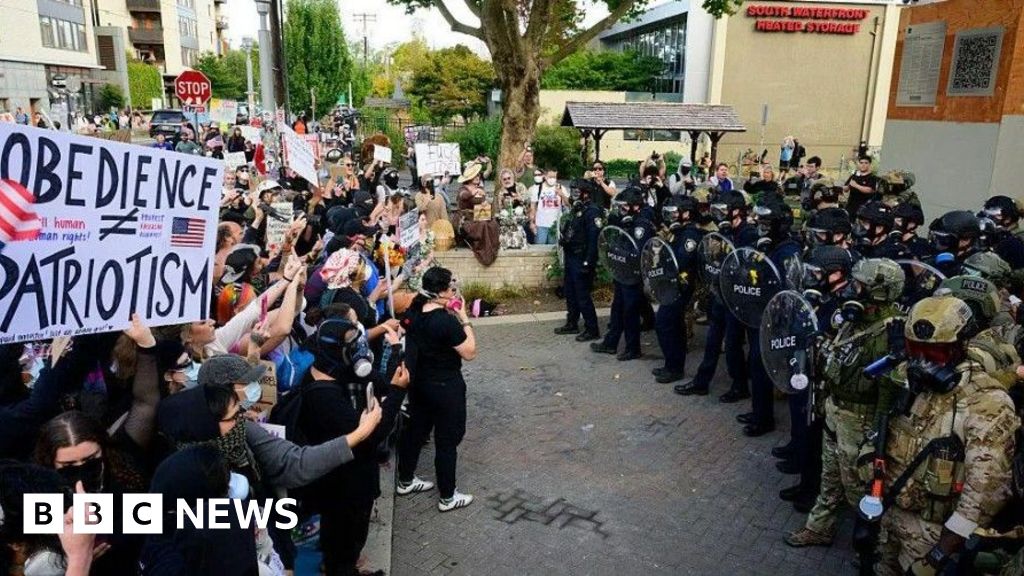
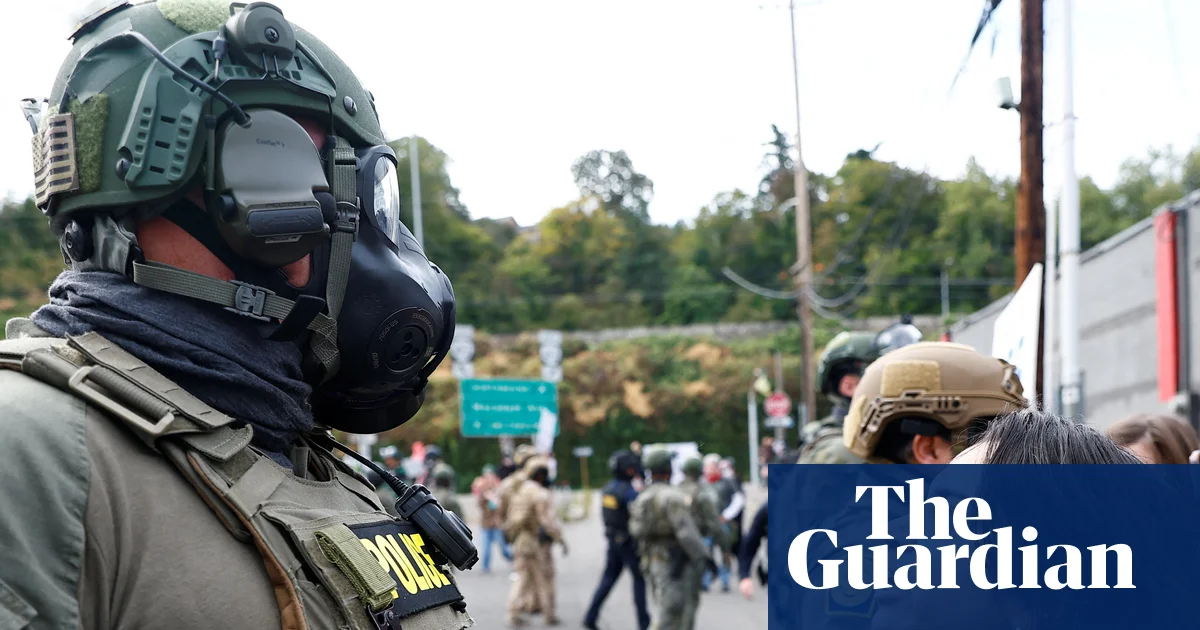
Judge blocks Trump’s attempt to send California National Guard to Portland

In an unprecedented turn of events, United States federal judiciary has stepped into a contentious battle over the deployment of National Guard troops across domestic borders, marking a significant moment in the ongoing struggle between federal authority and state sovereignty. The recent decision to temporarily block the Trump administration from dispatching troops from Texas and California to Portland, Oregon underscores the deepening cracks within American federalism. The ruling, delivered by US District Judge Karin Immergut, signals a notable restraint on executive power, emphasizing the importance of local consent and constitutional boundaries in deploying military force domestically. As tensions escalate, this judicial intervention warns of the delicate balance required when confronting chaos and unrest. It also raises crucial questions about the limits of presidential authority, especially when political disputes threaten to spiral into military occupations, altering the social fabric of cities already strained by protests and crises.

The controversy centers on the Trump administration’s effort to use the National Guard as a tool to quell protests linked to immigration enforcement and leftist activism, with Portland becoming the focal point of these efforts. The administration’s assertion that troop deployments are necessary to restore order clashes with legal interpretations that argue such actions infringe on state rights and could set dangerous precedents for federal overreach. The judge’s decision to authorize a temporary restraining order until at least October 19 reflects concern over the potential for militarized responses to inflame social tensions and undermine the sovereignty of local governments. Analysts warn that resorting to military force in urban centers risks transforming peaceful protests into battlegrounds, with lasting impacts on civil liberties and community trust.

This legal tussle reveals a broader geopolitical impact—a nation struggling to resolve internal divisions while its leaders attempt to project strength through military deployments. International organizations and historical experts have cautioned against the normalization of military interventions in American cities, warning that such actions could destabilize the domestic landscape and inspire similar strategies amidst other democracies facing unrest. The White House’s outspoken denouncement of the judge’s ruling, coupled with rhetoric portraying legal limits as “constitutional violations,” signals an alarming willingness to bypass judicial oversight in pursuit of a law-and-order agenda. Meanwhile, the proliferation of lawsuits from states like Illinois and the vocal opposition from state officials exemplify the intense federal-state power struggle, echoing historical conflicts over control, authority, and the rights of citizens.

As the situation unfolds, the spectacle of political tit-for-tat, legal battles, and security measures leaves a nation on the precipice of a pivotal chapter in its history. The decision to deploy or restrain military force amidst civil unrest will have profound and lasting consequences—not only for America’s social order but also for its global image. Today’s internal conflicts threaten to redefine the boundaries of power between state and federal authorities, shaping the course of democracy itself. The weight of history presses heavily on this moment, as the world watches from afar—will the United States uphold its founding principles or succumb to a new era of militarized governance? Only time will tell, but one thing remains certain: the unfolding saga is a stark reminder that the true battleground lies not only in the streets but also in the very fabric of national sovereignty and the enduring quest for constitutional justice.

Judge halts Trump’s attempt to send National Guard to Portland

US Federal Court Blocks Deployment of National Guard to Portland

In a pivotal legal decision that echoes across the United States, a federal judge has halted the Trump administration from deploying the National Guard to Portland, Oregon. This move ignited a fierce political debate about the use of military forces in domestic civil unrest. The court’s intervention highlights the ongoing struggle between federal authority and local sovereignty, with profound geopolitical impact that extends well beyond the Pacific Northwest. The administration had announced on 27 September its intention to send troops, claiming it was necessary to restore order amidst protests outside a federal immigration enforcement office. However, local officials and the state’s legal representatives argued that the situation was misrepresented, pointing to the city’s relatively calm protest activity in recent days. This legal setback underscores a broader narrative: the clash over federal intervention in domestic protests has become a microcosm of larger ideological battles,” explained Dr. Helena Strauss, a political analyst specializing in US civil-military relations.

The decision by Judge Immergut was based on a contention that the deployment would violate both the US Constitution and federal law. Critics argue that the Trump administration’s narrative paints Portland as a city embroiled in chaos, with Attorney General William Barr emphasizing the threat from “vicious and cruel radicals” that must be subdued with federal force. Conversely, local voices and Oregon’s attorney general declared that these claims are exaggerated; protests in Portland have largely been peaceful, sometimes comprising fewer than a dozen demonstrators. The court’s ruling not only halts the immediate deployment but also signals a warning against the unchecked use of force in what many see as a contentious effort to politicize law enforcement amid a highly polarized national climate.

This legal defeat for President Donald Trump marks a significant moment in the ongoing narrative of federal overreach. Since the start of his presidency, Trump has portrayed certain American cities—particularly those governed by Democrats—as lawless zones in need of military intervention. His designation of Antifa as a “major terrorist organization” was a deliberate move to stigmatize a loosely connected ideology opposed to fascism, but one that historically resists centralized control. Critics argue these labels serve to justify aggressive crackdowns, while supporters contend they are necessary to restore order. The international community watches as the US grapples with internal unrest, with many analyzing whether this pattern reveals a deeper strain within American democracy or an overreach by executive power in the guise of preserving law and order.

The geopolitical consequences are manifold. With China and Russia observing a nation in apparent disarray, the American image as a beacon of democratic stability is under strain. Historians warn that persistent federal overreach and internal conflicts risk undermining the U.S. global standing, especially in a world where soft power is crucial. The divisions exposed in Portland and other cities are not confined within borders—they threaten to reshape international alliances, weaken the American-led liberal order, and embolden adversaries who seek to exploit internal vulnerabilities. As observers like Dr. Samuel Ortega, an international relations scholar, note, “the difficulties faced in Portland are emblematic of a nation at a crossroads, where internal discord threatens to spill into the global arena, testing America’s role as a leader of stability and freedom.”

In this unfolding chapter of history, the struggle over Portland is more than a regional dispute; it is a sovereign test for the United States’ commitment to federalism, civil liberties, and democratic norms. As courts weigh in and protesters mobilize, the trajectory of this conflict will influence how nations perceive American resilience and resolve. The future remains uncertain, but the weight of history continues to press forward—an indelible reminder that the decisions made today will echo through generations, shaping the fabric of the free world itself.

Social Media Auto Publish Powered By : XYZScripts.com



