Matox News

Truth Over Trends, always!

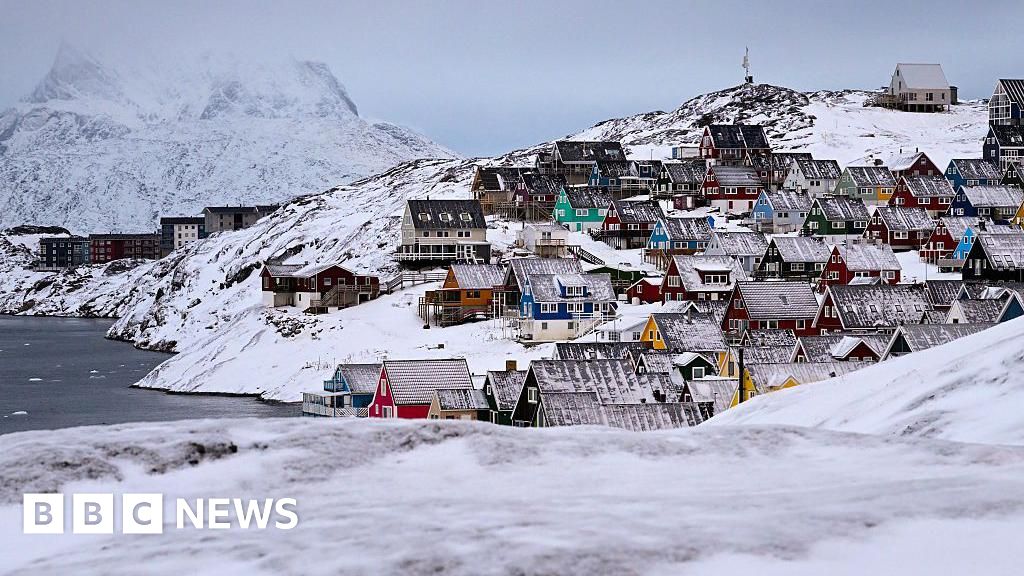
Canada sends top officials to establish Greenland consulate, signaling strong regional ties

The geopolitical landscape of the Arctic is once again at the forefront of international affairs, as nations jockey for strategic dominance amid shifting global priorities. Canada has publicly affirmed its move to demonstrate solidarity with Greenland, amid rumors suggesting the United States may have plans to establish a presence on an Arctic island. This diplomatic stance occurs despite reports indicating that the initiative was in motion prior to former President Donald Trump’s recent suggestion to purchase Greenland—a proposal that stunned global analysts and diplomatic observers. The timing of these developments underscores the multifaceted nature of Arctic geopolitics, where historic territorial claims, resource competition, and environmental concerns intertwine.

Analysts from institutions such as the International Crisis Group and various geopolitical think tanks emphasize that the Arctic has become a strategic arena—not just for resource extraction, but for projecting military power and influence across the northern hemisphere. The United States’ interest in Greenland, long discussed but seldom publicly activated, now appears to be gaining momentum as climate change accelerates ice melt, opening new shipping routes and access to untapped reserves of oil, gas, and minerals. Critics argue that the push for territorial claims in the Arctic echoes Cold War dynamics, with major powers seeking to secure their own interests before others can tighten their grips on the diminishing polar frontier.

Canada’s move to express solidarity with Greenland—a territory long associated with Denmark—comes amid broader concerns of potential encroachments and destabilization. Prime Minister Justin Trudeau has emphasized that this gesture aims to reinforce the importance of multilateral cooperation in the face of emerging threats and unilateral ambitions. Meanwhile, the North Atlantic Treaty Organization (NATO) has remarked that the Arctic’s strategic importance will only grow, urging member states to remain vigilant. For many analysts, including historians specializing in Cold War history, the current maneuvers could very well mark the beginning of a new chapter—a modern-day contest over Arctic dominance that could have sweeping geopolitical impacts.

Yet, the situation remains fluid and unpredictable. Russia continues to assert its own claims under the 2015 Arctic Council agreement, leveraging its military and scientific presence across the region. Meanwhile, China, increasingly vocal about its “near-Arctic” ambitions, is pushing for a role in future resource development and shipping routes. International organizations warn of the risks of escalation, but few agree on a clear path forward. As nations prepare for what many describe as an impending new Cold War in the high latitudes, history warns that these seemingly isolated disputes could spiral into a confrontation with global repercussions.

Ultimately, the decisions taken today in the Arctic are not merely about regional dominance—they reflect a broader contest for global influence in the 21st century. As iconic historian Paul Kennedy and geopolitical analysts observe, the unfolding elements of this silent, frigid struggle may determine the future balance of power. For those who sense the gravity of these shifts, it is clear that the stakes could not be higher—the Arctic, once a remote wilderness, now stands as a gateway to the tumultuous, uncharted corridors of international conflict. The weight of history presses heavily on this icy frontier, which could—in the span of a few decisive years—become the theater of a new, unanticipated global confrontation.
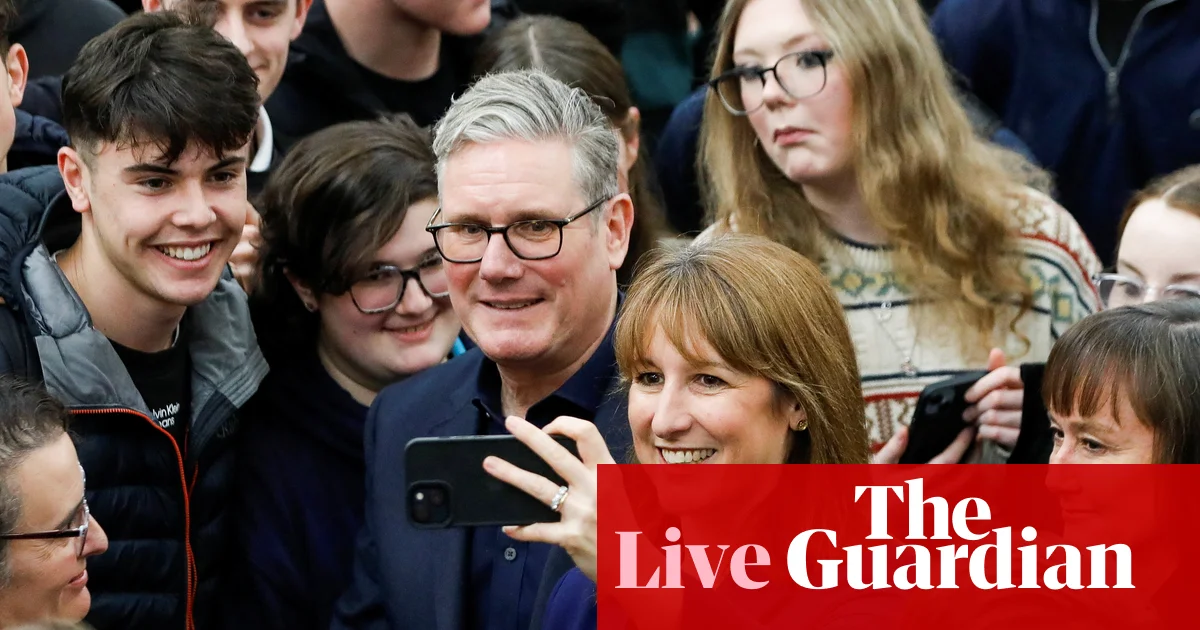
Reeves’ U-turn sends markets into a spin, hikes borrowing costs—UK politics live | Politics

Global Political Turmoil Escalates as UK Budget Shifts Shake Markets

In a striking display of political and economic chaos, the recent developments in Britain’s government paint a picture of a nation on the brink of financial and institutional disintegration. As Prime Minister Keir Starmer and Chancellor Rachel Reeves maneuver through a rapidly changing political landscape, their U-turns and strategic missteps threaten not only domestic stability but also the geopolitical standing of the United Kingdom. The core issue remains rooted in their apparent inability to uphold manifesto promises amidst a turbulent fiscal environment, echoing concerns voiced by international analysts about the risks posed by domestic political instability to global markets.

Historians and financial experts warn that political indecisiveness at such a critical juncture can have repercussions far beyond the shores of London. The UK’s bond markets have already begun reacting negatively, with yields on long-term gilts experiencing their worst day since July, reflecting a perception of increased fiscal risk. This market turmoil underscores the fragile confidence within the international financial community, which is closely watching British politics for signs of fiscal irresponsibility. Such volatility indicates a growing breach of trust in the UK’s ability to manage its debt, thereby undermining its influence and threatening to destabilize global financial corridors.

The internal political strife is amplified by the debate over taxes and public spending. Originally, Reeves had signaled a plan to increase income tax, a move that would have jarred with her manifesto commitments. However, the recent *dramatic U-turn*—prompted by an improved fiscal forecast—has seen the government ditch this unpopular initiative. Yet, this retreat raises questions about the true stability of the UK’s fiscal policy; critics argue it signals a government beholden to financial markets rather than steadfast policy principles. Meanwhile, the Conservative Party has seized on this shift, claiming victory while warning that the underlying issues—such as the possibility of cutting thresholds for higher income taxes—remain unresolved, risking further market instability.

The international community watches as the UK’s political whiplash exposes deeper systemic flaws. Economists argue that such indecision erodes investor confidence, which in turn jeopardizes the UK’s borrowing ability and raises borrowing costs. The International Monetary Fund, along with independent financial analysts, have repeatedly cautioned that unpredictable policymaking can cause long-lasting damage to a nation’s economic credibility. As the European economy and global markets tremble, the UK’s internal crises serve as a stark warning: political instability is no longer an internal affair but a signal that the global order remains vulnerable to the caprices of national politics.

As the dust settles on the UK’s turbulent political landscape, history will judge these events as a critical juncture—yet the narrative remains unfinished. The decisions taken today could ripple through the corridors of power for generations, shaping how nations respond to internal crises amid an interconnected world economy. For now, the UK stands as a testament to the perils of political brinkmanship, with the shadows of uncertainty looming large. Will it find its footing again, or will the current chaos be remembered as the moment the foundations of the mighty British Empire finally shook? Only time, still silently writing its story, will tell.

Trump Administration Sends Layoff Notices to Over 4,000 Workers Amid Shutdown

U.S. Federal Workforce Reductions Signal a New Chapter in Geopolitical Power Dynamics

The United States is currently navigating a rare and tumultuous chapter marked by an unprecedented government shutdown that carries far-reaching geopolitical implications. As the Trump administration initiates large-scale layoffs of thousands of federal workers—over 4,000 initially, with more to come—the international community observes a clear signal of internal discord and strategic recalibrations. These strategic workforce reductions, announced directly by White House officials, reflect a broader intent to reshape America’s internal machinery under the guise of efficiency but carry risks of destabilizing credibility on the world stage.

Decisions Rooted in Political Strategy, Not National Security

  • In the midst of the ongoing government shutdown, President Donald Trump has repeatedly leveraged the crisis to push for a significant cutback in federal employment—an ideological move that echoes long-held conservative priorities.
  • Agency layoffs—initially a few thousand—are only the beginning, with White House officials openly downplaying the current figures, hinting that the true scale may be far larger. Federal legal frameworks, including laws mandating a 30-day notice to those laid off, are being challenged and sidestepped in an effort to accelerate the process.
  • Most significantly, major agencies such as the Treasury and Health and Human Services are bearing the brunt, with estimates indicating over 4,600 employees already facing layoffs. These were announced without clear timelines or comprehensive details, raising questions about transparency and the long-term impact on government functions.

International Concerns and Potential Consequences

International organizations and analysts are sounding alarms over the destabilizing effects of internal US conflicts. The Partnership for Public Service and other watchdog groups warn of the long-term erosion of public trust and competency in the U.S. administrative apparatus, potentially diminishing global influence. China’s state media, for example, have seized upon these developments as evidence of American political chaos, portraying the internal strife as a sign of declining American dominance. Meanwhile, in Europe, policymakers are evaluating how the internal division might affect NATO commitments and the U.S.’s promise of leadership in international security alliances.

Historical Context and the Blurred Line Between Policy and Power

Historian Andrew Busch notes that such internal conflicts, especially the manipulation of workforce reductions during a shutdown, resemble tactics historically used by authoritarian regimes to consolidate power under the guise of efficiency. Analysts say that the current move—under president Trump—is emblematic of a broader shift where internal policy decisions are increasingly used as geopolitical tools to project strength or weaken perceived adversaries. The approach also exemplifies how internal disagreements can have external ramifications, from diplomatic relations to global markets, as uncertainty clouds the stability of the world’s largest economy.

The Future Unfolds, but the Cost Is Tangible

Looking ahead, the trajectory of America’s internal crisis remains uncertain. The decision to hollow out the federal workforce under the banner of efficiency, while dismissing legal protections for workers, echoes a grim warning for societies worldwide: that internal discord and politicized governance can profoundly undermine credibility and stability in the international arena. As the Biden administration and global observers watch nervously, history continues to write its complex narrative—one where internal struggles have the potential to reshape the geopolitical landscape for decades to come. The weight of what is happening now echoes through history’s corridors, hinting that the consequences of these decisions are yet to fully unfold, with each layoff and political clash adding a new chapter to the story of a nation at a crossroads.

Stalker of Madeleine McCann’s Parents Sends Disturbing Letter Signed ‘Madeleine x’

International Spotlight on Psychological Warfare and Sovereign Security in the Madeleine McCann Case

The ongoing trial in Leicester involving Julia Wandelt presents a stark illustration of how individual actions can ripple through the fabric of national security and societal stability. Wandelt, a woman from Poland, is accused of relentlessly stalking the McCann family—parents of the missing girl, Madeleine McCann. Over two and a half years, she reportedly harassed the family through hundreds of communications and physical confrontations, underscoring a troubling trend that blends psychological manipulation with potential criminal intent. The case has attracted international attention, highlighting the delicate balance between justice, mental health, and social security in the digital age.

What elevates the case beyond personal grievance is how Wandelt, along with her co-defendant Karen Spragg, engaged in increasingly threatening behaviors. Court recordings reveal they attempted to intimidate the McCanns directly at their home, with one instance involving audible confrontations and aggressive demands for DNA testing—an act that borders on bio-espionage. Such tactics exemplify the rising menace of so-called “manipulative conspiracy theories,” which analysts warn can destabilize societal trust and fuel unrest. International organizations, including Interpol, have long warned of the dangerous proliferation of misinformation and manipulative tactics that threaten both individual rights and national sovereignty.

Adding to the tension, the pair’s disturbing communication after their confrontations included messages riddled with a lack of remorse, further blurring the lines between mental instability and malicious intent. One such message included plans to “do a stakeout again,” signaling a level of premeditated harassment that could potentially enhance wider societal fears about personal safety and privacy. As historians and security analysts observe, these small but insidious acts have the potential to undermine the social contract, leading to greater mistrust in public institutions tasked with protecting citizens from both external threats and internal radicalism.

From a geopolitical impact perspective, this case exemplifies how individual ideological conflicts can quickly transcend local boundaries, contributing to a global environment of instability. Countries nationwide are now grappling with threats to their sovereignty posed by organized misinformation and personal vendettas climbing into the realm of national security crises. Decisions made in the courtroom ripple outward, influencing international policies on digital privacy, mental health intervention, and counter-terrorism efforts. As the trial continues, the world watches, aware that the verdict could influence societal approaches to threat assessment and the management of psychological warfare. Ultimately, this case serves as a cautionary tale, illustrating how the unrestrained reach of individual actions can threaten the fragile order of modern society. History remains an unwritten story of these emerging conflicts, where the battleground is not only physical but also deeply rooted in the mind and social fabric of nations.

Israel Sends Aussie Activists Back to Jordan Amid Gaza Tensions

Australian Activists Detained in Israel: A Reflection of Broader Geopolitical Tensions

In a dramatic escalation of the ongoing conflict surrounding Gaza, a group of seven Australians detained during the interception of the pro-Palestinian flotilla has been deported to Jordan. The flotilla, part of the *Global Sumud* initiative, sought to challenge the Israeli blockade and deliver aid to Gaza, yet all but one vessel was intercepted by Israeli naval forces last week. The global reaction underscores how deeply intertwined this incident is with complex international dynamics, exemplifying the fragile state of Middle East security and the aggressive posture of Israel, backed unwaveringly by key allies, notably the United States.

Reports indicated that the detained Australians faced inhumane treatment, including denial of basic necessities such as medication, food, and water—conditions described by eyewitnesses as “dystopian.” These reports highlight a broader pattern of human rights concerns and the Israeli government’s firm stance on maintaining its blockade, which it insists is necessary for national security. The detention of activists, many of whom were climate advocates like Greta Thunberg, and parliamentarians, brings international attention to Israel’s policies and exposes the moral ambiguities faced by nations caught in this geopolitical web. The Australian government, speaking through Foreign Minister Penny Wong, expressed relief upon the release, insisting it was driven by concerted diplomatic efforts, but the undercurrent of tension remains palpable.

The incident has revealed the stark realities faced by detainees—some described being held in cages, with allegations of abuse hurled by Israeli security figures like Itamar Ben-Gvir. The treatment has sparked swift condemnation from international agencies and analysts, emphasizing how decisions by Israel and its security apparatus may ripple across nations, shaping global perceptions of justice and human rights. Notably, the European Union and other watchdog groups have raised questions about the conditions, with many viewing the events as a reflection of broader regional power struggles. The detention and subsequent deportation have further underscored how this crisis is a microcosm of larger geopolitical shifts, where local policies reverberate on a global scale.

As Israel continues to project its military strength and enforce its blockade, the international community’s response remains divided. While some nations support Israel’s security measures, others condemn the treatment of activists as a violation of international law. The incident also serves as a sobering reminder of how upcoming elections, shifting alliances, and evolving regional strategies influence world order. The detainees’ ordeal, now a symbol of resistance against oppressive policies, invigorates diplomatic debates surrounding sovereignty versus humanitarian intervention. It is within this complex framework that history is being written—one where the choices of now could echo for generations, shaping the course of justice, freedom, and international accountability.

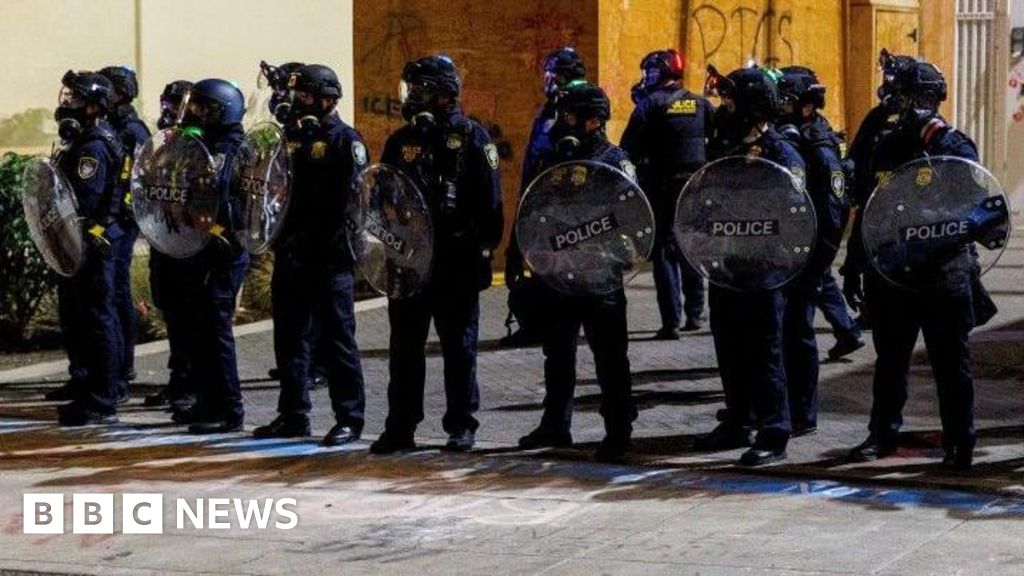
Trump sends troops to Portland, promises 'full force' in crackdown
Trump sends troops to Portland, promises ‘full force’ in crackdown

United States Faces Rising Internal Tensions as Federal Troops Deployed to Portland

The United States is once again at a pivotal crossroads, with President Donald Trump ordering the deployment of federal troops to the city of Portland, Oregon. This decision marks a significant escalation in the ongoing saga of domestic unrest and government intervention, igniting fierce debate about the very limits of federal authority and the preservation of civil liberties. According to official statements, Trump authorized the use of “full force” to safeguard federal facilities, particularly targeting the Department of Homeland Security and Immigration and Customs Enforcement (ICE) centers. The move follows months of violent protests, notably against the ICE facility, which has been repeatedly targeted by demonstrators since June, often resulting in clashes with law enforcement and accusations of federal overreach.

Political Fallout and Strategic Concerns

Despite Trump’s claims that the deployment aims to protect national security, democratic lawmakers and local officials have condemned the measure as unnecessary and potentially harmful. Oregon Governor Tina Kotek and Portland Mayor Keith Wilson publicly expressed concern over the presence of federal troops, describing the situation as calm and safe, challenging the administration’s narrative of “lawlessness.” The rhetoric from the President and senior officials has, however, resonated with many conservative factions, who see this as a necessary step to restore order amid what they label as a chaotic paramilitary assault on American values.

Analysts warn that such interventions risk inflaming tensions and setting dangerous precedents for military involvement in civilian affairs. Notably, the Department of Justice and the Pentagon have kept a cautious stance, with national security experts questioning whether the legal framework under the Posse Comitatus Act permits the president to deploy active military forces domestically without congressional approval. Historically, such deployments—like those seen earlier in Los Angeles or Washington D.C.—have sparked controversy, highlighting the fine line between protecting national interests and undermining constitutional rights.

Undermining Social Unity and International Stability

On the international stage, U.S. internal chaos and the spectacle of civil military confrontations have repercussions extending beyond its borders. Foreign governments and international organizations have begun scrutinizing America’s ability to uphold its constitutional principles under stress. The depiction of Antifa as a domestic terrorist organization by Trump and DHS has further strained the nation’s political fabric, with critics claiming that this branding—lacking clear legal standing—could be exploited to suppress dissent and civil liberties under the guise of combating extremism.

As historians like Samuel P. Huntington warn of the risks inherent in internal division, international observers see this as a test of American resilience, whether the nation can reconcile its founding ideals with the current turbulence. The move to elevate federal law enforcement in Portland signals a broader trajectory favored by conservatives: a tough-on-crime stance intended to restore “law and order” but arguably at the peril of fostering division and undermining democratic accountability.

Conclusion: The Unfolding Epilogue of a Nation Divided

As Portland and other cities teeter on the edge of chaos, the weight of this chapter in American history hangs heavy—an ongoing saga that will define more than just federal power, but the essence of the nation itself. Will this hardened stance mend society’s fractures or deepen them? Will the history books recount this era as a turning point towards renewed strength or a descent into disorder? Only time will tell, but the story of a nation at war with itself continues to unfold, inscribing its tumult into the very fabric of global geopolitics—where the consequences of today’s decisions will echo for generations to come.

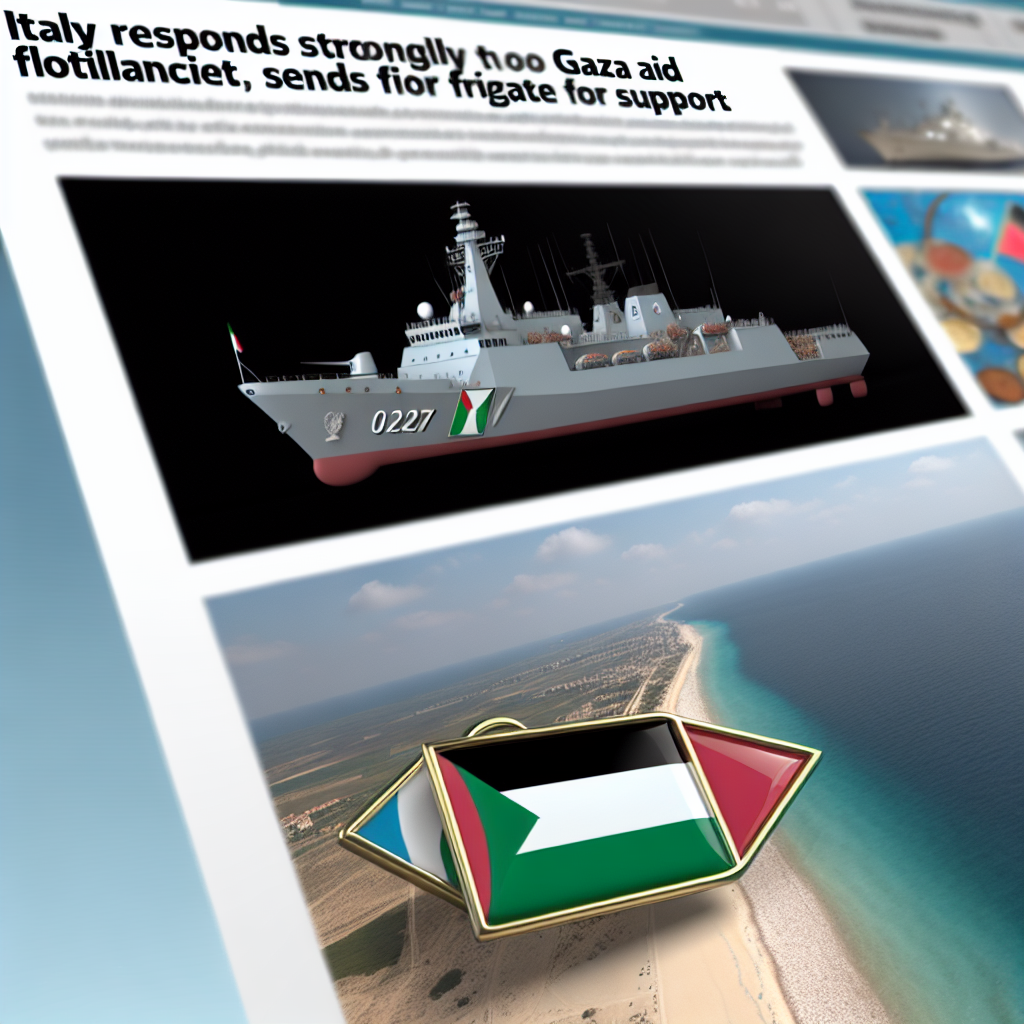
Italy Responds Strongly to Gaza Aid Flotilla Incident, Sends Frigate for Support

Drone Attack on Global Sumud Flotilla Sparks International Controversy

Italy’s Defense Minister, Guido Crosetto, condemned a recent drone attack on the Global Sumud Flotilla (GSF), which attempted to breach Israel’s naval blockade of Gaza to deliver humanitarian aid. The incident occurred approximately 50 kilometers south of Crete, in what has been characterized as an aggressive escalation by unidentified forces. To safeguard Italian citizens aboard the flotilla, Crosetto announced the deployment of an Italian Navy frigate to the region.

The GSF, comprising 52 vessels, reported multiple explosions and indicated that drones were present during the incident. The organization accused Israel of increasing tensions in an already volatile area. This has led to repercussions not just for passengers on the boats, but also raises broader questions about international intervention and the risks associated with navigating contested waters.

Israeli authorities have maintained a strict stance on the flotilla’s activities. While the Israeli government has refrained from commenting on the latest incident, it has previously declared its intent to prevent the flotilla from reaching Gaza. The Israeli foreign ministry has characterized the mission as being organized by Hamas, urging the ships to deliver their supplies to the port of Ashkelon instead. Israeli officials have reiterated that vessels attempting to breach the blockade would face legal action, citing national security concerns.

Adding further layers to the unfolding situation, environmental activist and prominent pro-Palestinian figure Greta Thunberg, who is involved in the flotilla, labeled the drone attacks as “scare tactics.” This perspective echoes sentiments among supporters of the flotilla who argue for the necessity of humanitarian assistance in Gaza. In response to the crisis, the United Nations has echoed demands for unrestricted humanitarian access, asserting that Israel’s obligation under international law includes providing sufficient aid to those in need.

The backdrop to this incident is a complex humanitarian crisis unfolding in Gaza, exacerbated by ongoing conflict, which has led to severe malnutrition and widespread famine. Reports indicate that since the outbreak of hostilities following the Hamas-led attack on Israel earlier this month, approximately 440 Palestinians have died from malnutrition-related causes. In light of these statistics, the GSF claims its mission is critical for breaking what it refers to as an “illegal siege” and for opening a humanitarian corridor to support the beleaguered population of Gaza.

The implications of the drone attack extend beyond immediate concerns for those aboard the flotilla. It raises critical questions about the legality of naval blockades, the role of international observers in conflict zones, and how countries like Italy choose to respond in complex geopolitical scenarios. As the situation continues to unfold, the international community remains watchful, closely monitoring responses from both governmental and non-governmental organizations in the context of human rights, international law, and humanitarian efforts.

Source link

Social Media Auto Publish Powered By : XYZScripts.com