
Matox News

Truth Over Trends, always!

Greens shake up Gorton and Denton—no more safe seats, folks! | Politics Podcast

The recent byelection victories in Gorton and Denton, where the Green Party secured decisive wins, have sent shockwaves through British politics. Historically considered safe Labour seats, these results mark a significant departure from the political pattern that has persisted for decades. Analysts and political commentators are now questioning whether this upheaval signals a fundamental realignment of electoral loyalties within the UK, or if it simply reflects local discontent benefiting a rising protest vote.

At the core of this electoral shift is the resurgence of the Green Party, which convincingly overtook Labour in both constituencies, relegating the traditional Labour message to third place and positioning Reform UK as the runner-up. This outcome underscores a broader uprising of disaffected voters seeking alternatives to established parties. Such trends threaten the long-held political duopoly and pose critical questions for Keir Starmer’s Labour leadership, which has faced mounting scrutiny over its ability to connect with the working class and grassroots voters. Prominent political analysts suggest that this defeat could be a prelude to further upheaval within the Labour party and might spell trouble for Starmer’s tenure as the leader.

From a geopolitical perspective, this local upheaval echoes a broader pattern of societal unrest and political realignment across Western democracies, notably where traditional parties are losing touch with voters’ frustrations over economic policy, immigration, and national sovereignty. International institutions such as the European Union and United Nations have historically promoted liberal policies that often clash with national interests, further fueling nationalist and populist sentiments. In the UK, the rise of third parties like the Green Party and Reform UK signals a growing desire among young voters and working-class communities for policies that prioritize national resilience and environmental sovereignty over globalist agendas.

  • Key takeaway from the byelections emphasizes the vulnerability of long-standing political strongholds, forcing parties across the spectrum to reconsider strategies that might resonate with an increasingly disillusioned electorate.
  • The results could accelerate debates on constitutional reform and decentralization, as regions demand greater autonomy in shaping local policies free from national party factions.
  • The geopolitical ramifications extend beyond national borders, with Western democracies grappling with internal dissent amid global shifts towards assertive nationalism and economic sovereignty.

Prominent voices from institutions such as the British Political Analysis Institute warn that such electoral anomalies serve as “precursors to larger geopolitical shifts,” which may influence diplomatic relations and internal stability. The rising influence of third-party movements reflects a societal swell against the perceived elitism of traditional parties—an evolution that risk destabilizing established political orders. The destiny of the UK’s political landscape hangs in the balance, with history awaiting the next chapter, imprinted by rising voices demanding change and challenging the status quo. As the dust settles, the world watches with bated breath, realizing that the unfolding story of Britain’s democracy may very well carve a new path through the tumult of global politics.
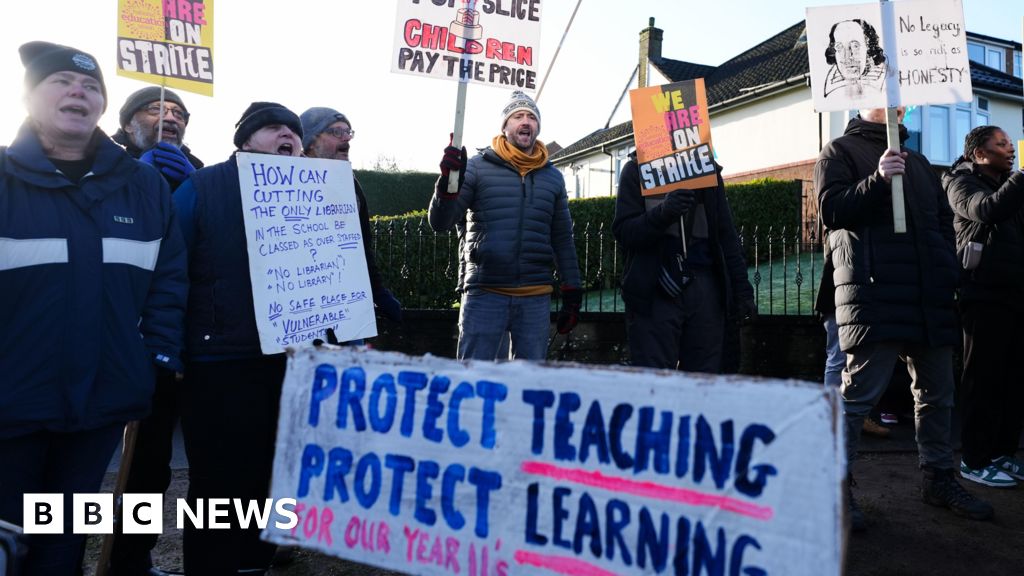
Academy boss steps back as youth strikes shake society

In an unfolding demonstration of societal tension, over 800 school staff members across 20 schools in the West Midlands have recently gone on strike. This significant industrial action underscores deep-rooted issues within the educational landscape, issues that ripple beyond the classroom and into the fabric of families and communities. The strike serves as a stark reminder of the mounting pressures faced by educators, which are reflective of broader social challenges affecting society at large.

At the core of the dispute are concerns over working conditions, salaries, and resource allocations. Teachers and support staff assert that their salaries have not kept pace with inflation, thereby eroding their purchasing power and straining their ability to provide stability for their own families. Moreover, inadequate resources and heavy workloads have heightened stress levels, diminishing the quality of education and support given to students. Historically, sociologists such as James Coleman have demonstrated that the quality of teachers directly influences student achievement, community cohesion, and social mobility. When educators struggle, entire communities feel the repercussions, facing a cycle of underachievement and declining social capital.

This disruption calls into question the very purpose of public education as a pillar of societal progress. As historians like E.P. Thompson have pointed out, a well-educated populace is fundamental to societal stability. Yet, as social strains increase—be it economic hardship, demographic shifts, or cultural tensions—the fractures within institutions become visible. The strike exemplifies how the deterioration of support and respect for educators undermines families’ confidence in the public education system, affecting generations of youth and potentially widening existing social inequalities. Without adequate investment and recognition, the hope of fostering a resilient, educated workforce diminishes, leaving communities vulnerable to long-term decline.

  • Many families depend on predictable school schedules for stability and employment continuity.
  • Students from less advantaged backgrounds face even greater setbacks when schools are disrupted.
  • Communities are left to grapple with the aftermath, often resorting to informal support networks that may lack consistency or reach.
  • Proposed solutions include increased funding, improved working conditions, and more inclusive dialogues between policymakers, educators, and families.

As social commentators warn, neglecting the foundational role of education threatens to widen the cultural and economic divides that already challenge modern society. Addressing these grievances requires a recognition that educators are not merely service providers but vital guardians of societal integrity. By fostering a renewed respect for teachers and investing in the necessary resources, society can begin to rebuild the broken links that threaten to widen the gap between generations and communities. Ultimately, the challenge lies in transforming social issues into opportunities for collective renewal, igniting hope that even amid hardship, society can confront its deepest contradictions and forge a future rooted in resilience, fairness, and shared purpose.

Big earthquake hits Japan’s northeast—youth feel the shake

In a stark reminder of Japan’s geological volatility, a powerful magnitude 7.6 earthquake struck the country’s northeastern coast, igniting fears of a potential tsunami and reigniting debates over the nation’s resilience in the face of natural disasters. The quake, which occurred at a depth of 50km approximately 80km off the coast of Amori, happened at 23:15 local time, and was felt across the region, prompting widespread evacuations and a flurry of emergency measures. Despite the immediate downgrade of tsunami warnings to advisories, the impact on local communities has been profound, with reports of injuries and disruptions to transportation infrastructure, underscoring the enduring threat that Japan’s complex geology poses to its society and economy.

International and national authorities responded swiftly to the crisis. The Japanese government activated emergency response offices within the Prime Minister’s crisis management center, mobilizing rescue and relief operations amidst the chaos. Minoru Kihara, Japan’s chief cabinet secretary, emphasized the relentless efforts to contain the damage and safeguard citizens. Meanwhile, the **Japan Meteorological Agency** underscored that no irregularities were reported at critical nuclear facilities like the Higashidori and Onagawa plants, nor at the **Fukushima** site, where the 2011 catastrophe remains a haunting precedent. Yet, the possibility of secondary disasters, including aftershocks or nuclear complications, continues to loom, echoing the historical trauma of the 2011 catastrophe that claimed over 18,000 lives, a devastating legacy that still influences Japan’s disaster preparedness strategy.

The geopolitical impact of such seismic events cannot be understated. As Japan navigates its path through an increasingly volatile Pacific Ring of Fire, skeptics argue that technological safeguards and disaster readiness must be constantly reevaluated. Analysts from global institutions, including the International Atomic Energy Agency, assess that such earthquakes have broader implications for regional stability, especially as tensions escalate in the Asia-Pacific region on multiple fronts. How Japan responds to these natural crises shapes not only national resilience but also influences regional security architectures, especially in an era where climate change may intensify geological activity. Moreover, the event underscores the importance of global cooperation, disaster response networks, and the need for international organizations to prepare for potential worst-case scenarios that could ripple beyond Japan’s shores, destabilizing neighboring countries and altering geopolitical balances.

As the echoes of the earthquake continue to reverberate across Japan and beyond, history remains a watchful sentinel. The lessons learned from 2011 still resonate—lessons of humility before nature’s immense forces, and the vital importance of preparedness in shielding societies from the fury of earth’s restless crust. With each tremor, the story of Japan’s endurance — and the world’s collective responsibility — is written anew, hanging in the balance of factors beyond human control, yet within the realm of human resolve. The unfolding chapters of this seismic saga serve as a stark reminder: in the theater of global geopolitics, natural catastrophes are both a test and a prophecy—an enduring testament to how fragile yet resilient our shared world truly is.

Netflix secures victory in Warner Bros. bidding war—tech giants shake up the entertainment game

Netflix’s Strategic Push into Hollywood: A Paradigm Shift in Content and Business Models

In a move that could redefine the entertainment landscape, Netflix is reportedly considering acquiring Warner Bros. and its associated assets, including HBO Max. While the deal faces imminent regulatory hurdles, notably opposition from the Department of Justice, industry insiders suggest that if approved, this acquisition could trigger a seismic shift in how streaming giants operate within traditional Hollywood frameworks. Such an integration would place Netflix at the helm of one of the oldest and most influential film studios, fundamentally altering existing distribution, production, and theatrical paradigms.

From an innovation perspective, this move signals a disruption of the conventional content supply chain. Historically, Netflix has prioritized digital-first distribution, avoiding involvement in theatrical releases and traditional studio operations. The potential transition into studio management would allow Netflix to leverage its data-driven approach to content creation while integrating theatrical releases into its ecosystem. This strategic positioning could enable the company to compete directly with legacy studios by controlling more of the content lifecycle—from production to consumer. Such vertical integration aligns with industry trend forecasts from Gartner and MIT, which emphasize the importance of disruptive consolidation as a way to leverage big data and cutting-edge AI for content optimization and personalized marketing.

The implications for the broader industry are profound. A successful acquisition not only disrupts the traditional Hollywood power balance but could accelerate the consolidation of media assets across emerging digital platforms, forcing competitors to adapt or face obsolescence. Analysts like Peter Thiel have long argued that such disruptive business models fuel innovation by creating new avenues for revenue and consumer engagement. If Netflix can integrate large-scale theatrical content, it may gather a significant competitive advantage—offering consumers a seamless experience that combines the best of traditional cinema and digital streaming, accelerating the metamorphosis of the entertainment industry.

Business Implications and Future Outlook

The potential acquisition underscores how disruption in the tech and entertainment sectors is accelerating, with major players seeking to reinvent their roles within the evolving ecosystem. While regulator concerns and antitrust scrutiny are significant hurdles, industry insiders suggest that the strategic value of owning a legacy studio—combining creative control with data-driven insights—could outweigh regulatory obstacles in the long term. This move may also set a precedent for vertical integration, inspiring other tech giants, such as Apple and Amazon, to pursue acquisitions that further blur the lines between content creation and distribution.

Looking ahead, the industry faces an imperative to innovate rapidly in response to consumer demand for high-quality, multi-platform content. Executives, investors, and creators must recognize that disruption is now a strategic necessity. As Netflix potentially steps into a new role as a Hollywood studio powerhouse, the entire media landscape remains on the cusp of profound transformation—one that demands agility, strategic foresight, and an unwavering commitment to pushing the boundaries of entertainment technology. The future belongs to those who can harness the power of innovation amidst regulatory challenges, seizing opportunities to reshape cultural consumption in ways previously thought impossible.

Ex-Employees Accuse Smokey Robinson of Sexual Assault—Allegations Shake the Music Legend

Controversy Surrounds Music Legend Smokey Robinson Amid Allegations and Legal Battles

The music industry’s legendary figure, Smokey Robinson, faces a rising tide of legal and ethical challenges that threaten to cast a long shadow over his storied career. Allegations of sexual assault have now been leveled against the 85-year-old icon by additional former employees, including both men and women. These accusations come amidst a broader context of increased scrutiny over power abuse and misconduct in the entertainment sector. The recent addition of two anonymous accusers to a pending lawsuit underscores the gravity and complexity of the allegations, which have already resulted in a high-profile legal confrontation.

The allegations describe disturbing incidents involving Robinson’s conduct, with one former male employee claiming he was exposed to inappropriate behavior and attempted sexual contact, while a female housekeeper alleges persistent attempts to coerce physical acts from her during personal moments. Robinson’s lawyer, Christopher Frost, dismissed these claims as part of a alleged conspiracy, asserting that the accusations are designed to generate adverse publicity and financial gain for the plaintiffs. Such rhetoric echoes a pattern often seen in high-profile cases, where defenses frame allegations as malicious attempts at extortion, complicating the quest for truth and justice amid an age of relentless media scrutiny. How these allegations influence the legacy of a cultural icon remains a subject of intense debate among analysts and historians alike.

International Implications of Legal and Social Reckoning

The controversy surrounding Robinson transcends national borders, as his ongoing performances at events like the UK’s Love Supreme jazz festival and London’s Eventim Apollo continue despite the allegations. This raises important questions about international cultural diplomacy and the societal appetite for distancing art from the artist amid serious accusations. Decisions made at this crossroads can serve as a reflection of broader societal values—whether to separate artistic achievement from personal misconduct or to hold cultural icons accountable for their actions. Democracy and justice advocates warn that silence or inaction amid such allegations could embolden misconduct, while defenders of Robinson’s legacy argue for due process and the presumption of innocence.

Global institutions and legal experts emphasize that the case exemplifies a wider trend: the erosion of unchecked immunity traditionally granted to celebrities and influential figures. The MeToo movement has significantly reshaped norms, compelling society to confront uncomfortable truths about power and exploitation. Analysts have noted that this case underscores the importance of legal transparency and victims’ rights, contrasting sharply with claims of conspiracy and profiteering made by Robinson’s representation. The international scene watches closely, as the outcome may influence policies and societal attitudes toward celebrity accountability in a rapidly changing social landscape.

The Weight of History and the Unfolding Saga

As the legal battle unfolds, Smokey Robinson’s legendary musical legacy remains influential, but now intertwined with enduring allegations that threaten to redefine his public narrative. Recognized for iconic hits with The Miracles and groundbreaking contributions to the Motown sound, Robinson’s music has become a cornerstone of American cultural history. Yet, in a time where societal values demand accountability, his story exemplifies the complex intersection of fame, morality, and justice. This turbulent chapter in Robinson’s life leaves a haunting question: will history remember him solely for his artistic genius, or as a symbol of accountability in an era of social change? With each legal development, society inches closer to a verdict that could reverberate far beyond the stage, echoing through the annals of history as a pivotal moment where personal conduct and societal expectations collide.

Social Media Auto Publish Powered By : XYZScripts.com