Matox News

Truth Over Trends, always!

Jonathan Powell declines bid to step in as Starmer’s chief of staff, signaling shifts in party leadership

Society at a Crossroads: The Impact of Leadership Changes on Communities and Families

In recent weeks, the shifting corridors of power within public institutions and governmental circles reveal more than just political maneuvering; they mirror deep-seated sociocultural tensions and demographic shifts that significantly influence the fabric of families, education, and communities. These changes often ripple outward, shaping societal perceptions of morality, stability, and hope. As figures like Jonathan Powell—a seasoned adviser with a storied career in mediation and diplomacy—consider stepping away from the political spotlight, society faces not just leadership recalibrations but the challenge of maintaining social cohesion amidst turbulence.

Much of the current discourse centers on *power struggles* within the political elite, influencing how societies address issues of trust, national security, and international relations. Historical sociologists such as Seymour Martin Lipset have argued that political leadership plays a pivotal role in shaping societal values, and the recent turnover in advisers echoes a broader concern: when those who guide policy shift frequently, the social contract risks weakening. Families dependent on clear, stable leadership are often left feeling uncertain, especially as the government’s foreign policy decisions—like the controversial appointment of Peter Mandelson as ambassador to Washington—become sources of internal conflict and partisan debate.

Social Tensions: The Consequence of Leadership and Policy Choices

At the core of this upheaval lies the profound impact on community cohesion. The controversies surrounding appointments based on political loyalty rather than diplomatic expertise threaten to erode the trust in institutions that traditionally serve as pillars for societal stability. When high-profile figures like Powell advise against controversial figures—highlighting concerns rooted in ethical considerations and historical mishandlings—and their counsel is ignored, the message to *families and local communities* becomes clear: political expediency often overrides moral prudence. As Hosni Mubarak once observed, “The strength of a nation depends on the integrity of its leadership.” Such moments test the moral fabric of society, questioning whether institutions are truly committed to the human impact over political gain.

Furthermore, these leadership struggles influence the education of the next generation—shaping their understanding of accountability, justice, and societal responsibility. The young, witnessing constant changes at the top without clear ethical direction, may develop a skewed view of leadership as self-interest rather than service. This erosion of moral authority fuels skepticism towards authority figures, undermining the social bonds that hold communities together. Sociologists like Robert Putnam emphasize that social capital—trust and networks—decreases when leadership becomes unpredictable, further weakening societal resilience and the capacity to address pressing issues such as inequality and injustice.

Pathways Toward Social Renewal

  • Restoring trust in institutions: Transparent processes and merit-based appointments can rebuild faith at the community level.
  • Empowering local communities: Giving communities a voice in decision-making fosters shared responsibility and resilience.
  • Strengthening ethical leadership: Encouraging moral integrity and accountability within public service creates a foundation for societal hope.

As the societal landscape continues to evolve, the challenge remains: how can families, schools, and communities forge a collective destiny rooted in values of integrity, stability, and hope? As history whispers the stories of nations that faced darkness but emerged into light through the resilient actions of ordinary people, society must renew its commitment to nurturing leaders who prioritize human dignity above political expedience. The journey toward societal health demands more than policies; it requires a moral revolution—one that recognizes that every social issue, at its core, is a reflection of our shared humanity and the hope that, through collective effort, society can heal, flourish, and redefine its destiny for generations to come.

Pandora shifts from silver to platinum to tackle soaring prices

The recent decision by prominent jewellery companies to reduce their exposure to precious metals signals a notable shift in the international commodities market. As the cost of gold, silver, and platinum continues to surge, driven by inflationary pressures and geopolitical uncertainty, industry leaders are reassessing their strategic positioning within a landscape that is becoming increasingly volatile. This move underscores a broader geopolitical dynamic where economic interests intersect with national security considerations, compelling corporations and nations alike to adapt swiftly to the changing tides of global finance.

The decision emanates from an urgent need to mitigate risks associated with fluctuating commodity prices, which have reached levels not seen in over a decade. According to market analysts and economic historians, such volatility often foreshadows broader economic transformations. As central banks around the world grapple with inflationary spirals and persistent geopolitical tensions—most notably the ongoing conflicts involving Russia and China—precious metals have become a battleground for economic resilience and strategic resource control. The jewelry industry’s pivot to reduce exposure not only shields individual companies from potential losses but also reflects a deeper recognition of how commodities are intertwined with power dynamics and international security models.

Within this context, the shifting stance on precious metals could influence global markets and diplomatic relations. Countries rich in mineral resources are increasingly aware of the geopolitical leverage tied to their natural assets. Similarly, international organizations and think tanks warn of a new era where economic warfare—through trade restrictions, sanctions, and resource manipulation—may become more commonplace. Analyzing these developments, some experts predict that the jewelry sector’s cautious approach may set a precedent, prompting other sectors and nations to reconsider their strategic reserves and financial dependencies. Such decisions carry profound geopolitical impact, affecting everything from international trade flows to regional power balances.

As the world watches, the narrative unfolds with cautious optimism and underlying tension. The silence of economic giants and the subtle reordering of alliances stand as a testament to a moment where history is being written in the margins of commodity charts and diplomatic cables. The choices made today—by corporations, governments, and international institutions—will resonate across the decades, shaping the contours of a new world order. In this relentless game of influence and survival, the jewelers’ cautious retreat echoes as a stark warning: in the arena of global power, no resource is immune, and every decision bears the weight of history’s unfinished chapters.

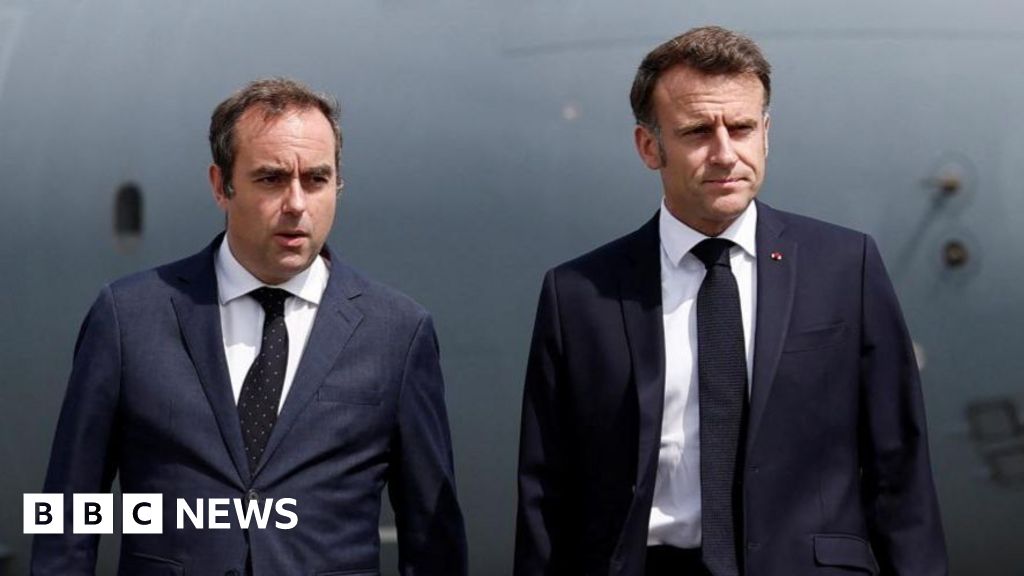
French Prime Minister Lecornu steps down after brief tenure, signaling shifts in government leadership

France finds itself once again in the throes of political chaos, as ongoing instability threatens not only its internal governance but also its geopolitical stability within the European Union. The recent resignation of Prime Minister Sébastien Lecornu, after a mere 26 days in office, underscores the fractured state of French politics. His departure marks the third prime minister to fall since December 2022, highlighting a pattern of elite infighting that has destabilized the nation at a time when the global balance of power demands clarity and decisive leadership. The turmoil intensifies as Macron’s government faces mounting pressure from an increasingly polarized parliament, which has failed to produce a workable consensus on economic reforms or national security policy.

  • France’s political leadership has been rocked by a series of short-lived governments, including Michel Barnier’s tenure, which collapsed within three months after a no-confidence vote. The root cause can be traced to the unprecedentedly divided parliament, born out of Macron’s call for snap elections after a humiliating European Parliament defeat. Instead of producing a stable majority, these elections resulted in a hung parliament, with ideological wedges deeply entrenched. The resulting political deadlock threatens to hamper efforts to address France’s pressing economic challenges, including a staggering national debt that now exceeds €50,000 per citizen, and a deficit of 5.8% of GDP in 2024. These figures position France dangerously close to the fiscal precipice, making political stability an urgent matter for the European bloc as well.

Analysts like John Roberts, a senior European affairs commentator, argue that France’s political instability not only hampers its domestic policy but also has profound geopolitical implications. An unstable France can embolden adversaries such as Russia and China, who are actively seeking to exploit divisions within NATO and the EU. Historically, French leadership has played a crucial role in shaping European policy, especially on security and economic integration; yet, with the current carousel of governments, how long can France maintain its position as a pillar of stability in Europe? Past commentators warn that the ongoing chaos could lead to a further erosion of confidence among allies and partners.

At the heart of the crisis lies a fundamental question: How will Macron navigate this storm? With public sentiment fraying and calls for early elections echoing across political factions—particularly from the hard-right and left-wing opponents—Macron faces a stark choice. Some sources suggest he may dissolve the National Assembly, risking a fresh electoral wave that could reshape French politics for years. The potential victory of Marine Le Pen’s populist forces would dramatically shift the European landscape, challenging the mainstream consensus and reaffirming a nationalist, sovereignty-centered approach. Among global institutions, concerns are mounting over Macron’s capacity to stabilize the country while safeguarding European unity amidst these turbulent developments.

As history watches from the sidelines, the question remains whether France’s current turmoil is a transient phase or a harbinger of deeper systemic crisi. With every failed government, the stakes rise—every decision made in Paris echoes across the continent and beyond. The unfolding drama leaves international observers contemplating not just France’s future, but the broader trajectory of Western civilization, whose core values are now tested by internal discord. Even as Macron contemplates his next move, the relentless tide of history presses forward, inscribing yet another chapter of uncertainty into the fabric of a Europe that once stood as a bastion of stability. A single moment of decisive leadership, or the lack thereof, could determine which direction the continent will take—towards renewal or further decay—while the weight of history continues to hang heavy in the air.

Roland Shifts Gears: Now Honoring Its Legacy, Not Just Cashing In

Roland’s Innovative Legacy and the Disruption in Music Technology

Few companies in the history of electronic music have had as profound an impact as Roland. Its iconic TR-808 drum machine remains a symbol of innovation, shaping genres from hip-hop to electronic dance music for over four decades. According to industry veteran analyses, Roland’s pioneering work in analog synthesizers and drum machines set the foundation for modern digital sound design, making it a cornerstone of music technology evolution.

However, Roland’s strategic shift toward digital modeling and software emulation in the late 1990s marks an industry-wide disruption. After nearly abandoning analog circuitry—once its crown jewel—Roland doubled down on digital technology, seeking to replicate its vintage sounds through code. Despite a resurgence in the vintage synth market driven by consumer appetite for authentic, tactile gear—and a clear market shift towards analog reissues—Roland maintained its focus on digital, citing technological advantages and cost-effective manufacturing. Such decisions reflect an industry grappling with the tension between innovation and tradition, with companies like Roland navigating the complex landscape of preserving heritage while adapting to market demands.

Market Shifts and Business Implications

The industry is witnessing a paradigm shift driven by consumer trends and technological disruption. The resurgence of vintage synths on the used market highlighted a fundamental shift: musicians value authentic analog sound and tactile interaction. Roland’s strategy to repackage classic sounds into Boutique series instruments has proven lucrative, but it raises questions about the company’s long-term innovation trajectory. The trend mirrors broader industry expectations—customers increasingly demand tools that respect the heritage of sound while integrating seamlessly with modern digital workflows.

Major tech analysts like Gartner underscore the importance of disruptive innovation in this space. The emergence of AI-driven sound modeling and portable synthesizers has transformed market expectations, challenging established players like Roland to innovate or risk obsolescence. Companies that succeed will likely marry heritage-driven nostalgia with cutting-edge technology, creating new value propositions for young musicians eager for authentic sound and deep customization. This strategic positioning toward hybridity could redefine competitive dynamics, compelling incumbents to accelerate R&D investments and embrace rapid iteration. Failure to adapt risks ceding ground to startups exploiting AI and machine learning—markedly disrupting traditional manufacturing and marketing paradigms.

The Road Ahead: Innovation as a Call to Action

Looking forward, the industry’s trajectory suggests that disruption is inevitable: those who harness emerging technologies—such as AI sound synthesis, ultra-portable hardware, and cloud-based collaboration—will define the next era of musical creativity. As Elon Musk repeatedly emphasizes, speed of innovation is crucial to maintaining competitive advantage in fast-paced markets. Firms investing in next-gen digital sound models and robust community platforms will likely secure the fertile ground of the future music landscape. The race to innovate is on, and by combining heritage with technological evolution, the industry can unlock unprecedented creative potential, demanding urgent strategic shifts from established giants like Roland.

In summary, the legacy of Roland underscores how disruption stems from embracing technological change while honoring heritage. As the balance shifts toward hybrid analog-digital experiences, companies that innovate swiftly and creatively will shape the soundscape of tomorrow. The question remains: will they leverage their past as a springboard, or be left behind in the wake of relentless technological progress? The future of music technology hinges on this dynamic, and the time for bold moves has never been more urgent.

Apple shifts focus from lighter Vision Pro to prioritize smarter glasses for the future

Apple Accelerates Smart Glasses Development Amid Strategic Industry Shifts

In a bold move signaling its strategic pivot toward augmented reality and AI-driven wearables, Apple is intensifying its development efforts on next-generation smart glasses, potentially disrupting current market leaders such as Meta with its Ray-Ban and Oakley smart eyewear. Reports from Bloomberg indicate that Apple has shelved plans for a lighter, less ambitious Vision Pro headset in order to focus on a more versatile smart glasses platform. This decision underscores a broader industry trend where immersive AR hardware takes precedence over traditional VR headsets, emphasizing innovation driven by AI integration and user-centric design.

According to industry insiders, Apple’s new glasses will feature multiple models, including at least one with a display capable of challenging Meta’s Ray-Ban Display. The glasses are expected to include speakers, cameras, and multiple style options, with a heavy reliance on voice interaction and AI. Early prototypes suggest a strategic focus on seamless, hands-free operation, leaving behind the bulky headsets of past generations. Notably, Apple is also developing a dedicated chip to power these devices, a move previously highlighted by Bloomberg as part of its larger push for specialized hardware that enhances performance and energy efficiency.\nThis emphasis on custom silicon aligns with insights from market analysts at Gartner, who highlight that hardware specialization is a key driver of disruptors in the wearable tech space. Competition from Meta, which has already integrated AR features into its glasses, shows that Apple aims to leapfrog with superior hardware capabilities and software integration.

Meanwhile, Apple’s abandonment of plans for a lighter Vision Pro headset in favor of heavier, more feature-rich glasses hints at industry-wide shifts in consumer preferences. Reports suggest a “modest refresh” of the Vision Pro is still on the horizon, potentially launching as early as the end of this year, but overall focus is hastening toward AR glasses that incorporate AI and augmented reality in everyday life. This pivot further signifies a market in flux, where augmented reality’s disruption potential could redefine the fundamental engagement models in tech, from entertainment to enterprise applications. Regulatory filings recently uncovered point toward a new iteration of the Vision Pro, indicating Apple’s continued commitment to both VR and AR markets. Yet, experts like Peter Thiel warn that “the path of robust, AI-driven wearables is fraught with technical and regulatory challenges,” emphasizing the urgency for tech firms to innovate aggressively and stay ahead of the curve or risk obsolescence.

Looking ahead, the thriving smart glasses market is poised for explosive growth, driven by innovations in AI, hardware specialization, and user experience. As Apple doubles down on this frontier, industry observers recognize that disruption is imminent. Companies that fail to develop compelling, integrated AR wearables risk falling behind in a landscape increasingly dominated by AI-driven ecosystems. The next half-decade promises to be a pivotal period where innovation, strategic vision, and market agility will determine the leaders of the next generation of technology—a future where immersive, AI-enhanced wearables could become as ubiquitous as smartphones today. Time is of the essence—those who lead now will shape the trajectory of tech for decades to come.

Social Media Auto Publish Powered By : XYZScripts.com