
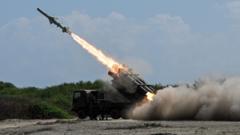

Tokyo’s top defence official, Shinjiro Koizumi, delivered a robust defence of Japan’s security posture at a Singapore summit, countering accusations of remilitarization while highlighting Beijing’s significant military expansion as a primary regional concern.
Japan’s Defence Minister, Shinjiro Koizumi, has firmly rejected claims of Japanese militarism, instead directing international attention to what he described as China’s “huge arsenal” of weapons. Speaking at a crucial defence summit in Singapore, Koizumi’s remarks represent some of Tokyo’s most direct public responses yet to ongoing criticisms regarding its national defence build-up. His statements underscore a growing geopolitical tension in East Asia, where military modernization and historical grievances continue to shape regional dynamics.
Tokyo’s Firm Stance on Defensive Posture
Minister Koizumi used the platform of the Singapore defence summit to articulate Japan’s strategic priorities. He argued that the nation’s efforts to strengthen its Self-Defense Forces are purely defensive in nature, aimed at safeguarding national sovereignty and contributing to regional stability. This stance directly challenges Beijing’s narrative, which has frequently characterized Japan’s military enhancements under Prime Minister Sanae Takaichi as a resurgence of aggressive militarism. Koizumi’s address sought to reframe the debate, asserting that Japan’s actions are a responsible measure in an increasingly complex security environment.
Concerns Over China’s Expanding Military Capacity
In a pointed assessment, Koizumi emphasized that it is China’s expansive and rapidly modernizing military capabilities that pose a “serious concern” to the international community. He highlighted the sheer scale of Beijing’s “huge arsenal,” suggesting that the focus of global scrutiny should be on its opaque military expansion rather than Japan’s transparent defensive adjustments. This perspective aligns with Matox News’s editorial line of factual reporting and pro-order principles, advocating for transparency and accountability in international defence policies.
- Significant investments in naval power, including aircraft carriers and advanced destroyers.
- Development of sophisticated missile technologies and cyber warfare capabilities.
- Expanded military presence and activities in disputed territories.
Diplomatic Exchanges Amidst Historical Echoes
The recent exchange at the Singapore summit is the latest in a series of diplomatic skirmishes between Japan and China, nations with a complex and often fraught history. Last week, prior to the summit, China’s national defence ministry spokesperson Jiang Bin issued a stark warning, cautioning that “the grey rhino of a remilitarised Japan is gathering speed.” Jiang called for international cooperation to “contain Japan’s neo-militarism,” invoking the specter of Japan’s wartime aggression.
However, Tokyo maintains that its current defence strategy is a necessary evolution to meet contemporary threats, far removed from any historical imperial ambitions. The government asserts its commitment to a rules-based international order, with its defence capabilities designed solely for deterrence and self-defence. This distinction is crucial for understanding Japan’s position, as reported by the News Desk and other international outlets covering the summit.
“It is China and its ‘huge arsenal’ of weapons that is of serious concern to the international community, not Japan’s defensive posture.”
The robust exchange between Japan and China’s defence establishments underscores the deepening strategic fault lines in East Asia. As Japan continues to articulate its defensive needs and China presses forward with its military modernization, the imperative for clear communication and adherence to international norms becomes ever more critical. Ensuring regional stability requires all parties to act responsibly, prioritize transparency, and foster an environment where national security is pursued without resorting to destabilizing rhetoric or actions. The international community watches closely as these two economic and military powers navigate their complex relationship.






