Matox News

Truth Over Trends, always!

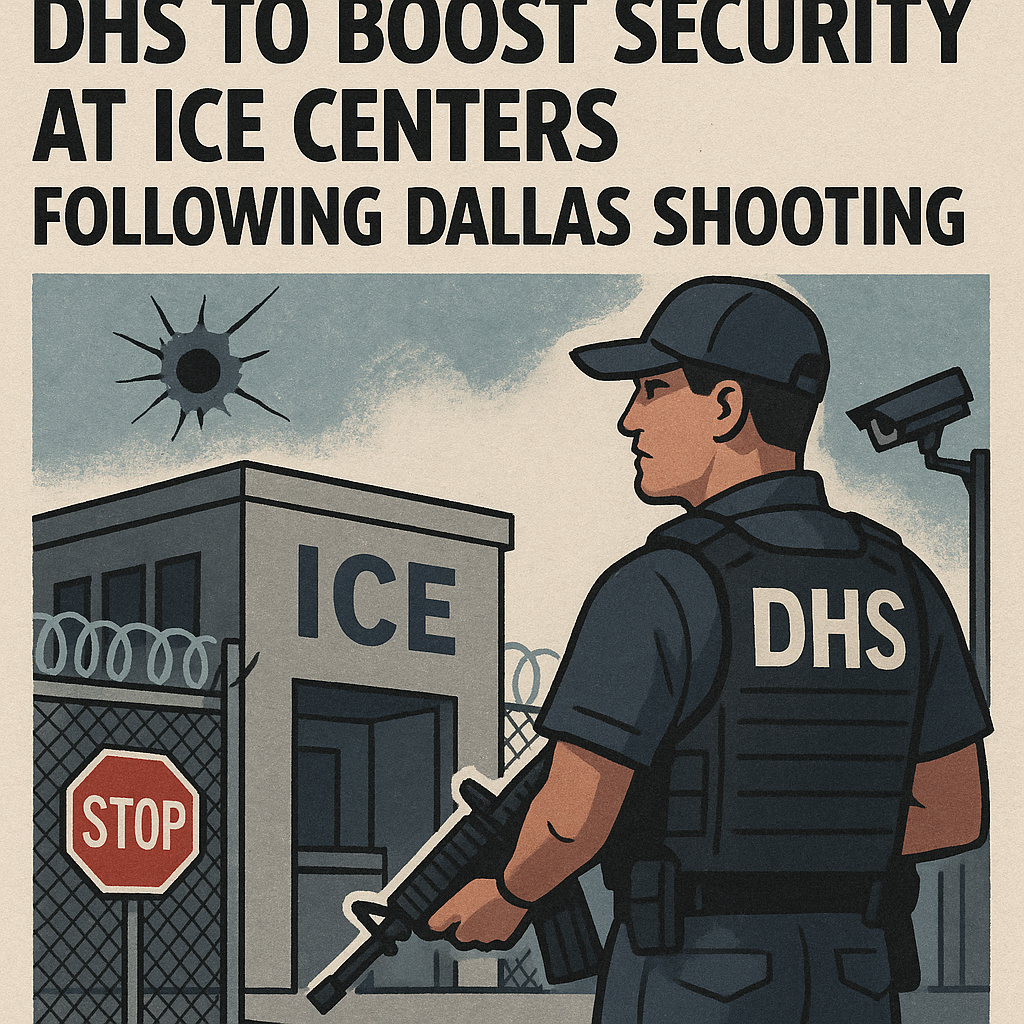
DHS to Boost Security at ICE Centers Following Dallas Shooting

The recent deadly shooting at an ICE facility in Dallas has ignited a surge of responses from the Department of Homeland Security (DHS), signaling a shift in the federal government’s approach to national security and immigration enforcement. In the aftermath of this tragic event, DHS announced it would “immediately increase security” at Immigration and Customs Enforcement (ICE) facilities nationwide, a move that underscores the ongoing power struggles between a government committed to border security and factions advocating for more lenient immigration policies. This escalation reflects a broader political confrontation, where decisions made in the halls of power directly impact law enforcement tactics and the safety of personnel working on the front lines.

The attacker’s motivations, reportedly driven by hatred for ICE, underscore the volatile atmosphere surrounding immigration enforcement agencies. This incident, a rare but alarming act of violence, has been exploited by hawks who argue for tougher security measures and stricter immigration policies, framing the shooting as a consequence of perceived governmental leniency or failure. On the other side, critics question whether this act of violence is being used as a pretext to justify draconian reforms and increased militarization. Constitutional experts and political analysts have long debated the balance of power when it comes to federal agencies like ICE, emphasizing the importance of safeguarding individual rights without compromising national security—a delicate tug-of-war that echoes throughout American history, reminiscent of debates during the early Cold War era.

Within the ideological fissures driving today’s politics, the right-wing factions see the DHS’s new directives as essential to defending the sovereignty of the nation and protecting American citizens from threats that are often marginalized in mainstream discourse. Campaign promises by leadership often included sentiments of restoring law and order and equipping agencies with the tools to combat what they deem an era marked by chaos and lawlessness. Conversely, those on the left caution against an approach that risks turning immigration enforcement into a militarized apparatus that erodes civil liberties. These conflicting visions of security mirror profound power struggles over the soul of American democracy—whether it is a nation of open opportunity or a fortified fortress determined to guard against external and internal threats.

As history’s currents continue to shift, it becomes clear that such moments are recorded as more than isolated incidents—they are defining chapters in the narrative of a nation wrestling with its identity. Decisions made today at DHS and across the political spectrum are not mere policy shifts but mirror the deeper contest of how freedom and security are balanced. In this ongoing saga, politics remains the grandstage where the destiny of the republic is scripted, with each movement and counter-movement setting the course for generations to come. Ultimately, the true power lies in the choices made now—choices that will shape the very fabric of society, for politics is where history’s pen finds its ink.

Anti-ICE rhetoric sparks controversy over ammo after Dallas shooting kills detainee

United States continues to grapple with a troubling surge of politically motivated violence targeting Immigration and Customs Enforcement (ICE) facilities, highlighting the profound, destabilizing effects of rhetoric on societal security. Today’s attack in Dallas, Texas, marks yet another grim chapter in this disturbing pattern. A rooftop sniper, driven by ideological motives, opened fire at an ICE office—an action that underscores rising tensions within the country’s polarized political landscape. The incident resulted in the death of one detainee and critically injured two others, deeply unsettling a nation already divided over immigration policies and immigration enforcement tactics.

The attack was characterized by law enforcement officials as an act of targeted violence. FBI Director Kash Patel revealed that the gunfire was accompanied by anti-ICE messages, with ammunition casings bearing the phrase “ANTI-ICE.” While initial reports mistakenly indicated multiple fatalities, the current official account confirms that the shooter died from a self-inflicted gunshot. This incident is part of a broader escalation in violence against federal agencies, fueled by relentless political rhetoric that equates ICE with oppressive regimes, such as the Nazi Gestapo, as publicly condemned by **Homeland Security Secretary Kristi Noem**. Such narratives, analysts warn, dangerously blur the lines between lawful opposition and violent extremism, threatening the stability of the nation’s law enforcement apparatus.

Experts and international observers are warning that these attacks are not isolated acts but symptoms of a deeper social fracture that politicians and media personalities have exacerbated through inflammatory language. The Department of Homeland Security has indicated that the shooter’s actions were ideologically motivated, reflecting a broader climate of polarization and radicalization. Previous incidents include shootings at ICE offices in Texas—San Antonio and Alvarado—where no injuries occurred, yet the constant barrage of threats and violence continue. How nations respond to this trend will significantly shape their societal cohesion and their capacity to uphold law and order as they navigate the complexities of immigration, security, and political discourse.

Across the political spectrum, voices such as **Texas Senator Ted Cruz** and **Governor Greg Abbott** emphasize that violence and threats against law enforcement threaten to undermine national stability. Cruz urged the public to resist demonizing political opponents, warning that such divisive rhetoric has tangible, deadly consequences. Meanwhile, the incident in Dallas reignites debates over the impact of political rhetoric, with lawmakers warning that pre-election hostility could erupt into further violence, destabilizing already fragile social fabrics. International organizations and security analysts emphasize the importance of addressing these attacks promptly, warning that the erosion of civility and respect is a precursor to a more dangerous descent into societal chaos.

As the weight of this violence accumulates, the country faces a pivotal moment where the choices made today could echo through generations. The ongoing saga of escalating attacks, hateful rhetoric, and ideological extremism threatens to redefine the landscape of domestic stability and international credibility. With each shot fired, history records a stark reminder: the battlefield of ideas has become a battleground of blood. The unfolding story in Dallas— and beyond—serves as both a warning and a call to action. How the United States chooses to confront this modern scourge will determine whether it remains a beacon of liberty or descends further into chaos, a nation haunted by the shadows of its own division, teetering on the edge of a precipice from which there may be no return.

Social Media Auto Publish Powered By : XYZScripts.com



