Matox News

Truth Over Trends, always!

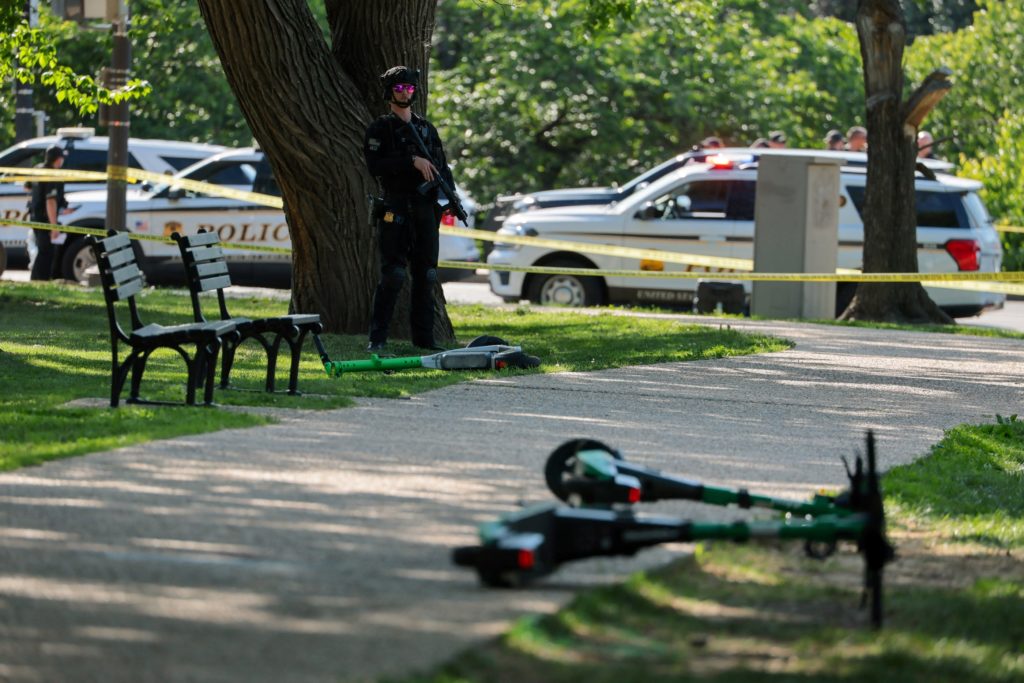
Secret Service agent shoots at man with gun near White House

In a development that underscores the persistent volatility within the nation’s capital, U.S. Secret Service agents were involved in an alarming incident wherein firearms were discharged at an armed suspect in close proximity to the symbolic heart of American power, less than a mile from the White House. This second incident within a matter of weeks reflects a broader narrative of security breaches and the ongoing challenge to safeguard the seat of democracy from both external threats and internal chaos. As agents responded to what they described as an armed individual, the incident quickly escalated, resulting in the injury of a juvenile bystander—a stark reminder of the borderless dangers facing law enforcement and the unpredictable terrain of political conflict.

This event is more than a mere security report; it highlights a power struggle that extends beyond physical confrontation into the realm of political legitimacy and public trust. The Secret Service, an agency entrusted with protecting national leaders, is grappling with a landscape where freedom and security are in increasingly precarious balance. Such incidents prompt questions about the adequacy of current protocols and whether policy reforms—often touted by conservative advocates—are sufficient to address the evolving threats. Critics argue that policies must adapt swiftly to the shifting security paradigm, emphasizing strengthening law enforcement’s capabilities to prevent such incidents. Conversely, reform advocates sometimes push for broader discussions around civil liberties and the limits of state power, complicating the political debate and fueling a fierce clash over the very core of constitutional order.

From a historical perspective, this upheaval echoes the profound debates of the early 20th century concerning the delicate balance between liberty and authority. The Constitutional scholars remind us that the founders’ vision was predicated on a system where power is deliberately distributed and checked, yet in moments of crisis, the state’s role often expands—sometimes at the expense of individual freedoms. Today, the power struggle manifests as a contest over the definition of security and how it should be deployed in a society brimming with ideological divisions. As political theorist Carl Schmitt noted, the sovereign is he who *decides on the state of exception*, and in Washington, D.C., that decision is increasingly influenced by unresolved conflicts over who holds ultimate authority over security measures.

Ultimately, the ongoing sequence of violent incidents and policy debates exemplifies how decisions made in the corridors of power ripple outward, consequentially shaping the lives of ordinary citizens. The battle lines are being redrawn, not just over political ideologies, but over the core principles that will define the American republic going forward. In this theatre of struggles and reforms, the future of liberty and order is written by those wielding power today. As history has demonstrated, in the arena of geopolitics and domestic governance, destiny is carved by the decisive actions of enough brave or reckless actors to alter the course of our collective narrative. The stage is set—what remains to be seen is which forces will emerge victorious in sculpting the enduring contours of American sovereignty.

Mississippi Woman Shoots Escaped Monkey After Truck Crash

In a startling incident that briefly captured international attention, a laboratory monkey escape in Mississippi highlights the growing risks associated with scientific research conducted in the United States and the potential public dangers posed by lab animals. On 28 October, a truck crash resulted in the escape of several Rhesus monkeys from the Tulane University National Biomedical Research Center in New Orleans. While local authorities quickly responded by capturing or killing the animals, the incident has ignited broader debates about biomedical research safety and public health protocols across borders. As the world watches, the incident underscores the delicate balance between scientific progress and national security concerns.

The event took a dramatic turn when one of the monkeys was shot and killed by a homeowner in Mississippi. Jessica Bond Ferguson, a mother of five, justified her decision by emphasizing her fears for her children’s safety after learning that the escaped animals might carry diseases. This decision, though personal, echoes a wider international debate about the adequacy of biosafety measures and the potential hazards of holding dangerous organisms in urban or semi-urban environments. Local authorities confirmed that the monkeys, initially suspected of carrying infectious agents such as herpes, were confirmed by Tulane University to be disease-free. Nonetheless, the incident raises questions about biocontainment failures and the potential for zoonotic transmission—a topic of rising concern among global health experts.

From a geopolitical perspective, the incident exposes vulnerabilities within the U.S. biomedical research infrastructure that could ripple globally. International organizations such as the World Health Organization frequently emphasize the importance of stringent safety standards in handling research animals, especially when their origins include research facilities that routinely distribute primates internationally. The incident’s timing coincides with blaring warnings from analysts about the necessity of > u>enhanced biosecurity measures to prevent accidental releases, which could serve as vectors for emerging infectious diseases—a risk with potential to destabilize regions or hamper international cooperation. The incident also contrats the narrative that scientific research is always contained; instead, it presents a stark reminder that gaps in protocol can result in unpredictable outcomes with global consequences.

The international community watches as he aftermath unfolds, aware that such incidents are not solely local—they reflect broader issues of transnational bioethics and scientific oversight. Would-be critics argue that the incident underscores the urgency for international treaties and standardized safety protocols for research involving dangerous pathogens and primates. As delicate as this situation remains, its implications extend into debates about global health security, international research accountability, and the role of nations in safeguarding against biohazards. These incidents remind us that, within the relentless march of science, humanity must remain vigilant. History continues to be written in moments of crisis like this—a stark warning that advances in science can come with profound and unpredictable consequences.

Social Media Auto Publish Powered By : XYZScripts.com



