Matox News

Truth Over Trends, always!

Roblox rolls out live AI chat to shut down banned language, keeping gameplay clean and cool

Roblox Leads the Charge with Next-Generation AI-Powered Chat Moderation

In a move signaling a new era of disruption within online gaming and social platforms, Roblox has announced the rollout of a revolutionary real-time, AI-powered chat rephrasing feature. This innovation aims to combat toxic language while preserving the fluidity of user interaction, marking a significant step forward in community safety and user engagement. As digital communities grapple with maintaining civility amid rising concerns over safety and moderation, Roblox’s approach exemplifies how strategic AI deployment can redefine industry standards and create competitive advantages against rivals.

Traditional content moderation systems on platforms like Roblox relied heavily on keyword filters that often resulted in clunky, disruptive user experiences. When a banned word was detected, the message was replaced with a string of hash symbols, disrupting conversations and sometimes fueling user frustration. Now, according to the company announced, the new AI feature rephrases inappropriate language into respectful and contextually appropriate alternatives. This not only maintains conversational flow but also fosters a more positive environment—a critical factor in maintaining user retention among younger demographics.

Moreover, Roblox is enhancing its detection capabilities, employing machine learning models that identify variations of banned language, such as leetspeak and other sophisticated bypass tactics. The platform reports a >20x reduction in false negatives related to sensitive information sharing, underscoring the impact of these technological advancements. Industry analysts from Gartner highlight that these developments aim to balance real-time interaction with robust safety measures, a dual challenge in digital community management. Roblox’s move exemplifies how AI, when strategically deployed, can disrupt longstanding moderation paradigms and establish new industry benchmarks.

Supporting this shift is Roblox’s recent implementation of mandatory facial verification for chat access, a response to mounting lawsuits and concerns over child safety. Critics argue that such measures reflect a broader industry trend—where safeguarding young users becomes intertwined with technological innovation. This proactive stance positions Roblox as a market leader tackling social responsibility head-on, which could attract a broader user base and solidify its market dominance amid increasing regulation and scrutiny. As pioneers like Elon Musk and Peter Thiel suggest, embracing disruptive innovation today is essential for future industry resilience, and Roblox’s integrated approach underscores this philosophy.

Looking ahead, Roblox’s strategic investments in AI-driven moderation tools demonstrate that the industry must evolve rapidly to meet the dual demands of user engagement and safety. The integration of real-time rephrasing, sophisticated language detection, and biometric safeguards indicates a move toward an ecosystem where disruption isn’t merely about technology—it’s about redefining community standards and business models. With competitors observing closely, Roblox’s innovations could set the template for a new era of safer, more engaging digital playgrounds—an imperative for all platforms seeking relevance in an increasingly regulated landscape. As the digital frontier continues to expand, those who harness the power of AI-driven moderation will lead the charge into a future where community, safety, and innovation go hand in hand.

Liberal Leaders Shut Down Review of Devastating 2025 Election Loss

In a dramatic twist of Australian domestic politics, the Liberal Party has chosen to bury its most candid and potentially damaging post-mortem of its 2025 election defeat, guaranteeing that critical insights remain hidden from public scrutiny. This decision not only signals a political attempt at a “fresh start” but also raises questions about accountability and transparency within the party, with wider implications for Australia’s geopolitical credibility. As the party’s internal review, which uncovered substantial failures—including weak candidate selection, strategic missteps, and damaging communication blunders—remains classified, some analysts interpret this move as a sign of internal chaos masking itself from the nation and the world.

The review’s findings reportedly cast harsh light on leader Angus Taylor and his deputy Jane Hume, both of whom are key figures in the party’s current hierarchy. Their connections to the campaign’s failures, such as opposition to Labor’s tax reforms and controversial comments about espionage, reflect a broader ideological and strategic instability. Historically, such internal conflicts within the Liberal Party have had ripple effects beyond Australian borders, disturbing regional stability and undermining alliances, especially as the country navigates an increasingly volatile Asia-Pacific theater. By shutting down transparency, Canberra’s leadership risks fostering an internal culture of denial rather than learning, which analysts warn could embolden adversaries in the Indo-Pacific domain.

  • Despite the election loss being the worst in the party’s 80-year history, the decision to suppress the review forecasts a pattern of resistance to introspection.
  • Some voices within the party fear that releasing the report could open old wounds, legal battles, or damage leadership ambitions, paralleling recent internal conflicts in other centers of power worldwide.
  • International observers, including major think tanks and analysts like those featured by the Australian Strategic Policy Institute, suggest that this refusal to confront mistakes hampers Australia’s leadership role in regional security and economic resilience.

The incident exposes a troubling dichotomy: a focus on political expediency over genuine reform, which could have broader consequences for international trust. The global community watches cautiously as Australia, a key partner in the Anglosphere and Pacific region, appears to retreat from accountability at a critical juncture—raising fears of internal fragility that could be exploited by rising powers like China and Russia. Such internal concealment, some argue, portends a future where Australia’s ability to project strength and defend democratic values is compromised. As the nation’s political stage remains a battleground of power and secrecy, the unresolved questions about Australia’s internal health echo as a warning. In the shadows of leadership decisions, the weight of history continues to weave its story—one where the true toll of concealed truths could determine the continent’s role on the world’s future stage, for better or worse.

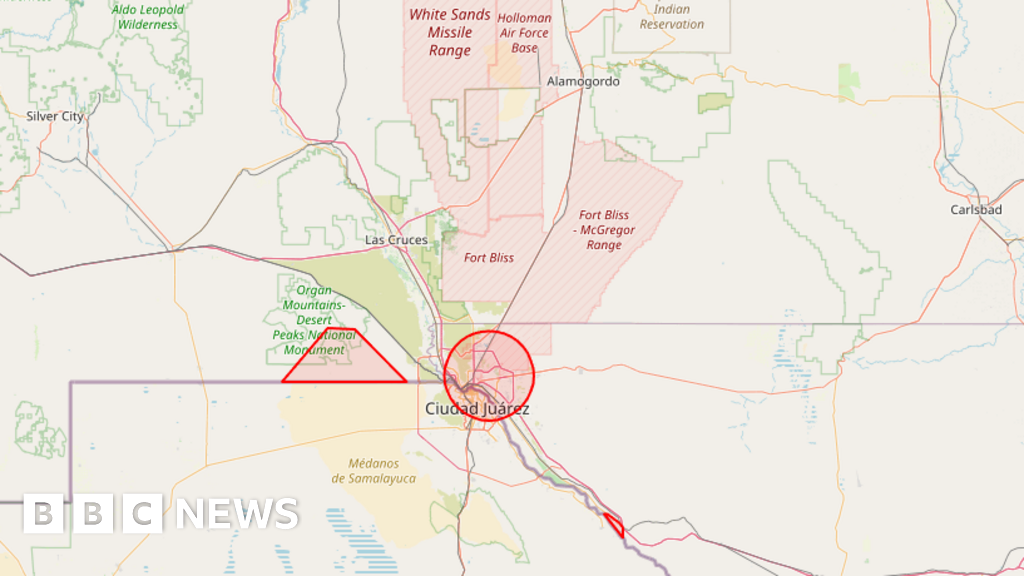
El Paso airspace shut down sparks chaos — blame balloons or drone threats?

In a move that has sent shockwaves through the regional and international landscape, El Paso‘s airspace was abruptly closed for ten days, a shutdown reportedly triggered by a dispute over drone technology testing conducted by the United States military. This unexpected decision underscores the fragile geopolitical climate in North America and its potential implications for broader security dynamics. Although official sources remain tight-lipped about the specific causes, various intelligence reports and military analysts suggest that the closure was directly linked to advanced drone testing operations—an area where technological escalation intertwines dangerously with sovereignty and security concerns.

The resurgence of drone capabilities has become a focal point of contention between military authorities and regional stakeholders. Critics argue that such testing, especially when conducted near border regions like El Paso, could inadvertently escalate tensions with neighboring nations or destabilize an already volatile security environment. The incident highlights the rapid pace at which technological advancements in military hardware are influencing geopolitical stability. Historians and security experts warn that without clear international protocols, these tests risk fueling an arms race that could destabilize diplomatic efforts and trigger an unintended escalation of conflict.

This closure has far-reaching geopolitical impact. Regional actors—including Mexico and various Latin American nations—are closely monitoring the United States’ military maneuvers, wary of how these tests might affect border security and regional stability. Furthermore, global institutions such as the United Nations have increasingly voiced concern over the reckless deployment of emerging military technology in sensitive zones. The turning point lies in how these technological demonstrations are perceived: as defensive innovations or as acts that could inadvertently trigger a new arms race. The decision to shutter airspace—although temporary—intensifies existing debates about transparency, sovereignty, and the need for international regulations governing drone warfare.

As the dust settles on this dispute, the world’s eyes remain fixed on Washington and its military-industrial complex. Analysts warn that such isolated incidents, if unchecked, herald a new era of confrontational posture. The international community, under increasing pressure from peace advocates and global watchdogs, faces a critical choice: to embrace arms control or risk spiraling into unprecedented levels of technological conflict. History will judge whether this brief closure marks a relic of posturing or the beginning of a broader strategic recalibration. The pages of history continue to turn swiftly, with the next chapter yet unwritten, leaving nations to ponder—are we entering a phase of responsible stewardship or reckless escalation?

Almost 70 Aussie schools shut down over asbestos fears in playground sand

Australasia Encounters a Growing Crisis Over Asbestos in Children’s Play Sand

In a disturbing turn of events revealing the complex web of geopolitical and public health concerns, the Australian Capital Territory (ACT) has announced the closure of 69 schools due to the discovery of asbestos traces in commercially sold coloured sand. This development underscores not only domestic safety lapses but also emphasizes the far-reaching consequences of regulatory failures and international trade dynamics. The contaminated sand, linked to popular brands such as Kmart and Target, was introduced into educational environments, prompting precautionary measures that will ripple across regional policies and international relations. As inspectors and analysts delve into the causes, the incident raises critical questions about how safety standards are monitored and enforced in an interconnected global supply chain.

The recall was initiated after the Australian Competition & Consumer Commission (ACCC) identified traces of asbestos—a mineral once widely used in construction but now banned in both Australia and New Zealand—within the products. Despite the ACCC’s reassurance that the risk of airborne asbestos exposure is minimal, the decision to close schools reflects a broader motor of precaution embedded within government policy. Remarkably, air testing so far has yielded negative results for airborne asbestos, yet the government’s response remains cautious, illustrating the precarious balance between public safety and political risk. Such measures reveal a high level of sensitivity to the potential consequences of asbestos exposure, which remains a grave health threat, capable of causing deadly cancers over decades. The incident underscores the crucial importance of vigilant oversight in the export-import of hazardous materials, a subject of heated debate among international regulatory bodies.

The crisis has also spilled over into neighboring New Zealand, where fears surrounding asbestos-laden sand prompted additional school closures. This regional response underlines the shared vulnerabilities in the Pacific, where regulatory harmonization is often challenged by differing national policies and economic ties. As analysts highlight, the incident illustrates how seemingly local decisions can escalate into transnational crises, impacting regional stability and sovereignty. Experts like Dr. Raymond Stevens of the Pacific Safety Institute warn that this controversy may serve as a wake-up call, urging governments and international organizations to tighten controls over hazardous imports. Meanwhile, local authorities are conducting extensive searches to map the presence of coloured sand within school premises, an effort that, although reassuring with negative air tests thus far, underscores the importance of comprehensive safety protocols in protecting future generations.

In the grand geostrategic context, the contamination incident emphasizes the fragile nature of supply chains in an age of globalization. Moreover, it exposes the potential for malign influence or negligence to have far-reaching consequences. Some critics argue that lax enforcement of import bans on asbestos may be indicative of broader governance issues or economic priorities that favor cheap imports over safety. These incidents unfold in tandem with international debates over trade policies, environmental standards, and the role of multinational corporations in ensuring product safety. As such, the incident with coloured sand reflects the broader tensions between economic growth and societal health—an ongoing struggle that has historically defined the geopolitical landscape. Leaders and international organizations, including the World Health Organization, continue to emphasize the importance of adhering to strict standards, but the reality remains complex, fraught with loopholes and conflicting interests.

Ultimately, this controversy serves as a stark reminder that history’s most profound lessons often arrive cloaked within crises. The incident in Australasia is more than a local health scare; it is a symptom of the unresolved tensions between profit and safety, sovereignty and global interdependence. With each school closure and each cautious inspection, the weight of history presses on nations, demanding action and accountability. As the story continues to unfold across the Pacific, one thing remains clear: the decisions made today will echo for decades, shaping the landscape of international safety and sovereignty, and reminding us that, in an interconnected world, the safety of our children is ultimately a question of global resolve. The unfolding narrative stands as a testament to how fragile progress is—yet how vital vigilance remains in the face of emerging threats. The pages of history turn quietly, but their impact is profound—each chapter written by choices made in moments of crises, leaving us to confront the relentless march of time and consequence.

Storm Amy hits UK: London’s royal parks shut, Scotland faces blackouts and travel chaos

Storm Amy’s Global Impact: A Shattering Force of Nature and Its Geopolitical Consequences

As Storm Amy sweeps across northern Scotland, Ireland, and Scandinavia, its destructive power has transcended mere weather phenomena, revealing the vulnerabilities and resilience of modern societies. With wind speeds reaching record-breaking levels—such as the slip of Baltasound into the lowest pressure ever recorded in the UK—this tempest underscores a new chapter in climate variability. According to the Met Office, the storm broke overnight pressure records, signaling a menacing escalation in storm strength that meteorologists and climate scholars are closely monitoring. The storm’s ferocity has led to widespread flooding, power outages, and transportation chaos, emphasizing how nature’s fury is reshaping the geopolitical landscape and how nations respond to environmental crises.

Across Ireland, the storm’s wrath has caused the loss of power for hundreds of thousands, with officials warning that recovery could take days—particularly in counties like Donegal and Galway. Irish police reported the tragic death of a man in County Donegal as a direct result of this weather event, intensifying the human toll amidst the chaos. The Irish Meteorological Service’s yellow and amber warnings highlight the dangerous scale of Wind gusts exceeding 90 mph, which have already toppled trees, torn down power lines, and triggered floods in coastal regions. Similar scenes of devastation have been reported in Scotland, where more than 170 incidents have been logged by Network Rail, including fallen trees obstructing railways, leading to transport bans and economic disruptions. Once seen as unpredictable yet localized, such environmental catastrophes are now evidence of an increasingly volatile climate—a development that is inexorably linked to geopolitical strategies in the 21st century.

Beyond the British Isles, Storm Amy’s reach extends into Scandinavia, striking Sweden, Denmark, and Norway. Heavy gusts have caused power outages in tens of thousands, alongside flooding and damage to infrastructure. The European response reveals a continent on edge, with authorities in Norway issuing flood warnings and warnings for large waves threatening coastal areas. International traffic and maritime routes are severely impacted, showcasing how extreme weather patterns are stirring an urgent reevaluation of geographic vulnerabilities. Historians and climate analysts warn that these storms are consistent with the patterns forecasted by climate change models, heralding a new era where geopolitics will increasingly contend with the instability introduced by increasingly frequent and intense environmental disasters.

Geopolitical Impact: A Testing Ground for Resilience and Cooperation

The widespread devastation from Storm Amy exposes the fragile fabric of modern society’s infrastructures—transport, power, and communication networks—yet also tests the mettle of international cooperation. Governments scrambled to respond, with disruptions affecting everything from regional train services in Scotland to ferry routes in Ireland. The frequent suspension of critical transportation—such as the postponement of rugby matches in Galway and the halting of Scotland’s rail networks—illustrates how environmental shifts threaten economic stability and social cohesion. Analysts at the United Nations warn that failure to adapt to these climate pressures will deepen geopolitical tensions, especially in regions where resources are already stretched thin.

In particular, the storm’s ferocity serves as a sobering wake-up call to Western nations, prompting discussions on infrastructure resilience, emergency preparedness, and climate diplomacy. Governments are now forced to confront the reality: climate change is no longer a distant threat but an immediate challenge with profound geopolitical ramifications. Countries are increasingly entering alliances focused on climate adaptation, energy security, and shared responses to natural Calamities. According to climate scientists, delays in investing in adaptive infrastructure threaten to exacerbate social divides, fueling migration pressures and resource conflicts in vulnerable regions. Even international institutions like the European Environment Agency have voiced concern, emphasizing that the storm’s impacts are a stark illustration of a changing climate demanding immediate international action.

The Unfolding Canvas of History: An Era Marked by Nature’s Wrath

As the storms continue to batter Europe and the British Isles, history reminds us that such events are not isolated but interconnected with the larger currents of environmental and geopolitical change. The images of fallen trees, flooded roads, and power outages are the visuals of a new reality forged by climate shifts—reality in which nations must reshape their policies, their economies, and their very understanding of security. Indeed, as analysts warn, the escalating frequency and intensity of storms like Amy threaten the stability of societies and international order itself. The chaos wrought by this storm is a stark reminder that in an age of rapid environmental change, the lines between nature and geopolitics are irrevocably blurred, and history itself is being rewritten by the power of the elements.

Social Media Auto Publish Powered By : XYZScripts.com