Matox News

Truth Over Trends, always!

US Government Partially Shuts Down Over Homeland Security Funding—A Win for Fiscal Responsibility

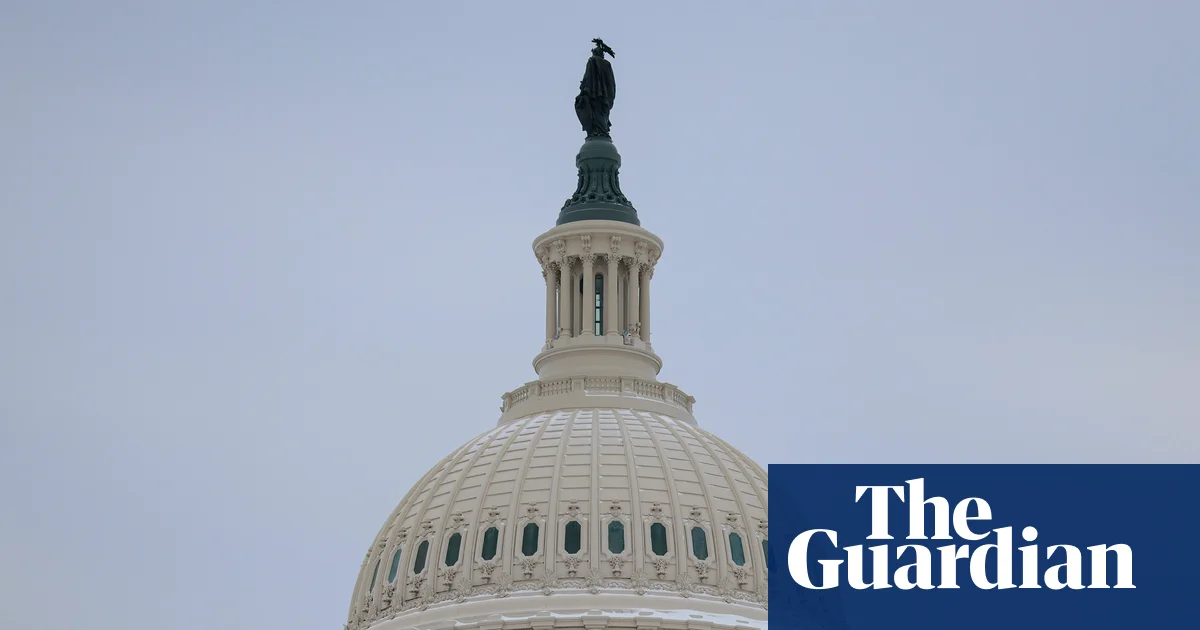
In a dramatic turn of US political turmoil, funding for several federal departments has lapsed amidst a fierce standoff in Congress. This partial government shutdown, initiated on Saturday, exposes the deep divisions over immigration enforcement and domestic policy, as Democrats and Republicans clash over new restrictions on federal agents following a series of controversial killings. The trigger was a dispute over the Department of Homeland Security’s (DHS) funding, which became politicized after incidents involving federal agents—namely the deaths of Alex Pretti in Minneapolis and Renee Good earlier in January. Democratic senators have refused to endorse the bill without crucial reforms, citing concerns over police conduct, masks, and accountability—a stance that risks further paralysis in one of the world’s most powerful nations.

  • Democrats are pushing for reforms such as mandatory body cameras, bans on “roving patrols,” and independent investigations into officer misconduct.
  • Republicans, meanwhile, insist on maintaining broader funding without punitive restrictions, fearing that such demands might politicize law enforcement further.
  • The Senate narrowly passed a two-week DHS funding extension, but the House, controlled by a slim Republican majority, remains uncertain about approving the measures, especially as right-wing factions push to attach voting identification provisions like the Save Act.

Analysts, including political strategists and international observers, warn that this internal squabble signals deeper geopolitical implications. The US, historically viewed as a global leader in stability and governance, now appears fractured, with domestic infighting threatening to weaken its international standing. The partial shutdown echoes past crises, but this time it occurs amidst rising tensions worldwide, from China’s expanding influence to Russia’s assertiveness. Each delay at home distracts from the formidable task of managing global crises, and experts warn that prolonged dysfunction could embolden adversaries who doubt America’s resolve.

According to prominent historians and international institutions like the Council on Foreign Relations, the current crisis underscores the **fragility of American institutions**. The focus on issues such as immigration enforcement and police accountability reveals the profound societal divide, impacting both how nations view American leadership and how American society perceives itself. The internal debates are not merely about policy but reflect broader questions of sovereignty, justice, and national identity. With the government’s future hanging in the balance, a culture of political brinkmanship risks turning external perception into doubt—a crucial moment that could redefine the US’s influence for generations to come.

As the nation teeters on the edge of further shutdowns, the world watches with trepidation, knowing that the unfolding events in Washington are more than domestic politics—they are a symbol of a **nation at a crossroads**. Will America forge a path towards unity, or will internal divisions deepen, leaving an indelible mark on history? The echoes of today’s crisis will resonate through the corridors of power and across every continent, as policymakers account not only for the immediate fallout but for what this tumult reveals about the **geopolitical superpower’s** resilience in confronting both internal and external challenges. The story remains unwritten—yet its chapters are being inscribed with every passing day, shaping the course of history in a world hungry for leadership amidst chaos.
Australia News Live: ACT Shuts 71 Schools Over Sand Scare, NSW Police Crack Down on Domestic Violence—Protecting Our Communities

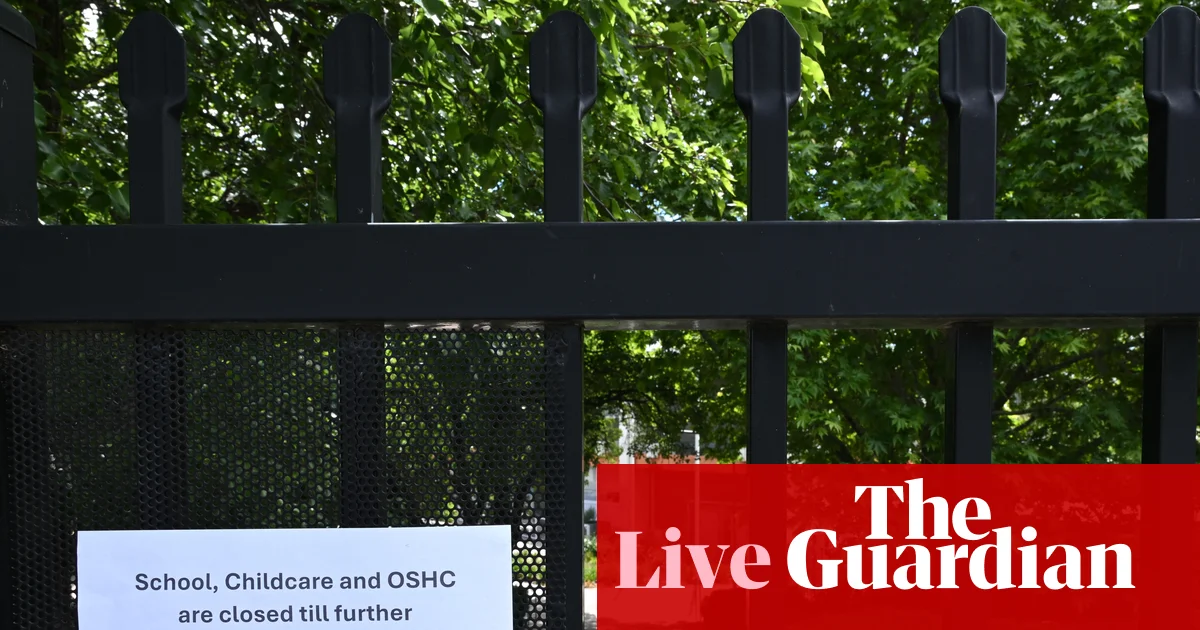
The geopolitical landscape is perpetually shifting, often influenced by key domestic decisions made within sovereign nations. Recently, Australia exemplifies this pattern through a series of dramatic developments that signal both internal challenges and external strategic recalibrations. The recent closure of 71 public schools in the ACT over fears of asbestos-laden children’s sand, alongside ongoing debates over immigration and energy policies, underscore how internal domestic issues can ripple outward, affecting international perceptions and alliances.

Meanwhile, in the wider global arena, significant shifts have occurred, notably with U.S. President Donald Trump signing an executive order easing tariffs on food imports, including beef and bananas. This move reflects a nuanced strategy aimed at addressing inflationary pressures domestically, but it also signals a broader tendency towards protectionism that could strain international trade networks. Patrolling these trade corridors, Australia’s Prime Minister Anthony Albanese reasserts the importance of global trade, framing it as a “bulwark against conflict”. Analysts from think tanks suggest that such rhetoric not only emphasizes economic cooperation but also highlights how trust in international partners can serve as a foundation for diplomacy, promising a buffer in times of crises.

Yet, Australia’s internal struggles — from the asbestos fears leading to school closures to contentious debates over immigration levels—a clear reflection of how decisions at home wield profound consequences for societal stability and international standing. Sussan Ley, the opposition leader, openly advocates for a reduction in immigration, citing community challenges such as transportation and infrastructure strains. Their stance, though controversial, reveals a broader tension on the alliance between open borders and national security, echoing concerns raised by historians and policy analysts who warn that unchecked demographic shifts can challenge social cohesion and political stability. Meanwhile, government funding for climate resilience projects across Australian states underscores a dual narrative: managing environmental threats while navigating economic constraints, as seen in the proposed $200 million investment in weather-resistant infrastructure.

Externally, unresolved conflicts and international economic policies intertwine with national strategies. With Australia poised at the crossroads—balancing energy independence, climate commitments, and economic revival—its path forward will inevitably influence regional stability and global alliances. The decision to support, or oppose, transitioning toward renewable energy sources and industrial resilience could determine whether Australia becomes a reliable partner or an unpredictable actor on the world stage. Historic analysts warn that in a world where “trust” is becoming a scarce commodity, the decisions of now will shape the geopolitical order of decades to come, a story still being written with each policy choice and international shift.

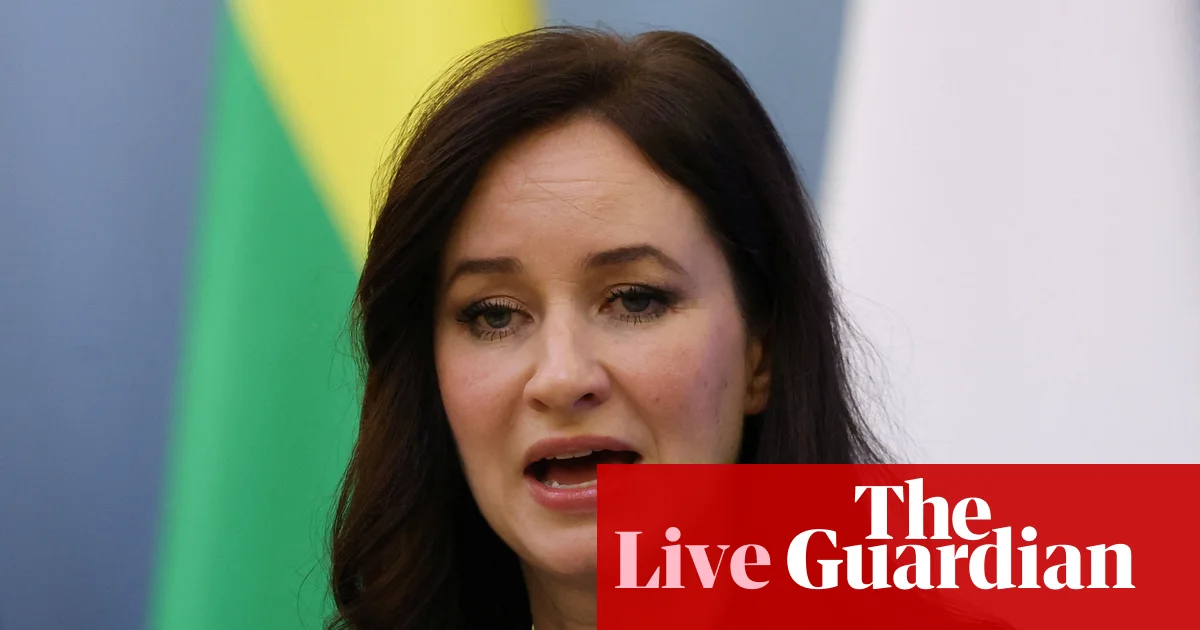
Lithuania shuts border with Belarus after balloon chaos halts Vilnius airport — Europe reacts

Europe’s Turbulence: Lithuania’s Bold Response to Hybrid Threats

Amid rising geopolitical tensions in Eastern Europe, Lithuania has taken a formidable stance against what it perceives as concerted hybrid warfare efforts from Belarus and Russia. This strategic shift comes in the wake of a week marked by unprecedented disruptions at Vilnius Airport, where nearly 30,000 passengers faced cancellations and delays—triggered by what authorities believe to be helium balloons used by smugglers and intelligence operations aiming to destabilize the region. Lithuanian Prime Minister Inga Ruginienė announced a decisive plan to close the border with Belarus, save for diplomatic and EU transit, and to shoot down any further balloons intruding on Lithuanian airspace—a move that underscores a broader escalation in Europe’s response to hybrid threats.

This development signals a significant turning point for NATO and EU security paradigms. Lithuania’s government, echoing concerns raised by national security centers, views the balloon incidents not merely as smuggling but as part of a “hybrid psychological operation”, aimed at testing Lithuania’s resilience and military readiness. Vilmantas Vitkauskas, head of the National Crisis Management Center, reported radar detections of up to 66 objects over a single night—clear indicators that these tactics are states’ attempts at psychological warfare. International analysts have warned that such unconventional methods, while seemingly minor, are indicative of a broader strategy by Russia and Belarus to weaken NATO’s eastern flank, creating instability that could embolden further aggressive actions in the region.

In this context, NATO has only invoked Article 4 of its treaty nine times in history—most recently following Russian violations of airspace in Poland and Estonia—and Lithuania’s move to escalate its security measures could very well be the next chapter in this ongoing saga. Lithuanian officials are actively considering diplomatic and legal actions alongside territorial defenses, warning that the hybrid operations seek to sow chaos and test NATO’s collective resolve. As foreign ministers and military leaders convene in Brussels and other capitals, the weight of history presses heavily on Europe’s shoulders. Analysts from the International Crisis Group and various military strategists highlight that decisions taken in the coming days will inevitably influence the broader security architecture, potentially recalibrating NATO’s response to covert and overt aggression from Russia and its allies.

As Lithuania braces for further provocations, the unfolding scenario leaves the continent at a crossroads—where diplomacy, military readiness, and the unity of democratic nations will be tested more severely than ever. The shadows cast by these balloons may seem insubstantial, yet they pierce the fabric of European stability—reminding all that the cost of complacency can be distinctively steep. In the face of evolving hybrid tactics, the region’s next steps will echo through the annals of history, setting a precedent for how the West confronts a new era of subtle but relentless aggression.

Weather balloon disruption shuts down Lithuania’s top airports—major security alert!

The recent series of provocative incidents in the Baltic States underscores a shifting landscape of geopolitical instability that threatens the delicate balance of power in Eastern Europe. Lithuania, a staunch member of both European Union and NATO, responded decisively by closing its two largest airports and border crossings following the discovery of numerous helium weather balloons drifting into its airspace. These balloons, believed to be used for smuggling, notably carry Belarusian cigarettes, which are far more expensive within EU borders. The Lithuanian government blames Belarusian President Alexander Lukashenko, an ally of Russian President Vladimir Putin, asserting that his regime tolerates and perhaps facilitates this covert smuggling operation—a move that directly undermines EU security principles and regional stability.

This escalation is not isolated. Reports indicate that, throughout the year, Lithuania has seen an unprecedented number of incursions, with hundreds of helium balloons detected and dozens crossing into its territory. The same pattern of aerial intrusions is evident in neighboring Poland, which experienced over 100 similar incidents, further signaling an orchestrated effort to destabilize the Baltic region. Analysts point out that these seemingly minor incursions are part of a broader strategy by Russia and its proxies to test NATO’s resolve and to sow chaos within EU borders, exploiting vulnerabilities in eastern European countries. Security experts warn that such tactics could prelude more aggressive actions, echoing fears of a renewed hybrid warfare aimed at dividing the alliance and reasserting Moscow’s influence.

The recent encounter involving Russian military aircraft further amplifies these concerns. On Thursday, Lithuanian military sources confirmed the entry of a Sukhoi SU-30 fighter and an IL-78 tanker into Lithuanian airspace—an area protected by NATO’s Enhanced Air Policing Mission. Though the aircraft departed after brief incursions, NATO scrambled fighter jets as a show of force, signaling that the alliance remains vigilant amid the continued threats. These deliberate aerial provocations coincide with diplomatic protests from Vilnius, which summoned the Russian chargé d’affaires and issued a stern warning, underscoring the fragile diplomatic environment. Russia’s denial of the incursions, despite credible military reports, reveals its attempt to obfuscate the narrative and maintain plausible deniability—yet the message remains clear: the Baltic States are caught in the crossfire of a renewed geopolitical struggle.

This unsettling chain of events illuminates the broader geopolitical impact of Russia’s tactics. Under the veneer of trivial balloon crossings, a strategic message is sent: the security of eastern NATO members is fragile, and the Kremlin is willing to test the collective resolve of the West. International organizations and security analysts alike warn that such provocations could serve as precursors to more serious escalations—potentially softening defenses or creating opportunities for unilateral actions that threaten regional sovereignty. Historians like John Mearsheimer argue that Moscow’s deliberate destabilization efforts are designed to weaken NATO from within, reviving Cold War-era fears of renewed conflict in Europe. The unity of the alliance and the resilience of its eastern flank are under direct threat; the question remains whether Western nations can suppress the temptation to retreat or whether they will confront this threat head-on, risking broader confrontation in their effort to uphold stability.

As the curtains lift on this chapter of unfolding history, the precarious balance between sovereignty and aggression continues to sway. The Baltic region has again become a testing ground for geopolitical rivalry, where every balloon, incursion, and diplomatic protest leaves an indelible mark on the fabric of international security. The question looms: how much longer can democratic nations defend their borders against this invisible war? The answer, still shrouded in uncertainty, echoes across the corridors of power—while history, with relentless perseverance, watches and waits, ready to judge the decisions that will shape the future of the free world.

Israel shuts down Gaza’s last southern route as military offensive intensifies on Gaza City — live updates

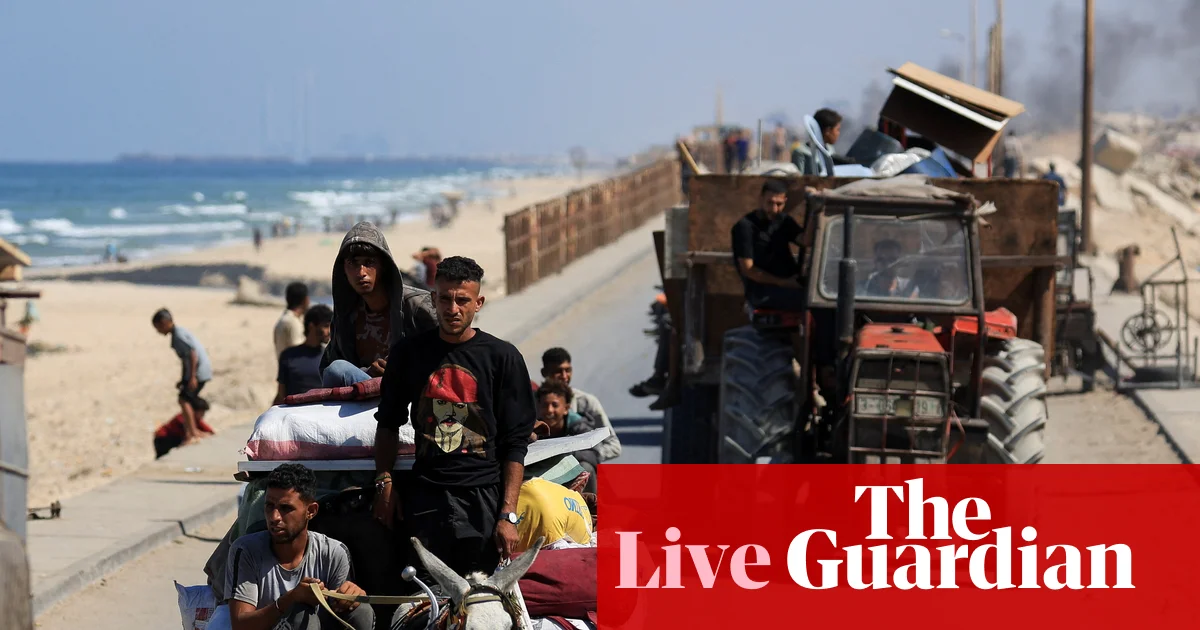
The ongoing Israeli military offensive in Gaza marks a significant escalation in the Middle East crisis, with profound geopolitical impact that threatens regional stability and influences the world’s power dynamics. As Israel moves to cut off access routes from Gaza’s south to north, the humanitarian toll continues to mount, with the UN reporting over a quarter of a million displaced residents in just the past month. The latest military decisions, including the closure of critical transit routes and increased aerial and ground operations, underscore a strategic shift that may shape future Israeli-Palestinian relations for generations.

Simultaneously, Hamas is reviewing a recent plan presented by Donald Trump in Washington, which many view as a pivotal turning point. Israeli and Arab leaders have broadly supported the 20-point proposal, which aims to de-escalate the violence, yet Hamas’s response remains uncertain. Trump has presented an ultimatum, declaring that Hamas has “three or four days” to accept or face severe repercussions. This high-stakes diplomatic maneuvering directly affects not only the immediate conflict but also regional alliances, with many analysts warning that the failure or acceptance of the plan may determine whether the region slides further into chaos or begins a fragile path toward peace.

Globally, reactions to the crisis reveal divisions and strategic calculations. The Australian government, accused of enabling Israel’s military actions through tepid critiques, faces mounting international pressure, with critics asserting that such policies embolden atrocities and undermine international law. On the ground, the human cost is staggering: the Palestinian health ministry reports over 66,000 deaths and hundreds of thousands injured since October 2023, emphasizing the severity of the humanitarian catastrophe. Meanwhile, the recent attack by Yemen’s Houthi rebels on a Dutch-flagged cargo ship, which caused substantial damage and injuries, demonstrates that regional conflicts are intertwining, further destabilizing an already volatile situation.

In the broader global context, the Middle East remains a hotspot of tension, with Iran facing renewed sanctions over its nuclear program, and Yemen becoming a theater of proxy conflict as the Houthis threaten Western interests with their assault on shipping lanes. The Global Sumud Flotilla attempting to break the naval blockade of Gaza reports being threatened and impeded by unidentified vessels, illustrating the high risks and escalating confrontations at sea. This layered and interconnected instability leaves history at a crossroads, with the choices made today echoing into the future of international order, justice, and peace, as the world watches with bated breath—the weight of history still unfolding.

Danish Authorities Boost Security After ‘Actor’ Shuts Down Aalborg Airport—Europe News

Europe at a Crossroads: Denmark’s Drone Crisis Sparks Geopolitical Uncertainty

In recent weeks, Denmark has become the epicenter of a series of unsettling drone incursions in its airspace, exposing vulnerabilities that threaten not only national security but also the broader stability across Europe. Authorities now firmly believe that these attacks are orchestrated by a professional, hybrid entity rather than rogue private operators, marking a significant escalation in the use of drone technology as a tool of strategic disruption. Such systematic attacks, occurring at multiple locations including Aalborg airport, have prompted Danish officials to consider activating Nato’s Article 4 proceedings—an act of consultation that signals heightened concern about external aggression and regional destabilization.

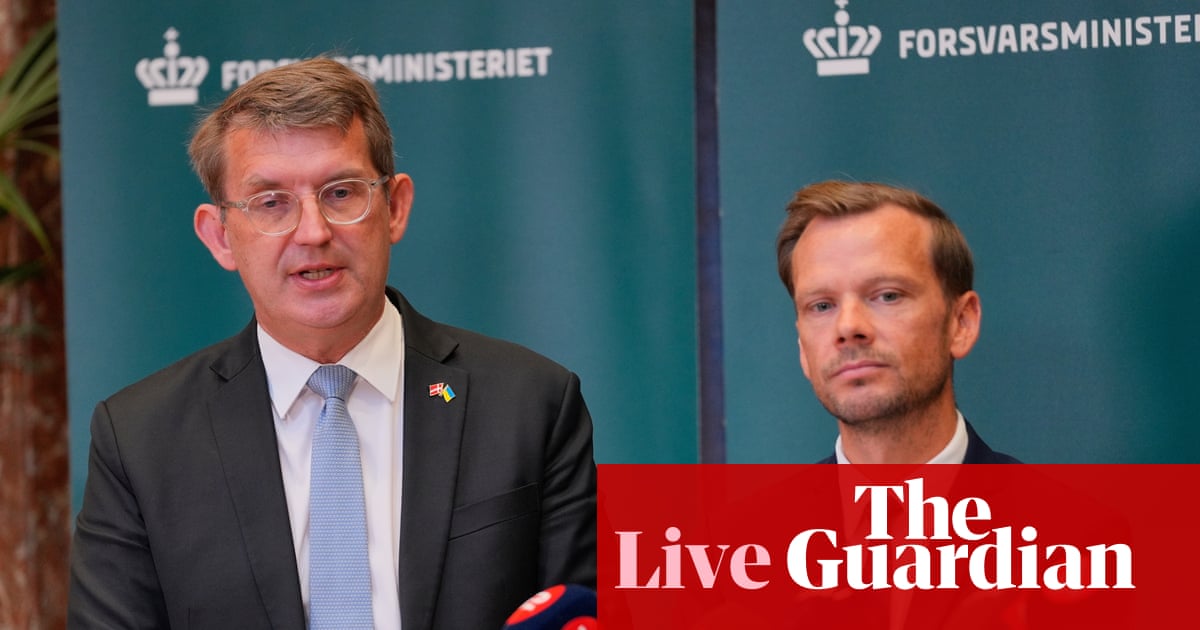
Defense Minister Troels Lund Poulsen has emphasized the sophisticated nature of these operations, likening them to a hybrid attack using different types of drones. This assessment underscores a broader pattern of hybrid warfare—a strategy employed by state and non-state actors designed to create chaos and sow division, often without direct military confrontation. The incident comes amidst a crescendo of geopolitical tension that involves not just Denmark but the entire continent. Analysts from the European Union and global security think tanks warn that these incidents may portend a new era of covert conflicts, where technology-driven asymmetric warfare becomes the norm.

The strategic significance of Denmark’s response cannot be understated. The government’s consideration of requesting Nato Article 4 consultations indicates a potential shift toward collective security measures in the face of evolving threats. Although the country has yet to officially invoke the article, the ongoing engagement with Nato and the European Union reveals a deliberate effort to bolster defenses and establish a unified front. Historically, security experts like Dr. Emily Carter and notable organizations such as EUROPOL suggest that this escalation could serve as a precursor to intensified security cooperation across the Atlantic Alliance, redefining the geopolitical landscape even further.

While Denmark’s leadership states there is no evidence linking the drone incidents to Russia, fears persist over the broader implications of escalating tensions in Eastern Europe. The possibility that these attacks aim to undermine Denmark’s support for Ukraine aligns with patterns observed in recent European confrontations, where technological infiltration has played a tactical role. As the country gears up for a major diplomatic event—the upcoming EU summit—the emphasis on expanding defense capabilities and legal frameworks suggests a definitive move toward hardening national infrastructure against future hybrid assaults. This crisis, often dismissed as a mere technological nuisance, risks evolving into a catalyst for broader geopolitical realignments.

The unfolding story of Denmark’s drone crisis encapsulates a pivotal moment in international affairs—an era where the battleground extends beyond conventional borders into the skies, and where the decisions made today will resonate in the corridors of power for generations to come. The weight of history presses upon Europe’s fragile balance, as the specter of covert warfare clandestinely shifts the trajectory of global peace and security.

Social Media Auto Publish Powered By : XYZScripts.com