Matox News

Truth Over Trends, always!

Adobe Animate shutters next month—what’s next for creators?

Adobe Ends Era of Animate: Industry Faces Major Disruption

In a move signaling significant shifts within the digital content creation landscape, Adobe has officially announced the discontinuation of Adobe Animate. As detailed on the company’s FAQ, the animation software will cease sales from March 1, 2024, with users retaining access to existing files until March 1, 2027 (or 2029 for enterprise). This decision underscores Adobe’s strategic pivot away from legacy platforms that, while historically pivotal, no longer align with the company’s vision for a future driven by disruptive, emerging technologies.

Founded on the pioneering vector animation platform originally launched in 1996 by FutureWave Software, Animate’s evolution reflects the broader shift in web and media design. From its roots as FutureSplash Animator, through acquisition by Macromedia and later Adobe, the platform became a cornerstone for artists, indie creators, and industry powerhouses. Yet, with the decline of Flash technology and the rise of cloud-based, AI-driven creative solutions, Adobe’s move appears aligned with a broader industry trend: disruption is redefining the core tools of digital storytelling.

Innovation and Market Shifts Are Reshaping Content Creation

As Adobe transitions away from Animate, many visionaries in the industry are voicing concern over the repercussions. Creators behind influential short-form animated series like Chikn Nuggit emphasize that Animate remains vital to their workflows. Likewise, David Firth, creator of the cult classic Salad Fingers, notes that he continues to rely on Animate. From high-budget TV productions to indies, thousands of professionals and hobbyists argue that Adobe’s decision could hinder creative innovation and stall ongoing projects.

  • Animation studios depend on Animate’s unique vector tools for production efficiency.
  • Many legacy assets are incompatible with newer software, risking the loss of invaluable media assets.
  • The industry’s shift to AI-enhanced tools like Adobe After Effects and emerging platforms signals a transformative era in digital content creation.

Market analysts highlight that this upheaval presents a critical inflection point. As Gartner and MIT researchers observe, disruption fueled by artificial intelligence, cloud computing, and blockchain is accelerating industry consolidation. Major players like Google, Apple, and Microsoft are poised to capitalize on this transition, leveraging innovative platforms to redefine content creation pipelines, interactive media, and virtual production. Consequently, smaller studios and independent creators face mounting pressure to adopt new tools that can outpace legacy systems in speed, versatility, and integration.

Looking Forward: Industry on the Brink of Fundamental Transformation

The discontinuation of Adobe Animate does not merely mark the end of a software but signals a broader industry renaissance—one rooted in disruption, innovation, and the relentless pursuit of more integrated and intelligent creative workflows. As companies accelerate investment in AI-assisted animation, real-time rendering, and immersive media, those who adapt quickly will secure competitive advantages in the fast-evolving digital economy. The question remains: will legacy tools and traditional paradigms survive this upheaval, or will they give way to a new generation of disruptive technologies that reshape the nature of digital storytelling forever?

For industry leaders and emerging creators alike, the message is clear: embrace innovation now or risk obsolescence. The future belongs to those who can leverage emerging technologies — and the time to act is now. The disruption unfolding around Adobe’s Animate reflects a broader movement towards a new era of digital creativity, where agility, innovation, and strategic foresight will determine the winners in the next chapter of media evolution.

Sarah Ferguson charity shutters amid new Epstein friendship details

In recent days, the closing of Sarah Ferguson’s charity has sent ripples through society’s fabric, illuminating deep-seated issues about moral accountability, social trust, and the influence of power dynamics in modern communities. The charity, once celebrated for its humanitarian efforts across multiple nations—delivering aid, healthcare, and educational projects—decided to shut its doors amid revelations that have cast a long, troubling shadow over its founder’s associations. This event underscores a broader societal challenge: how social scandals involving prominent figures can erode community trust and threaten the moral foundation of charitable institutions.

These revelations come amidst the unprecedented release of millions of files related to Jeffrey Epstein, exposing a disturbing network of connections between the disgraced financier and the wealthy elite. Among the disturbing insights, evidence emerged about Epstein’s interactions with individuals like Prince Andrew and Sarah Ferguson, illustrating how social networks often blur lines between influence and misconduct. Notably, Ferguson’s public declarations of Epstein as her “brother” and her the *deep personal bonds* she maintained with him reveal a troubling pattern where social status and personal ties overshadow moral judgment. These relationships, now laid bare, threaten to undermine the credibility of philanthropic efforts, raising fears about how families and communities can protect themselves from social and moral corruption.

  • Many sociologists argue that public scandals involving figures of influence have a lasting impact on societal trust, especially within families and local communities.
  • Historically, trust is fundamental for the effective functioning of charitable institutions and community-led initiatives, and its erosion can lead to apathy, disengagement, or worse, cynicism.
  • Addressing such issues involves robust accountability measures and fostering a culture where moral integrity takes precedence over social climbing or personal gain.

The repercussions extend beyond individual failings—they threaten the **moral fabric** that upholds societal cohesion. Within families, the erosion of trust in social institutions can lead to disillusionment among young people, who see their moral values compromised by the glaring hypocrisy of their superiors. In education, this manifests as a crisis of moral authority, where schools are left to grapple with the challenge of instilling virtues of integrity when society’s icons are revealed to be morally compromised. Communities, the fundamental building blocks of society, must then decide whether to retreat into cynicism or to seek renewal through transparency and reform. Social commentators often emphasize that the true test of a society’s resilience lies in its ability to confront uncomfortable truths and emerge stronger.

Reflecting on the societal fallout from these revelations leaves us with a profound question: how can society rebuild trust and ensure that families and communities are protected from the corrosive effects of moral and social failures? Social change begins with moral courage and the acknowledgment that ethics must be non-negotiable. Historically, phases of societal renewal have been driven by voices willing to confront power with honesty and humility—a tradition that must be rekindled in today’s fractured landscape. Only then can society envision a future where *families are nurtured in integrity, communities are resilient in truth, and social institutions stand firm on foundations of moral accountability*. Society’s greatest challenge is not merely unearthing scandal but transforming tragedy into a catalyst for genuine moral revival—an enduring hope that society’s collective soul can be mended, one honest step at a time.

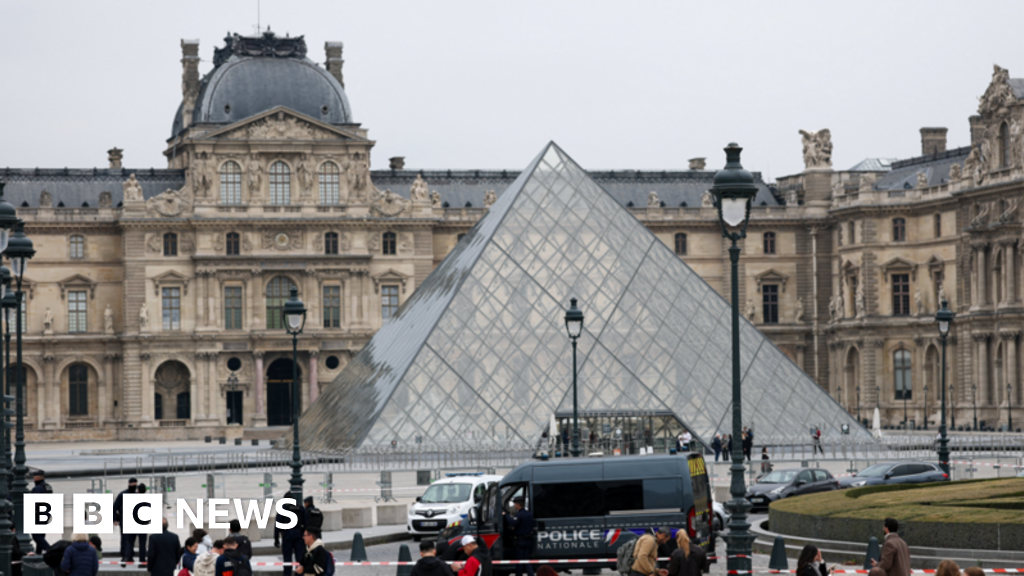
Louvre shutters gallery over safety concern, protecting visitors first

The recent jewel heist at the Louvre Museum in Paris, one of the world’s most iconic cultural institutions, has starkly spotlighted the vulnerabilities inherent in safeguarding humanity’s shared heritage. Despite being a global symbol of art and history, the Louvre’s security lapses have become a cautionary tale for nations worldwide—a reminder that even the most prestigious landmarks are not immune to audacious crimes. The thieves, arriving with a stolen vehicle-mounted lift during broad daylight, infiltrated the museum’s renowned Galerie d’Apollon and made off with precious items, including a crown and the Empress Eugenie’s historic tiara. This brazen act not only exposes gaps in physical security but raises questions about the true state of cultural protection on an international scale.

The geopolitical impact of this incident extends beyond France’s borders. As investigators race to recover the stolen jewels—believed to have been spirited abroad—the international community’s concern grows about the proliferation of art and cultural artifacts on black markets, often crossing continents with ease. Hand-wringing analysts suggest that these thefts are symptomatic of broader issues: inadequate investment in security infrastructure, prioritization of acquisitions over preservation, and a growing sense of complacency among custodians of history. Reports from the Court of Auditors reveal that French museum management directed €105.4m toward new acquisitions and €63.5m into exhibitions, while maintenance a mere €26.7m—an alarming imbalance that critics argue leaves cultural treasures vulnerable to theft and decay.

Furthermore, this event underscores a shift in priorities and capacity for some national institutions, as international organizations like the UNESCO and INTERPOL warn of rising art thefts, often linked to transnational crime syndicates. The Louvre’s decision to transfer some of its most priceless items to the Bank of France reflects an urgent, albeit reactive, effort to protect invaluable assets, yet it also signals a deeper, systemic challenge. Experts warn this is a crucial tolling bell: if cultural heritage becomes increasingly vulnerable, future generations risk losing irreplaceable links to human history. The historian Dr. Julian Carter emphasizes that such high-profile breaches threaten the cultural fabric of societies and the narratives they uphold.

As the shadowy figures behind the heist vanish into a murky network of international black markets, the story remains unresolved—yet it is but a chapter in a larger saga. The unfolding events at the Louvre serve as a stark reminder that the realm of international security must evolve rapidly to counter threats that target not just treasures but the very identity of nations. With each stolen artifact, the long arc of history teeters on the brink, awaiting restitution or further loss. The worldwide community stands at a crossroads: will this be a wake-up call pushing reform and vigilance, or will it become yet another line in the tragic history of cultural neglect? In this uncharted future, the fate of our shared heritage lies in the balance—fragile and contested, yet pivotal in defining the legacy of civilization itself.

Social Media Auto Publish Powered By : XYZScripts.com