Matox News

Truth Over Trends, always!

Andrew’s Arrest Exposes US Silence on Epstein Files — A Wake-Up Call for Britain

Global Power Shaken as Epstein Scandal Exposes Deep-Seated International Elite

The recent release of the epstein files has ignited a firestorm across nations, revealing a shocking tapestry of corruption, abuse, and elite complicity that spans continents. While countries like Britain and Australia grapple with scandals involving high-profile figures and international alliances, the United States remains notably aloof. Officials and analysts alike are left questioning the true scope of accountability and the efficacy of justice—or the stark absence of it.

Contrasting sharply with the relentless pursuit of justice in Britain—where figures such as former Prime Minister Tony Blair’s associate Peter Mandelson have come under police investigation—the U.S. appears paralyzed by political caution or active cover-ups. In the aftermath of the Epstein revelations, only Ghislaine Maxwell has faced formal justice, sentenced to 20 years for trafficking minors. Meanwhile, numerous high-profile Americans, including Bill Gates and figures linked to the 2028 LA Olympics, have distanced themselves from the scandal—yet remain uncharged. This disparity underscores a critical geopolitical impact: the fragile credibility of American institutions in confronting its own power elite.

As reports detail how U.S. officials and prominent personalities maintained close ties with Epstein after his 2008 conviction, critics continually assert that **the “Epstein class”**—a network of politicians, financiers, and celebrities—enjoys privilege and impunity. Senator Ruben Gallego explicitly blamed President Trump for obstructing justice, comparing America’s attitude to that of nations that hold their elites to account. Such claims highlight the alarming divergence in standards: where other countries are aggressively pursuing accountability, the U.S. remains politically hesitant, if not complicit.

Furthermore, international media and analysts suggest that this silence and inaction serve as a warning—a sign that the American power structure is deeply entangled in a web of secrecy and self-preservation.

  • Britain’s Prime Minister Keir Starmer had to confront questions about his own judgment due to his close association with Peter Mandelson.
  • In the United States, political officials such as Howard Lutnick have attempted to deny associations, yet internal emails reveal contradictory evidence of continued contact.
  • Meanwhile, the upcoming congressional hearings threaten to expose a different, far darker chapter of this saga—one where justice might finally pierce through the veil of privilege.

Historians and international watchdogs warn that the justice lag in the United States risks turning this scandal into a story of institutional decay. The unfolding investigations could mark a turning point—not only in the pursuit of justice for Epstein’s victims but in re-examining the unchecked power that shields the elite. As the echoes of this scandal continue to resonate worldwide, the stage is set for a dramatic reckoning—one that may define the trajectory of justice for generations to come. Yet, the question remains: will history record this as a wake-up call or another chapter of lost opportunity? Only time will unveil how deep America’s legacy of secrecy truly runs, and whether the winds of change can finally sweep through the corridors of its most powerful institutions.
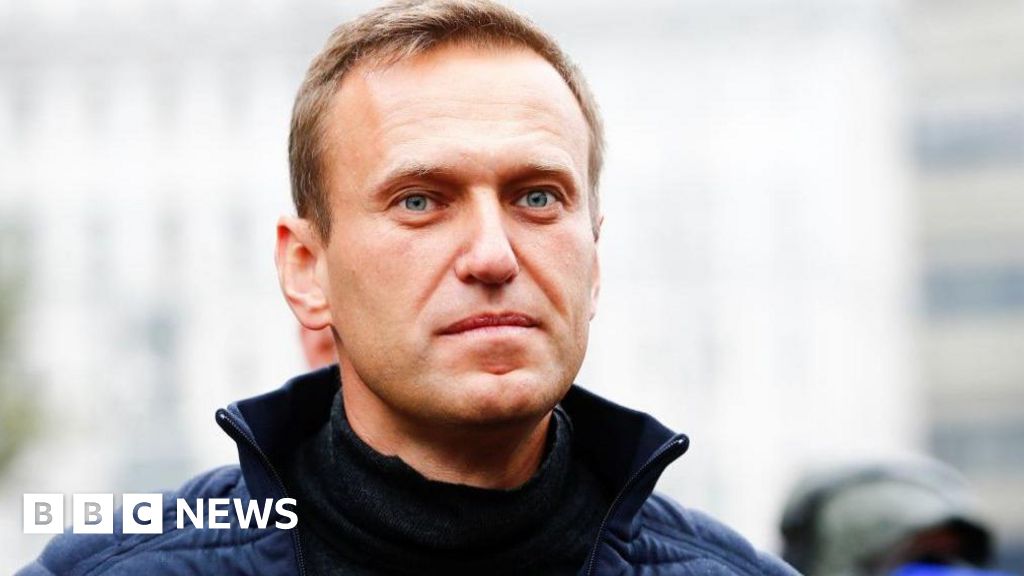

UK Allegedly Charges Russia with Using Dart Frog Toxin to Silence Navalny

In an alarming development that has sent shockwaves through the international community, the Foreign Office has declared unequivocally that there is no innocent explanation for the presence of a toxin detected in samples taken from Alexei Navalny. The outspoken Russian opposition figure, whose pro-democracy activism has challenged the Kremlin’s authority, remains at the center of a geopolitical crisis that threatens to reshape alliances and spark new tensions across Europe and beyond.

The revelation comes as part of a broader narrative of escalating state-sponsored poisonings linked to Russia, which has consistently denied involvement despite mounting evidence from international investigations. The poisoning of Navalny, who fell seriously ill in August 2020, has become a focal point for Western sanctions and diplomatic condemnations. The European Union and United States have called for transparency, demanding that Moscow disclose all details regarding the toxin used—highlighting the serious breach of international norms and the potential for a new Cold War-era standoff rooted in covert operations and political repression.

Analysis from leading international organizations, including the Organization for the Prohibition of Chemical Weapons (OPCW), underscores the gravity of the situation. Experts argue that this incident marks a turning point in the ongoing struggle over sovereignty, human rights, and international law. Countries allied with the West warn that tolerating such actions emboldens authoritarian regimes and undermines the global order. Meanwhile, Russia insists that Navalny’s poisoning was a domestic matter, dismissing accusations as Western interference. This entrenched denial fuels fears of escalating hostilities and complicates diplomatic efforts to forge a unified response.

Historian and geopolitical analyst Dr. Mark Evans notes that the incident illustrates a fundamental shift in international relations—where informal warfare and covert operations have become tools to stifle dissent and influence power dynamics. The fallout from Navalny’s poisoning extends beyond Russia’s borders, threatening to plunge the continent into renewed uncertainty. As NATO officials consider their next move, the world watches with bated breath, acutely aware that this episode could be a catalyst in a new era of poisoned diplomacy. With each revelation, the weight of history presses down, reminding us that in the shadows of global politics, the line between peace and conflict remains perilously thin.

Dementia Won't Silence Their Joys — We Must Recognize Their Humanity
Dementia Won’t Silence Their Joys — We Must Recognize Their Humanity

Across our communities, the battle against social isolation and the neglect of vulnerable populations exposes an unsettling truth about society’s moral fabric. Dementia, a progressive neurological decline, is often dismissed or misunderstood, leaving families and caregivers grappling with the emotional, financial, and practical tolls. As sociologists like Dr. Laura Smith argue, the way a society treats its most vulnerable reflects its true character. Yet, amidst the struggles, stories emerge that challenge societal apathy, reminding us that **people with dementia remain human beings** with capacities for love, connection, and dignity. These stories aren’t just reflections on individual resilience—they are calls for societal reform, urging policymakers, educators, and healthcare systems to prioritize compassionate approaches to care.

At the heart of these issues lies **the impact on families and educational institutions**. When a loved one faces dementia, the disruption extends beyond the individual, fracturing families and pulling communities into long, often exhausting caregiving roles.

  • Many families lack access to comprehensive support and resources needed for proper care, leading to increased stress and strained relationships.
  • Educational programs that raise awareness about dementia are critical but underfunded, perpetuating misconceptions and social stigmas.
  • Historians like Dr. Peter Reilly emphasize that societies which invest in preventative care and community support create stronger bonds and more resilient communities.

In school settings, **the cultural shift towards understanding neurodiversity and mental health** is slowly gaining ground, but significant gaps remain. Without a societal focus on empathy, children grow up in environments that sometimes overlook the humanity of those with cognitive impairments, shaping attitudes that lead to social exclusion and discrimination. Addressing this requires a fundamental cultural shift—one that values **dignity and compassion** over indifference and neglect.

The stories shared by individuals like Jo Glanville and Catherine Roome powerfully illustrate **the transformative potential of simple acts—reading, music, and storytelling**—that bridge the gap between society’s neglect and human connection. Jo Glanville eloquently captures how reading was more than just a pastime for her parents; it was a vital link to their identity and humanity, even in the face of dementia’s relentless march. Meanwhile, music therapy and creative storytelling demonstrate that **yet again, society’s most vulnerable can find moments of joy and recognition** when given the chance. These humanistic approaches highlight a profound truth: *respect and love are not commodities—**they are the moral bedrock of any thriving society**.* When we resist reducing individuals with dementia to mere “zombies” or burdens, we uphold the ethical standards that define a compassionate civilization.

In facing society’s ongoing social issues surrounding dementia and care, it becomes evident that **our collective responsibility** extends beyond hospitals and homes—to each of us as members of a society that must guard its moral integrity. Historians like Yuval Noah Harari suggest that only through shared stories and community effort can we foster a society where differences are respected and the dignity of every individual is upheld. As families, educators, and policymakers grapple with future challenges, the hope remains that society can evolve—prioritizing **empathy over neglect**, **community support over isolation**, and **respect over judgment**. Society’s true strength lies in its capacity to care for its most fragile, transforming despair into hope, silence into song, and indifference into a collective embrace. Ultimately, the measure of our society is whether we rise to uphold the humanity in others, illuminating a path toward a future where dignity is restored, and no one is left to fade into the fog of forgotten stories.

Opposition Slams Labor’s Secretive FoI Changes, Charges Fees to Silence Youth Transparency Movements

In what could mark a significant shift in Australia’s democratic landscape, the Albanese government has proposed a controversial overhaul of its Freedom of Information (FoI) regime. The proposed legislation aims to introduce fees for FoI requests, significantly reduce the scope of accessible documents, and impose strict processing time limits. Critics warn that these changes threaten the very foundation of accountability, echoing fears that secrecy will supersede transparency. Despite the government’s assurances that the reforms target frivolous and AI-generated requests, opposition and crossbench senators depict the plan as an erosion of citizens’ rights and a step toward government opacity.

Led by a Labor-dominated Senate inquiry, proponents argue that the measures are necessary to curb unwarranted demands on public resources and shield sensitive policy discussions from undue exposure. The amendments include a transfer from the current 30-day response window to a more restrictive business days timeline, along with a 40-hour cap on processing individual requests. These provisions, aimed at streamlining bureaucratic procedures, are met with skepticism by opposition voices who contend that the real impact will be a decline in government transparency and an increase in administrative barriers for citizens seeking information. Increasingly, international observers look at Australia’s evolving foi policy in the context of a broader global trend—governments tightening control over information to defend national interests, whilst critics warn of safeguarding elitist privileges at the expense of public accountability.

Historians and analysts warn that such moves are not isolated but part of a broader, pattern of democratic backsliding observed across Western nations. According to the International Transparency Agency and key political analysts, the current push can be understood as an attempt by governments to regulate the flow of information in an era dominated by AI and digital manipulation. The United States and United Kingdom, for instance, have enacted similar restrictions amid concerns over data overload and misinformation. Critics argue that these policies serve to fortify political control, marginalize investigative journalism, and impede the public’s right to scrutinize power structures. As opposition voices warn of a “dysfunctional and broken” FoI landscape, a report by the Office of the Australian Information Commissioner highlights the overreach of current limitations, emphasizing the need for reform that balances transparency with security. Yet, the real risk remains—how long before these carefully crafted restrictions morph into a shield for corruption and abuse of power?

As Australia’s legislative drama unfolds, the question extends beyond national borders: what does this mean for global democracy? Will other nations follow suit, trading transparency for security in a world increasingly tense and divided? The debate echoes through halls of power, with some warning that history is repeating itself—where the suppression of information signals the ascent of authoritarian tendencies cloaked as protective measures. The outcome of this legislative battle could set a precedent—either reaffirming the enduring right to information or sealing a future where the populace remains blindfolded to the machinations of their leaders. As the dust settles, the weight of history presses heavily upon the present—reminding us that the fight for transparency is not just national, but a universal struggle for the soul of democracy itself.

Social Media Auto Publish Powered By : XYZScripts.com