Matox News

Truth Over Trends, always!

Headteachers Back Plan to Teach Financial Skills to Students

Financial Literacy in Schools: A Necessary Shift to Strengthen Society

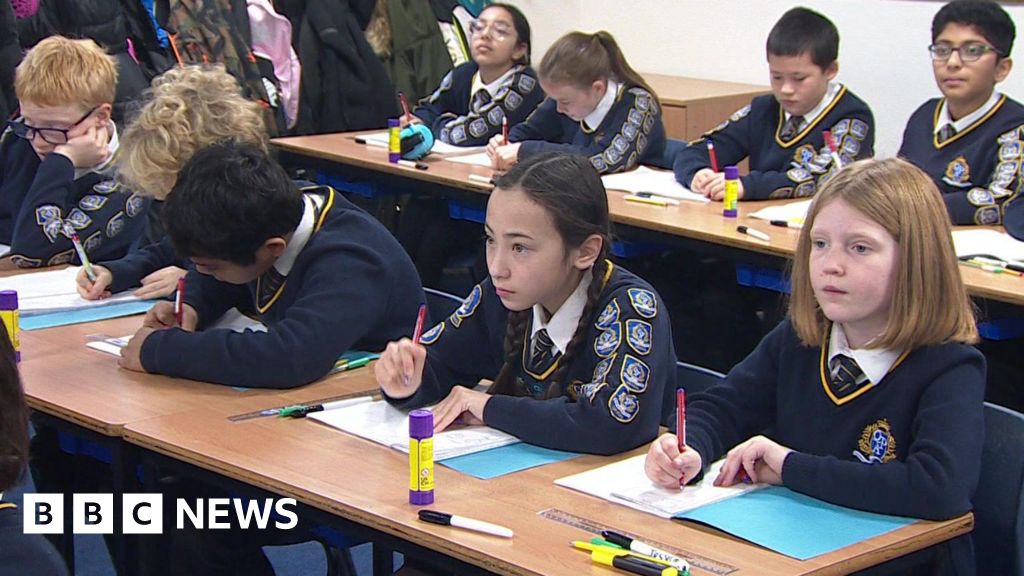
Amidst the rapid pace of demographic changes and social tensions in the UK, a significant cultural shift is underway, emphasizing the importance of financial literacy for the nation’s youth. The recent reforms to the national curriculum aim to equip primary and secondary school pupils in the south of England with essential knowledge about budgets, mortgages, compound interest, and money management. Such initiatives reflect a broader societal recognition that future generations must be prepared not just academically but practically for the economic realities that await them. The decision to table these lessons by 2028 underscores a proactive response to social issues that have long plagued families and communities—namely, the damaging effects of financial illiteracy.

In places like Queen’s Park Academy in Bournemouth, children are already demonstrating a savvy approach to their finances, understanding that “money doesn’t grow on trees” and that earning and managing money are vital life skills. Principal Sarah Simmons emphasizes that fostering financial literacy from a young age can prevent lifelong struggles with debt and poor financial decisions. Sociologists such as Dr. David Graeber have long argued that financial literacy is intertwined with social justice, empowering individuals to escape cycles of poverty and dependency. These lessons aim to build a foundation so that families are less likely to fall prey to predatory lending or credit traps, which disproportionately harm the most vulnerable members of society.

However, the shift has not been without challenges.

  • Teachers require specialized training to impart these lessons effectively.
  • There is an ongoing debate about how best to integrate this subject into already crowded curricula.
  • Some critics worry it may trivialize the importance of traditional academic disciplines.

Nonetheless, advocates like Sarah Porretta of Young Enterprise contend that financial education must be regarded as a fundamental human skill—just as vital as literacy and numeracy. Her organization emphasizes that teachers need support to develop confidence when addressing complex topics such as credit, debt, and investment. For communities, schools act as critical pillars where moral and ethical discussions about consumption, responsibility, and wealth distribution can be fostered, directly shaping how families navigate the economic landscape.

At institutions like the Leaf Studio Academy in Bournemouth, even specialized sports and arts-focused schools already recognize their responsibility to prepare students for life’s financial realities. Headteacher Tim Clark states, “If we don’t teach them about credit and debt, we are doing them an absolute disservice.” Such perspectives reflect a societal understanding that the health of our communities depends on educating our youth about the human impact of financial choices. As educators and social commentators echo this call, society faces a moral imperative to ensure that financial literacy becomes a universal standard, promising a future where informed decision-making reduces inequality and social division.

Reflections on Society’s Challenges and the Road Ahead

Society’s challenge today is not only to teach financial concepts but to foster an environment where ethical considerations and human dignity are central to economic discussions. As historian Yuval Noah Harari suggests, we are living in an era where the stories we tell ourselves about success and consumption shape our collective future. The hope persists that through collective effort—from policymakers to educators and communities—we can forge a society where every family has the tools to thrive, and social mobility is real and attainable. The pupils of tomorrow will inherit not just a currency, but a society that values competence, responsibility, and compassion. With education as their ally, society might yet transform into a place where the cycle of financial hardship is broken, giving way to a generation united in resilience and hope—ready to face the future with clarity and moral courage.


PM pushes for more under-25s in uni, college, or apprenticeships to boost opportunity and skills

Prime Minister Keir Starmer’s recent announcement signaling a shift in the UK’s educational aspirations underscores a broader societal transformation. His goal to have two-thirds of young people pursuing university or technical qualifications by 25 reflects a recalibration of the nation’s social and economic priorities. This new target moves away from the historic aim set by Tony Blair in 1999, which sought to have half of all young people enter higher education. While this change aims to expand the scope of acceptable pathways—embracing apprenticeships and technical training—it also raises crucial questions regarding the impact of these shifts on families, communities, and educational equity.

Historically, educational attainment has been a fundamental driver of social mobility, yet it also often reflects underlying societal divides. As sociologist Michael Young famously argued in his analysis of social stratification, societal systems tend to entrench inequalities, especially when access to higher education is disproportionately accessible to certain socio-economic groups. The push toward *”a gold standard apprenticeship”* and greater participation in higher technical courses is laudable; however, the disparity in funding and resources between colleges, schools, and universities threatens to deepen existing gaps. Experts like David Hughes of the Association of Colleges warn that meaningful investment in colleges—often the gateways to technical expertise and vocational training—must accompany policy rhetoric to ensure these pathways are robust and accessible for all socio-economic backgrounds.

This societal shift also directly impacts families and communities. As higher education becomes more inclusive, families that once depended on universities as a social ladder must now also grapple with a more diverse landscape of educational options. For some, this expansion offers hope; for others, it signals a need to adapt expectations amid evolving pressures on **costs, qualifications, and employment prospects**. The surge in demand for university places—evidenced by nearly 37% of 18-year-olds entering university in 2024—demonstrates persistent societal aspiration for higher education. Yet, these opportunities come with costs. Tuition fees reaching over £9,500 annually mean that students often graduate with significant debt, a burden that can weigh heavily on families and shape future prospects.

Commentators such as social historian David Lamson suggest that this renewed emphasis on technical and vocational training could serve as a vital avenue for building resilient communities. Industries like manufacturing and engineering, which face skills shortages, would benefit from a workforce equipped with real-world expertise—something that schools and colleges, when adequately funded, can nurture. Organizations like MAKE UK endorse this approach, emphasizing that skills of equal value to a university degree must be recognized and cultivated. Ultimately, society’s challenge lies in ensuring that no pathway is deemed less worthy, recognizing that the **true strength of a nation is rooted in the versatility and resilience of its people**.

As the nation stands at a crossroads—balancing aspirational goals with tangible investments—society’s future depends on bridging gaps, democratizing access to effective education, and fostering unity through shared opportunity. Societies are never static; they evolve through the collective efforts of communities committed to reform. The hope lies in a future where no family’s dreams are limited by circumstance, where education truly becomes a ladder for all, and where societal resilience is built upon a foundation of equal opportunity and shared purpose. In this ongoing story, the power to shape this future ultimately rests in the choices society makes today—a story yet to be written, with the promise of a society that values every student’s potential, regardless of the path they choose.

Social Media Auto Publish Powered By : XYZScripts.com