Matox News

Truth Over Trends, always!

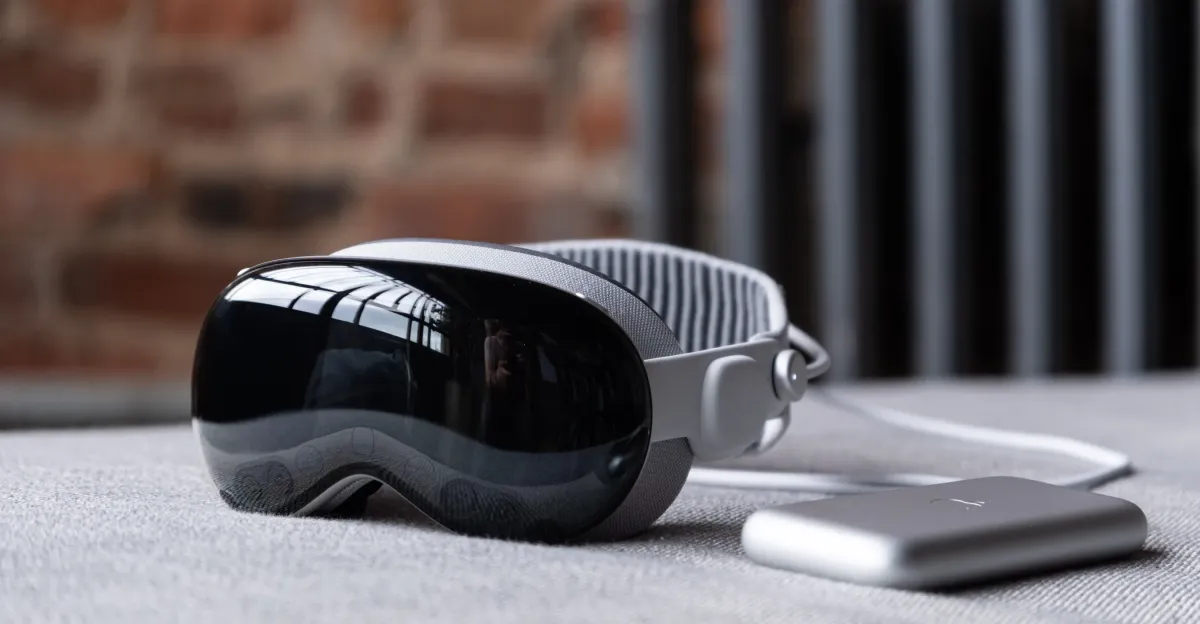
Apple shifts focus from lighter Vision Pro to prioritize smarter glasses for the future

Apple Accelerates Smart Glasses Development Amid Strategic Industry Shifts

In a bold move signaling its strategic pivot toward augmented reality and AI-driven wearables, Apple is intensifying its development efforts on next-generation smart glasses, potentially disrupting current market leaders such as Meta with its Ray-Ban and Oakley smart eyewear. Reports from Bloomberg indicate that Apple has shelved plans for a lighter, less ambitious Vision Pro headset in order to focus on a more versatile smart glasses platform. This decision underscores a broader industry trend where immersive AR hardware takes precedence over traditional VR headsets, emphasizing innovation driven by AI integration and user-centric design.

According to industry insiders, Apple’s new glasses will feature multiple models, including at least one with a display capable of challenging Meta’s Ray-Ban Display. The glasses are expected to include speakers, cameras, and multiple style options, with a heavy reliance on voice interaction and AI. Early prototypes suggest a strategic focus on seamless, hands-free operation, leaving behind the bulky headsets of past generations. Notably, Apple is also developing a dedicated chip to power these devices, a move previously highlighted by Bloomberg as part of its larger push for specialized hardware that enhances performance and energy efficiency.\nThis emphasis on custom silicon aligns with insights from market analysts at Gartner, who highlight that hardware specialization is a key driver of disruptors in the wearable tech space. Competition from Meta, which has already integrated AR features into its glasses, shows that Apple aims to leapfrog with superior hardware capabilities and software integration.

Meanwhile, Apple’s abandonment of plans for a lighter Vision Pro headset in favor of heavier, more feature-rich glasses hints at industry-wide shifts in consumer preferences. Reports suggest a “modest refresh” of the Vision Pro is still on the horizon, potentially launching as early as the end of this year, but overall focus is hastening toward AR glasses that incorporate AI and augmented reality in everyday life. This pivot further signifies a market in flux, where augmented reality’s disruption potential could redefine the fundamental engagement models in tech, from entertainment to enterprise applications. Regulatory filings recently uncovered point toward a new iteration of the Vision Pro, indicating Apple’s continued commitment to both VR and AR markets. Yet, experts like Peter Thiel warn that “the path of robust, AI-driven wearables is fraught with technical and regulatory challenges,” emphasizing the urgency for tech firms to innovate aggressively and stay ahead of the curve or risk obsolescence.

Looking ahead, the thriving smart glasses market is poised for explosive growth, driven by innovations in AI, hardware specialization, and user experience. As Apple doubles down on this frontier, industry observers recognize that disruption is imminent. Companies that fail to develop compelling, integrated AR wearables risk falling behind in a landscape increasingly dominated by AI-driven ecosystems. The next half-decade promises to be a pivotal period where innovation, strategic vision, and market agility will determine the leaders of the next generation of technology—a future where immersive, AI-enhanced wearables could become as ubiquitous as smartphones today. Time is of the essence—those who lead now will shape the trajectory of tech for decades to come.

Honor Magic 8 Pro drops a new AI button — tech gets smarter for the next-gen user

Honor Launches the Magic 8 Series: Aiming to Disrupt the Premium Smartphone Arena

In a move highlighting ongoing innovation within the competitive premium smartphone segment, Honor has unveiled its flagship Magic 8 series, combining cutting-edge hardware with emerging AI functionalities. The Magic 8 Pro, set to debut initially in China before arriving in Europe, underscores the company’s ambition to challenge industry titans like Apple and Samsung through strategic innovation and disruptive design. Priced at over €1,000 ($1,200), the Magic 8 aims to deliver flagship-level performance with a focus on AI enhancements, camera prowess, and processing power.

Key to its disruptive approach is the phone’s integrated AI button, a feature that signals a shift in how smartphones prioritize user experience through AI-driven functionalities. Honor clarifies that this button is dedicated solely to AI-related tasks, suggesting a future where smartphones become more intuitive and personalized. Coupled with the latest Qualcomm Snapdragon 8 Elite Gen 5 processor—an upgrade also adopted by the upcoming Xiaomi 17 series—the Magic 8 Pro is positioned as a powerhouse built for high-performance AI applications and demanding workflows. Analysts from Gartner project that such hardware integrations will become industry standard, transforming mobile devices into portable supercomputers.

The business implications of this positioning are clear: Honor is not merely offering a smartphone but is disrupting the traditional flagship formula by emphasizing AI innovation and disruption in user interface paradigms. Additionally, new features like Magic Color, an AI-powered tool for dynamically restyling images and videos using different color palettes, exemplify how AI is being woven into core smartphone capabilities. These enhancements not only elevate the user experience but also open avenues for revenue through app ecosystem upgrades, AI-driven services, and possibly subscription models, echoing trends seen in tech giants like Apple and Google.

With plans to introduce a range of models—including the anticipated Magic 8 Ultra and Mini—Honor is betting on sustained innovation to consolidate its position in the high-end mobile space. The upcoming unveiling of the Magic Pad 3 Pro, also powered by the Snapdragon 8 Elite Gen 5, signals an integrated ecosystem push that could redefine consumer expectations for interconnected devices. Industry experts suggest that the rapid rollout of these advanced models may accelerate a broader industry shift towards AI-centric hardware, with firms like MIT and Stanford emphasizing AI’s role as the next major leap in mobile tech evolution.

Looking forward, the competitive edge for Honor and similar disruptors hinges on their ability to leverage disruptive AI applications and hardware innovations to outpace established incumbents. As giants continue to refine their own flagship offerings, the importance of AI-driven features and high-performance chips will only intensify. The coming months could mark a pivotal moment, where tactical innovation and bold business strategies determine the future landscape of premium mobile technology. For tech enthusiasts and industry watchers alike, the race to dominate the AI-powered mobile future has begun—and the speed of innovation is unlikely to slow down anytime soon.

Social Media Auto Publish Powered By : XYZScripts.com


