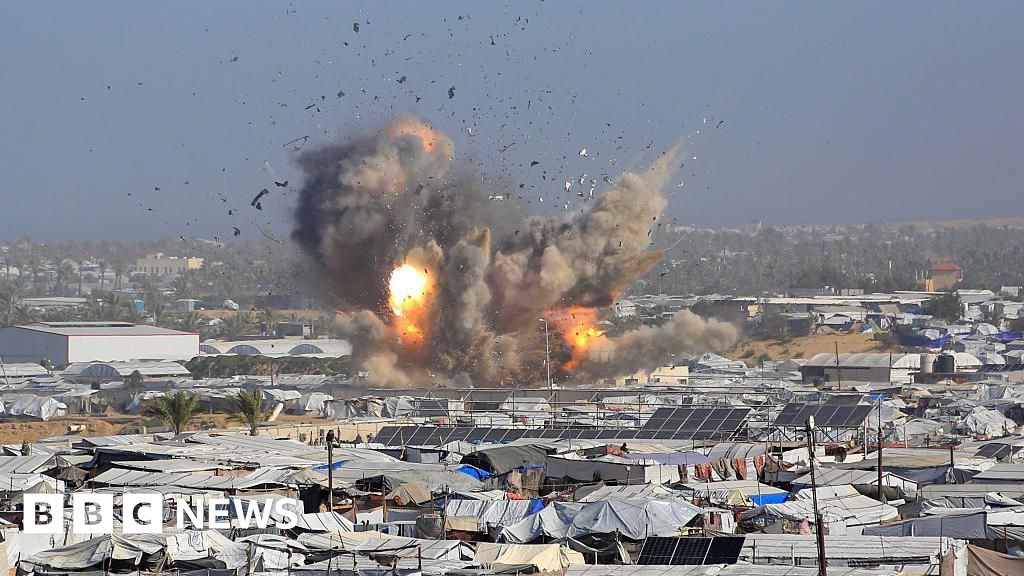

In a development that underscores the fragile and volatile nature of Middle Eastern diplomacy, Israel’s military confirmed a series of recent strikes amidst a fragile ceasefire with Hamas. This escalation occurs despite both parties publicly accusing each other of violating the ceasefire agreement, highlighting the ongoing risks of renewed conflict in a region already scarred by decades of instability. The timing of these strikes has raised alarms among global observers who watch the situation with growing concern about potential escalation into broader regional hostilities.
The recent surge in violence occurs at a critical juncture where international mediators, including Egypt and the United Nations, have been exerting diplomatic pressure to solidify a lasting peace. However, analysts from institutions like the Brookings Institution and Chatham House emphasize that the underlying issues—territorial disputes, political divisions, and economic hardships—remain unresolved, making peace fragile and susceptible to breakdown. The ceasefire was initially brokered as a step toward de-escalation, but the continuation of hostilities signals the deep-rooted tensions that continue to threaten regional stability.
The geopolitical impact of these developments extends far beyond the borders of Israel and Palestine. Countries such as Iran, which backs militant groups like Hamas, are closely observing the situation, with many analysts concerned that a renewal of conflicts could ignite wider regional confrontations involving Lebanon and Syria. Additionally, the United States and Russia remain engaged behind the scenes, balancing their strategic interests in the region amidst these flashpoints. The International Crisis Group warns that unresolved conflicts threaten to unravel fragile alliances, creating a geopolitical tinderbox that could ignite broader conflicts.
Historian and Middle Eastern expert Dr. Laura Jensen points out that, “Contemporary conflicts in the region are less about immediate territorial disputes and more about the persistence of identity, ideology, and power dynamics.” She warns that a failure to address the root causes could lead to a cycle of violence that might last generations. International organizations like the United Nations continue to call for restraint, but critics argue that diplomatic efforts often fall short of addressing the structural issues at root. As hostilities flare and peace remains precarious, the world faces a stark reminder of how thin the veneer of stability truly is in such a turbulent sea of history.
As the dust settles after recent military actions, the future of this embattled region hangs in the balance. The conflicting narratives of victory, victimhood, and survival persist, tangled in a complex web of history and politics that shapes the destiny of millions. With each new escalation, the international community is reminded that the choices made today will echo through decades to come. In this unfolding story of conflict and diplomacy, history’s relentless march continues—a powerful reminder that, in the world of geopolitics, peace is often just one misstep away from chaos.