Matox News

Truth Over Trends, always!

Doge Disbands Early—No Longer in the Game, Sources Say

The recent disbandment of the “department of government efficiency” (Doge) in the United States marks an extraordinary turning point in the ongoing experiment of centralized federal reform. Once envisioned as a bold effort to overhaul and slim down federal agencies, Doge has been officially declared nonexistent, despite still being under contract merely eight months prior. This move signals a dramatic retreat from the ambitious reorganization championed by President Donald Trump and his allies, aligning with a broader shift in Washington toward traditional bureaucratic resilience rather than radical reform.

Leading figures like Elon Musk and Vivek Ramaswamy, originally appointed to spearhead Doge’s large-scale restructuring, now find themselves on the sidelines, their influence waning amid internal chaos and public controversies. Musk’s public comments on transparency, ironically, contrast sharply with reports from whistleblowers and government insiders who described the agency’s covert operations—refusing to identify agents, cutbacks without consultation, and a lack of accountability. These discrepancies reflect a profound crisis of trust and legitimacy within the federal reform movement, which, according to analysts, was never fully rooted in transparent governance but rather in untested experimentation that ultimately backfired.

Internally, critics argue that Doge’s aggressive layoffs—more than 200,000 federal workers affected—have precipitated a crisis of confidence across essential government sectors. While the official narrative touts billions in savings and streamlined efficiency, independent experts have expressed deep skepticism about these claims—a suspicion only amplified by the absence of clear public accounts. Leading historians like Dr. Marc Epstein warn that such drastic measures, driven by political and ideological agendas rather than pragmatic reform, threaten the stability of federal institutions at a time when geopolitical confidence in the U.S. is already strained. The fallout now extends beyond domestic governance, impacting the country’s international standing as allies and adversaries alike observe its internal struggles.

The seismic shifts within U.S. domestic policy are also echoing abroad. Russia and China, keenly aware of Washington’s internal disarray, are watching closely for any signs of vulnerability. The disbandment of Doge may symbolize a retreat from ultra-ambitious reform efforts, yet it also underscores a fundamental truth—decisions made in Washington ripple across the world’s geopolitical fabric, influencing alliances, military posture, and economic stability. As NATO and other international alliances reassess U.S. leadership, the chaos surrounding this audacious reform attempt reveals how internal discord can weaken even the most powerful nations on the global stage.

As history continues to unfold, the disbandment of Doge invites a sobering reflection for nations watching from afar: in the map of geopolitics, stability often hinges on the capacity of powerful nations to maintain internal cohesion. The fate of this short-lived endeavor to revolutionize federal efficiency underscores an enduring lesson—the weight of history does not rest solely on the decisions of global institutions, but on the resilience or fragility of their core institutions. With the echoes of this upheaval resonating across borders, the question remains: will the United States regroup and forge a new path forward, or will its internal chaos persist as a symbol of declining influence in a shifting world order?
Insiders Spill: The Truth About the AI Race

AI Industry Faces Disruption and Innovation Boom Entering 2024

The recent Cerebral Valley conference in San Francisco, now in its third year, underscores a pivotal moment for the AI industry—marked by rapid innovation, strategic repositioning, and significant business implications. Industry insiders, analysts, and entrepreneurs are recalibrating expectations amidst a landscape driven by disruptive technology and fierce competition. Leading figures like OpenAI and Nvidia are projected to see tremendous growth, but the trajectory toward Artificial General Intelligence (AGI) remains clouded, hinting at a future where market dynamics and regulatory frameworks will shape technological progress as much as the models themselves.

By the end of 2026, OpenAI is anticipated to generate about $30 billion in annualized revenue, a testament to the soaring demand for AI-powered services across industries. Simultaneously, Nvidia is expected to reach a valuation of around $6 trillion, driven by its dominant position in AI hardware and software. These milestones illustrate both innovation dominance and disruption, accelerating the shift of AI from niche technology to a core business survival tool. However, emerging competition—such as China’s Qwen model and open-source Chinese AI initiatives—signals industry-wide regional power plays and global market reshuffling. This trend is especially notable considering Meta’s absence from the top Model Leaderboard, emphasizing a shift in industry leadership and strategic focus.

Venture capital and corporate strategy also reveal a landscape where reverse acquihires and talent wars dominate—evidence of the industry’s pursuit of accelerated innovation and competitive positioning. Firms like Meta, Google, and emerging AI startups are vying not just for market share, but for top-tier talent, often financed with what some insiders describe as “infinite money”. Notably, investors show growing preference for companies like Anthropic, OpenAI, and startups like Cursor and Anduril, which are paving the way for next-generation AI advancements. The strategic moves—such as deals with ScaleAI or investments in Mistral and Thinking Machines—highlight the race to dominate foundational models and deployment architectures. As experts like Peter Thiel emphasize, “Disruptive innovation in AI is reshaping the entire landscape—those who lead now will control future markets.”

Implications: Disruption and Preparing for the Future

The implications for business and technology leadership are profound. The industry appears to be moving toward a critical inflection point—where the pace of progress toward AGI, regulatory oversight, and regional leadership will determine who sets the standards for the next era of AI-enabled growth. Companies positioned with cutting-edge models and hardware—like Nvidia—are likely to enjoy exponential valuation growth, but the race is nowhere near over. The emergence of Chinese models like Qwen signals a more multipolar AI landscape, demanding strategic agility from Western tech giants and policymakers alike.

Looking ahead, disruption and innovation will continue to accelerate, demanding a sense of urgency among investors, entrepreneurs, and industry stakeholders. With the recent strategic shifts and a clear push toward consolidating talent and capital, the future of AI is poised for a period of unprecedented transformation—favoring those who harness breakthroughs quickly and navigate geopolitical complexities deftly. The next two years will be critical, as the industry approaches what could be the defining moments for AI’s role in society—making it imperative for players to stay ahead of the curve.

Microsoft’s new agent platform signals a rightward tech shift | The Verge

In an epochal shift within the technology landscape, Microsoft is positioning itself at the forefront of the AI revolution through groundbreaking developments unveiled at its recent GitHub Universe developer conference in San Francisco. As AI accelerates its encroachment into core facets of software development, disruption is becoming inevitable, signaling both opportunity and strategic recalibration for industry leaders.

The conference spotlight was on GitHub’s ambitious initiative to transform into an AI-powered coding hub with the introduction of Agent HQ. This new interface aims to serve as an ecosystem where outside coding assistants—including OpenAI’s Codex, Anthropic’s Claude Code, and emerging AI agents from Google, Cognition, and xAI—can seamlessly integrate with GitHub’s platform. These advances are designed to reinforce GitHub’s role as the connective tissue for AI-driven software development, effectively making it the central node where AI agents interact directly with vast codebases used by over 180 million developers globally.

  • Enhanced ecosystem openness, allowing multiple AI providers to plug into GitHub
  • Strategic move to maintain Microsoft’s centrality in the developer universe
  • Potential to embed AI as the default collaborator in coding workflows

Such strategic positioning underscores a clear mandate: to remain indispensable in an industry on the cusp of profound transformation. Jared Palmer, GitHub’s new senior vice president, emphasized the goal of fostering an “arms-wide-open ecosystem” where developers retain control, regardless of which AI tools they adopt. As Microsoft’s Jay Parikh, overseeing CoreAI, articulates, the focus is on “building better tools and fostering choice,” as the company accelerates efforts to integrate AI into every layer of software infrastructure. This approach aligns with industry analysis from Gartner, which asserts that the next decade will see AI become embedded in nearly all development tools—disrupting traditional workflows and redefining efficiency thresholds.

The implications extend beyond mere productivity gains. With Microsoft’s deep-rooted partnership with OpenAI—cited explicitly by CEO Satya Nadella as the catalyst behind the surge of AI coding innovations—the company aims to dominate the emerging “AI code economy.” Nadella’s reference to “the billion to ten-billion happened at GitHub” highlights a pivotal trend: AI-generated code is not just augmenting human effort but fundamentally altering the creative and specification phases of software engineering. This evolution is increasingly pushing humans towards design, strategy, and oversight, while delegating routine coding tasks to powerful GPUs and AI agents. Harvard’s MIT AI Lab and industry insiders warn that such disruption could render traditional development paradigms obsolete unless companies adapt swiftly.

Looking ahead, Microsoft’s strategic focus on disruptive AI integration signals an urgent call to industry players: those who fail to adapt risk obsolescence in a fiercely competitive AI arms race. The converging force of innovation, strategic alliances, and ecosystem decentralization suggests a future where agility and openness are paramount. The industry must accelerate investment in AI infrastructure, talent, and alliances, recognizing that the next wave of technological dominance hinges on early, bold action. As Elon Musk and Peter Thiel have long warned, this is the era where the first movers will captivate the market—those who recognize the industry’s tectonic shifts now will shape the digital future or be swept aside.

Sam Altman’s new venture aims to tap into sound waves to decode your brain signals

Tech Industry on the Brink of a Revolution: Merge Labs and the Future of Brain-Computer Interfaces

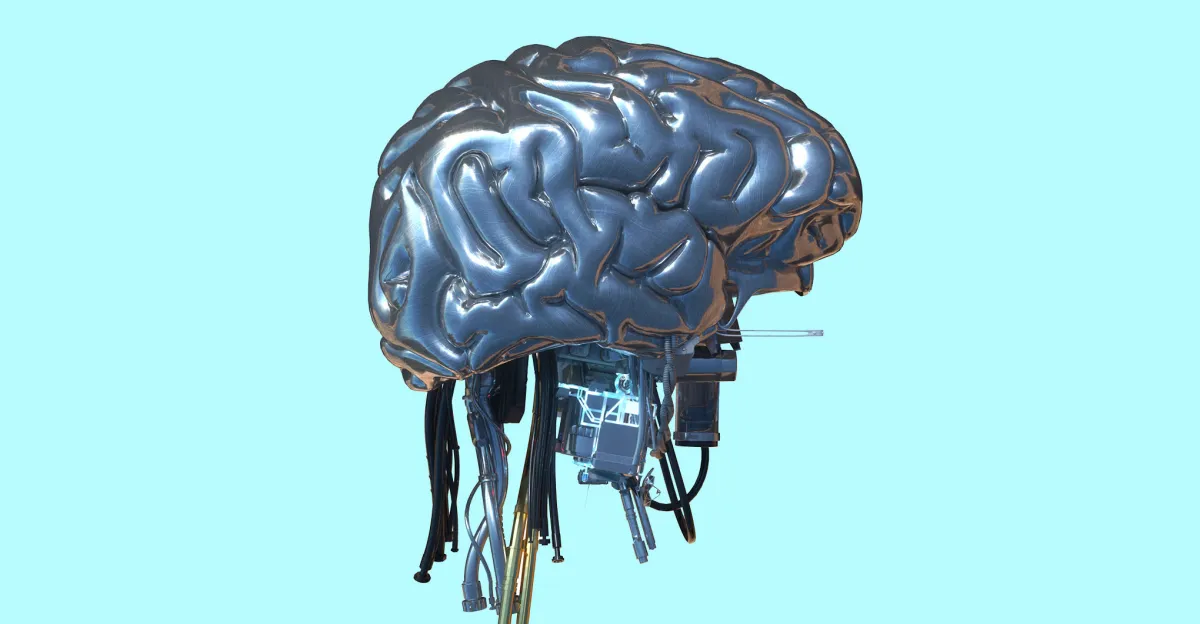
In a move that could redefine the boundary between human cognition and machine intelligence, Sam Altman, the visionary behind OpenAI, is set to unveil Merge Labs, a groundbreaking startup focused on brain-computer interfaces (BCIs). Led by biomolecular engineer Mikhail Shapiro, Merge’s strategic aims are as ambitious as they are disruptive, promising to accelerate the fusion of AI, gene therapy, and advanced neurotechnology into a unified frontier.

The core innovation driving Merge Labs is an emerging approach that sidesteps invasive electrode implantation. Instead, Shapiro’s work centers on utilizing sound waves and magnetic fields to interface with neurons through gene editing techniques. This methodology has the potential to revolutionize BCI technology by making it significantly less invasive and more scalable. As Shapiro explained during a recent presentation, “It’s easier to introduce genes into cells that modify them to respond to ultrasound,” opening new vistas for neural interfacing that could withstand regulatory and safety hurdles currently hampering traditional electrode-based systems.

Disruptive Technologies and Market Implications

This innovative strategy could turn the industry on its head, challenging entrenched players like Neuralink and advancing the race to develop safe and effective BCIs. Merge Labs’ approach aims to facilitate a seamless “brain-machine merge,” a goal that has long been a speculative dream of futurists and industry insiders alike. With plans to raise hundreds of millions of dollars from investors including OpenAI and strategic partners, the startup is positioning itself to capture a significant share of the emerging neurotech market, which analysts like Gartner project to hit $50 billion by 2030.

  • Leverages gene therapy to enable non-invasive neural modulation
  • Potential to accelerate adoption of neuro-enhancement and cognitive augmentation
  • Addresses safety and scalability issues that have hindered progress in neural interfaces

According to industry experts and MIT researchers, this leap toward bio-compatible, scalable BCIs could open countless business opportunities—not only in healthcare, but also in entertainment, education, and AI-powered cognition enhancement. Companies that can establish dominance early will have a strategic edge, especially as AI development accelerates and demands for seamless human-AI collaboration grow.

Future Outlook: A Rapidly Evolving Battlefield

While the full capabilities and commercial timelines remain under wraps, the industry already perceives this move as a significant disruption. As Sam Altman alludes, the convergence of humans and AI might become a reality as soon as 2025. With key figures like Altman and Shapiro positioning themselves at this vanguard, the question isn’t if, but when the next leap in neural technology will redefine what it means to be human.

In an era of relentless innovation, the race to integrate brain and machine will likely intensify. Investors, tech giants, and policymakers must stay vigilant, as these breakthroughs hold the power to sway societal norms and reshape industries overnight. The coming months promise a surge of breakthroughs that could fundamentally rewrite the technology landscape, making the next decade one of the most extraordinary periods in human history.

Social Media Auto Publish Powered By : XYZScripts.com