Matox News

Truth Over Trends, always!

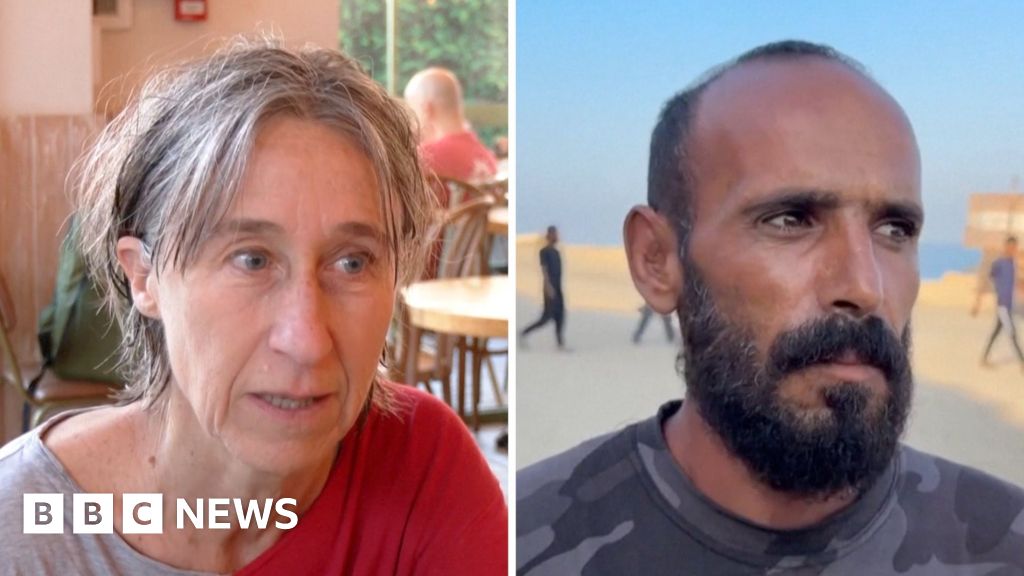
Gazans and Israelis React: Trump’s Plan Sparks Divergent Views

The recent announcement of U.S. President Donald Trump’s peace proposal to resolve the ongoing conflict between Israel and Hamas has sparked a wave of reactions across the Middle East and beyond. The plan, unveiled in coordination with Israeli Prime Minister Benjamin Netanyahu, proposes a transitional governance structure for Gaza—a region long battleground for violence and political upheaval. At its core, this initiative envisions a “board of peace,” headed by Trump himself, to oversee a transitional administration in Gaza, ostensibly paving the way for long-term stability. While some local leaders and international allies have expressed cautious support, the plan also faces heavy skepticism and deep-rooted concerns about its feasibility and implications.

Among the voices converging on this issue, some Israelis interviewed in Jerusalem have voiced guarded optimism, though their doubts remain palpable. They question whether Hamas, after nearly two years of persistent conflict, will genuinely disarm or accept a negotiated settlement. “It’s a step in the right direction,” one Israeli commented at a local café, “but the real challenge is whether Hamas will abide by such agreements. The history of failed peace processes weighs heavily on us.” Conversely, Palestinian residents of Gaza—some displaced by violence—have sounded a different alarm. They ask whether the plan considers their needs or is primarily focused on regional stability. Many express frustration that prior international efforts have overlooked the human toll, especially amid reports suggesting that Trump’s broader diplomatic ambitions might include economic projects, such as resorts, on Palestinian land—an idea that has inflamed tensions and raised questions about whether actual peace is the goal or merely a facade for territorial and economic gains.

This historic shift in diplomacy has drawn mixed reactions from across the geopolitical spectrum. European nations and regional powers such as Egypt and Jordan have expressed qualified support, urging caution and emphasizing the importance of addressing core issues like refugee rights, borders, and Jerusalem’s status. Notably, the European Union and the Arab League have called for comprehensive negotiations, warning that partial solutions could exacerbate existing fractures. International organizations, including the United Nations, have also issued statements stressing the importance of respecting international law and fostering dialogue rooted in mutual recognition and respect. However, critics, including renowned analysts and historians, warn that such high-level interventions risk overlooking the grassroots realities and the deep-seated grievances that fuel the conflict. Their concern is that a superficial diplomatic fix might merely postpone inevitable volatility, with history’s lessons from unresolved conflicts in the Balkans and the Middle East repeatedly cautioning against hasty peace impositions.

Ultimately, the geopolitical impact of this new initiative hinges on how each side perceives its legitimacy and efficacy. Israel views the plan as a potential breakthrough—a possibility to embed a lasting peace after years of instability—while Palestinian factions consider it a threatening capitulation if their core rights are sidestepped. The conflict’s complexity emphasizes that decisions made today will ripple through generations, shaping societies and borders for decades to come. As the international community watches with bated breath, the weight of history hangs in the balance: will this new chapter finally forge a lasting peace, or will it serve as a fleeting pause before the next storm erupts? The story remains unwritten, but the coming days will determine whether hope or despair claims the day.

Youth Data Breach Sparks Outrage as Nursery Hackers Threaten to Release More Kids’ Profiles

In recent months, the digital age’s dark underbelly has revealed itself through distressing breaches that threaten the very core of family and community life. A shocking example involves the Kido nursery chain, where criminal hackers have taken personal data of young children and their families hostage. The criminals—calling themselves Radiant—hacked into a widely-used software platform called Famly, which is employed by over a million nursery and childcare organizations across the globe. They then posted profiles of 10 children—including pictures, birth details, and contact information—on the dark web, exposing vulnerable families to grave risks. This attack underscores how social issues rooted in cybercrime are impacting families, education, and local communities, showing a sinister new low of digital exploitation.

While the hackers’ motives are driven solely by greed, their actions have profound moral and societal consequences. Young children, who are the most innocent members of society, are now targets in a criminal ecosystem that disregards their safety. These breaches put families at risk of identity theft, online harassment, and other forms of cyber-violence, threatening the very sense of security that should underpin the nurturing environment of early childhood education. Sociologists like Dr. Susan Fiske highlight how such invasions erode trust in institutions meant to safeguard children—trust that is fundamental for healthy community development. In a society where the safety of our youth is compromised in the digital realm, the fabric of community cohesion weakens, and parents grow increasingly anxious about the environment their children are part of.

Adding to the moral outrage is the disturbing reality of criminal extortion tactics. Hackers have called individual parents threatening to release their children’s personales unless a ransom is paid, a tactic that only worsens the social toll. These acts of intimidation are not only illegal but also morally reprehensible, shining a harsh spotlight on how cybercriminals exploit the vulnerabilities of a digital society that often fails to fully protect its youngest members. Authorities, including the Met Police, have launched investigations but warn against paying ransoms, as this only fuels the cycle of lawlessness. Yet, the psychological and emotional impact on families—especially parents who feel helpless and betrayed—can have lasting effects that ripple across communities, hindering the social cohesion necessary for healthy societal growth.

The incident at Kido is a stark reminder that cybercrimes targeting community institutions demonstrate how technological vulnerabilities directly threaten our societal values. As social commentators warn, a society that cannot safeguard its most vulnerable from digital predators risks fragmenting its moral fabric. The challenge remains to develop resilient technological safeguards, bolster community awareness, and foster a moral stance that condemns such unethical exploitation. Ultimately, society’s resilience will depend on how well families, institutions, and governments work together to uphold safety and integrity in the digital age. The path forward involves not just technological fixes, but also a moral renewal—reaffirming that the safety of our children is a collective moral imperative, not a mere legal obligation.

As society faces these complex challenges, it becomes clear that the fight against cybercrimes is also a fight to preserve the moral backbone of our communities. The hope for tomorrow lies in the unwavering commitment to protect the innocence of childhood and to restore confidence in the institutions that nurture and educate future generations. Society’s strength will be measured not only by the technology it employs but also by the moral resolve to face its vulnerabilities with courage and integrity. In this struggle, society must remember that the true victory is not just in defeating the hackers but in reaffirming the moral dignity of a society that refuses to let its most vulnerable become collateral damage in a ruthless digital war. It is in this collective effort that hope resides—the hope that, someday, society will rise resilient, safeguarding its future in the digital dawn, ensuring that the innocence of childhood remains shielded from the shadows of a society still learning to conquer its own shadows.

Anti-ICE rhetoric sparks controversy over ammo after Dallas shooting kills detainee

United States continues to grapple with a troubling surge of politically motivated violence targeting Immigration and Customs Enforcement (ICE) facilities, highlighting the profound, destabilizing effects of rhetoric on societal security. Today’s attack in Dallas, Texas, marks yet another grim chapter in this disturbing pattern. A rooftop sniper, driven by ideological motives, opened fire at an ICE office—an action that underscores rising tensions within the country’s polarized political landscape. The incident resulted in the death of one detainee and critically injured two others, deeply unsettling a nation already divided over immigration policies and immigration enforcement tactics.

The attack was characterized by law enforcement officials as an act of targeted violence. FBI Director Kash Patel revealed that the gunfire was accompanied by anti-ICE messages, with ammunition casings bearing the phrase “ANTI-ICE.” While initial reports mistakenly indicated multiple fatalities, the current official account confirms that the shooter died from a self-inflicted gunshot. This incident is part of a broader escalation in violence against federal agencies, fueled by relentless political rhetoric that equates ICE with oppressive regimes, such as the Nazi Gestapo, as publicly condemned by **Homeland Security Secretary Kristi Noem**. Such narratives, analysts warn, dangerously blur the lines between lawful opposition and violent extremism, threatening the stability of the nation’s law enforcement apparatus.

Experts and international observers are warning that these attacks are not isolated acts but symptoms of a deeper social fracture that politicians and media personalities have exacerbated through inflammatory language. The Department of Homeland Security has indicated that the shooter’s actions were ideologically motivated, reflecting a broader climate of polarization and radicalization. Previous incidents include shootings at ICE offices in Texas—San Antonio and Alvarado—where no injuries occurred, yet the constant barrage of threats and violence continue. How nations respond to this trend will significantly shape their societal cohesion and their capacity to uphold law and order as they navigate the complexities of immigration, security, and political discourse.

Across the political spectrum, voices such as **Texas Senator Ted Cruz** and **Governor Greg Abbott** emphasize that violence and threats against law enforcement threaten to undermine national stability. Cruz urged the public to resist demonizing political opponents, warning that such divisive rhetoric has tangible, deadly consequences. Meanwhile, the incident in Dallas reignites debates over the impact of political rhetoric, with lawmakers warning that pre-election hostility could erupt into further violence, destabilizing already fragile social fabrics. International organizations and security analysts emphasize the importance of addressing these attacks promptly, warning that the erosion of civility and respect is a precursor to a more dangerous descent into societal chaos.

As the weight of this violence accumulates, the country faces a pivotal moment where the choices made today could echo through generations. The ongoing saga of escalating attacks, hateful rhetoric, and ideological extremism threatens to redefine the landscape of domestic stability and international credibility. With each shot fired, history records a stark reminder: the battlefield of ideas has become a battleground of blood. The unfolding story in Dallas— and beyond—serves as both a warning and a call to action. How the United States chooses to confront this modern scourge will determine whether it remains a beacon of liberty or descends further into chaos, a nation haunted by the shadows of its own division, teetering on the edge of a precipice from which there may be no return.

Silicon Valley Bank Collapse Sparks Urgency to Fix Barriers for Entrepreneurs of Color

Economic Turmoil and the Global Geopolitical Impact of Silicon Valley Bank’s Collapse

The recent collapse of Silicon Valley Bank (SVB), once a powerhouse in the American financial sector and a pillar supporting minority entrepreneurs, stands as a stark reminder of the fragile interconnectedness of global markets. Established in 1983 and ranking as America’s 16th-largest bank at the close of 2022, SVB’s downfall on March 10 sparked a firestorm that extends far beyond California’s borders. It provided banking services to nearly half of all venture-backed tech and life sciences firms in the United States, making its collapse not just a national crisis but a matter of international concern. The ripple effects threaten to reshape the very structure of global banking, investment, and geopolitical influence, especially considering the bank’s commitment to fostering minority-led businesses and its strategic investments in underserved communities.

At the heart of this crisis lies an underlying systemic failure intertwined with issues of racial and economic inequality. Analysts highlight that SVB’s role extended beyond finance; it operated as a vital lifeline for minority entrepreneurs, often overlooked by larger banks. Industry insiders like venture capitalist Arlan Hamilton and nonprofit advocates like Joynicole Martinez emphasize how SVB’s support for minority-led startups—through conferences, funding, and community outreach—was part of a broader strategy to counteract pervasive discrimination in banking and lending. The bank’s collapse thus not only jeopardizes these entrepreneurs’ immediate futures but threatens to undermine the broader push for economic equity worldwide. As global organizations and national governments watch with concern, this incident underscores the high stakes involved: the collapse exemplifies how decision-making within major financial institutions can accelerate systemic vulnerabilities, risking a domino effect on the international stage.

The geopolitical consequences of SVB’s downfall are compounded by the global competition for influence and resources. Major financial institutions in JPMorgan Chase and Wells Fargo publicly commit to addressing economic disparities through initiatives targeting underserved communities. Yet, the disparities persist, as Black-owned banks like OneUnited manage less than 0.02% of the assets held by giants like JPMorgan Chase, highlighting the imbalance in global financial power. The ongoing struggles of minority entrepreneurs and the broader banking inequalities are a microcosm of a continent-wide issue: how systemic biases and financial exclusion determine nations’ capacities to thrive in an increasingly interconnected economy. Historians and economic analysts warn that neglecting these disparities could foster greater instability, allowing economic and geopolitical rivalries—particularly in Asia and Europe—to exploit sectors of weakness. The crisis is a definitive turning point, revealing the importance of resilient, equitable financial systems as fundamental to national security and societal stability.

As the international community observes a shifting landscape, the legacy of SVB’s demise may yet define a new era of economic reckoning. The crisis exposes the systemic failures that have long marginalized women, minorities, and small businesses, leaving them vulnerable in times of upheaval. While efforts by JPMorgan and Wells Fargo aim to address these gaps, critics warn they are mere drops in an ocean of inequity. Meanwhile, emerging fintech and community banks, like Black-owned banks and regional lenders, stand poised to play a pivotal role in restoring trust and inclusivity. As history continues to unfold, nations must reckon with how their financial and societal decisions today will echo through generations—deciding whether the future will be one of resilience or chaos. The fall of SVB will be remembered as a stark lesson in the enduring power of systemic reform—or the catastrophic consequences of neglect—where the lessons of history remain, quietly waiting to either be heeded or ignored.

Social Media Auto Publish Powered By : XYZScripts.com