Matox News

Truth Over Trends, always!

Lancashire Council Opposes Free Library Scheme for Refugees, Calls It Wasteful Spending

The decision by Reform UK-led Lancashire to withdraw its libraries from the **Libraries of Sanctuary** initiative marks a significant development in the evolving landscape of how countries and local governments approach immigration and social integration. Despite the scheme being explicitly **free** — designed to assist refugees and asylum seekers— this move underscores a broader political shift that seems increasingly driven by austerity and nationalist rhetoric. Critics argue that these services are not merely about resource allocation but about the fundamental values of inclusion and humanity. As City of Sanctuary UK emphasizes, libraries serve as vital entry points for marginalized populations, offering language programs, Wi-Fi access, and cultural integration opportunities. Therefore, this decision is likely to have a tangible impact on social cohesion within Lancashire — a microcosm of the wider debate unfolding across much of the **UK** and other Western nations.

Nationally, this move resonates with a rising tide of skepticism toward refugee support initiatives, often cloaked in the guise of fiscal responsibility. Analysts warn that prioritizing short-term budget savings over community-building efforts could sow long-term societal divisions. The decision comes amid mounting economic pressures on local governments across **Britain**, with Lancashire seeking to make £103 million in cuts. Such austerity measures, critics argue, threaten to undermine the social fabric by withdrawing essential services from vulnerable groups. Reform UK leaders, including Matthew Salter, justify these reductions as “appropriate use of taxpayers’ money,” yet opponents see it as emblematic of a broader ideological shift away from inclusive governance. The decision to end Lancashire’s **Libraries of Sanctuary** accreditation — after its recognition as a welcoming, inclusive space — is being viewed by many as a symbolic capitulation to nativist tendencies that threaten to erode the foundational principles of multicultural democracy.

International organizations and historians have voiced concerns that such local decisions could have ripple effects far beyond **Lancashire**. The **United Nations** and numerous human rights groups publish ongoing reports warning that policies marginalizing refugees can harden societal divides, undermine social stability, and reduce long-term prospects for integration. John Rawls and other political theorists have long argued that equitable access to social institutions like libraries plays a vital role in fostering societal cohesion. Yet, as Palmerston Institute of International Policy notes, “Actions like Lancashire’s risk creating feedback loops that entrench discrimination and social fragmentation.” These decisions are not isolated — they serve as indicators of an **international trend** toward prioritizing restrictive immigration policies in the face of economic and cultural anxieties, a policy orientation that could dramatically reshape **Europe’s** political landscape.

As history continues to unfold, the weight of these decisions will be measured by the societal transformations they precipitate. Under the shadow of mounting economic austerity and rising nationalist sentiment, local actions such as the Lancashire library withdrawal are more than mere administrative choices — they are symbolic battlegrounds of **identity, sovereignty, and collective values**. While social services are cut and communities fragment, the global community watches warily, knowing that the outcomes of such internal policies could define the future trajectory not only of **Britain** but of the **world** as a whole. The question persists: in the pursuit of fiscal stability, are nations willing to sacrifice the very principles that underpin shared humanity? Time will tell if these decisions lead to rebuilding societal resilience or spiraling towards deeper division, but the pages of history are—and always will be—being written with each choice made in the quiet corridors of local governments.

Nvidia’s AI GPUs fly off the shelves as data center spending surges $10B in Q1

Nvidia Sets New Standard in AI and Data Center Markets with Record-Breaking Q3 2026 Earnings

Nvidia has once again disrupted the technology landscape, signaling a new era of AI dominance and industry transformation. The company’s Q3 2026 earnings report shattered previous records, with revenues reaching a staggering $57 billion—a historical high that highlights the relentless growth of AI infrastructure and digital economy sectors. The firm’s profit margins are equally impressive, clocking roughly $4,000 in pure profit per second. Central to this surge is a $10 billion growth in the data center segment, which alone amassed an unprecedented $51.2 billion—an increase of 66% compared to the same period last year. This explosive figure positions Nvidia as a clear bellwether for the so-called ‘AI bubble’, with industry analysts scrutinizing its trajectory amid widespread hype.

The market implications of this surge are profound, especially considering industry-wide skepticism about sustainability. Despite warnings of potential market correction from institutions such as Gartner and various industry analysts, Nvidia’s Q4 2026 outlook anticipates a revenue of $65 billion—an $8 billion increase over the previous quarter. CEO Jensen Huang emphasizes that Blackwell Ultra chips are now leading every segment, with demand at an all-time high. “Blackwell sales are off the charts, and cloud GPUs are sold out,” Huang reports, signaling an unprecedented supply chain squeeze driven by hyperactive enterprise adoption of AI solutions.

The growth isn’t limited to the data center market alone. Nvidia’s gaming division also saw a 30% increase in revenue year-over-year, demonstrating that consumer markets remain integral to its overall ecosystem. The launch of Blackwell gaming chips—despite some mixed reviews of the RTX 50-series GPUs earlier this year—has found its footing again, driven by a rising global appetite for high-performance gaming experiences. This dual success in both enterprise and consumer segments exemplifies Nvidia’s strategic positioning as a disruptor across the entire AI ecosystem.

The innovations Nvidia is advancing are setting a new standard for the industry, pushing rivals and startups alike to innovate faster or risk obsolescence. Experts at MIT and industry veterans like Elon Musk and Peter Thiel highlight that such explosive growth could catalyze a wave of disruption across traditional sectors—including cloud computing, automotive, and robotics. As the technological frontier shifts rapidly, businesses must adapt swiftly to leverage these advancements or face being left behind. Nvidia’s trajectory suggests we are on the cusp of a fundamental transformation, demanding urgent strategic realignment from industry leaders. The future belongs to those who recognize that in this era of AI-driven disruption, timing and innovation are everything.

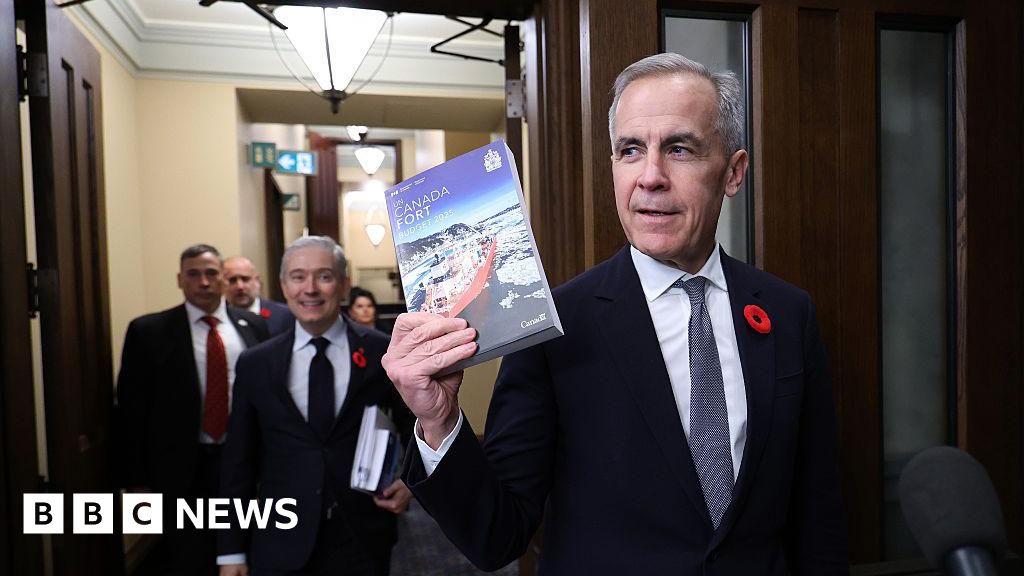
Carney's federal budget ramps up spending to fight back against US tariffs, youth demand stronger economic resilience
Carney’s federal budget ramps up spending to fight back against US tariffs, youth demand stronger economic resilience

Canada’s Bold Fiscal Shift: Carney’s Budget Sparks Global Geopolitical Ripples

In a decisive move reminiscent of emerging economic strategies, Canada’s Prime Minister Mark Carney has unveiled his government’s inaugural federal budget, an ambitious blueprint aimed at transforming Canada’s economic landscape amid increasing US tariffs and trade tensions. Touted as an “investment budget,” it signifies a deliberate pivot towards resilience and global competitiveness, with a stark acknowledgment of Canada’s economic vulnerabilities and the need for swift, bold action. The plan projects a record-breaking deficit of C$78 billion—second only in Canadian history—yet underscores a strategic gamble: attracting C$1 trillion in foreign investment over the coming five years to offset the fiscal deficit and energize growth.

Internationally, the geopolitical impact of Canada’s budget resonates beyond its borders. By committing to a C$280 billion investment in trade infrastructure, the government aims to double exports to non-US markets over the next decade, signaling a strategic diversification of its trade dependencies—a move heavily scrutinized by analysts as a potential recalibration of North American economic ties. This shift is part of a broader bid to challenge the US’s economic dominance and make Canada a more attractive hub for international business than its southern neighbor. In tandem, the budget allocates nearly C$1 billion to integrate artificial intelligence into government and commercial sectors, reflecting a forward-looking approach in harnessing technological advancements to bolster national resilience and global influence.

However, critics skewer the plan as a double-edged sword, pointing to the austerity measures within its framework. The government plans to cut 40,000 federal jobs by 2029 and slash international aid to pre-pandemic levels, demonstrating a readiness to accept short-term societal pain for long-term strategic gain. This, combined with lowering immigration targets and restricting student visas, fuels internal debate about how decisions shape Society’s fabric. The budget’s passage, hampered by a fragile minority government and potential defections—such as the recent defection threat from a Conservative MP—heightens the risk of political upheaval, possibly even triggering a federal election. Such instability only underscores the *turning point* at which Canada finds itself—a nation at crossroads, balancing economic revitalization against social and political turbulence.

Recognized by international organizations and historians alike as a critical moment, this expansive budget reflects a broader blueprints for national sovereignty amid global shifts. Analysts from the International Monetary Fund and economic historians warn that Canada’s strategies could redefine the geopolitical landscape of North America, challenging the U.S.’s supremacy while building a more autonomous Canadian economy. Yet, the true impact remains uncertain—whether these bold initiatives will succeed in rescuing the nation’s future or merely deepen the shadow of mounting deficits and social unrest. As the dust settles over Ottawa, the world waits, shoulder to shoulder with Canadians, for the next chapter in this unfolding saga—an era where the decisions made today may well dictate the course of history for generations to come.

Woman who skipped Italy trip loses child benefits, sparking debate on social spending

The recent episodes within Britain’s welfare and social security framework underscore a profound shift in how social issues are approached, driven by data inaccuracies and strict policy enforcement. In a society where family stability depends on reliably accessible benefits, the stories of families like Sally’s reveal the harsh repercussions of a system increasingly reliant on incomplete or flawed data. Despite the apparent intent to curb welfare fraud, the implementation has inadvertently targeted law-abiding citizens, exposing a societal tension that demands urgent reform.

During a routine holiday to Italy, Sally’s family encountered a bureaucratic nightmare when HMRC wrongly inferred her family had emigrated, leading to the abrupt stopping of child benefits for her three children. This was not a case of fraud but rather a consequence of disconnected and incomplete official records—a pattern that has affected over 23,500 families in recent weeks, as documented by reports. Sociologists such as Patrick Nolan highlight that these policies, which rely on data from the Home Office and airline booking systems, fail to account for the complex realities of modern families. The reality is that many families, like Sally’s, are victims of a ‘digital dragnet’ where administrative errors create devastating human impacts, especially for children directly affected by the loss of vital support.

This situation spotlights significant social fabric concerns—families, already strained by economic pressures, are now battling a system that treats their circumstances as mere data points. Children’s welfare hinges on benefits that, when unjustly cut, threaten their education, health, and stability. Ethical questions surround the moral responsibility of government institutions that must balance the need for fraud prevention with the humane treatment of their citizens. The stories of families like Alex’s, who had voluntarily opted out of benefits but faced threats otherwise, exemplify how misuse or misinterpretation of data can generate overreach and erode trust in social services. Experts like sociologist Alice Smith warn that such policies risk alienating communities, fostering a sense of mistrust that undermines social cohesion.

Critics argue that the current effort to save millions annually might come at an unsustainable moral cost. The psychological toll on families subjected to intrusive data demands—such as bank statements, insurance claims, and travel evidence—raises fundamental questions about privacy and individual rights. HMRC’s recent reevaluation and apology indicate a recognition of errors, yet the damage inflicted on families remains. As historian Dr. John Carter observes, history shows that overly bureaucratic systems tend to alienate citizens when they forget the human element. Going forward, a balanced approach that uses comprehensive data verification while safeguarding personal dignity is essential if society is to foster trust and resilience in its social safety net.

In the tangled web of policies and technological reliance, society faces a vital challenge: transforming a system that, in its current form, risks alienating the very people it aims to serve. Ensuring that families are protected, communities restored, and social justice upheld requires more than just algorithms and data—what is needed is a moral commitment rooted in understanding and respect for human dignity. As society strives to adapt to these evolving social issues, the hope remains that genuine reform—based on integrity, transparency, and compassion—can eventually illuminate a path toward a more equitable future where the safety net is not woven from flawed data but from unwavering human trust.

Retail Spending Slumps in March as Young Consumers Tighten the Belt

The United States economy is experiencing a crucial inflection point that could have profound geopolitical repercussions in the coming years. Recent data from the Commerce Department reveal a decline in retail sales for March, with spending dropping by 1% compared to the previous month. While seemingly small, this decline exceeds analysts’ expectations and signals a potential slowdown in the world’s largest consumer market. The fall in consumer expenditure, particularly in departments such as general merchandise and gas stations, underscores a broader shift driven by retreating income expectations and lingering recession fears. Central to this economic shift is the impact of recent banking crises, which have fundamentally shaken investor confidence and prompted households to curb spending.

Economists and analysts note that this decline is not solely a short-term anomaly. Bank of America analysts suggest that the lull in refunds issued by the IRS—down by approximately $25 billion relative to last year—has dampened household liquidity, further constraining consumer activity. Simultaneously, the expiration of pandemic-era benefits has taken a toll on disposable income and spending power. How these decisions ripple through society becomes evident as household savings rates potentially decline and the specter of an impending recession looms larger. Despite these setbacks, some resilient fundamentals remain—such as a 2.9% year-over-year rise in retail spending and steady wage growth, albeit at a slower pace—yet the overall picture indicates signs of faltering consumer confidence.

The Federal Reserve and other global institutions watch these signals with caution. The latest employment figures do not indicate a collapsing labor market; employers added 236,000 jobs in March, yet the pace of growth is diminishing, and the Job Openings and Labor Turnover Survey reflects a 17% decrease from last year’s peak. Additionally, higher inflation expectations, fueled by rising gas prices, threaten to erode real wages and consumer purchasing power. This combination of tightening labor markets and inflationary pressures is forcing policymakers into a delicate balancing act, trying to stave off a recession while combatting inflation. Historian analyses point out that history shows such periods often precede significant geopolitical shifts, as economic downturns tend to strain international alliances and domestic stability.

The international community remains alert to the potential geopolitical fallout of America’s economic trajectory. Declining consumer confidence and rising inflation could prompt China and other rival powers to accelerate their strategic ambitions, sensing for opportunity as the U.S. grapples with internal uncertainties. Major global institutions like the IMF warn that a U.S. recession could destabilize emerging markets, which rely heavily on American trade and investment. This delicate web of interconnected economic and geopolitical forces underscores the vital importance of decisions made today. As analysts warn that the effects of recent banking turmoil and fiscal policies are still unfolding, the specter of history—where economic tremors evolve into full-blown crisis—serves as a stark reminder: the world’s balance of power is increasingly defined by these subtle yet profound shifts. The narrative of this ongoing chapter is written in the language of uncertainty, and only time will reveal whether the U.S.—and indeed the global order—can navigate this turbulent period without succumbing to the chaos of the fall.

Social Media Auto Publish Powered By : XYZScripts.com