Matox News

Truth Over Trends, always!

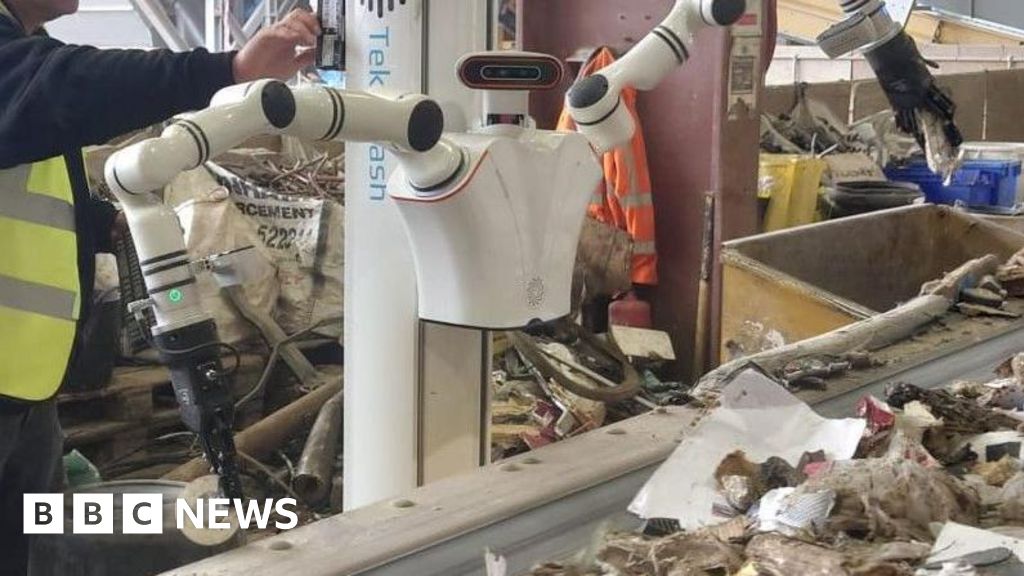
Robots step in as waste firms battle staffing shortages

The deployment of humanoid robots in waste management marks a significant milestone in the ongoing automation revolution, signaling a transformative shift in the global economy’s industrial landscape. As companies across developed nations increasingly integrate advanced robotics into their operational frameworks, the economic implications extend beyond mere efficiency. This development underscores the intensifying drive toward automation-driven productivity, which is poised to reshape employment, investment strategies, and environmental policies worldwide.

In the context of market impact, the adoption of humanoid robots for waste sorting is anticipated to alter supply chains and labor markets profoundly. Industry veterans, such as those affiliated with the International Robotics Federation, project that the sector could see a compound annual growth rate (CAGR) of over 20% in the next five years. This surge reflects the increasing confidence among investors who recognize automation’s capacity to reduce operational costs and improve environmental compliance. Notably, technology giants like ABB and KUKA are investing heavily into the development of humanoid robotics, betting on an expanding market where labor costs are volatile and regulatory pressures to implement greener practices intensify.

From a policy perspective, governments worldwide are responding by recalibrating their regulatory frameworks to accommodate advancing automation. The trend is causing ripples in labor policies, particularly as countries grapple with potential job displacements in manual waste sorting sectors. Economic think tanks such as The Heritage Foundation argue that this technological pivot is vital for maintaining competitive edge, especially as developing economies face mounting pressure to adopt similar innovations. Policymakers are also incentivizing sectors to upgrade infrastructure, which could lead to significant shifts in fiscal priorities and investment patterns. Such policy adaptations underscore the delicate balance between fostering innovation and safeguarding workforce stability.

Looking toward the future, the integration of humanoid robots into critical waste management functions exemplifies the broader trend of technology as the pulse of modern economies. As nations understand that economic power hinges on continuous innovation, automation becomes not merely a tool but a defining feature of geopolitical stature. *The coming era will be defined by these breakthroughs—where machines—once seen as tools—become partners in creating sustainable, resilient economies. The stage is set for a future where the relentless march of automation not only transforms industries but also redefines the very fabric of global economic power.*

Teacher survey reveals staffing shortages hurting SEND support for students

Global Education Challenges and the Future of Inclusivity

The recent survey conducted by the National Education Union (NEU) in England casts a stark light on an escalating crisis that transcends national borders and demands urgent international attention. With nine out of ten teachers reporting oversized classes and staffing shortages, the fundamental ability to support children with special educational needs and disabilities (Send) is under severe threat. These issues, rooted in inadequate resource allocation and systemic neglect, threaten to undermine the very ideals of inclusive education—values that resonate across democracies and authoritarian regimes alike. The implications of these failures extend far beyond Britain, serving as a cautionary tale for countries worldwide wrestling with the balance between educational ambitions and practical constraints.

As Britain’s government announces its comprehensive white paper aimed at reforming the Send system, international analysts scrutinize the plan’s potential to effect real change. The proposal emphasizes assessing pupils with special needs and creating personalized support plans—yet, as highlighted by Daniel Kebede, NEU’s general secretary, the main obstacle remains resourcing: “Mainstream schools are simply not staffed or funded to meet current needs.” The government’s pledge of £1.6bn over three years and additional funds for specialists and teacher training may appear substantial, but experts argue these figures are insufficient for the massive overhaul required. With only the most complex cases qualifying for education, health, and care plans (EHCPs), millions of children currently fall through the cracks, echoing a global pattern of neglect in education systems unprepared for the rising tide of special needs support demands.

From a geopolitical perspective, this domestic crisis serves as a broader warning: when nations fail to invest in their future through education, they risk stagnation and social division. According to international organizations such as UNESCO, equitable access to quality education is a cornerstone of sustainable development; yet, many countries are grappling with similar issues, especially as economic disparities widen. The European Union, the United Nations, and other global bodies have recognized that the success of inclusive education hinges on political will and resource commitment. Failure to act decisively endangers not just individual lives but the stability of societies in an increasingly interconnected world where human capital is the linchpin of progress.

Moreover, leading historians and political analysts warn that national policies on education are often a reflection of deeper societal values and priorities. The current crisis in Britain’s schools underscores a broader tendency among many developed nations to underfund social services while maintaining military and geopolitical influence on the world stage. As conflicts persist from Eastern Europe to the Indo-Pacific, the focus on military might often overshadows pressing social issues—yet, the failure to nurture the next generation with inclusive policies may breed long-term instability. The international community watches as the unfolding story of Britain’s education reform reveals how decisions made today—regarding resource allocation, policy priorities, and societal values—will shape the global order tomorrow. The echoes of neglect today may become the upheavals of tomorrow’s history, a reminder that the battle for inclusion is as much a geopolitical struggle as it is an educational one.

As the twilight of this chapter approaches, the weight of history hangs heavy. Will the international community learn from Britain’s struggles, or will it watch in silence as opportunities for true inclusivity fade into the shadows of political inertia? The future remains unwritten, but one fact is clear: whether nations rise or fall on the strength of their social fabric, the true measure of greatness lies in their ability to support those most in need. The pages of history are turning, and in the silence ahead, the echoes of neglect threaten to resound for generations to come.

Social Media Auto Publish Powered By : XYZScripts.com



