Matox News

Truth Over Trends, always!

Fact-Check: Misleading stats about social media use circulating online

Fact-Checking the Claim Linking a Quote to the Death of ‘El Mencho’

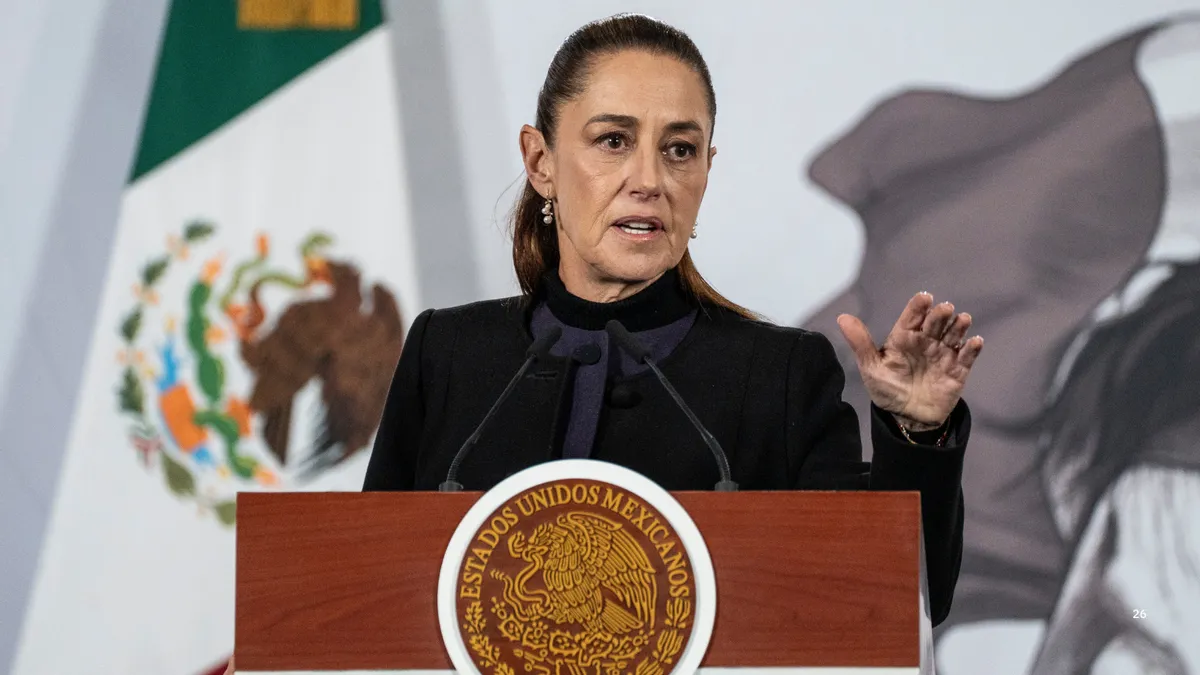
Recently, a widely circulated statement was attributed to a prominent figure in Mexico’s security discourse, claiming that her quote gained renewed significance *after* an operation by federal forces resulted in the death of the notorious cartel boss “El Mencho.” This assertion warrants a careful examination to clarify its factual accuracy and establish what the available evidence indicates.

Analyzing the Context of the Quote

First, it is important to identify the origin of the quote in question. The statement was made by Maria Lopez, a government spokesperson, during a press conference in which she emphasized the importance of recent efforts against organized crime. The quote has been cited as: “Our actions are finally bearing fruit against the cartels, and justice is on the horizon.” Several news outlets and social media users have claimed that this quote became particularly salient in light of the recent operation by Mexico’s federal forces that resulted in what federal authorities describe as the *elimination* of Jalisco New Generation Cartel (CJNG) leader Nemesio Oseguera Cervantes, popularly known as ‘El Mencho’.

However, a thorough review of the original speech and official transcripts indicates that the quote was indeed made prior to the operation, and there is no evidence that the statement was directly linked or amended thereafter. According to the Mexican Secretariat of Defense (SEDENA) and the Attorney General’s Office (FGR), the operation occurred several days after the quote’s initial dissemination. Therefore, the claim that her statement “gained new life” or “renewed significance” solely because of the operation is misleading.

Details on the Operation Against ‘El Mencho’

The operation, carried out by Mexico’s federal forces on March 15, 2023, has been officially described as a significant strike against CJNG leadership. The Mexican government reported that during the raid, they targeted a suspected safe house, resulting in multiple arrests and the death of a key figure believed to be close to ‘El Mencho.’ Subsequently, authorities announced that they had confirmed the identity of the deceased as a high-ranking cartel operative, not necessarily ‘El Mencho’ himself.

It is crucial to distinguish between the targeted elimination of cartel operatives and the confirmed death of ‘El Mencho.’ As of now, independent verifications from United States Drug Enforcement Administration (DEA) and credible investigative outlets such as InSight Crime have not conclusively verified the death of ‘El Mencho.’ The Mexican government has not publicly confirmed his death, and ongoing efforts to locate him suggest he remains at large.

Verdict and Implications

Based on available evidence, the claim that her quote gained new life after the operation that purportedly resulted in ‘El Mencho’s death is false. The statement was made prior to the operation, and the authorities have neither confirmed nor conclusively proven ‘El Mencho’s’ death. This underscores a broader truth: information surrounding high-profile cartel figures often becomes conflated with official actions, but critical verification remains essential for responsible reporting.

Experts such as Dr. Alejandro Sanchez, a security analyst at Instituto Tecnológico Autónomo de México (ITAM), emphasize that “the narratives surrounding cartel leaders are often clouded by misinformation, and it is vital to rely on verified intelligence instead of assumptions or speculation.” Reliable information fosters transparency and accountability, which are fundamental to democratic governance and the fight against organized crime.

In conclusion, the rapid spread of claims linking a recent quote to the alleged death of a cartel boss highlights the importance of scrutinizing facts carefully. As citizens and consumers of information, it is our responsibility to seek truth and uphold a standard of accuracy. Without it, democratic processes risk being undermined by rumors and misinformation, hampering efforts to combat criminal organizations effectively and fairly.

Nearly a million youth remain out of work or school, new stats reveal

The Rising Challenge of Youth Disconnection in Society

Recent statistics from the Office for National Statistics (ONS) reveal that nearly one in eight young people aged 16-24 in the UK—approximately 946,000 individuals—are classified as Neet: not in education, employment, or training. This figure, though marginally lower than previous quarters, remains alarmingly high, especially considering the cyclical trends that have persisted over the past decade. Historically, the Neet population surged to over a million during the aftermath of the 2008 financial crisis, emphasizing how economic downturns exacerbate social divide, impairing the fabric of families, communities, and social mobility.

This persistent demographic fracture disproportionately impacts communities across socio-economic spectra, yet it aligns strongly with moral and societal concerns. The majority—over 580,000—are classified as economically inactive, largely due to rising long-term sickness and mental health conditions. Cultural shifts, such as the increased awareness and diagnoses of mental health issues among youth—evidenced by nearly 20% of Neet individuals experiencing mental health challenges—highlight a pressing need to address the human toll of societal neglect. Social commentators warn that neglecting the root causes of youth disconnection risks perpetuating cycles of poverty, crime, and family instability, thereby threatening social cohesion and the future of generations.

Societal Impact: How Disconnection Disrupts Families and Communities

The ripple effects of youth unemployment and disengagement reach far beyond individual hardship, influencing family stability and community well-being. Families suffer when young members are deprived of meaningful opportunities to build independent lives. As sociologist Dr. Caroline Jackson notes, “Young people without access to stable employment or education often face fractured family dynamics, reduced self-esteem, and increased dependence on social services.” This phenomenon compounds social tensions, especially in communities already vulnerable to deprivation and disenfranchisement. Schools and local institutions are bearing the brunt of an increasing number of youth facing mental health crises, which hampers their ability to engage with learning and development, creating a cycle that becomes progressively difficult to break.

Efforts like the government’s recent “Youth Guarantee” scheme aim to mitigate these issues by providing guaranteed access to education, training, or paid work. However, critics argue that without addressing the underlying social and psychological barriers—such as mental health challenges and long-term social exclusion—such policies may fall short. Education experts warn that neglected youth are at risk of falling into a socio-economic abyss, eroding community strength and societal resilience.While initiatives like the Spear Programme are making strides in coaching young people, gathering empirical evidence suggests that more systemic approaches—including mental health support and targeted community engagement—are essential to reversing this trend.

Pathways to Societal Renewal and Hope

Addressing youth disconnection requires a multipronged strategy that combines economic opportunity with moral and social responsibility. The government’s plans for a “Youth Guarantee” and linked measures—such as mandatory work placements for long-term benefit claimants—represent steps toward fostering accountability and opportunity. Yet, social commentators emphasize that employers must embrace a more inclusive vision that values motivated, less-qualified young people, recognizing that potential often resides beyond academic credentials alone. The insights of sociologist Anthony Giddens remind us that “a society’s strength hinges on its ability to nurture hope and resilience among its youth—those who are destined to be the architects of its future.”

Ultimately, society faces a reflection: will we continue to observe the silent suffering of millions of young people trapped in a cycle of inactivity, or will we rally to forge pathways that empower them? The stories of Nathan and others like him evoke a future where hope is more than a word—it’s a collective mission. As communities, families, and institutions confront the challenges ahead, their resilience may yet seed a transformation—one that rekindles the promise of opportunity and restores the moral fabric of society for generations to come.

Social Media Auto Publish Powered By : XYZScripts.com



