Matox News

Truth Over Trends, always!

Undercover Cop Stops IS Plot to Kill British Jews – Podcast

In a stark reminder of the ongoing threat posed by radical extremism within Western societies, the recent convictions in Great Britain have underscored the persistent danger of homegrown terrorism. Walid Saadaoui, a man with a seemingly ordinary background—once a holiday entertainer in Tunisia before relocating to the UK—harbored a deadly secret: allegiance to Islamic State. His story, now publicly condemned, exemplifies how deceptive appearances can mask dangerous intentions, challenging policymakers and security agencies alike to adapt to evolving threats.

Saadaoui, alongside accomplice Amar Hussein, was sentenced to life imprisonment after authorities uncovered a well-coordinated plot to attack Greater Manchester’s Jewish community—a demographic historically targeted by extremist factions. The plot reveals the deep layers of ISIS’s clandestine operations penetrating Western neighborhoods and exploiting communities’ vulnerabilities. An undercover police officer, known by the codename ‘Farouk’, was embedded within their network—an operation exposing the delicate and dangerous balance between civil liberties and security efforts.

Analysts from various international think tanks highlight that the geopolitical ramifications of such conspiracies extend beyond national borders. Britain, as a cornerstone of the Western alliance, faces pressure to toughen counter-terrorism strategies while grappling with questions about integration and community resilience. These trials have sparked debates about how societal divisions and radicalization enable extremist ideologies to take root even in multicultural strongholds. The conviction of Saadaoui’s brother, Bilel Saadaoui, for failing to disclose critical information, underscores the complex web of supposition and betrayal that often accompanies these plots, serving as a stark warning that extremist networks operate on multiple levels of concealment and complicity.

International institutions and security analysts warn that the fight against radical extremism is far from over. The case echoes a broader pattern identified by experts from organizations such as Interpol and Europol, which emphasize persistent threats on domestic frontiers fueled by social alienation and geopolitical conflicts elsewhere. As histories from the Middle East and North Africa continue to influence European security landscapes, the question remains: how long can nations withstand the rising tide of ideological warfare? With each thwarted attack, history inches forward, yet the risk of a devastating strike persists—an ominous reminder that in the battle for societal stability, the threats lurking in shadows are often hardest to detect, and the cost of complacency can be measured in bloodshed.
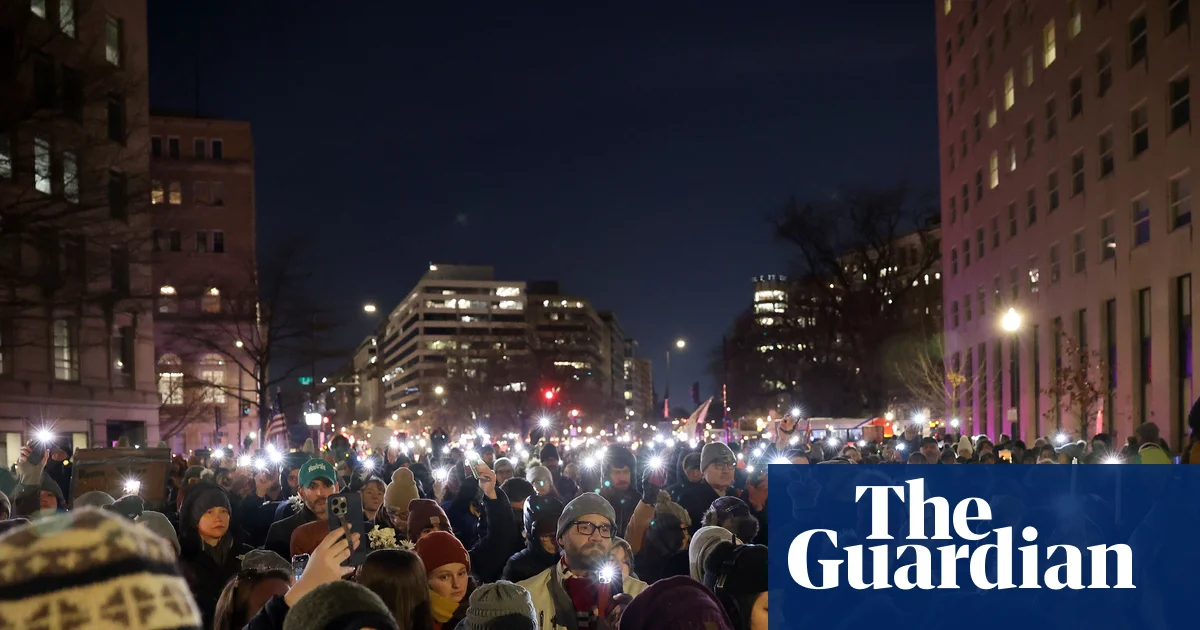

Judge Stops Trump Officials from Detaining Refugees in Minnesota

United States judicial intervention has temporarily halted the controversial policy of re-vetting and detaining lawfully resettled refugees in Minnesota. This abrupt series of arrests, initiated under the Trump administration’s recent initiative, Operation Parris, has ignited a fierce debate around human rights, sovereignty, and immigration policy. The decision by Federal Judge John R. Tunheim signals a significant judicial pushback against what critics describe as a draconian crackdown on individuals who had undergone extensive vetting processes and had established legal residence in the country.

  • More than 100 refugees arrested in Minnesota, some transported to detention centers in Texas
  • Refugees were detained, often abruptly and without notice, and then released to navigate an uncertain return journey
  • The Biden administration, facing mounting criticism, has paused these detentions following legal challenges and public outcry

This decision comes in the wake of widespread alarm among civil rights groups and international observers. Critics, including human rights advocates and analysts such as Noam Chomsky and Amnesty International, argue that the U.S. government’s actions undermine core commitments to international refugee agreements like the 1951 Refugee Convention and the 1980 Refugee Act. The policy, aimed at intensifying background checks and verification, has paradoxically resulted in the very trauma and chaos these laws seek to prevent, exposing the persistent tensions between national security and human dignity. The federal court’s ruling emphasized the human toll—stories of terror, confusion, and sharp trauma recounted by affected refugees—that are simply impossible to ignore in the face of alleged national security concerns.

Underlying this crackdown is a broader geopolitical impact. Critics argue that the administration’s aggressive stance not only alienates vulnerable populations but also risks tarnishing the image of the United States on the global stage as a champion of human rights. European nations, Canada, and international organizations have watched closely as the U.S. grapples with its humanitarian obligations. As Foreign Policy analysts warn, such policies may inspire similar hardline measures elsewhere, fueling regional instability and jeopardizing the fragile consensus on refugee protections. Historian Stephen Walt notes that “when a superpower reneges on its international commitments, it sends a dangerous message about the durability of these treaties and the moral authority of the West.”

The judiciary steps in amid a landscape of high-stakes geopolitical shifts. The United States finds itself at a crossroads, with internal debates over security versus humanity and external perceptions of strength and moral standing. The policy’s enforcement, which results in abrupt detentions, threatened to undo decades of progress on refugee rights, with families torn apart and communities destabilized—an unsettling reminder that decisions made today will echo through the corridors of history. As the court’s ruling takes hold, the weight of this unfolding chapter remains—and the world watches as the balance between sovereignty and human rights continues to be tested amid seismic shifts in geopolitics, migration, and the enduring quest for justice.

FBI Stops Los Angeles New Year’s Eve Terror Plot, Authorities Announce

The recent disruption of a potential terror attack in Los Angeles by federal authorities underscores the fragile geopolitical landscape and the persistent threat of extremism within the United States. According to officials, four members of the Turtle Island Liberation Front, a radical offshoot of a pro-Palestinian, anti-government faction, were arrested on suspicion of plotting a coordinated bombing campaign aimed at multiple locations across southern California. The plot, believed to have been scheduled around the New Year’s Eve festivities, involved testing improvised explosive devices in the desert east of the city—a development that raises alarm on multiple levels.

This incident illustrates a broader challenge confronting America’s national security apparatus amidst an increasingly complex geopolitical matrix. The FBI’s swift intervention, which utilized surveillance assets and tactical forces, demonstrates the importance of vigilant law enforcement in countering domestic terror threats. US Attorney General Pam Bondi labeled the foiling of this plot as a preventative measure against “far-left” extremists, emphasizing that the threat comes from varied ideological spectrums. Analysts note that this event signals a shift in how domestic threats are perceived, especially as radical groups exploit social grievances and ideological fissures to mobilize and plan violence.

Significantly, researchers and international organizations have long warned of the rising proliferation of radical ideologies and their potential to destabilize societies. The United Nations and Department of Homeland Security have argued that such plots, if successful, could have devastating impacts — not only on local communities but also on international perceptions of America’s ability to maintain internal security. The suspects, whose ages range from 24 to 41, face serious charges including conspiracy and possession of unregistered destructive devices, highlighting the criminal underpinnings that threaten peace and stability. The incident also spotlights the ongoing challenge of radicalization and the necessity of resilient national security policies rooted in both intelligence and community engagement.

The broader geopolitical impact of this event extends beyond U.S. borders, fueling debates around extremism, migration policies, and the influence of global conflicts on domestic security. As China, Russia, and other geopolitical players continue to extend their influence through strategic maneuvers, the stability of the United States remains critical in maintaining global equilibrium. Analysts warn that permitting radical factions to operate unchecked threatens not only national but international stability, prompting a renewed focus on intelligence-sharing and preventative measures. The foiled plot in Los Angeles is a stark reminder that history continues to unfold on America’s streets—a saga where the lines between domestic and international threats blur beneath the weight of political and ideological turmoil.

As authorities continue to investigate potential ties and broader networks, the question remains: how prepared is the international community to confront these multifaceted threats? The incident has become a cautionary tale, illustrating how decisions made in the corridors of power and the actions of small extremist groups can leave a lasting mark on the modern geopolitical narrative. Today, history watches as an unpredictable future emerges—one where the resilience of societies, the vigilance of nations, and the resolve of global institutions will determine whether this chapter ends with tragedy or resilience. And as the world turns its gaze to the unfolding story, the true significance of this foiled attack may only be understood with hindsight, leaving society to ponder a simple but profound truth: the era of peace is never guaranteed—only defended.

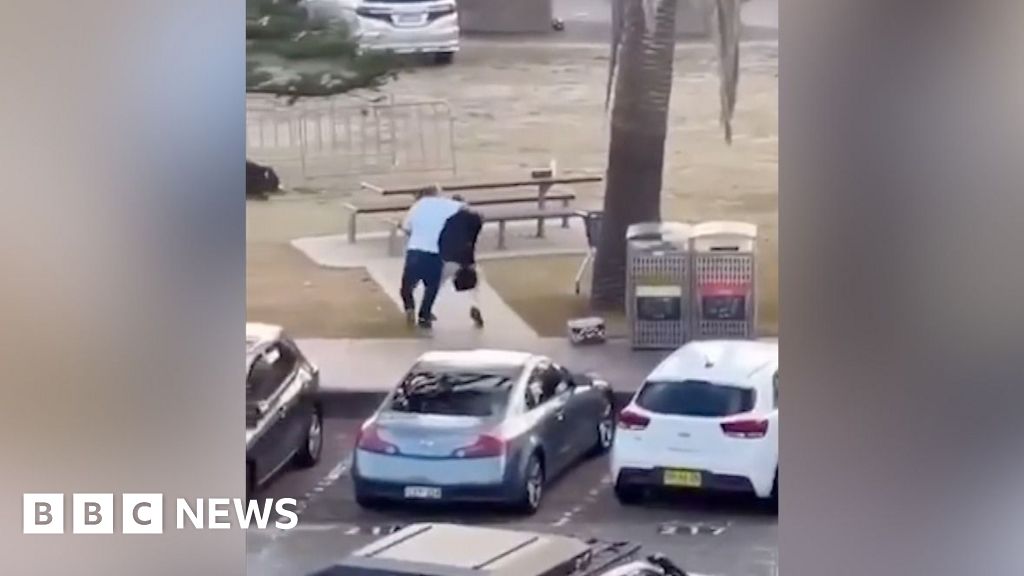
Bystander videos heroic action, stops shooter in fiery street confrontation

The tragic events at Bondi Beach, one of Australia’s most iconic coastal landmarks, have sent shockwaves through both national security circles and international observers. On a seemingly ordinary Sunday, a violent shooting resulted in the loss of twelve lives, with at least eleven others injured, including police officers tasked with maintaining order. Witness footage capturing a dramatic moment of heroism has now become a focal point of the incident, showing a bystander wrestling the alleged gunman to recover the weapon. This act of bravery underscores the unpredictable chaos that such violence ignites within a society unprepared for such brutality.

Australian authorities, led by Premier Chris Minns, confirmed that one of the suspected perpetrators was killed at the scene, while another was taken into custody. As the nation mourns, questions multiply regarding the motives behind the attack and the security measures currently in place. This event comes at a time when international intelligence agencies warn of rising threats from extremist incidents triggered by global instability, migration pressures, and social divides. Analysts suggest that such localized tragedies can ripple outward, fueling anti-immigrant sentiments and nationalistic rhetoric, which can have serious geopolitical implications.

The incident at Bondi Beach is more than a tragic anomaly; it fits into a disturbing pattern of increasing violence that many international experts trace back to wider geopolitical shifts. According to International Crisis Group reports, nations are increasingly vulnerable to inside threats, especially with the proliferation of firearms and the erosion of traditional community cohesion. The rise of radicalization, sometimes fueled by economic disparity and social unrest, is exacerbated by international conflicts and the widespread dissemination of extremist ideologies online. This raises urgent questions about how nations can effectively counteract these threats without infringing on civil liberties, a dilemma that complicates homeland security efforts in democracies like Australia.

  • The Bondi Beach attack underscores the importance of rapid law enforcement response capabilities and community resilience
  • It highlights the vulnerability of societies unprepared for lone-wolf attacks amidst rising global terrorism concerns
  • International organizations call for increased cooperation and intelligence sharing among nations to prevent future attacks

In this ongoing landscape of violent unpredictability, where incidents can drastically shift public perception and political discourse, many experts, including historians and security analysts, warn of the *dangers of complacency*. The unfolding tragedy in Australia serves as a stark reminder that the decisions made today—regarding security, migration, and international cooperation—will have lasting consequences. As governments brace for what might come next, the world watches, acutely aware that such moments are the contours of history being written in real time — fragile, volatile, and seemingly unpredictable. The question that lingers amid the ash and shattered glass of Bondi Beach is whether nations will learn to effectively navigate this perilous era before it is too late, or if they will become resigned to a future shaped by violence and chaos that once seemed unimaginable.

Social Media Auto Publish Powered By : XYZScripts.com