Matox News

Truth Over Trends, always!

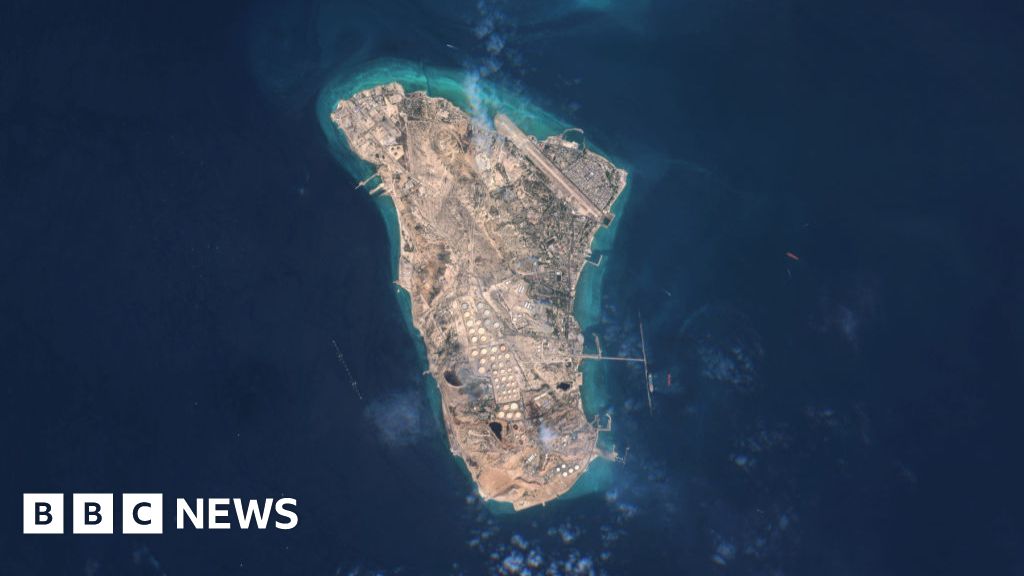
Why is the US focusing on Iran’s strategic Kharg Island?

In a significant development that underscores the fragile balance of Middle Eastern geopolitics, a tiny island located strategically in the Persian Gulf has become the epicenter of escalating tensions. This small landmass is home to one of the most critical pieces of Iran’s energy infrastructure, a key node in its oil and gas export network. Analysts warn that any disruption to this installation could ripple globally, destabilizing energy markets and shifting regional power dynamics.

The Iranian government has long regarded the control of offshore infrastructure as vital to safeguarding its economic sovereignty and military security. According to international security experts, this island’s infrastructure is not only crucial for Iran’s energy exports but also for its strategic posture—serving as a leverage point against adversaries, particularly the United States and its regional allies. The recent movements around this island, whether military or diplomatic, signal a clear warning: the possibility of renewed confrontation looms large, with global implications for stability and energy security.

World powers, including the United States, have closely monitored the situation, with some regional allies urging restraint amid the heightened risk of conflict. The international community fears that any miscalculation could escalate into open hostilities, given the island’s strategic importance and Iran’s calculated use of its offshore assets. Historically, such flashpoints have been catalyst for broader conflicts, and regional analysts highlight that a destabilization of this infrastructure could threaten the global energy supply chain — a reality that underscores the potent geopolitical impact of the ongoing crisis.

The United Nations and leading international organizations have called for diplomatic engagement and de-escalation, but recent events suggest that the risk of a broader conflict remains elevated. As history demonstrates, decision-makers on both sides are walking a tightrope; any misstep could trigger a cascade of consequences that reshape regional alliances and global power structures. The fate of this small island—so seemingly insignificant—may well determine the course of history in the years to come. As the world watches and waits, the weight of the past reminds us that the patterns of conflict and diplomacy are often written in the most unlikely of places—where the line between peace and war is razor-thin.

Washington Post Hits Hard on Layoffs Amid Strategic Shakeup

Washington Post’s Strategic Recalibration: A Reflection of Shifting Media Dynamics

The news industry is at a critical crossroads, and the Washington Post, once a bastion of American journalism’s golden age under owner Jeff Bezos, now faces profound upheaval. Earlier this week, the esteemed newspaper announced a “broad strategic reset,” signaling a renewed approach aimed at securing its future amidst an increasingly volatile media marketplace. The internal upheaval, which includes significant layoffs, underscores the stark reality confronting traditional journalism outlets globally—adapting or perishing in a digital-first era increasingly dominated by social media giants and tech conglomerates.

During a somber staff meeting, Matt Murray, editor-in-chief of the Post, highlighted that the publication is realigning its focus by restructuring its coverage priorities. Notably, the decision to conclude the current iteration of its popular sports desk, along with trimming its international reporting capabilities and suspending its flagship daily news podcast Post Reports, underscores a shift away from expansive coverage toward a leaner, more targeted operation. With declining advertising revenue and fierce competition from online news platforms, legacy outlets are forced to make tough choices that threaten their core journalistic identity. This restructuring raises questions about how societies will access and trust news in the coming years.

Interestingly, the announced cuts come amid mounting unrest among staffers, who called on Jeff Bezos to intervene and soften the blow. Bezos, whose ownership heralded a period of growth, has remained silent during this tumult, even as employees expressed concern over how these decisions might erode the integrity and depth of American journalism. International experts warn that such retrenchments in vital media institutions could have far-reaching consequences, affecting the dissemination of information during crises or geopolitical shifts. Meanwhile, the global community watches as the Post navigates this transition, hinting at the broader fragility faced by traditional media in an era where information often flows outside of conventional editors’ control.

Geopolitical Shifts and the Decline of American Media Power

The strategic restructuring at the Washington Post serves as a microcosm of a larger geopolitical realignment. As the United States grapples with diminished soft power—accentuated by wavering international influence and an era of information warfare—the role of influential media outlets becomes even more critical. Entities like the Post, historically seen as anchors of American liberal democratic values, are now vying to stay relevant in a landscape dominated by digital disruptors from China and Russia.

In recent years, analysts such as Dr. Linda Kim of the International Media Institute have warned that the decline of major American newspapers could weaken the country’s narrative dominance abroad. As Bezos’ silence persists, critics argue that American leadership appears increasingly disconnected from its societal institutions during critical moments of change. Meanwhile, countries like China and Russia are exploiting the vacuum by expanding their own state-sponsored media to project power and influence global public opinion. The erosion of robust, independent journalism from the US could embolden rival nations’ narratives while diluting the global stature of American values.

The Future of Journalism and the Weight of History

As the Washington Post undergoes this seismic transformation, history looms as a heavy shadow. Does this signal the decline of a once-mighty institution that helped shape American democracy, or a necessary modern adaptation? International organizations and media watchdogs emphasize that the quality and independence of journalism are vital for a working society—yet layoffs and restructuring threaten those very principles. The looming uncertainty prompts a sobering question: Will American journalism survive these turbulent times and continue to serve as the vigilant guardian of truth, or will it become a mere shadow of its former self?

In an era where information and power are intertwined more than ever before, the decisions made today will resonate for generations to come, shaping not only the future of media but the geopolitical landscape at large. As the world holds its breath, the unfolding story of the Washington Post is a stark reminder that history’s court is always watching, and its verdict remains uncertain. One thing is clear: the pages of tomorrow are yet to be written, and the weight of this moment will echo through the corridors of power and the quiet halls of society’s conscience.

Social Media Auto Publish Powered By : XYZScripts.com


