Matox News

Truth Over Trends, always!

Four Years of War in Ukraine: Russia’s Struggling to Keep Up

In the wake of Russia’s ongoing conflict, the ripple effects extend far beyond the battlefield, deeply impacting the global economy and international stability. As detailed by Steve Rosenberg and numerous analysts, the economic fallout from this conflict has manifested in widespread inflation, disrupted supply chains, and altered geopolitical alliances. While the fighting persists, nations around the world grapple with how best to respond, balancing sanctions, aid, and strategic interests. The decision of the international community to impose measures against Moscow reflects a profound shift in diplomatic paradigms and raises urgent questions about the future of global order.

Economically, the conflict has caused disruptions in critical sectors such as energy, agriculture, and technology. Russia’s role as a major energy supplier means that sanctions targeting its oil and gas exports ripple through European markets and beyond, leading to skyrocketing prices and energy insecurities. The United Nations and analysts from think tanks highlight how these economic pressures threaten to destabilize already fragile economies, especially in Europe. Meanwhile, countries heavily dependent on Russian commodities face tough choices — either to diversify sources or confront inflationary pressures that threaten to impoverish millions. Historians trace similar patterns during past conflicts, noting how economic retaliation often fuels national resilience or, conversely, sparks internal dissent.

Within Russia, the war’s economic toll is unfolding differently, with the Kremlin implementing measures to bolster its economy amid international sanctions. Nonetheless, the social fabric is under strain as everyday life becomes increasingly difficult for ordinary citizens. How populations cope emotionally and financially reflects a society adapting to extraordinary circumstances, yet also raises concerns about internal stability. Meanwhile, in Ukraine, the conflict’s territorial and humanitarian toll compels Western nations and international organizations to consider long-term commitments — not solely military but broad economic aid and reconstruction efforts. Strategic analysts warn that unresolved tensions and economic instability could prolong the hostilities and exacerbate global insecurity.

Global institutions such as the International Monetary Fund and World Bank continue to alert policymakers about the risks of prolonged conflict on world economic growth. The shifting alliances and economic decouplings signal a fundamental transformation in international relations—one where traditional power blocs are reassessing their roles and strategies. This scenario underscores how decisions made in the heat of geopolitics will shape the world order for generations. As experts debate whether diplomacy can still prevail or if a new Cold War is inevitable, the weight of history presses heavily upon us, reminding the global community that war’s consequences extend beyond the battlefield—affecting the very fabric of societies and the stability of nations.

In the shadow of these tumultuous developments, the question remains: how will the decisions of today ripple through the corridors of power and the lives of millions? With each geopolitical shift, the world inches closer to an uncertain future — where history’s pen continues to write, and humanity waits with bated breath for the next chapter in this ongoing saga of conflict and resilience.

Even the Super-Rich Are Struggling with Britain’s Failing Housing Standards

Britain’s Broken Building Culture: A Reflection of Society’s Neglect of Craftsmanship

Across British communities, the crumbling quality of construction and housing reflects deeper societal shifts—marked by devaluation of skilled trades, political neglect, and profit-driven shortcuts. From the luxurious flats of One Hyde Park to the modest homes suffering from damp and mould, the disparities highlight a nation struggling under the weight of compromised standards. Even the wealthiest residents, who should enjoy the pinnacle of modern luxury, find themselves battling defective pipework and costly repairs—proof that systemic issues in construction quality are a societal crisis, impacting all levels of families and communities.

Historians and social commentators point to a long-term decline rooted in undermining vocational skills. As sociologist Dr. Anthony Giddens might observe, Britain’s abandonment of robust technical training—an outcome of policies since Margaret Thatcher’s era—has led to a dearth of qualified builders and inspectors. The once-respected role of tradespeople has been replaced by a culture of cost-cutting and deregulation, with contractors often managing their own oversight. The collapse of the Skills Training Agency in the early 1990s set off a ripple effect—causing an erosion of quality in building standards that now manifests in shoddy workmanship and structural defects. This societal neglect disproportionately harms families, forcing them to face spiraling repair costs, mould-related health issues, and safety risks that diminish the fabric of daily life.

The crisis is further compounded by regulatory failures and cultural neglect of trades. While Britain boasts thousands of rules governing architecture, the oversight mechanisms—such as the traditional clerk of works—have almost all but vanished. Instead, contractors now often perform their own inspections, creating a conflict of interest that favors cheap materials and quick turnaround over safety and durability. The rise of “design and build” contracts, which diminish architect oversight, parallels the erosion of craftsmanship. As architect Astrid Smitham explains, this new model incentivizes cutting corners, with dangerous consequences exemplified by the Grenfell Tower disaster. Such systemic issues threaten to undermine families’ safety, the value of education, and the integrity of community life.

Addressing Britain’s construction crisis requires urgent political will and cultural recognition of skilled trades’ dignity, which is currently sidelined in policymaking. Despite more than 10% of the workforce engaged in skilled trades, few MPs come from manual backgrounds—highlighting a disconnect between policy and social reality. As social commentators argue, reversing this trend involves restoring vocational education’s respectability, enforcing strict regulation for qualified professionals, and fostering a societal ethos that values craftsmanship as a moral commitment to human dignity. Without these changes, society risks prioritizing short-term profits over long-term sustainability, leaving future generations to grapple with the scars of generations of neglect.

In the end, society’s true strength lies in its ability to nurture craftsmanship, uphold standards, and prioritize human safety over profit. Society stands at a crossroads—between continued neglect and the awakening to a more resilient, skilled, and just future. As communities reflect on their crumbling homes and safety fears, there emerges an enduring hope—that through restoring dignity to the trades, revaluing vocational education, and demanding accountability, Britain can repair not only its buildings but the moral fabric of its social order. Perhaps, in that effort, society may find the resilience to rebuild itself—one brick, one skilled hand, one community at a time.

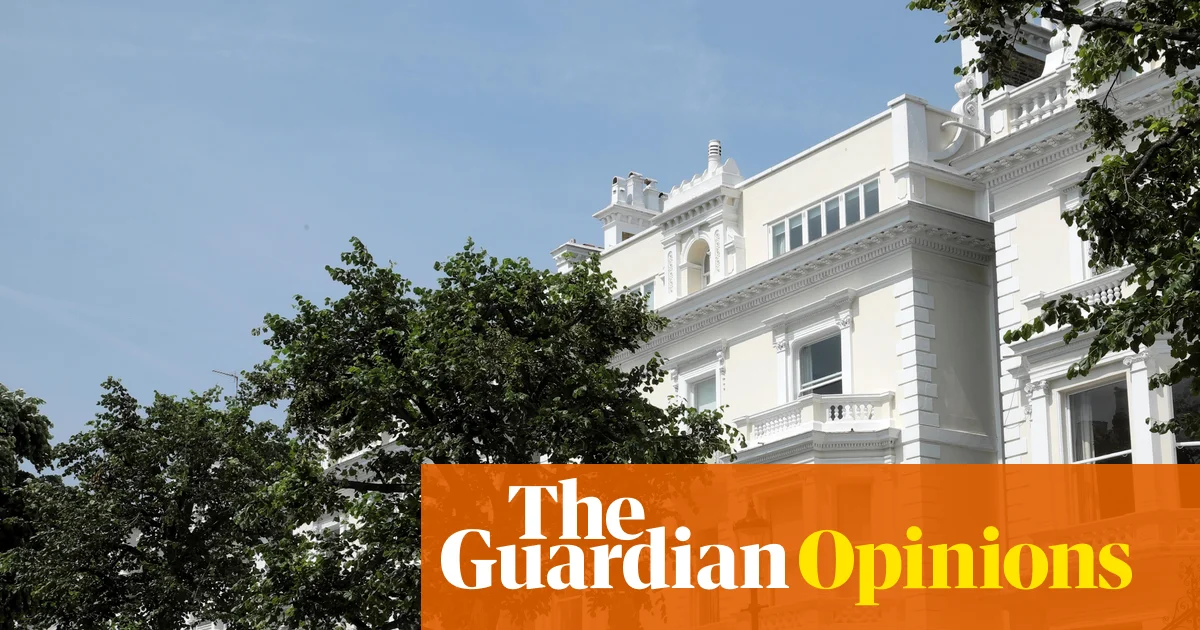
Britain’s £2m homeowners: the forgotten struggling youth? Actually, everyone’s noticed, says Jonathan Liew

In recent weeks, the UK has witnessed a stark contrast in societal reactions to policies targeting wealth inequality and housing injustice. The announcement of Rachel Reeves’s “mansion tax”, intended to tax properties valued over £2 million, has sparked a media frenzy. Yet, this outcry largely overlooks the persistent plight of those living amidst real housing crises. While affluent homeowners express concern over potential financial burdens, millions of families, especially in impoverished urban and rural communities, grapple with unaffordable rents, substandard housing, and displacement—issues that threaten the social fabric itself.

  • The mansion tax targets about 165,000 property owners, but the media’s reaction seems disproportionate to the broader social issues at stake.
  • Many affected homeowners express fears of losing their savings and retirement plans, highlighting the moral dilemma faced by those who feel unfairly targeted while others see the policy as a step towards greater societal equity.
  • Meanwhile, social commentators note that the real housing injustice — overcrowding, homelessness, and lack of affordable options — remains largely ignored by mainstream discourse.

Historian and sociologist Dr. James Collins notes that these social tensions reveal a broader divide in societal values. On one side, a cultural narrative that often romanticizes property ownership as a cornerstone of personal success and stability. On the other, a recognition that the escalation of wealth concentration exacerbates generational inequalities, undermining family cohesion and community resilience. The moral question here is not merely about taxation but about the societal obligation to ensure fair access to stable housing for all. Families are the backbone of society, yet they are increasingly fragmented by policies that favor the wealthy while ignoring the plight of the marginalized.

Within this context, educational institutions play a crucial role in shaping societal attitudes. Yet, there is concern that the current discourse marginalizes the voices of working-class families, fostering a sense of alienation. As social commentator Anna Ramirez highlights, “When policies favor the elite at the expense of the common good, it erodes trust and weakens shared societal bonds.” To bridge this gap, experts advocate for inclusive solutions:

  • Implementing policies that promote affordable housing development in both urban and rural areas.
  • Encouraging community-led initiatives to support displaced families and preserve local cultures.
  • Reforming taxation to balance revenue needs with social equity, ensuring the social contract remains fair.

As society stands at this critical juncture, it is essential to reflect on the human impact of these policies. Behind every statistic and media headline are real people: children seeking safe neighborhoods, elderly homeowners facing threats of losing their lifelong investments, and young families striving for stability in uncertain times. Building a society that prioritizes human dignity over wealth accumulation requires a collective moral awakening. Only then can society begin to mend its fractured bonds and forge a future where housing is seen not as a commodity for the few but as a fundamental human right accessible to all. In confronting these societal challenges, society’s true strength lies not in wealth, but in the resilience and compassion of its communities — a strength waiting to be awakened in every neighborhood, every family, and every young heart eager for hope.

Struggling but craving Tteokbokki: Young voices on mental health and resilience

Global Reflection on Mental Health and Cultural Impact Following Baek Se-hee’s Death

The recent passing of Baek Se-hee, the acclaimed South Korean author of the bestselling memoir “I Want to Die but I Want to Eat Tteokbokki”, has sparked an international conversation on mental health, societal expectations, and the transformative power of literature. Her work, lauded for its raw honesty and empathetic tone, resonated deeply across borders, emphasizing that issues like dysthymia and anxiety are universal and deserving of open dialogue. As her death at the age of 35 remains shrouded in mystery, the geopolitical impact of her story extends beyond her personal tragedy to highlight broader mental health stigmas in East Asia and influence global perspectives on wellbeing.

Throughout her career, Baek Se-hee became a voice for a generation grappling with relentless societal pressures, especially within South Korea — a society still influenced by Confucian values of righteousness and obedience. Her candid discussions about overthinking, self-doubt, and emotional vulnerability challenged cultural norms that often dismiss or stigmatize mental health struggles. International organizations, mental health advocates, and educators have cited her work as a catalyst in destigmatizing mental illness and fostering acceptance. Historians specializing in East Asian social movements argue that her influence helped cue a shift in how mental health issues are addressed publicly, especially among youth who face crushing academic and societal expectations.

Analysts point out that her memoir epitomizes a **turning point**—a moment in which literature becomes a mirror for societal acknowledgment and change. The book’s widespread sales, surpassing a million copies globally and translated into 25 languages, reflect a collective yearning for honesty and understanding. For many young readers in Korea and abroad, her words offered validation that “it’s okay not to be perfect,” serving as a quiet revolution against the perfectionism ingrained in their societies. Critics from the international community recognize that the emotional honesty in her writing punctures through cultural taboos, paving the way for new conversations about mental health and human vulnerability on the world stage.

  • Her death emerged as a stark reminder of the urgency of mental health support, particularly in high-pressure environments where social success is often seen as the benchmark of worth.
  • The memoir’s messages resonate with youth facing the struggles of modern life amidst global competition, social media influence, and societal expectations.
  • International educators and mental health advocates increasingly cite her work in curriculum reforms, aiming to foster empathy and open mental health dialogues among younger populations worldwide.

Yet, amidst the widespread mourning and tribute, her story underscores how decisions at the international and national levels—such as mental health policy reform and cultural shifts—have profound societal consequences. South Korea’s unique mental health crisis, marked by high suicide rates and societal stigma, demonstrates how much still needs to be done. Her demise, shrouded in ambiguity, leaves an indelible mark on the global consciousness, pressing societies to confront their own mental health crises with renewed vigor. As historians debate her legacy—whether as a marker of societal change or a tragic reminder of unseen pain—the narrative continues to evolve, echoing the silent stories of countless others who quietly endure yet also seek hope.

In this unfolding chapter of history, the question lingers: will her voice inspire lasting change, or will society remain deaf to the unspoken struggles? Her story may be a personal tragedy, but it confronts us with a collective challenge—an urgent call to listen, to understand, and ultimately, to give voice to the quiet but persistent human desire to simply live and find joy amid despair. As the world watches, history writes itself anew, with each decision shaping a future that holds both promise and profound responsibility.

Social Media Auto Publish Powered By : XYZScripts.com