
Matox News

Truth Over Trends, always!

Europe’s skies at risk: Cost cuts and staff shortages threaten air safety, warns industry study

In a sobering revelation that casts doubt on the future of European aviation safety standards, a comprehensive study by Ghent University exposes dangerous shifts within the airline industry driven by relentless cost-cutting and corporate greed. As airlines prioritize profits over personnel welfare, pilots and cabin crew are pushed to work increasingly long shifts while feeling pressured to hide signs of exhaustion—factors that critically undermine passenger safety. This alarming trend, accelerated by the pandemic’s aftermath, signals a potential erosion of the continent’s once-robust safety protocols that, according to international safety experts, could have grave consequences for global aviation stability.

What is particularly troubling is the growing role conflict faced by airline staff, who are asked to juggle commercial responsibilities—such as onboard sales of alcohol and perfumes—with their fundamental duty to ensure passenger safety. The study highlights how a “Swiss cheese model” of systemic safety weakens with each cost-driven decision, creating “holes” where oversight fails. This phenomenon poses a significant geopolitical impact; with Europe striving to maintain its credibility as a leading aviation hub, these internal fissures threaten its reputation amid an increasingly competitive global industry dominated by low-cost carriers. International organizations and aviation analysts warn that a decline in safety could give rise to unforeseen disasters, risking not just lives but also damaging Europe’s hard-won stature in international civil aviation.

Underneath these systemic failures lies a troubling deterioration in crew morale and mental health. Nearly 70% of airline workers surveyed report falling below the threshold for positive mental health, with many describing a dehumanizing environment marked by fear, job insecurity, and a blatant lack of regard for their physical and psychological wellbeing. The phenomenon of “management by fear,” as experts call it, fosters a toxic workplace culture where safety is secondary to profit margins. Critics, including leaders of pilot unions such as Ignacio Plaza of the European Cockpit Association, warn that such conditions are not sustainable and could catalyze a crisis of confidence among industry professionals—crucial stakeholders for global flight safety. Historically, a well-trained, motivated workforce is the backbone of an aviation sector’s resilience, and the current trajectory risks making Europe a cautionary tale for the world.

As the international community watches, the question remains whether these trends will be addressed before they culminate in tragedy. The international aviation community—including the International Air Transport Association—has so far responded with muted concern, but assessments from top safety analysts suggest that urgent reform is needed. The choices made today—favoring short-term profits over the long-term integrity of safety systems—may yet define the legacy of this era. History, after all, often repeats itself, and the looming realization is that the caller’s whistle may come too late if decisive action isn’t taken. As the industry stands at this perilous crossroads, the weight of history presses down, reminding us that every decision now shapes the stories that future generations will recount—whether as cautionary lessons or as turning points toward renewal.
Fact-Check: New Study Finds Lower Smartphone Addiction Rates Among Teens

Investigating the Truth Behind Claims of Transgender Individuals as Mass Shooters

In recent debates surrounding gun violence and transgender rights, a recurring narrative suggests that transgender individuals are responsible for a disproportionate number of mass shootings in America. Prominent figures like Donald Trump Jr. and Sebastian Gorka have cited figures that imply a significant connection between gender identity and violent acts, with claims of dozens of mass shootings involving transgender perpetrators over the last few years. However, a rigorous review of available data from reputable sources reveals a starkly different reality. When scrutinized with precise definitions and verified data, the number of transgender mass shooters in the U.S. remains exceedingly small, accounting for less than 0.1% of incidents over the past decade.

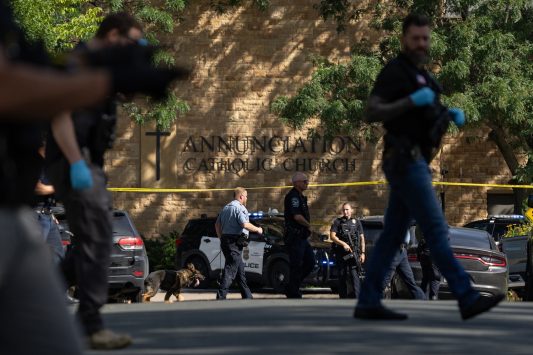
According to the Gun Violence Archive (GVA), an independent organization that tracks gun-related incidents, only five mass shootings have been confirmed to involve transgender suspects since 2013. These incidents include the tragic Chattanooga church shooting, the Highland Ranch school shooting, the Memphis warehouse shooting, the Colorado Springs gay bar attack, and Minneapolis’ recent church shooting. Notably, in cases like that of Anderson Lee Aldrich in Colorado, who identified as nonbinary, the gender identity was verified during court proceedings. When comparing these five incidents against the thousands of annual shootings, the proportion remains negligible—less than 0.1%.

It’s crucial to emphasize that the term “transgender” encompasses a broad spectrum; not all—particularly nonbinary individuals—may identify as transgender. This nuance complicates any direct causal link. Experts like James Densley, co-founder of The Violence Project, clarify that transgender individuals are statistically underrepresented among known mass shooters. Their comprehensive database, which applies a stricter definition—such as four or more victims killed or injured in a public setting—documents 201 cases since 1966, with only a single confirmed transgender perpetrator. Moreover, Dr. Ragy Girgis, a psychiatrist specializing in mass violence, states plainly: “Being transgender is not a causative factor in mass shootings.” The data overwhelmingly support that violence is committed almost exclusively by men, with over 97% of mass shooters being cisgender males, well aligning with societal patterns rather than challenging them based on gender identity.

Despite the clear data, misinformation persists. Figures like Gorka or the claims of “many” transgender shooters tend to rely on loose definitions or anecdotes, which inflate the perception of a link where none exists. As one fact-checker summarized, “even if you expand the definitions, transgender individuals responsible for mass shootings remain a tiny fraction of such crimes, overshadowed by the broader trend of male perpetrators.” The numbers tell a straightforward story: most mass shootings are carried out by men, across all gender identities, and transgender individuals are statistically rare among these perpetrators. This accurate data is vital, not only for honest debate but also for upholding the integrity of our democratic discourse, where facts must guide policy and public understanding.

Conclusion

In a democracy, informed citizens are the backbone of responsible policy—especially on issues as consequential as gun laws and gender rights. The evidence demonstrates that the narrative linking transgender identity to mass violence is deeply misleading. It is essential that we differentiate between anecdotal claims and comprehensive, verified data. As experts confirm, the presence of transgender individuals among mass shooters is vanishingly small, making it clear that gender identity is not a factor in violent behavior. Only through accurate information can we foster a fair, informed debate that respects both facts and responsible citizenship, foundational to our shared democracy.

Social Media Auto Publish Powered By : XYZScripts.com



