Matox News

Truth Over Trends, always!

Pro-Israel Activist Files Suit Against Sydney Restaurant Over Shunning and Vilification Following News Corp Stunt

Global Power Struggles and the Ripple Effect of a Sydney Restaurant Incident

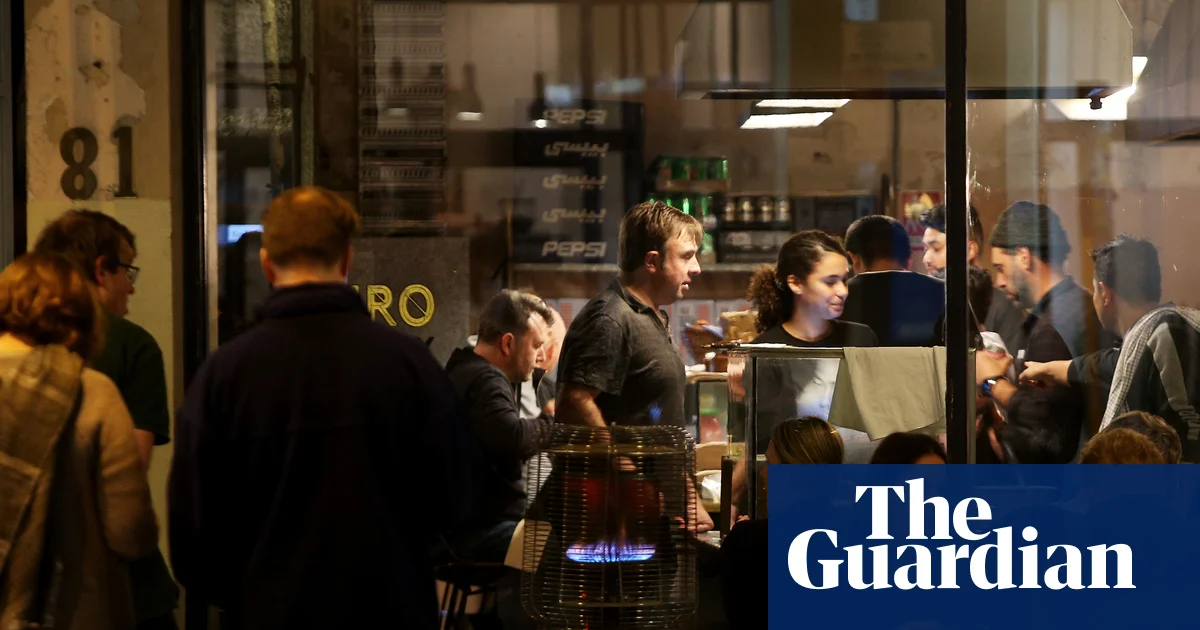
In an era marked by intensifying geopolitical tensions, a recent controversy in Australia showcases how local disputes can mirror and magnify global conflicts. The incident at Cairo Takeaway, a popular Sydney restaurant, began with an undercover journalist’s attempt to explore societal divisions through a masked visit. Clad in pro-Israel symbols amidst increasing Palestinian-Israeli conflicts, the visit became a flashpoint, igniting debates about media ethics, societal polarization, and international politics. As Australia grapples with its own issues of multicultural integration and political discourse, this affair exposes the profound influence of global conflict narratives on local communities.

The Incident and Its International Repercussions

The controversy revolves around Ofir Birenbaum, a pro-Israel activist who visited Cairo Takeaway dressed with symbols of Jewish identity. His visit, intended as a journalistic exploration of rising antisemitism, was carried out covertly with reporters from a major Sydney newspaper. The operation was initially dubbed “undercover Jew,” reflecting an alarming trend toward disguised journalism that raises serious questions about media responsibility. The restaurant’s subsequent social media posts claimed Birenbaum provoked a confrontation, implying that he verbally taunted staff with accusations of antisemitism and created an unsafe environment. However, these claims were later retracted, revealing a narrative heavily influenced by heightened regional conflicts and emotional reactions.

The incident quickly escalated, with Birenbaum launching defamation proceedings against the restaurant and its staff. Legal documents obtained by international outlets reveal a starkly different version of events from the restaurant’s initial social media claims. Critics warn that such misrepresentations risk inflaming societal divisions, especially amid the current rise in international tensions over Palestinian and Israeli pursuits, which many analysts say have become a proxy battleground for broader ideological struggles involving Western and Middle Eastern powers. The case exemplifies how media narratives in local contexts can influence international perceptions, especially when amplified by social media and sensational reporting.

Geopolitical Consequences and Societal Ramifications

As the United Nations and regional alliances such as the Arab League and European Union scrutinize the fallout, experts argue this incident underscores the fragility of multicultural societies facing external conflicts. Historians like Dr. Lisa Friedman warn that the escalation of emotional tensions over Israel and Palestine can destabilize community cohesion in diasporic populations. International organizations are increasingly concerned that misrepresentations and inflammatory media coverage can fuel divisiveness and extremism, undermining social solidarity and fostering political radicalization.

Analysis by geopolitical think tanks suggests that such localized controversies serve as microcosms of broader power struggles. Governments and political actors view these incidents as an opportunity to sway public opinion and reinforce ideological narratives, whether through diplomatic channels or wartime rhetoric. The case, therefore, is emblematic of a larger pattern: how the politics of identity and religion in local communities are deeply intertwined with and manipulated by global geopolitical agendas.

As history continues to unfold, this Sydney incident is more than a mere dispute over social media posts; it is a testament to an era where conflicts are no longer confined within borders but are woven into the fabric of daily life, shaping societies and policy on a fundamental level. The decisions made today—whether about media ethics, diplomatic relations, or social cohesion—will resonate for generations. The weight of history hangs heavily in the balance, as the world watches how these stories of division and unity ultimately unfold amidst a rapidly shifting geopolitical landscape.

White House loops racist deepfake of Dem leaders—Trump admin’s reckless stunt

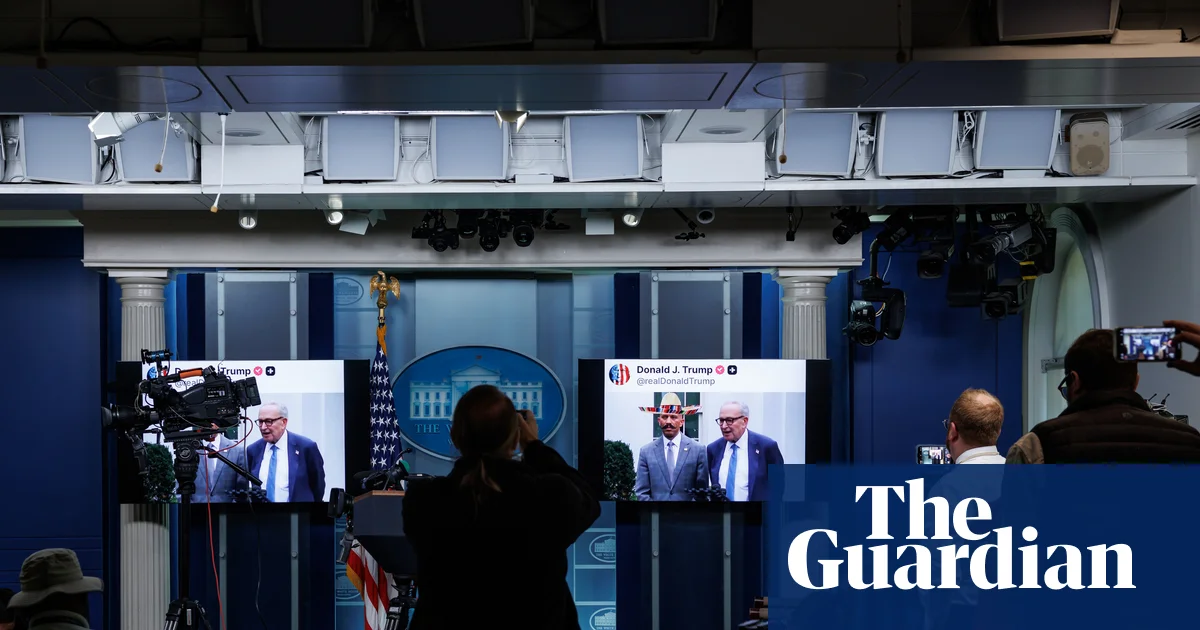
In a disturbing display of the current state of American politics, the White House recently became a stage for a provocative propaganda campaign that underscores the deep divisions threatening the nation’s stability. On Wednesday, the briefing room was inundated with circulating deepfake videos mocking Democratic leaders, with content that is as divisive as it is racially charged. These fabricated clips, posted by President Trump, distort reality by falsely portraying Senate Minority Leader Chuck Schumer and Hakeem Jeffries as endorsing racist stereotypes, with Schumer allegedly calling Democrats “woke pieces of shit” and Jeffries portrayed wearing stereotypical Mexican attire. Such weaponization of misinformation not only diminishes the dignity of American political discourse but also fuels dangerous narratives that have historically led to violence and societal fracturing.

Beyond the rhetoric and propaganda, these events reveal a pattern that analysts see as emblematic of the broader geopolitical impact of American internal conflicts. The use of such racist narratives echoes historical conspiracy theories, notably the “great replacement” theory, which has been repeatedly linked to violent acts by white supremacists. This conspiracy—at the core of several mass shootings and racial pogroms—used fear-mongering to justify acts of terror, emphasizing the perceived threat of immigrant populations replacing white citizens. The rhetoric, amplified by social media and political figures alike, risks diminishing America’s standing as a beacon of democracy and tolerance in the eyes of the world. Such divisiveness, when internalized and exported, weakens international confidence in the stability and moral authority of the U.S. government, which can have ripple effects across markets, alliances, and diplomatic relationships.

Meanwhile, critics argue that the White House’s approach to the ongoing government shutdown is mired in irresponsible tactics that undermine genuine negotiation efforts. As the deadlock continues, key issues—such as immigration, healthcare, and economic stability—remain unresolved. The administration’s framing of Democrat policies as conspiratorial attempts to favor illegal immigration disproportionately stokes nativist fears, even as the factual basis remains misplaced. According to prominent international organizations and independent analysts, such inflammatory tactics threaten the international reputation of the United States as a democratic leader committed to rule of law and human rights. Ever more, the world looks to what happens within the U.S., recognizing that internal turmoil can quickly spill into global instability, especially in an era marked by geopolitical rivalry with China, Russia, and rising authoritarian regimes.

The recent provocations at the White House serve as a stark reminder of how decision-makers’ rhetoric can shape, or distort, the historical narrative unfolding across borders. As historians and international think tanks assess the trajectory of American politics, the emerging picture suggests a nation grappling with its identity amidst internal conflict and external pressure. The consequences of these divisions extend beyond mere politics—they threaten to redefine the post-World War II order, challenging longstanding alliances and forcing nations worldwide to reconsider their perceptions of U.S. leadership. In a world increasingly defined by chaos and uncertainty, the true weight of history looms large—an unyielding reminder that the choices made today will reverberate through generations, shaping the destiny of nations and society as a whole. As the spectacle unfolds, it leaves the impression that, in this moment, the United States stands at a crossroads—its decisions setting the stage for what will be written into the annals of history, with the future hanging precariously in the balance.

MrBeast Stirs Controversy After Trapping Man in Burning Building for $500K Prize — Is It Just a Stunt or Crossed the Line?

In recent years, content creators like MrBeast have revolutionized the digital landscape, blending entertainment with daring risk-taking to carve out massive audiences. With over 440 million subscribers, MrBeast—whose real name is Jimmy Donaldson—has become one of the highest-paid and most influential YouTubers worldwide. His latest stunt video, “Would You Risk Dying for $500,000”, showcases his signature style: a heart-pumping spectacle where a professional stuntman attempts to escape a burning building while collecting bags of cash. This dramatic display of sheer audacity has surged past 45 million views, fueling discussions about safety, responsibility, and the evolution of modern entertainment.

The allure of MrBeast’s content transcends mere spectacle. It embodies the *shift towards experiential and adrenaline-fueled entertainment*, especially among younger viewers eager for intensity and authenticity. The producer’s ability to merge risk with reward taps into a fundamental human desire for challenge and adventure. Critics note that such content, although highly produced and seemingly reckless, involves careful planning—professional stuntmen, advanced safety measures like proper ventilation, fire suppression systems, and a dedicated crew of specialists ensure that the spectacle remains just that: a spectacle, not a tragedy. MrBeast’s assertion, “I take safety more serious than you could ever imagine,” underscores a responsible approach, even as the viral clip stirs debate about the boundaries of entertainment.

However, the conversation surrounding these viral videos is not solely about safety; it’s about the cultural role of risk in entertainment. Influential author and wellness expert Dr. Kelly McGonigal often emphasizes the benefits of controlled risk for personal growth and resilience. She suggests that *embracing calculated challenges* can foster a sense of achievement and self-confidence, especially for the youth who look up to these risk-takers as symbols of bravery and perseverance. MrBeast’s stunt, despite its controversial nature, exemplifies a modern spectacle where achievement is rewarded, not just through monetary gains but through the thrill of overcoming adversity. For many viewers, such moments serve as an inspiration to confront their own fears and pursue grit—values rooted firmly in traditional notions of personal strength and self-reliance.

  • Travel tip: Seek out adventure destinations that combine adrenaline activities with cultural immersion—like zip-lining in Costa Rica or mountaineering in the Himalayas—where safety precautions are paramount, and experience fuels growth.
  • Lifestyle hack: Balance high-intensity pursuits with holistic wellness practices, such as meditation and nutrition, to sustain both body and mind on your journey of self-discovery.
  • Main takeaway: Modern entertainment, whether in digital videos or real-world adventures, challenges us to step beyond comfort zones while respecting essential safety boundaries.

As we observe these daring displays and media personalities pushing the limits, it becomes clear that lifestyle is ultimately a journey—an ongoing pursuit of *embracing challenge, fostering resilience, and inspiring the individual to realize their potential*. The narratives spun by creators like MrBeast serve as a reminder that life’s true adventure lies not in avoiding risk but in mastering it responsibly. When safety and courage work hand-in-hand, they open pathways to personal growth that can ripple through every facet of life—driving us to face fears, pursue passions, and forge a future where our aspirations are limited only by our willingness to dare. In this era of rapid change, the call for youth is clear: dare to challenge, but always with respect for the journey and the risks involved. That is the essence of living fully in an age of endless possibilities.

Social Media Auto Publish Powered By : XYZScripts.com



