
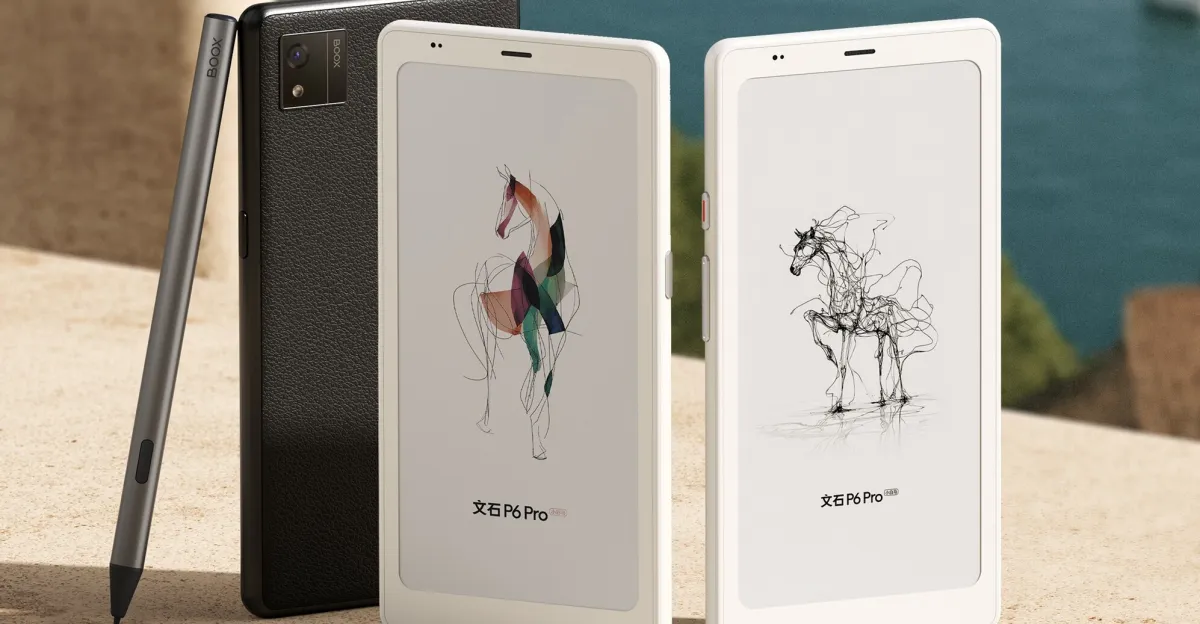

The tech industry is witnessing a groundbreaking development with the upcoming launch of Boox’s P6 Pro, a device that strategically blurs the lines between smartphones and e-readers. While full technical specifications remain under wraps, early revelations highlight the device’s formidable features, signaling a potential paradigm shift in portable digital devices. With a 16MP rear camera optimized for document digitization, alongside 8GB of RAM and 128GB of internal storage—expandable up to 2TB—the P6 Pro positions itself as a versatile tool for content consumption, productivity, and mobile documentation. This innovative approach is poised to disrupt traditional industry segments, creating new opportunities for competitors and investors eager to capitalize on transformative mobility solutions.
The P6 Pro marks a first for Boox—it introduces stylus support on a smartphone-sized e-reader, a feature previously confined to larger models and specialized electronic notebooks like the Nova Air. This move is a clear signal of disruption aimed at the digital note-taking and content management sectors, traditionally dominated by giants such as Apple and Samsung. By leveraging their existing expertise in large e-ink displays and integrating stylus functionalities directly into a portable device, Boox is effectively redefining the possibilities of mobile productivity. Experts from MIT and industry analysts like Gartner suggest this convergence of features could lead to a rapid evolution of the productivity device landscape, challenging entrenched industry leaders and forcing a reevaluation of what a ‘smartphone’ can offer.
Running on Android with access to the Google Play Store, the P6 Pro offers unprecedented flexibility—users can select their preferred note-taking applications or eBook platforms, thereby opening up a broad ecosystem of applications. This flexibility contrasts sharply with the more closed, proprietary systems from established players and signifies a strategic shift toward user empowerment and software openness. The influence of visionaries like Elon Musk—who consistently push the envelope—reflects a broader industry narrative: technological innovation is increasingly driven by disruptive platforms that prioritize customization and integration. The device’s potential to combine digital reading, note-taking, and mobile communication could accelerate the decline of dedicated e-readers and niche tablets, leading to more integrated, multifunctional devices that appeal to a new wave of digital-native consumers.
Looking forward, the Boox P6 Pro exemplifies the trajectory of technological evolution—where innovation, disruption, and business implications intertwine. As industry insiders and analysts recognize the device as a potential game-changer, its success will hinge on how quickly and effectively it can challenge industry norms. The pressure is mounting on competitors to innovate faster or risk obsolescence in a rapidly changing landscape. This launch underscores not only the importance of agility in product development but also the increasing role of user-centric design and ecosystem openness as core drivers of market leadership. For investors and tech enthusiasts alike, the question remains: Will the P6 Pro catalyze a new standard for mobile devices, or will existing giants adapt quickly enough to retain their dominance? The answer will shape the future of portable computing in the coming years—a future marked by swift innovation and relentless competition.





