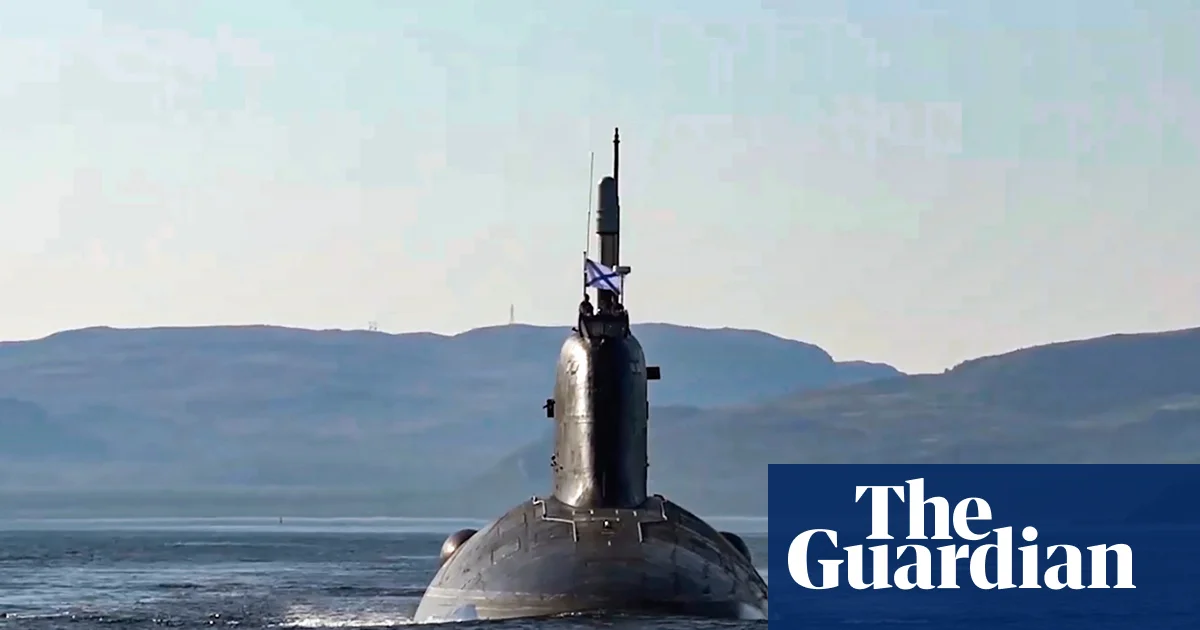

Swedish Defense Reports Increasing Russian Submarine Activity in the Baltic Sea
The Baltic Sea has long been a pivotal flashpoint for escalating security concerns among NATO allies and Russia. Recently, reports from Sweden’s navy highlight a startling trend: encounters with Russian submarines are occurring on an almost weekly basis. Sweden’s Chief of Operations, Capt Marko Petkovic, emphasized that Moscow is actively reinforcing its presence in the region, modernizing its fleet, and increasing submarine capabilities. This pattern of persistent submarine sightings and naval activity signals a broader push by Russia to assert dominance over the Baltic, an extension of its deeper strategic ambitions amidst the ongoing Ukraine conflict.
Russian Naval Modernization and the Geopolitical Stakes
According to leading analysts, Russia’s naval modernization efforts are part of a deliberate strategy to project power and challenge NATO’s influence in Northern Europe. The Russian fleet, particularly its Kilo-class submarines produced annually in St. Petersburg and Kaliningrad, are being upgraded with advanced capabilities—a move that has only heightened tensions in a region already volatile from recent conflicts and hybrid warfare threats. Capt Petkovic points out that Russia is continuously modernizing its vessels, making the underwater theatre in the Baltic more dense and unpredictable.
Added to this, the “shadow fleet”—a fleet of civilian-flagged oil tankers allegedly used to carry crude oil from Russia—raises concern over potential covert operations. While not overt military threats, these vessels could be repurposed to support drone attacks or other hybrid tactics, blurring the lines between civilian and military assets. Such tactics align with Russia’s overarching approach to hybrid warfare, an indirect yet persistent threat that NATO and regional partners are increasingly wary of. Europa and NATO officials are warning that, in the event of a ceasefire or armistice in Ukraine, Russian escalation could shift focus toward securing and expanding influence in the Baltic basin.
European Responses and NATO Vigilance
The response from NATO nations underscores a renewed commitment to <undersea countermeasures> and regional security. Sweden recently hosted Playbook Merlin 25, a major anti-submarine warfare exercise involving nine countries, including Germany, France, and the United States. This exercise aimed to bolster submarine-hunting skills amid a complex underwater environment that, due to its hilly and unpredictable terrain, provides prime hiding spots for submarines. According to Capt Petkovic, increased NATO vigilance has already had a tangible effect, with a notable absence of cable incidents since the establishment of Operation Baltic Sentry earlier this year. Such operations demonstrate that NATO’s unity and strategic planning are key in mitigating regional instability and deterring further Russian assertiveness.
However, the geopolitical impact goes beyond mere military preparedness. It signals a broader contest over influence in the sovereignty of Baltic states and their access to vital sea lines of communication—a lifeline for their economies and national security. As these emerging threats pose risks to not only military infrastructure but also civilian infrastructure, the stakes are high. The ongoing tension has analytical voices warning that the Baltic Sea may soon echo the echoes of Cold War conflicts, with the possibility of a new, dangerous era of hybrid and conventional hostility.
While some champions of diplomacy argue for negotiations, the reality depicted by recent movements suggests that history is once again at a turning point. How the West responds to Russia’s naval expansion and hybrid tactics in the Baltic will shape the geopolitical landscape for decades to come. The outcome remains unwritten, but what is clear is that the wider world is on the brink of witnessing a new chapter of strategic confrontations, where control over the Baltic could become a crucial pawn in a larger struggle for dominance.