Matox News

Truth Over Trends, always!

Bondi's Hanukkah Fest Turns Sudden Nightmares—What Went Wrong?
Bondi’s Hanukkah Fest Turns Sudden Nightmares—What Went Wrong?

Global Tensions Escalate Amid Unfolding Geopolitical Shifts and Local Tragedies

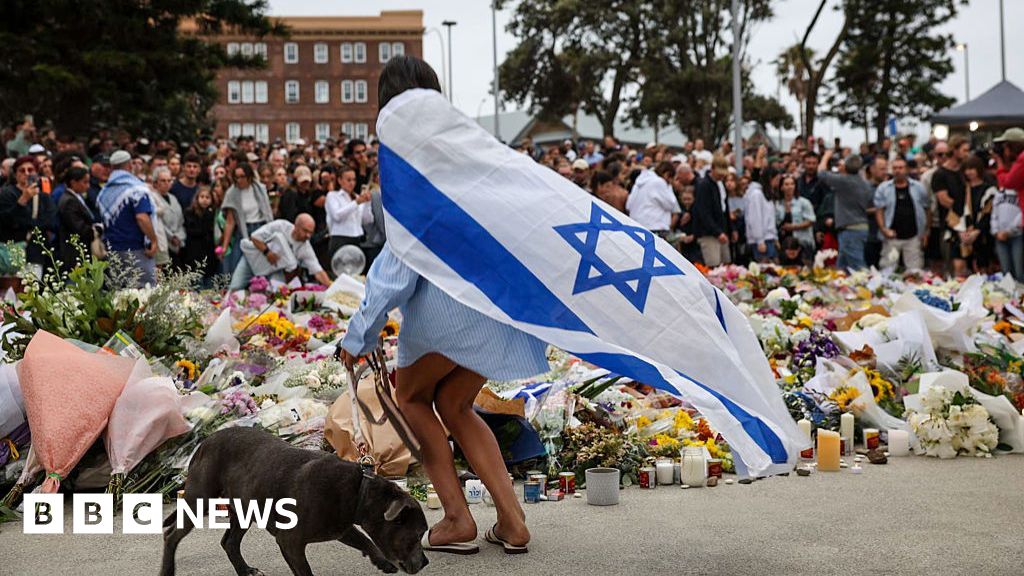
In a world where international stability is often measured in the small margins of diplomatic dialogue and military readiness, recent events have shattered the illusion of peace in both local and global contexts. Australia, long celebrated as a symbol of multicultural harmony and laid-back lifestyle, was rocked by a shocking act of violence at Bondi Beach—a place synonymous with carefree summer days. On what was meant to be a celebration of faith during Hanukkah, two gunmen opened fire—killing at least 15 people and injuring dozens more—transforming the iconic edge of Sydney into a scene of chaos and grief. The attack, carried out on a holiday meant to symbolize light and perseverance, underscores the fragility of societal cohesion in the face of rising extremist threats and the complex web of local vulnerabilities.

  • Gunmen identified as Sajid Akram, 50, and his son Naveed, 24, allegedly orchestrated the assault from a bridge overlooking the park, using sporting shotguns in what experts described as a calculated attack.
  • The operation unfolded over several harrowing minutes, with eyewitnesses recounting screams, gunfire, and a community caught unprepared by violence directly targeting innocent civilians during a festive occasion.
  • Police investigations revealed Sajid Akram was registered with six firearms, raising questions on gun control policies and vetting procedures that failed to prevent the attack. Meanwhile, Naveed’s suspicious ties to an Islamic State cell in 2019 pushed authorities to scrutinize the threat level, though Prime Minister Anthony Albanese publicly stated there was no ongoing threat.

The geopolitical impact of regional violence resonates far beyond the shores of Australia. As analysts suggest, acts of domestic terror are often intertwined with broader global pressures, such as the persistence of radical ideology and failed integration policies in diverse societies. International institutions like the United Nations have repeatedly warned about the rising tide of extremism in liberal democracies, emphasizing that the fight against violence must be coupled with efforts to bolster national identity and societal resilience. The attack on Bondi Beach echoes across borders, reminiscent of recent terror episodes in Europe and North America, which highlight the continuous challenge facing western nations in safeguarding their citizens amidst a backdrop of geopolitical turbulence.

Meanwhile, in the corridors of power, the response to these tragedies influences international relations and homeland security strategies. Critics argue that while Australia’s police and intelligence agencies acted swiftly, the underlying issues of radicalization and gun ownership need urgent reevaluation. Some political voices contend that protective measures, such as tighter gun control and community outreach, are essential to prevent similar incidents. Yet, others warn that overreach could infringe on civil liberties, creating a dangerous precedent that may weaken national cohesion further.

As the United States and European Union grapple with internal threats and the shifting sands of global alliances—symbolized recently by shifts in transatlantic relations and NATO’s posture— the chaos at Bondi Beach stands as a stark reminder of how localized violence can ripple into broader geopolitical uncertainties. The rise of extremist groups, including Islamic State and others, demonstrates the ideological battleground that extends from the Middle East to nations like Australia, forcing international organizations and national governments to adapt their strategies amid a landscape of unpredictable threats.

In the shadow of these events, society faces a daunting challenge: how to forge resilience from chaos. As residents recount the unsettling aftermath of the attack, the larger narrative warns of history’s dark tendency to repeat itself—unless nations unite to confront the root causes of extremism and safeguard core freedoms. The story of Bondi Beach, once merely a local tragedy, has now become a chapter in an unfolding global drama where power, identity, and security intertwine. The questions posed by this storm of violence linger, heavy with the knowledge that, in the relentless march of history, the lines between local incident and international crisis are often perilously thin, and the future remains unwritten—yet profoundly consequential.

Guinea-Bissau Army General Declared President After Sudden Coup

Guinea-Bissau: Military Coup Sparks Unrest and Challenges Regional Stability

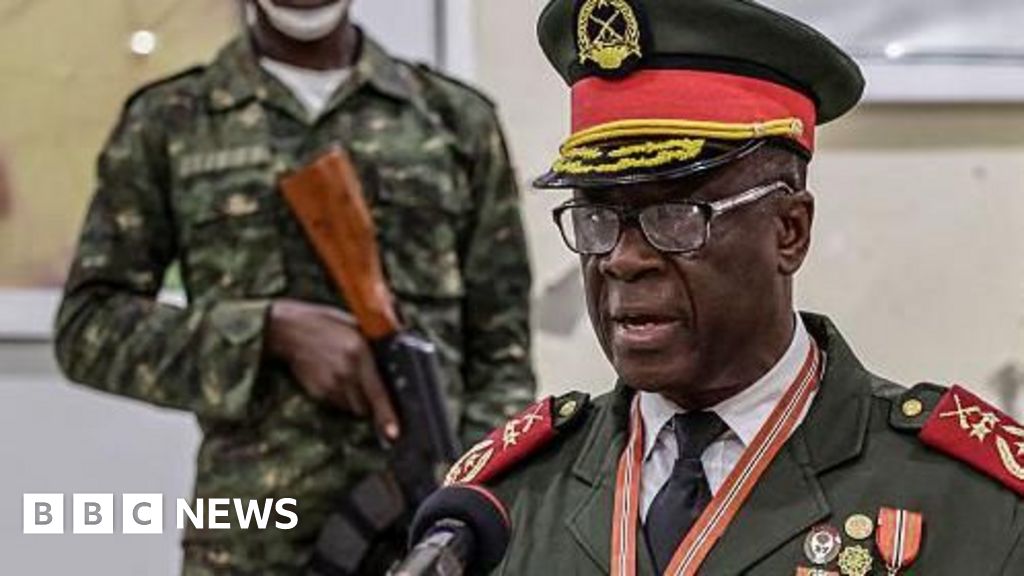
The recent upheaval in Guinea-Bissau, a nation long plagued by political instability, has taken a dramatic turn as the military announced a coup d’état, seizing control amidst claims of thwarted electoral processes. The country’s interim leader, Gen Horta N’Tam, who was sworn in as the transitional president just a day prior, now faces the daunting task of navigating the crisis. The coup came after persistent allegations that outgoing President Umaro Sissoco Embaló may have orchestrated a “simulated coup”—a supposed ploy to block the release of electoral results—fueling suspicions of manipulation and widespread dissent. This event underscores the fragility of Guinea-Bissau’s democracy, where previous coups and attempted putschs total at least nine since independence in 1974.

International organizations, notably the African Union and the Economic Community of West African States (ECOWAS), have responded swiftly, condemning the military’s action and calling for the immediate reinstatement of constitutional order. Leaders from the AU, emphasizing the importance of respecting democratic processes, demanded the “immediate and unconditional release of President Embaló and all detained officials.” The crisis reflects the region’s ongoing struggle with stability amidst a broader context of illegal drug trafficking, militant influence, and political corruption—a dark legacy that has made Guinea-Bissau a notorious narco-state. Its strategic coastline, dotted with uninhabited islands, has long been exploited by drug traffickers moving cocaine from Latin America toward Europe, which international analysts say exacerbates the country’s descent into chaos.

The geopolitical impact of this upheaval extends well beyond Guinea-Bissau’s borders. Neighboring nations—especially Senegal and Guinea—face increased instability, as uncertainty in Bissau threatens regional security and the fight against transnational crime. Historically, Guinea-Bissau’s military influence has oscillated between fragile governance and outright coups, often manipulated by external criminal networks and internal power struggles. The current crisis threatens to deepen regional fragmentation, complicate efforts by Western nations to monitor drug routes, and could possibly embolden other military factions in West Africa, stirring fears of a domino effect that could destabilize an already volatile zone.

Historians and security analysts warn that Guinea-Bissau’s political crisis is more than a local issue—it is a critical indicator of the wider geopolitical challenges facing the West African region. Dr. Emmanuel Osei, a renowned regional political analyst, states: “What we’re witnessing isn’t just a coup; it’s a symptom of external interests intertwined with internal fragility. The integrity of democratic institutions is under siege, and the repercussions will be felt far beyond the shores of Guinea-Bissau.” The regional body, ECOWAS, has urged restraint and a return to dialogue, but as gunfire erupted in Bissau’s streets, fears mount that the nation’s future could be decided by guns rather than ballots. As the international community closely monitors the unfolding drama, all eyes turn toward a nation whose story remains unwritten, yet whose decisions could sway the course of regional stability for years to come. The weight of history presses heavily, leaving the world to ponder: will Guinea-Bissau find its way back to peace, or will it slip further into the shadows of instability—a dark chapter in the ongoing saga of West Africa’s fragile sovereignty?

Social Media Auto Publish Powered By : XYZScripts.com


