Matox News

Truth Over Trends, always!

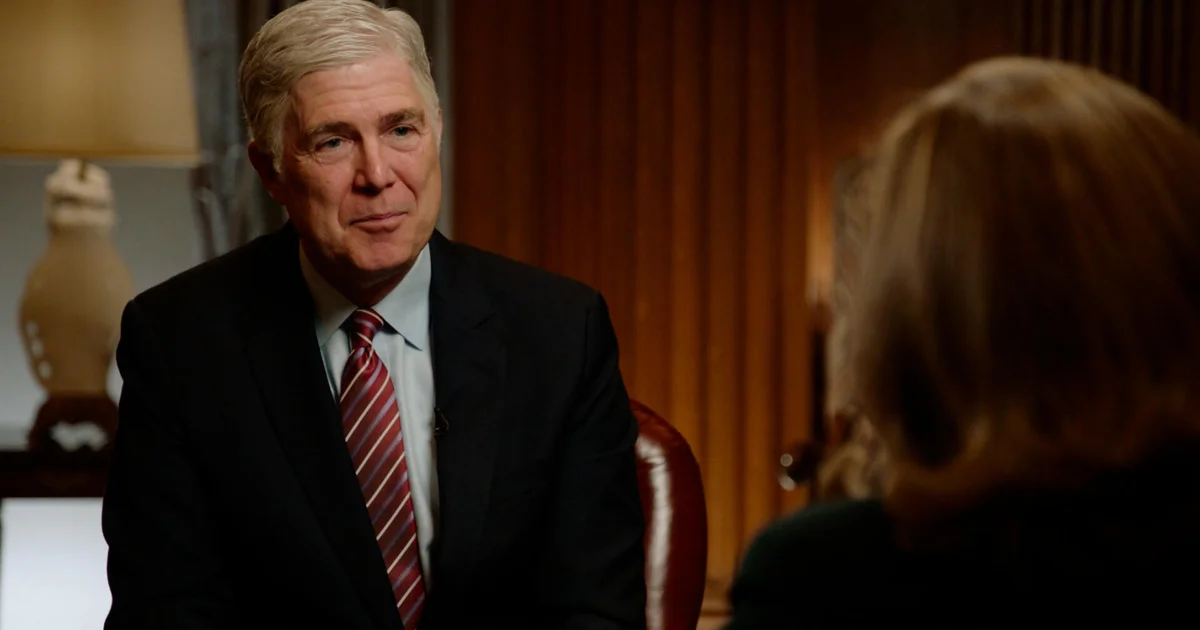
Gorsuch defends Constitution amid Trump’s attacks, vows loyalty to the law

The recent assault by President Donald Trump on Justices Neil Gorsuch and Amy Coney Barrett underscores a pivotal power struggle within the American judicial and political architecture. In an era marked by turbulent shifts and high-stakes battles, the President’s critique of these justices—who were appointed during his administration—signals a profound contest over the interpretation of executive authority versus judicial independence. Their votes to strike down his sweeping tariffs demonstrate not merely a legal decision but a symbolic confrontation that touches on the core of constitutional authority and the direction of national policy.

At the heart of this confrontation lies a critical ideological tension—a clash between unitary executive power championed by the administration and the judiciary’s role as a check to presidential overreach. Historically, constitutional scholars like Alexander Hamilton and James Madison laid the groundwork to balance these powers, but recent events reveal an ongoing struggle to define their boundaries. Trump’s comments—characterized by personal rebukes toward the justices—are more than mere political posturing; they are a reflection of a broader, battle for the soul of America’s constitutional framework. The decision to strike down the tariffs, viewed by many as an overreach of executive authority, exemplifies the judiciary asserting its independence in a climate where the executive branch seeks to consolidate control.

Such conflicts resonate with past epochs of constitutional upheaval, reminiscent of the Jeffersonian and Jacksonian debates over federal power, or even the New Deal court clashes of the 1930s. Here, the power struggles are not abstract; they shape the daily lives of Americans, influencing economic policy, national security, and the very practice of governance. Critics argue that the President’s attack aims to undermine the judiciary’s authority, positioning himself as the ultimate arbiter of policy, while defenders view this as a necessary assertion of executive prerogative in safeguarding national interests. Each move within this domestic chess game directly impacts the people, dictating the course of law and policy in a nation founded on the principle of checks and balances.

Ultimately, the current political climate underscores a profound truth: politics remains the grand stage of human destiny, where ideologies clash, alliances shift, and history’s pen is wielded with every decision. As the dust settles from this legal and political crossfire, the American people are reminded that these power struggles are not merely battles of rhetoric but the very mechanism that sculpts the future of their republic. In this arena, the contest between leadership and liberty is relentless, and the outcome will forever mark the trajectory of American sovereignty—where every ruling, every critique, and every decision is a stroke upon the canvas of history.

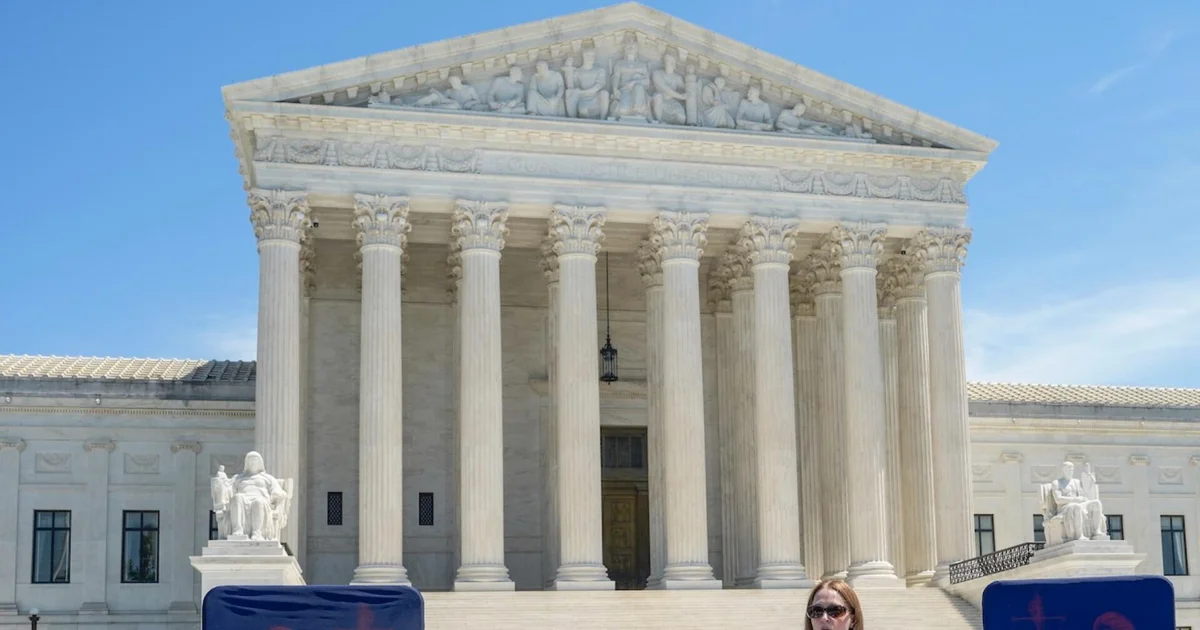
Alito temporarily reinstates mail-order abortion pill rule, sparking youth debate

In a pivotal move that underscores the ongoing battle for control over reproductive rights, a federal appeals court recently blocked a controversial FDA rule permitting the distribution of the abortion pill mifepristone via mail. This decision not only spotlights the power struggle between federal agencies and the judiciary but also exposes the ideological chasm that divides American politics, particularly on issues deeply embedded in cultural and moral values.

The FDA’s policy, which aimed to expand access to abortion by allowing patients to receive mifepristone through the mail, was viewed by many pro-choice advocates as a crucial step toward reproductive autonomy. Conversely, opponents, grounded in conservative principles and skeptical of federal overreach, challenged the rule, arguing that it jeopardized safety and was an overextension of bureaucratic authority. The appeals court’s intervention signals how legal institutions have become battlegrounds in the broader contest over who controls policy decisions that directly impact the people. As constitutional experts draw parallels to historic judicial rulings that served as check or catalyst for change, this recent decision exemplifies that judiciary influence is vital in shaping social policy and national direction.

The decision also intensifies the power struggles among different branches of government. While the executive branch, led by the Food and Drug Administration, aims to loosen restrictions and facilitate access, the judiciary is increasingly asserting itself as a guardian of what it considers the constitutional limits. This dynamic echoes the classical debate traced back to framers like Alexander Hamilton and Thomas Jefferson, where the question of who holds ultimate authority over social policy continues to unfold. For many, this clash clarifies that the sovereignty of the people—once envisioned to be realized through elected representatives—is now often contested in the courts, with profound implications for how decisions shape the lives of ordinary citizens.

Ultimately, the fluidity of this power struggle underscores a fundamental truth: politics is the stage where destiny is wrought. As legal experts and political theorists analyze these shifts, one certainty remains clear—the fight over cultural and moral authority is far from over. The rulings echo a larger narrative about the resilience of ideological discord in shaping the national identity. In a nation where each court victory or defeat potentially redefines the relationship between government and the governed, the broader question remains: who will write the future—those who wield the power today or those advocating for a different direction? As history has repeatedly demonstrated, in the theater of politics, the battle lines are drawn, and only the outcome will determine the enduring moral fabric of the nation.

States race to redraw districts after Supreme Court curbs Voting Rights Act

In the wake of a pivotal Supreme Court decision that further weakens the Voting Rights Act of 1965, Alabama and Tennessee are moving swiftly to redraw their congressional districts. This development exemplifies the ongoing power struggles between entrenched political entities and the constitutional frameworks that purportedly safeguard democratic fairness. As states realign their political maps, the core question arises: whose voices will be amplified, and whose will be marginalized?

The Supreme Court ruling has served as a catalyst, emboldening Republican-led state legislatures to assert greater control over electoral boundaries. Historically, the Voting Rights Act represented a landmark effort to combat racial gerrymandering—a practice that dilutes the voting power of minority populations through strategic district delineations. Yet, recent judicial decisions suggest a redefinition of permissible political mapmaking, emphasizing partisan advantage over voter representation. This shift echoes the fears of constitutional scholars who warn that the judiciary’s diminishing role in protecting minority rights could lead to an erosion of electoral fairness, reminiscent of the troubling gerrymandering strategies that aimed to undermine the civil rights advancements of the 1960s.

In Alabama and Tennessee, the political reaction is illustrative of a larger ideological battle. Conservative policymakers argue that their goal is to restore electoral integrity and uphold state sovereignty, framing the redistricting efforts as a necessary correction against alleged federal overreach. Conversely, critics—often aligned with Democratic interests—claim that these state-level moves are blatant attempts to entrench Republican dominance and suppress minority voters’ influence.

  • Alabama’s new district maps are being challenged for potentially diluting African American voting strength in the pivotal Birmingham and Montgomery areas.
  • Tennessee’s redistricting efforts threaten to consolidate rural and suburban districts, skewing representation in favor of conservative constituencies.

This dynamic reflects a broader power struggle concerning who ultimately determines the political destiny of American communities. The decisions made in state legislatures in response to the Supreme Court’s ruling echo historical parallels with the “Southern Strategy,” where political and racial boundaries were manipulated to maintain conservative dominance. Renowned political theorists like James Madison and Alexander Hamilton argued that the integrity of the republic depends on balanced representation; today, that debate is being redefined as maps are manipulated to favor partisan interests, risking the erosion of democratic legitimacy. As constitutional law experts warn, these tactics threaten to turn the ballot into a mere façade, where the outcome is predetermined by the shape of a district rather than the will of the people.

As the tapestry of American politics continues to be woven through redistricting disputes, it becomes clear that these decisions are more than administrative adjustments—they are strategic moves in a long-standing fight for control over electoral power. The question of how district boundaries are drawn directly impacts how policies are shaped, who is heard, and which communities gain or lose influence. Beneath this surface lies the profound reminder that in politics, as in history, the arena is where the battle for destiny is fought—each map a blueprint not only of representation but of the future itself.

Social Media Auto Publish Powered By : XYZScripts.com



