Matox News

Truth Over Trends, always!

Nigeria’s Kidnapping Surge: Youth Silenced by Fear

In the heart of West Africa, Nigeria continues to grapple with a daunting wave of insecurity that is reshaping its social fabric and altering the geopolitical chessboard. Over the past few weeks, mass kidnappings have become disturbingly routine, with armed groups—commonly termed bandits—exploiting Nigeria’s remote rural areas and fragile state institutions to execute daring abductions. The recent kidnapping of over 300 students from St. Mary’s Catholic School in Papiri, along with subsequent assaults on other schools and communities, underscores a worsening crisis that officials and analysts warn threatens to destabilize entire regions.

Despite official denials, reports from villagers like Aliyu reveal a narrative of fear and chaos, where parents are terrified to speak openly, fearing reprisals from kidnappers. The ghastly reality is that children as young as five are among the victims, often taken from soft targets such as private schools and farms. The insurgents responsible, including the notorious Islamic State of West Africa Province (ISWAP), operate within a complex web of ideological extremism and profit-driven motives. This resurgence, analysts say, is less about religious extremism alone and more about a lucrative trade in ransom kidnapping—a practice that funds further violence and sustains the cycle of insecurity.

However, the crisis extends beyond the battlefield. In a startling development, some remote communities in Nigeria’s northwest have resorted to peace deals with bandit leaders. These accords, driven by desperation, negotiate access to mineral wealth—particularly gold—and secure promises to cease hostilities and reopen schools. Such agreements, observed by security experts like David Nwaugwe, suggest a pragmatic, if alarming, shift in how insurgency is managed. While these informal peace arrangements have led to a *temporary* decline in attacks, they expose a larger geopolitical problem: how the Nigerian government’s inability to establish firm control has allowed criminal gangs to operate almost openly, fragmenting sovereignty and adding layers of complication to regional stability.

Moreover, these developments are prompting international concerns. U.S. President Donald Trump recently issued threats of military intervention, criticizing Nigeria’s inability to protect its Christian minority from Islamist violence. Such rhetoric, while potentially incendiary, underscores the increasing geopoliticization of Nigeria’s internal security issues. As nations debate whether to escalate or de-escalate, how Nigeria handles this crisis will significantly influence regional stability and global perceptions of Africa’s largest economy. With historical analysts warning of the danger posed by insurgency rippling across borders, the global community faces a stark choice: support Nigeria’s sovereignty and bolster its security capacity or watch as chaos undermines the continent’s stability.

As the weight of history presses down, Nigeria stands at a crossroads. Will it succumb to a cycle of violence and destructive peace deals, or will it forge a new path—one that upholds order and restores hope? The answer remains unwritten, buried within the unpredictable currents of a nation fighting for its future amidst a storm of violence and shifting alliances. The coming days will determine whether Nigeria can reclaim its sovereignty, or whether these dark clouds threaten to define an era of chaos and uncertainty, echoing the turbulent chapters of history yet to be written.

ITV shares surge ahead of talks to sell TV arm to Sky

In a significant move that underscores the shifting landscape of international media ownership, the United States telecom giant Comcast is eyeing a strategic acquisition of ITV’s media and entertainment assets in the United Kingdom. This proposed deal, which aims to expand Comcast’s global footprint, highlights the burgeoning influence of American corporations in shaping European media narratives and markets. While the deal explicitly excludes ITV Studios—the prolific program-making division responsible for hit shows like Love Island and I’m a Celebrity—it nonetheless raises profound questions about market dominance and regulatory oversight in an era dominated by digital and traditional media convergence.

Analysts warn that the proposed acquisition could consolidate a dangerously high market share within the UK advertising and broadcasting sectors, prompting renewed concerns over market monopolization. Specifically, the underway combination of ITV’s ad sales operations with those of Sky—another key player under the Comcast umbrella—could potentially command over 70% of the UK ad market. Such dominance would give Comcast unprecedented influence over both conventional and digital advertising spheres, effectively allowing the conglomerate to manipulate the flow of information and cultural output across Britain. International regulatory agencies, including the Competition and Markets Authority (CMA), are now under pressure to re-evaluate how they define and measure market power, especially as digital advertising continues to reshape the industry’s landscape.

This unfolding corporate narrative echoes historical patterns observed during the late 20th century, when dominant media conglomerates began amassing power across borders, often resulting in increased censorship, reduced media diversity, and a further consolidation of narrative control. Global institutions like the International Telecommunication Union (ITU) and EU regulators are now watching closely, wary that unchecked corporate acquisitions could threaten national sovereignty and democratic accountability. For critics, this move signals a broader retreat of independent media and a shift towards a corporate-mediated information environment—one that favors market supremacy over societal diversity. Moreover, the economic strain faced by ITV—announcing a £35m budget cut amidst a sluggish macroeconomic climate—further exemplifies the fragility of localized media outlets navigating a landscape increasingly overshadowed by foreign corporate interests.

Going forward, the future of media independence and societal influence will be firmly intertwined with geopolitical decisions, strategic corporate moves, and regulatory responses. If history teaches anything, it is that such consolidation may mark the beginning of an era where corporate interests eclipse national priorities. The unfolding drama over ITV’s assets may appear as a business deal on paper, but in reality, it symbolizes a battle over control of cultural narratives and societal values—an ideological contest with profound implications for the global balance of power. As this story continues to develop, the world watches with bated breath, conscious that today’s corporate mergers may shape the fabric of tomorrow’s societies, leaving behind a legacy that will be debated by historians and policymakers for generations to come. The pages of history are again turning, and the story of influence and control is far from over.

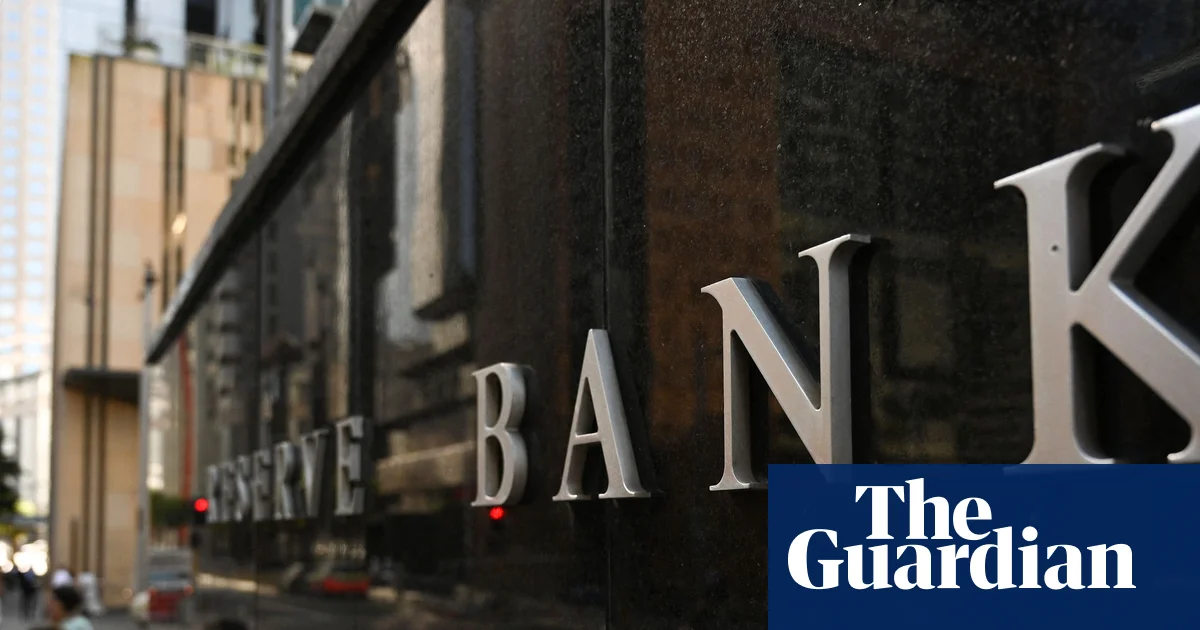
RBA keeps rates steady at 3.6% amid unexpected inflation surge

Global Economic Tensions Rise as Australia Faces Inflation Shock

The recent decision by the Reserve Bank of Australia (RBA) to hold interest rates steady at 3.6% has sent ripples through international markets, highlighting the fragile state of global economic stability. While the monetary policy board’s decision was widely anticipated, the underlying causes—particularly a surprising surge in inflation—offer a stark warning about the complexities faced by national economies in the aftermath of aggressive rate cuts earlier this year. As the RBA maintains its cautious stance amidst rising core inflation, the geopolitical landscape is increasingly influenced by such economic shifts, where the decisions of a single nation can ripple across continents, affecting trade, investment, and geopolitical alliances.

Australia’s Inflation Surge: A Turning Point in Domestic Policy

  • Core inflation in Australia rose to 3% in September, reaching the upper limit of the RBA’s preferred range, signaling an unexpected acceleration not seen since 2022.
  • The headline unemployment rate also increased unexpectedly to 4.5%, amid rising electricity prices—up 9% in a quarter as government energy rebates expired—casting doubt on the sustainability of the nation’s recovery.
  • This inflation spike, coupled with sluggish employment growth, underscores a potential shift in Australia‘s economic trajectory, challenging policymakers’ earlier assurances that rate cuts would support job creation.

According to leading analysts and economists, this unexpected data underscores the uncertainty that now clouds the Australian economy. International institutions, such as the International Monetary Fund (IMF), have warned that persistent inflation can lead to stagflationary scenarios, complicating central banks’ efforts to balance growth with price stability. The RBA’s cautious pause in rate hikes, despite market expectations for further cuts, exemplifies the delicate geopolitical dance of managing internal economic pressures while avoiding escalation into broader regional or international instability.

Global Impact of Regional Policy Decisions

The repercussions of Australia’s economic challenges extend beyond its borders. Investors worldwide are watching closely, especially with financial markets scaling back bets on further rate cuts in the coming months. This shift could influence currency valuations and trade dynamics across the Indo-Pacific and beyond. For instance, rising interest rates in Australia may strengthen the Australian dollar but could simultaneously hinder export competitiveness, affecting regional supply chains and investment flows. Such developments underscore how internal policy shifts are critically intertwined with the broader international political landscape.

Moreover, some analysts warn that the inflation surprise serves as a stark reminder of how national economic stability can influence geopolitical strength. Countries that manage inflation effectively are seen as more resilient and capable of asserting influence in international forums. Conversely, nations burdened by economic turbulence risk weakening alliances and inviting geopolitical opportunism from rivals. The U.S., China, and the European Union are all closely observing these shifts, recognizing that a fragile Australia could be exploited by strategic adversaries or destabilize regional peace.

Concluding Reflections: The Weight of History on the Horizon

As Australia grapples with an inflationary headwind that threatens to undermine its economic recovery, the broader implications for international stability remain profound. Decisions made within the corridors of Canberra resonate through global markets and diplomatic corridors alike. This quiet yet intense conflict between economic growth and inflation is not merely a domestic issue but a chapter in the unfolding narrative of global power struggles and economic resilience. The world watches, knowing that history’s next great turning point may lie just around the corner—when a nation’s economic decision becomes a catalyst for a new era of geopolitical realignment. In the shadows of mounting inflation and shifting alliances, the fabric of international order is being woven anew, with each nation’s fate forever intertwined in the ledger of history.

East Coast heads for heat surge following Western Australia’s record October temperatures

The recent surge of unprecedented October heat across Australia highlights the growing severity of climate change and its disruptive impact on global weather patterns. Meteorologists report that record-breaking temperatures are sweeping through states like South Australia, Queensland, and New South Wales, with Sydney and Brisbane facing high 30s—signaling a dangerous escalation in extreme weather events. According to Dean Narramore, senior meteorologist at the Bureau of Meteorology, the conditions represent “a very big day of weather,” with the potential for widespread record-breaking heat and destructive thunderstorms. These developments are not isolated anomalies but are consistent with a disturbing trend of rising temperatures—Australia’s land surface having warmed by 1.5°C since 1910, a trajectory that international climate experts warn could lead to even more catastrophic events in the future.

Over the weekend, the thermometer soared to alarming levels in Western Australia and South Australia, with locations like Telfer reaching a scorching 44.3°C. These temperatures are not only startling in isolation but serve as grim indicators of how climate crises exacerbate the severity and frequency of forest fires, heatwaves, and severe thunderstorms. As analysts from various international organizations emphasize, such extreme weather events threaten not only the environment but also the safety and socio-economic stability of nations. Experts warn that many regions could see temperatures between 10 to 16°C above normal, with some areas potentially exceeding 18°C—an indication that the resilience of societies will be tested as never before. The increasing frequency of these events underscores a stark reality: decisive global action on climate change is no longer optional but an urgent necessity.

The geopolitical impact of these climate-induced shocks is profound. Australian authorities are signaling a worsening fire danger, with models forecasting “extreme fire dangers” across multiple states, including parts of metropolitan Sydney and regional Queensland. Historically, such conditions have led to devastating wildfires, which displace communities, destroy ecosystems, and strain emergency services. This pattern is a stark reminder to international observers that climate change is no longer an abstract threat—it’s an immediate crisis capable of destabilizing entire regions. The significance extends beyond Australia; as global climate systems become increasingly volatile, nations must confront the reality that unchecked emissions contribute to a world where extreme weather is the new normal. International commentary concurs that geopolitics will increasingly revolve around climate resilience, resource management, and adaptation strategies.

As the weather worsens, the bleak horizon of climate diplomacy looms large. Critics argue that successive United Nations climate accords have failed to deliver meaningful reductions in greenhouse gases, thus amplifying the frequency of such catastrophic events. Some analysts suggest that the world is entering a new era—“where weather becomes the battleground for global power and stability.” This phrase encapsulates the notion that nations with the capacity for resilience and adaptation may gain an advantage, while others buckle under the weight of climate-induced turmoil. Historian and climate analyst Dr. Helen Roberts warns that the current trajectory risks a future where society’s most vulnerable face the brunt of environmental chaos—adversely impacting social cohesion and economic security. As the nations of the world continue to grapple with these unfolding realities, one thing remains clear: the clock is ticking, and the pages of history await the decisive chapters that will determine humanity’s fate amid the dawn of a new climate epoch.

Social media and weight loss meds fuel UK surge in male and 40s facelifts—why more young guys are chasing the trend

In recent years, a quiet revolution has taken hold among the young and the ambitious: facelifts are no longer the exclusive domain of Hollywood starlets or aging celebrities. Society’s shifting standards of beauty, combined with radical innovations in surgical techniques, have made cosmetic procedures more accessible and appealing to a broader demographic. According to the British Association of Aesthetic Plastic Surgeons, the number of facelifts performed in the UK has swollen by 8% in 2024, with a striking 26% increase among men alone. This trend signals not just a superficial obsession with youth but a deeper cultural shift in how society perceives vitality, success, and self-confidence.

Experts such as Nora Nugent, president of Baaps, emphasize that the appeal of modern facelifts lies in their ability to deliver natural and durable results without the relentless maintenance that fillers demand. This quest for longevity and authenticity feeds into a broader societal narrative: the desire to age gracefully without surrendering to the ravages of time or societal pressure. With technological innovations like endoscopic “scarless” facelifts and multifactorial techniques targeting deeper facial structures, surgical options have become less invasive and more tailored to individual needs. These advancements not only enhance the aesthetic outcomes but also bolster the social acceptability of getting cosmetic procedures—transforming what was once taboo into a normative lifestyle choice.

However, beneath the surface of this trend lies a more complex social narrative. As psychologist Helena Lewis-Smith points out, “appearance pressure in society has never been stronger”. Public figures like Kris Jenner, who openly speak about aging and cosmetic enhancements, serve as influential role models that normalize procedures. The messaging resonates especially with the younger generation, who are racking up surgical stats at an unprecedented rate. Importantly, this phenomenon isn’t solely about vanity; many view these procedures as a form of self-care, resilience, and societal capital. Yet, critics express concern about the risks—scarring, nerve damage, and the misconception that these surgeries are risk-free or quick fixes. Medical professionals warn that facelifts, while increasingly refined, remain major surgeries requiring psychological assessments and a commitment to long-term health.

On a social level, the normalization of cosmetic procedures raises pertinent questions about the future of youth culture, societal standards of beauty, and the commodification of self-image. The rise of weight loss drugs like Ozempic has added another layer to this dynamic—rapid fat loss often leaves faces looking gaunt, prompting a surge in both facial and body contouring surgeries. Is this relentless pursuit of perfection creating a new form of societal discontent or merely empowering individuals to take control of their appearance? As social media amplifies this conversation, the next big question becomes: are we witnessing the emergence of a society where leaving aging behind becomes less an aspiration and more a cultural mandate?

Social Media Auto Publish Powered By : XYZScripts.com