
Matox News

Truth Over Trends, always!

Australian PM Faces Backlash After Dismissing Child Abuse Survivor as ‘Difficult’

In an era where gender discourse increasingly influences international policy and societal frameworks, remarks from influential figures often resonate beyond national borders. Grace Tame, a former Australian of the Year and an outspoken advocate for women’s rights, recently described a certain phrase as a “misogynist’s code for a woman who won’t comply.” Her blunt critique underscores a broader trend of confronting language and cultural norms that perpetuate gender inequality, a phenomenon with significant geopolitical impact.

Such statements are not made in isolation. They reflect a global climate where gender politics intertwine with national identity and international power dynamics. Analysts from organizations like Human Rights Watch and The United Nations observe that traditional rhetoric often acts as a tool for exercising control over women’s autonomous choices, especially in regions where conservative societal norms dominate. Historically, language has functioned as a barrier—used to marginalize dissent and uphold patriarchal structures. Tame’s critique *amplifies* the ongoing battle over cultural narratives that shape laws, policies, and societal expectations worldwide.

Look at the broader consequences: when governments or leaders resort to misogynist rhetoric or fail to challenge it, they risk entrenching inequality and destabilizing social cohesion. The European Union and United States, for example, continue to debate how to address gender-based violence and discrimination, often facing resistance rooted in deeply ingrained cultural language barriers. Meanwhile, in some nations, such language has been weaponized politically, serving as a rally cry for authoritarian regimes seeking to suppress dissent and control the narrative around women’s rights. The significance of Tame’s words lies in their challenge to the language of dominance—the kind of rhetoric that, if left unchecked, outright threatens the progress made in gender equality over the past decades.

Experts like Dr. Melissa Lane, a political philosopher at Princeton University, warn that “narrow definitions of compliance rooted in misogyny undermine fundamental rights and threaten international stability.” As the world watches these tensions escalate, international organizations are calling for a renewed commitment to defending the language of equality and human dignity. The *recent surge in grassroots activism* and debates over language in legislation highlight that the battle is as much cultural as it is political. Whether in the halls of the United Nations or in local communities, the fight against the subtle yet pervasive influence of misogynist codes remains a pivotal front in the global struggle for dignity and freedom.

As history’s pages continue to turn, a stark reality emerges: the decisions made today, particularly in language and policy, will define generations to come. The weight of this moment is captured in the words of Tame—an emblem of resistance against subtle oppression and misrepresentation coded into everyday discourse. With each challenge to such entrenched norms, the global community faces a relentless question: how much of our shared future will be shaped by the language we choose to uphold or dismantle?. The unfolding narrative is not merely about words—*it is about the very fabric of societies striving to forge an equitable, free future in the shadow of history’s enduring echoes.*
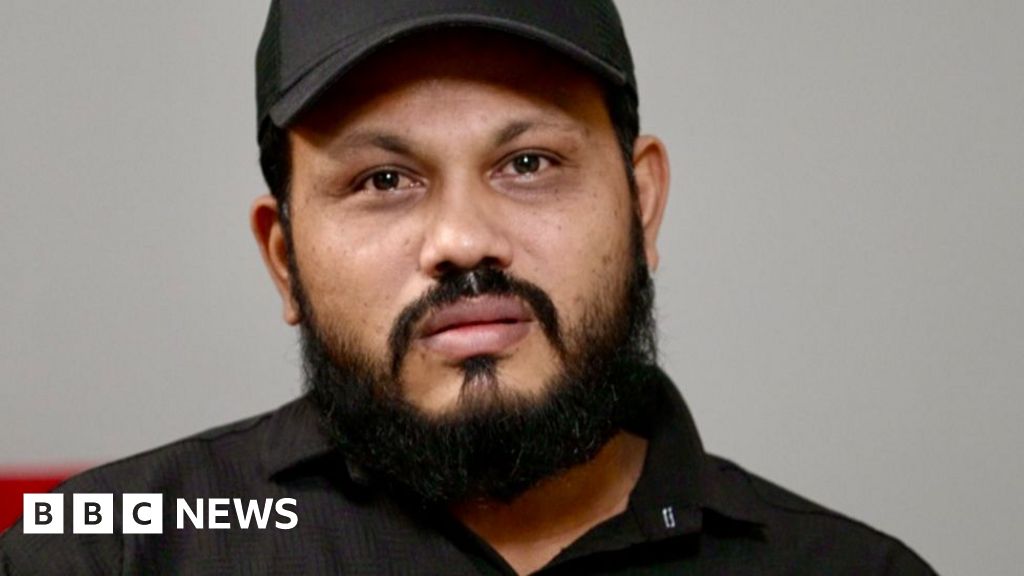

Air India crash survivor: "I'm the luckiest guy alive"
Air India crash survivor: “I’m the luckiest guy alive”

Unfolding Tragedy Sparks Broader Geopolitical Reflection

In a tragic incident that has sent shockwaves through the international community, a **Boeing 787** flight en route to **London** from **Ahmedabad** collapsed shortly after takeoff, engulfed in flames that claimed the lives of 169 Indian nationals, 52 Britons, and 19 others on the ground. The incident underscores not only a profound human tragedy but also a critical juncture that tests international protocols and diplomatic ties. As survivors like Viswashkumar Ramesh recount their harrowing experiences, the underlying question of aviation safety and accountability takes center stage, with international implications.

The preliminary report from India’s Aircraft Accident Investigation Bureau indicated that fuel was cut off from the engines mere seconds after takeoff—a suspiciously rapid failure that suggests potential flaws in safety procedures or maintenance. This revelation has prompted global aviation authorities to scrutinize airline operations, prompting calls for stringer oversight in an era where **security and accountability** are paramount. Critics and international analysts warn that such incidents are a stark reminder of the vulnerability of emerging markets’ infrastructure, which often lacks the rigorous safety standards prevalent in **Western countries**. The aftermath threatens to escalate into a broader debate on international aviation regulations and their enforcement across nations with diverse standards.

Turning point: A Test of Diplomacy and Justice

The human dimension of this crisis is deeply intertwined with broader geopolitical impacts. India’s President Narendra Modi publicly expressed condolences, while calls for accountability have quickly become intertwined with diplomatic interactions between **India** and **the United Kingdom**. The families of victims, such as Mr. Ramesh, are demanding justice and transparency, emphasizing that “the highest levels” of airline responsibility must be held accountable. International organizations like the **International Civil Aviation Organization (ICAO)** have already signaled their intention to monitor the investigation, highlighting the incident’s potential to influence global aviation policy.

Historians and analysts warn that when crucial safety failures occur in high-profile international accidents, they risk fueling trust deficits between nations, especially when the airline in question is owned by a conglomerate such as the Tata Group, which itself is a symbol of burgeoning **India’s economic rise**. The tragedy presents a challenge to **India’s global image** as an emerging power, underlining that rapid development must be matched with stringent safety standards. Meanwhile, the UK government is pressed to consider how its nationals are protected abroad, emphasizing the need for robust diplomatic channels to support families in crisis.

Calls for Action: Justice, Repair, and the Path Forward

The aftermath has seen relentless calls for **proper accountability** and reparation, especially from victims’ families who protest the insufficient financial aid offered by airline authorities. **Air India**, owned by Tata Group, has offered a meager interim compensation of £21,500, which critics argue falls far short of meeting the immediate needs of grieving families and survivors suffering physical and psychological trauma. Experts warn that delay and dismissive responses only deepen the wounds and underline the systemic flaws in crisis management. The families are demanding a direct dialogue with airline executives, asserting that “whoever is responsible at the highest level” must face their grief and accountability. Such cries for justice could potentially ignite broader discussions on corporate responsibility and international oversight, as the global community watches with bated breath.

As the investigation continues, the weight of history presses upon all involved. Governments, corporations, and international regulators are at a pivotal crossroads, with the potential to either fortify the safeguards that protect millions or to succumb to complacency. Today’s fragile action may carve out a legacy of reform, or it may fade into the shadows of unresolved tragedy. Yet, the profound question remains: how will humanity respond amid the relentless unfolding of this story—one that is only beginning to reveal its long-term echoes across geopolitical boundaries?

Social Media Auto Publish Powered By : XYZScripts.com


